
#gravity pet waterer
#pet bowls
#pet hydration
#summer pet supplies
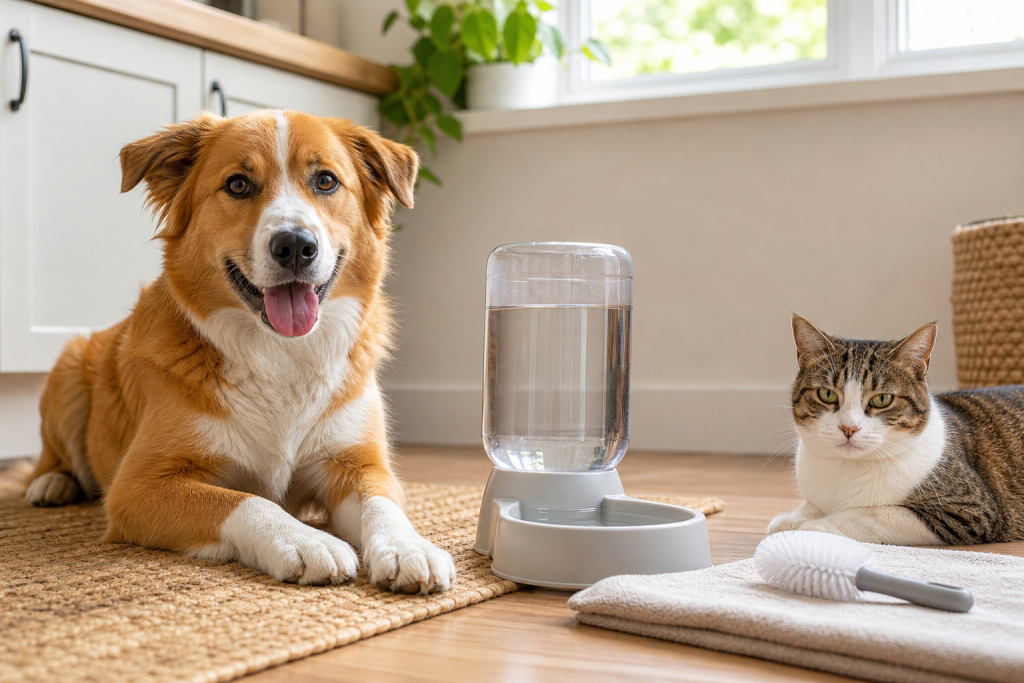
A gravity pet waterer is a bad deal if the bigger reservoir makes you clean it less often. It can help a dog or cat have water available between refills, but the bottle, neck, gasket and bowl base still need regular washing. Before checkout, buy for cleanability and fit first, then capacity.
This matters now because summer shopping pushes owners toward larger bowls, water dispensers and hydration gear. The AVMA and ASPCA both stress fresh water during warm weather, while the CDC says pet bowls should be cleaned every day for water. A large reservoir can reduce refill trips, but it does not turn stale water or a slimy base into a safer setup.
Why the Bigger Bottle Can Backfire
Gravity waterers look simple: fill the bottle, flip it into the base and let water refill the bowl as your pet drinks. The hidden cost is maintenance. Narrow bottle openings, molded corners, rubber seals and plastic bases can be harder to scrub than a plain stainless steel bowl.
That matters because water dishes are not just decorative pet supplies. The CDC says pet items such as bowls can carry germs and recommends cleaning pet bowls daily for water. The FDA also advises washing pet food bowls and utensils with soap and hot water, which is a useful standard when you are judging any feeder or waterer that touches your pet’s mouth.
What to Check Before Checkout
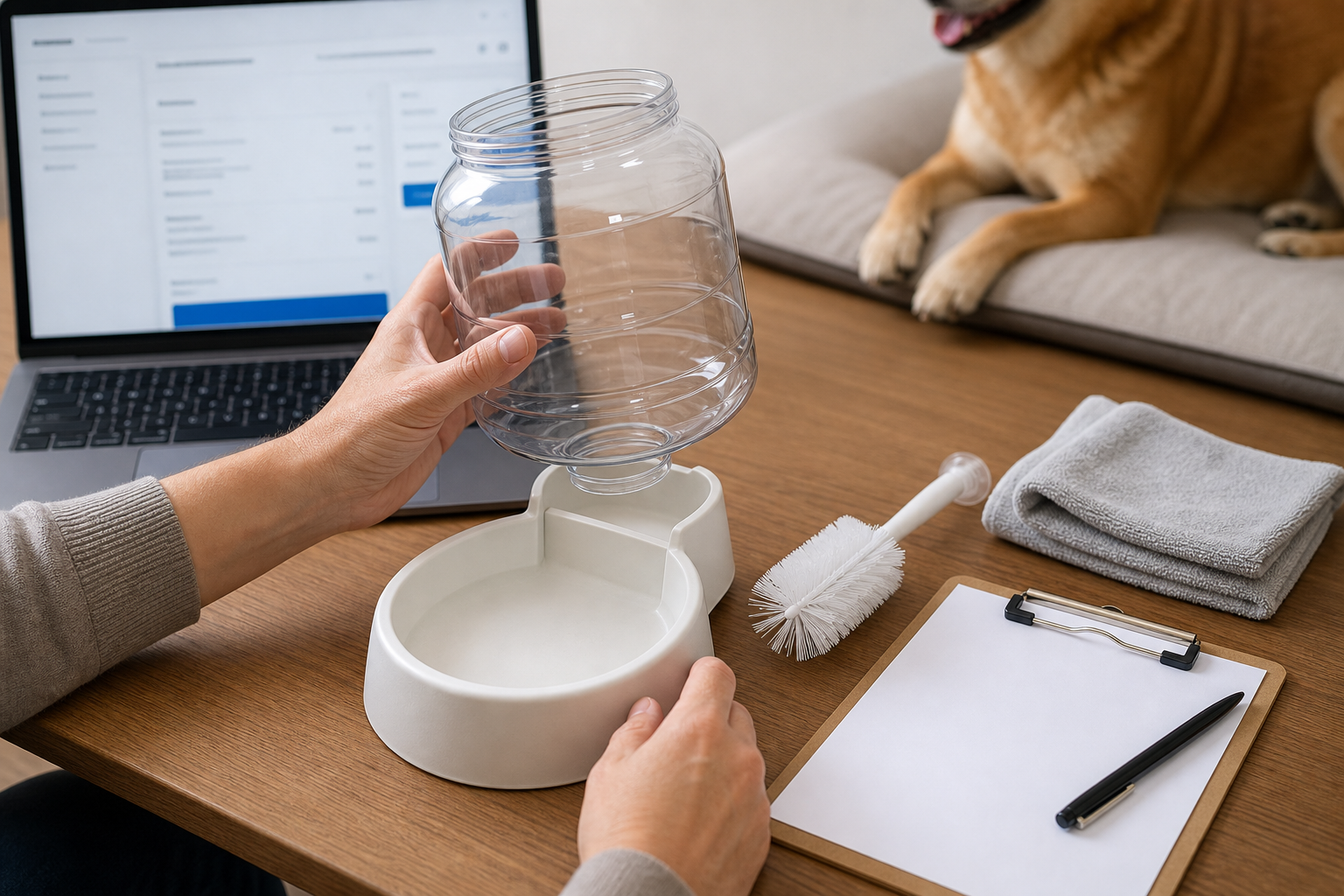
Start by asking how you will clean the waterer on a normal weekday, not how large it looks in the listing. A one-gallon dispenser can be useful for some homes, but a smaller, easier-to-wash model may be the better buy if your sink is small or your pet drops food, hair or litter dust into the bowl.
- Opening size: Make sure the reservoir mouth is wide enough for a bottle brush or your hand, depending on the design.
- Base shape: Avoid deep corners and decorative grooves that trap residue where a sponge cannot reach.
- Material: Check whether the bowl base is dishwasher-safe, hand-wash only, plastic, stainless steel, ceramic or a mix of parts.
- Stability: Look for a low, non-slip base if you have a large dog, playful cat or multi-pet home.
- Reservoir fit: The bottle should lock or seat securely without wobbling when the bowl is bumped.
- Refill visibility: A clear reservoir makes it easier to see the water level and spot cloudiness.
- Replacement parts: Check whether caps, seals or bases are sold separately, especially for larger models.
Capacity Is Not the Same as Fresh Water
A larger reservoir is convenient when you are at work, but it should not be a way to stretch water for days. The AVMA says pets should have unlimited access to fresh water in warm weather, and the ASPCA warns that pets can dehydrate quickly when it is hot or humid. Fresh means clean, accessible and replaced often enough for your pet and your home.
For one cat, a huge dispenser may leave water sitting longer than needed. For two large dogs, a tiny dispenser may empty too fast and create a false sense of security. Match capacity to your pet’s actual drinking pattern, the room temperature and how often you can inspect the bowl.
The Deal Section: What to Verify Before Paying
Gravity waterers often look cheap compared with smart fountains because there is no pump, app or filter subscription. That can be true, but the deal still depends on the parts you will actually use. A low price is less attractive if the base is hand-wash only, the bottle opening is too narrow or return shipping costs nearly as much as the product.
Before using a coupon, check the product page and seller terms for:
- actual reservoir capacity, not only “small,” “medium” or “large”;
- assembled dimensions, especially if it must fit under a cabinet or beside a feeding mat;
- dishwasher-safe wording for each part, not just the bowl;
- whether replacement caps, gaskets or reservoirs are available;
- return rules after water has touched the item;
- marketplace seller identity, shipping date and return address.
If a retailer listing says “easy to clean,” look for the details that prove it: a wide mouth, simple base, removable parts and clear care instructions. If those details are missing, the waterer may be a bigger gamble than a plain bowl.
What to Avoid
Avoid buying only by capacity. The biggest bottle on the page can be the worst fit if it is heavy to flip, awkward to carry or difficult to scrub.
Avoid assuming a gravity waterer replaces daily checks. Hair, kibble crumbs and dust can still land in the bowl, and pets can still tip, paw at or ignore a dispenser they do not like.
Avoid damaged plastic, cloudy reservoirs, cracked bases or parts with rough scratches. Those are harder to clean well. If your pet is sick, very young, senior, immunocompromised or has special hydration needs, ask your veterinarian what water setup is appropriate instead of relying on a product listing.
Best Use Cases
A gravity waterer can make sense for a healthy dog or cat that already drinks normally, a multi-pet kitchen where bowls are checked often, or a home where someone wants fewer mid-day refills. It is less ideal if your pet loves splashing, if the bowl sits near litter dust, if you need measured water intake, or if you will forget to wash the reservoir because it still looks partly full.
For cats, keep location in mind. Many cats prefer water away from food and litter areas. If your cat ignores a dispenser, the better buy may be more simple bowls in preferred locations rather than one larger waterer.
FAQ
Are gravity waterers better than pet fountains?
Not automatically. Gravity waterers have fewer powered parts and no pump, but fountains can encourage some pets to drink. Either choice still needs cleaning, and either can become a poor buy if replacement parts or care instructions are weak.
How often should I clean a gravity pet waterer?
Use the product’s care instructions, and treat the bowl area as a daily-clean item. The CDC says pet bowls should be cleaned every day for water, and more often if they look dirty or smell bad.
Is plastic safe for a pet waterer?
Plastic is common, but it should be smooth, intact and easy to clean. Replace parts that are cracked, scratched, cloudy or holding odor. If your pet has skin or mouth irritation, ask your veterinarian whether a different bowl material may be better.
Can I leave a gravity waterer full for a weekend?
Do not rely on a dispenser as your only plan for time away. Pets still need someone to check water, food, temperature, litter or potty needs and general wellbeing. A full reservoir can leak, clog, tip or become dirty.
Sources
Sources last checked June 20, 2026, 22:33 Europe/Rome.
- CDC, About Cleaning and Disinfecting Pet Supplies
- American Veterinary Medical Association, Warm Weather Pet Safety
- FDA, Tips for Safe Handling of Pet Food and Treats
- ASPCA, Hot Weather Safety Tips
- Amazon, example gravity pet water dispenser listing checked for current shopping context
- Target, example gravity cat and dog waterer listing checked for current shopping context