
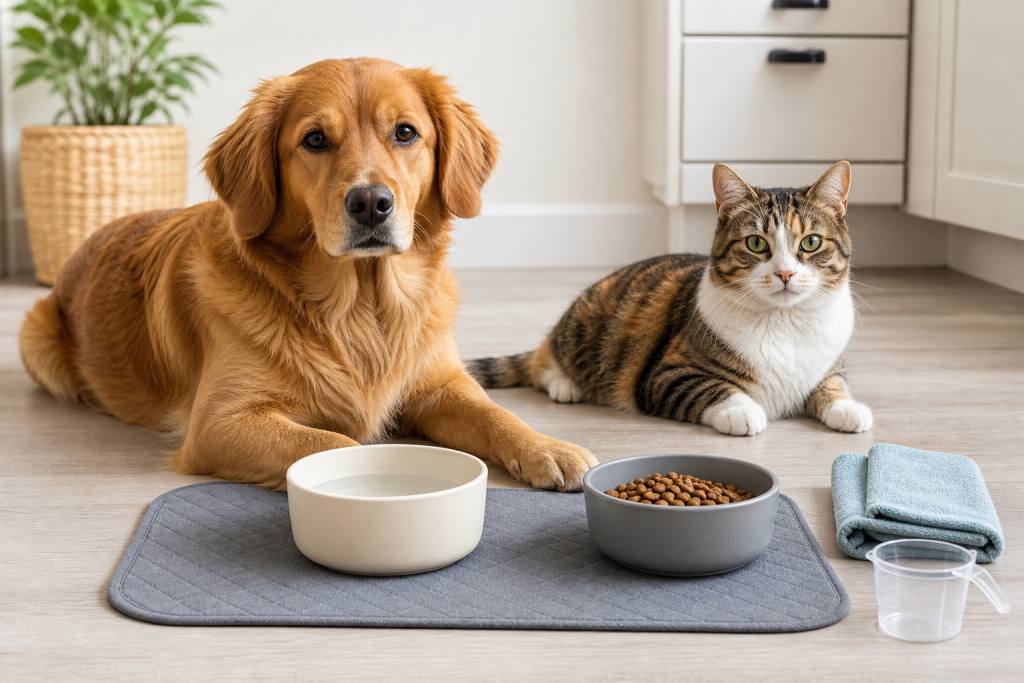
#feeding station
#pet bowls
#pet deals
#pet feeding mat
A pet feeding mat is only a good deal if it is large enough for the bowls, easy to wash and dry, and honest about what it can absorb. The cheap mat in the cart can become the messy one if water sits underneath it, wet food stains the surface, or the material needs replacing after a few weeks. Before checkout, compare size, edge height, cleaning instructions, floor grip, return terms and whether your pet’s eating style needs a different setup.
That matters right now because early Prime Day pet-deal lists are already highlighting food and water bowl mats alongside toys, harnesses, treats and grooming tools. A feeding mat is a small add-on, which makes it easy to buy too fast. The real value is not the discount badge. It is whether the mat reduces cleanup without creating a damp, smelly spot under the bowls.
Why This Small Deal Deserves A Real Check
Feeding mats look simple, but they sit in one of the germiest and most spill-prone places in the home: the food and water station. The FDA tells pet owners to wash food bowls and scooping utensils with soap and hot water after each use. CDC cleaning guidance says pet bowls should be cleaned after every use for wet food and every day for dry food and water.
The mat under those bowls is part of that same routine. If it catches kibble dust, drool, wet food, broth, fountain splashes or raw-food residue, it needs a cleaning plan too. A mat that cannot be washed easily is not a bargain for a messy drinker, a cat that paws water out of the bowl, a puppy in training, or a multi-pet kitchen.
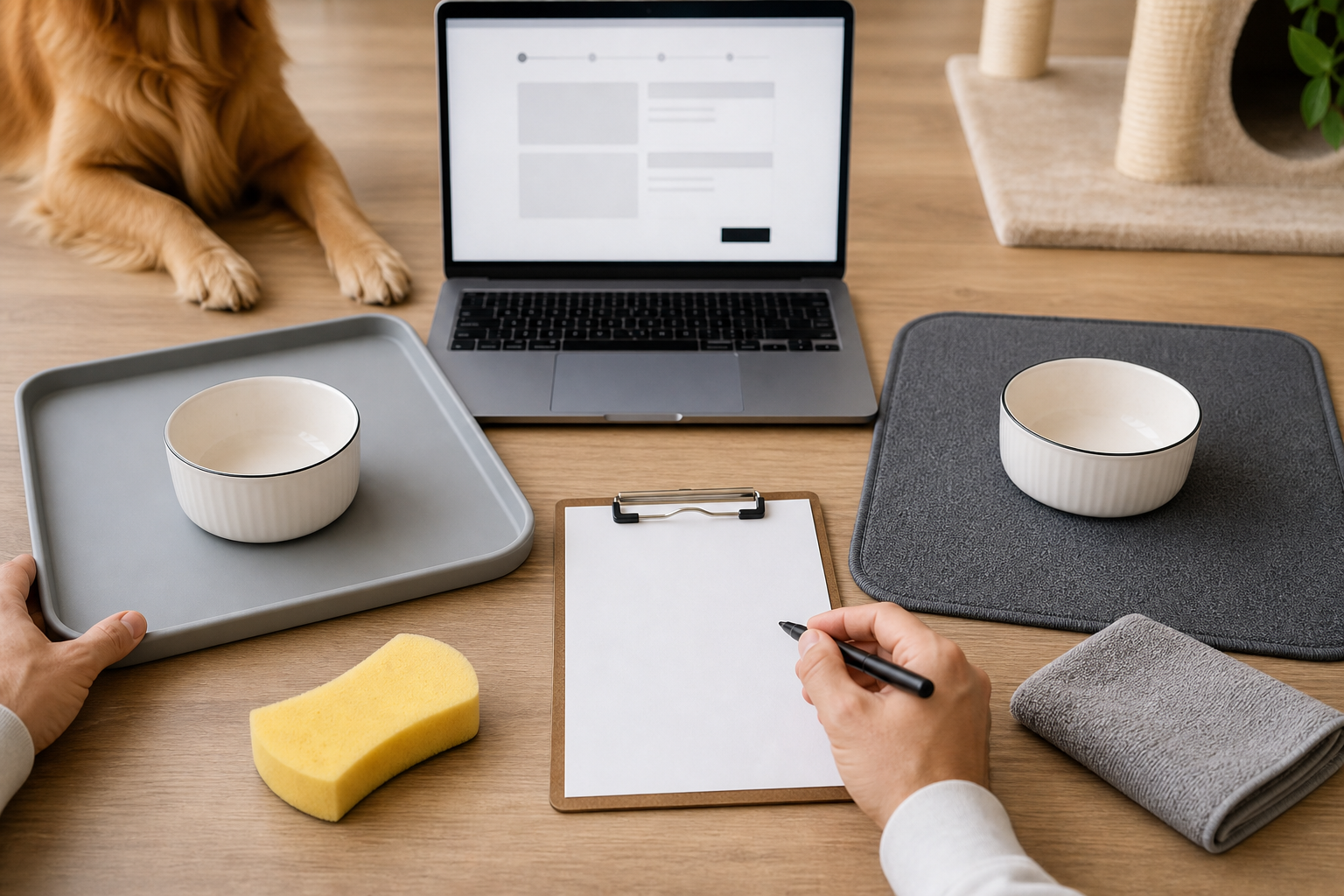
The Absorbent-Mat Claim Owners Misread
Many feeding mats are sold as absorbent, quick-dry, waterproof, non-slip or raised-edge. Those claims do not all mean the same thing.
An absorbent top can make the floor look dry, but it still has to dry fully between uses. A waterproof backing can protect the floor, but it can also trap moisture if water gets underneath. A silicone mat with raised edges can contain spills, but it may turn into a shallow puddle if your pet splashes heavily. A fabric-style mat may feel softer and quieter, but it can hold odor if it is not washable enough for your routine.
Before buying, ask what problem you are solving. A splashy water bowl needs size and quick drying. Wet food needs easy scrubbing. Kibble crumbs need a surface that shakes out or wipes clean. A senior pet that slips near the bowl may need grip more than absorbency. One mat rarely solves every feeding problem equally well.
Measure The Feeding Station, Not The Product Photo
Product photos often show small bowls placed neatly in the center of a generous mat. Real feeding stations are messier. Bowls move, water fountains need cord clearance, raised feeders take more footprint, and pets do not always keep their paws outside the splash zone.
Measure the full width of your bowl setup, then add room for spills around the outside. If your dog pushes the bowl forward while eating, include that movement. If your cat likes to pull food out of the bowl, measure where the food actually lands. If you use a fountain, check whether the mat lies flat under the base and does not block vents, pumps or cords.
Do not buy by species alone. A small dog with a wide water bowl can need more mat than a neat-eating large dog. A cat with a fountain and wet-food dish can need a different shape than a cat with one dry-food bowl. The mat has to match the station, not the label on the listing.
What To Verify Before Checkout
- Usable size: compare the mat dimensions with the actual bowl setup, including raised feeders, fountains and bowl movement.
- Cleaning method: check whether it is dishwasher-safe, machine-washable, hand-wash only or wipe-clean only.
- Drying time: avoid absorbent mats that stay damp in your space, especially under heavy water bowls.
- Edge design: raised edges help contain spills, but they also need to be easy to rinse and dry.
- Floor grip: look for a backing that will not slide on tile, vinyl or hardwood when a pet steps on it.
- Material fit: silicone, rubber, microfiber and stone-like absorbent mats clean differently and may suit different homes.
- Replacement cost: if the mat stains, curls, cracks or smells, you may need another one sooner than expected.
- Return terms: check whether used mats can be returned and who pays shipping if the size or material disappoints you.
Deal And Coupon Checks That Actually Matter
A feeding mat is exactly the kind of small pet item that gets added to a cart during a sale. Current Prime Day pet coverage has already listed absorbent placemats among early pet deals, but prices and availability can change quickly. Treat any discount as temporary unless the retailer confirms it in your cart.
Compare the final price after shipping, tax and any membership requirement. If you are buying from a marketplace, check who sells and ships the item, whether returns are free, and whether the listing gives real dimensions and cleaning instructions. A cheap mat with vague material wording, copied photos or no care guidance is not the same deal as a mat that clearly fits your bowls and cleaning routine.
Coupon stacking can also be limited. PetSmart’s coupon policy says coupons may not be valid with other discounts or offers, and retailer promotional terms often include exclusions, quantity limits and price changes. For Chewy, Petco, Amazon or any other retailer, verify the final cart before paying instead of assuming a sale banner applies to every size, color or seller.
What To Avoid
Avoid buying a mat that is smaller than your largest bowl tray just because the photo looks tidy. Also avoid mats with no cleaning instructions, heavy chemical odor, curled edges, rough seams, flimsy backing, or a surface that your pet immediately tries to chew or shred.
Do not use a feeding mat as an excuse to clean bowls less often. The mat catches mess. It does not make old food, standing water or dirty dishes safer. If wet food, raw food, vomit, urine or feces touches the mat, clean it promptly and follow the care label. If the material cannot be cleaned thoroughly, replace it.
For pets with allergies, skin sensitivity, repeated vomiting, appetite changes, sudden thirst changes or trouble eating, do not treat a new mat as the fix. Ask your veterinarian about the underlying issue and use the mat only as a cleanup and floor-protection tool.
A Better Buying Framework
Choose the feeding setup first, then the mat. Put the bowls, fountain or raised feeder on the floor and mark the area that actually gets wet or crumb-covered for a day. Then shop for a mat that covers that zone and can be cleaned as often as the mess requires.
For most households, the better short list is simple: enough size, stable grip, clear cleaning instructions, fast drying, no hidden return problem and no material your pet wants to chew. If you cannot confirm those points from the listing, the deal is weaker than it looks.
Quick Answers
Are absorbent pet feeding mats better than silicone mats?
Not always. Absorbent mats can help with splashes, while silicone mats are often easier to rinse and can hold spills with raised edges. The better choice depends on your pet’s mess pattern and how you clean.
How often should I clean a feeding mat?
Clean it whenever food or water collects on it, and follow the care label. If it sits under wet food or heavy water spills, it may need daily cleaning and full drying.
Can a feeding mat stop ants or pests?
No mat guarantees pest control. Clean spills quickly, store pet food properly, and do not leave old food sitting out.
What is the biggest checkout mistake?
Buying by the sale price before checking dimensions and cleaning instructions. A mat that is too small or hard to wash usually becomes a repeat purchase.
Sources
Last checked: June 20, 2026, 10:33 Europe/Rome.