
#cat litter box
#pet odor
#pet tech
#smart air quality monitor
#smart pet tech
A smart air quality monitor can be useful in a pet room, but it is a bad deal if you expect it to solve litter-box odor or pet dander by itself. Most monitors only report the things their sensors are built to detect, such as particles, VOCs, temperature or humidity. Before checkout, check the sensor list, app support, return window and whether you still need a separate cleaning or air-cleaning plan.
That matters right now because summer heat, closed windows, Prime Day-style pet deals and small apartment setups all make pet-room odor feel more urgent. It is easy to add a small connected sensor to the cart and assume it will tell you when the litter box, pet bed or air purifier needs attention. The useful version of this purchase is narrower: it can give you a trend signal, not a diagnosis and not a substitute for scooping, washing or ventilation.
What These Monitors Actually Measure
Read the specification table before you read the marketing headline. A basic indoor air quality monitor may measure particulate matter, VOCs, carbon dioxide estimates, temperature or humidity. Some models pair with an app or smart home routine. That does not automatically mean the device can identify cat urine, litter dust, pet dander, mold, cleaning spray or a specific odor source.
For pet owners, the most useful question is not “does it say pet air quality?” It is “what sensor is inside, and what will I do when the number changes?” A particulate sensor may help you notice dust spikes near a litter box, vacuuming routine or shedding area. A VOC reading may react to some household chemicals or odors, but it should not be treated as a precise litter-box ammonia test unless the manufacturer clearly says it measures that gas and explains the limits.
The Checkout Checks That Matter
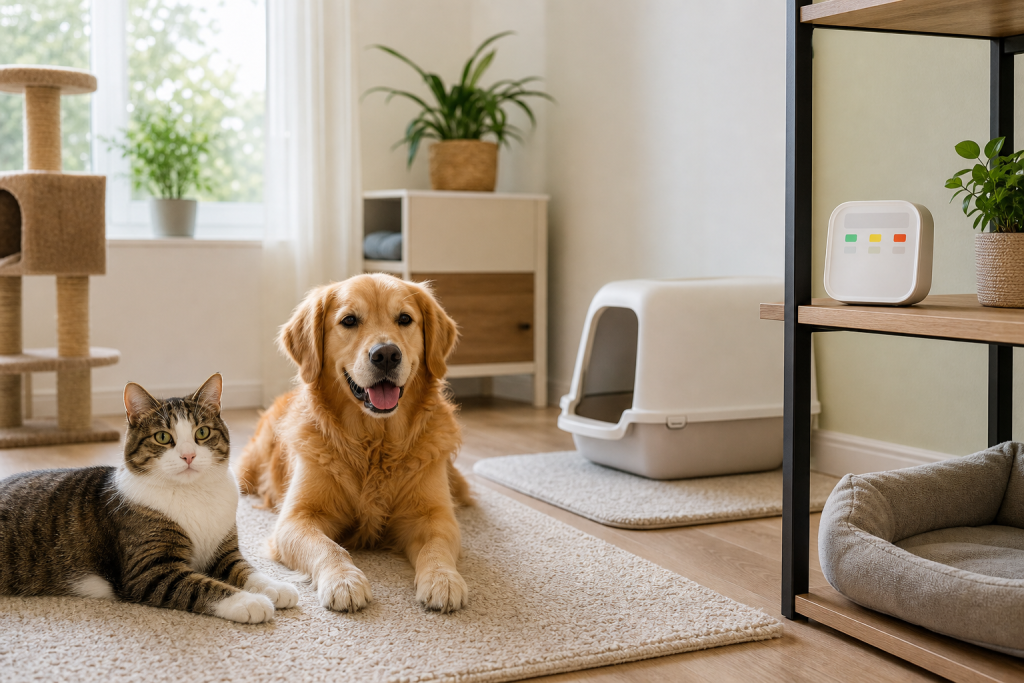
Start with the room, not the gadget. A monitor placed beside a litter box, dog crate, grooming table or pet bed has to be close enough to notice changes without being knocked over, chewed, sprayed, covered in litter dust or blocked by furniture. If the device needs wall power, check cord placement and whether your pet can reach it.
- Sensor list: Look for the exact pollutants or conditions measured, not only a general “air quality” score.
- Display and app: Make sure the device is still useful if the app is slow, the Wi-Fi drops or notifications are delayed.
- Software support: Connected monitors depend on updates, cloud services or apps. The FTC has warned that many smart product pages do not clearly say how long updates will continue.
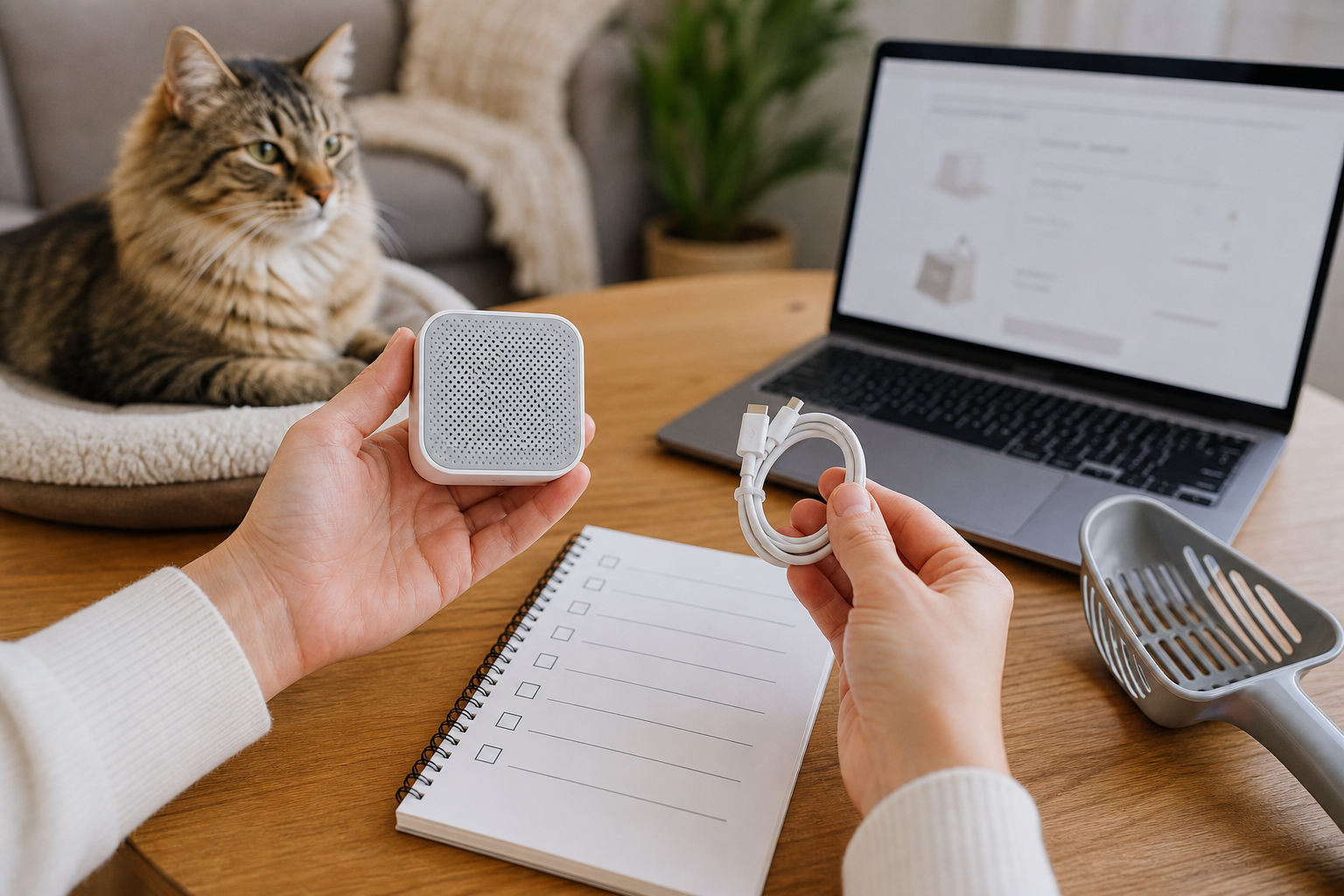
- Power and placement: Check battery life, charging cable length, outlet location and whether the unit can sit out of paw reach.
- Return terms: A sensor that does not react in your actual pet room is not worth keeping just because the deal looked good.
- Replacement costs: Some devices need no consumables, while others connect best with filters, hubs or smart home accessories.
The Litter-Box Mistake Owners Make
The monitor should not become permission to delay cleaning. The ASPCA says clean litter boxes matter for cat acceptance, and its guidance includes scooping at least daily and washing boxes weekly with warm water and unscented soap, baking soda or no soap. The CDC also treats items that touch poop or pee, such as litter boxes, as pet supplies that need regular cleaning and disinfecting.
If the app warns you after the room already smells bad, the better fix may be a larger litter box, more boxes in a multi-cat home, unscented litter, better location, more frequent scooping or a separate air cleaner sized for the room. If your cat suddenly changes litter-box habits, strains, cries, urinates outside the box or seems unwell, do not use a sensor reading to guess. Ask your veterinarian.
Deal And Coupon Checks Before You Pay
A discounted smart air monitor can be worth considering if it helps you compare routines or decide when to run an air purifier. The deal gets weaker when the listing hides the sensor type, overstates pet-specific odor detection, locks useful history behind a subscription or depends on an app with unclear support.
Before using a coupon, compare the final cart price with the same model at other retailers, check seller identity, confirm the return window, and look for the manufacturer support page. Do not pay extra for a “pet mode” unless the listing explains what changes. A cute app score is less valuable than a clear sensor table, stable warranty, good placement options and a return policy that lets you test it in the room where your pets actually live.
What To Avoid
Avoid ozone-generating air cleaners marketed as odor fixes for occupied pet rooms. The EPA and California Air Resources Board both warn against ozone-generating air cleaners in homes. A monitor may help you notice that a room needs attention, but it is not a reason to add a risky odor machine.
Also avoid vague listings that say “detects all pet smells” without naming the sensor, tiny units with no clear room-use guidance, and devices that require a phone app for every useful feature but do not explain update support. If a marketplace listing uses copied images, strange brand names or impossible claims, skip it.
Quick Answers
Can a smart air quality monitor detect cat litter odor?
Maybe, but only indirectly unless the manufacturer specifies the relevant gas or odor sensor. Many monitors show particles, VOC trends, humidity or a general score rather than identifying litter-box odor.
Is it better than an air purifier?
It does a different job. A monitor reports readings. An air purifier, if properly sized and maintained, is meant to move air through filters. You may need both, one or neither depending on the room.
Should I buy one for dog smell?
Only if you want a trend signal for the room. For dog odor, cleaning bedding, drying wet gear, grooming appropriately and washing bowls or soft items often matter more than another app.
What is the biggest buying mistake?
Buying the cheapest connected monitor without checking what it measures, whether it works without the app, and whether you can return it after trying it in the actual pet room.
Sources
Sources last checked June 23, 2026, 16:36 Europe/Rome.
- Federal Trade Commission, smart products and software update disclosure
- FTC Consumer Advice, securing internet-connected devices at home
- U.S. EPA, choosing the right portable air cleaner for the home
- U.S. EPA, ozone generators sold as air cleaners
- California Air Resources Board, air cleaning devices for the home
- ASPCA, litter box problems
- CDC, cleaning and disinfecting pet supplies