
#pet fire safety
#pet tech
#smart home
#smart smoke alarm
A smart smoke alarm can be a useful deal for pet owners, but only if it still works as a real alarm when the app, Wi-Fi or subscription is not perfect. The mistake is buying it like a normal gadget instead of a safety device that your dog or cat may depend on when no one is home. Before checkout, verify the alarm type, interconnection, app alerts, power backup, software support and return terms.
That matters right now because summer travel, longer workdays away from home and sale events can push pet owners toward quick smart-home buys. A discount on a connected smoke or carbon monoxide alarm is not automatically a bad deal. It becomes risky when the owner assumes a phone notification replaces proper alarm placement, monthly testing and a plan for who can respond if the alert arrives while the pets are inside.
Why Pet Owners Are Looking At Smart Alarms
Traditional smoke alarms are still the foundation. The National Fire Protection Association says working smoke alarms substantially reduce the risk of dying in a home fire, and the U.S. Fire Administration recommends alarms on every level, inside bedrooms and outside sleeping areas. For pet owners, the shopping question is narrower: if your dog or cat is home alone, will a connected alarm tell a person who can actually act?
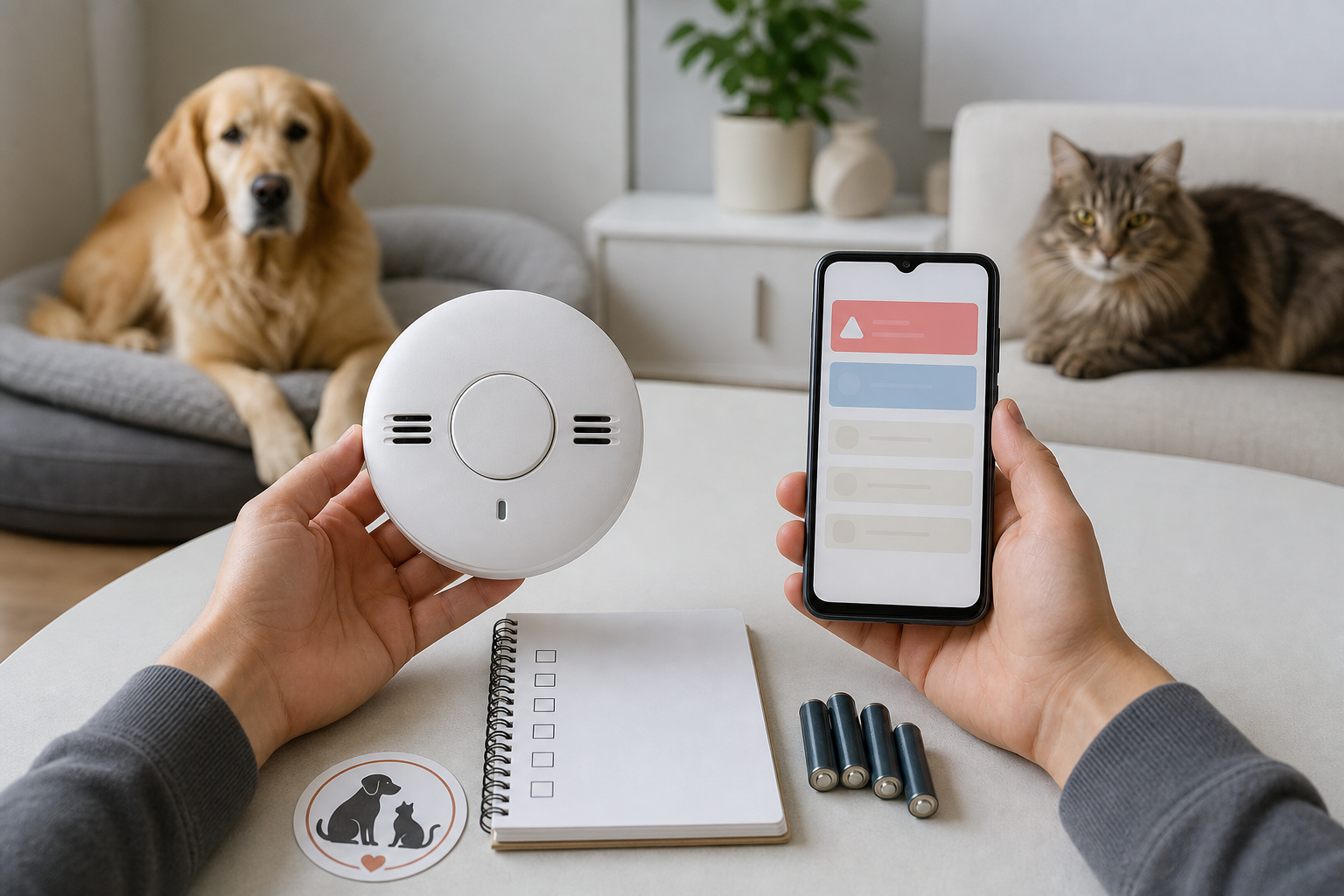
Smart alarms can add mobile notifications, low-battery notices, in-app testing or links to a monitored system. Those features can be valuable when you are at work, traveling or using a pet sitter. But they are add-ons, not permission to ignore the basics. If the alarm is poorly placed, too old, not interconnected where needed or dependent on a weak Wi-Fi setup, the app feature may not help when it counts.
The Checkout Checks That Matter Most
Start with the safety job, not the sale badge. Check whether the device detects smoke, carbon monoxide or both. If you need both, a smoke-only alarm with a flashy app may still leave a gap. Also check whether the unit is approved for the room where you plan to install it, whether it is battery powered or hardwired, and whether interconnected alarms are required or recommended for your home layout.
Then look at the alert path. A phone notification is only useful if the alarm can reach the internet, your phone can receive the alert, and someone nearby can respond. If you travel often, compare a simple app-only product with a professionally monitored system or a device that can share alerts with another trusted person. For renters, check what you are allowed to install before buying hardwired or adhesive-mounted equipment.
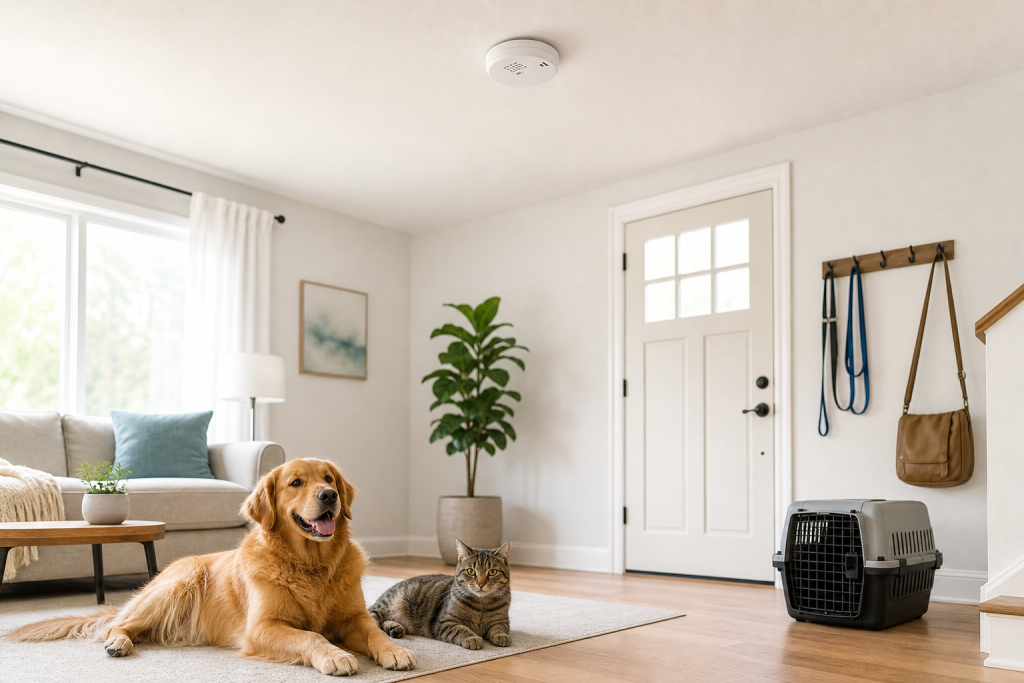
For homes with cats, curious dogs or free-roaming pets, think about false alarms and access. Kitchen placement, dust, steam and low batteries can create nuisance alerts. A product that constantly alarms may get disabled, which is worse than buying a simpler unit and maintaining it properly. Also keep leashes, carriers and emergency contact information in a place a sitter or responder can find quickly.
The Smart-Home Details Owners Skip
Connected alarms need long-term support. The Federal Trade Commission has warned that many smart-product listings do not clearly say how long software updates will be provided. That matters for any safety-adjacent device with an app, because outdated firmware, unsupported apps or a discontinued cloud service can reduce the value of the “smart” feature.
Before buying, find the manufacturer’s support page and look for firmware updates, app compatibility, warranty length, replacement sensor or battery rules, and what happens if the internet is down. A smart alarm should still sound locally even if the app is offline. If the listing is vague about local alarm behavior, app requirements or support duration, treat the discount as incomplete information.
Also check privacy. A smoke alarm is not usually as sensitive as a pet camera, but smart-home apps can still collect account, location, network and device data. Use a strong account password, enable available security features and keep the app updated. If the device requires permissions that do not fit the feature, pause before checkout.
Deal And Coupon Checks Before You Pay
Do not compare only the sticker price. A cheap smart alarm may need a hub, a paid monitoring plan, a specific smart-home platform, special batteries or a multi-pack to work as expected. If a coupon applies only to one unit, but your home needs several alarms, calculate the full setup cost before celebrating the deal.
Check the return window before installing. Some retailers treat opened electronics differently, and some hardwired products are harder to return after installation. Save the box until testing is complete. If you are buying during a short sale, verify the model number, battery type and compatibility instead of assuming every similar-looking alarm has the same features.
What To Avoid
Avoid buying a connected alarm only because it says “smart.” The practical features are remote alerts, local alarm reliability, clear battery or sensor-life notices and a support policy you can understand. Avoid no-name listings that make big safety promises but do not show certifications, installation instructions, support contacts or app details.
Do not use a smart alarm as a pet-sitting substitute. If your pet has separation anxiety, medical needs, heat sensitivity or escape risk, a detector does not solve those problems. It is one layer in a safer home plan: working alarms, fire prevention, emergency contacts, pet ID, accessible carriers and a person who can check on the animal when needed.
Quick Answers
Is a smart smoke alarm worth it for pet owners?
It can be, especially if pets are home alone and you need remote alerts. It is not worth paying extra if the product is poorly supported, incompatible with your home or unclear about how it works without Wi-Fi.
Do I need carbon monoxide detection too?
If your home has fuel-burning appliances, an attached garage or other CO risk, check local guidance and choose appropriate carbon monoxide detection. A smoke-only deal is not the same thing as smoke plus CO coverage.
Can a smart alarm contact firefighters?
Some alarms only notify your phone. Others can be part of a monitored security system. Read the plan terms carefully, because emergency dispatch usually depends on monitoring service, location, permissions and subscription status.
Should I replace all my alarms at once?
Check the age and type of your existing alarms first. The U.S. Fire Administration says smoke alarms do not last forever and recommends replacing them after 10 years. If one device is expired, others installed at the same time may be close too.
Sources
Last checked: June 24, 2026, Europe/Rome.
- National Fire Protection Association, smoke alarms
- U.S. Fire Administration, smoke alarms
- Federal Trade Commission, smart products and software update information
- Federal Trade Commission, securing internet-connected devices at home
- Tennessee State Fire Marshal, pet fire safety tips
- First Alert, smart smoke and carbon monoxide alarm feature examples