
#aquarium feeder
#automatic fish feeder
#fish supplies
#pet tech
#vacation pet care
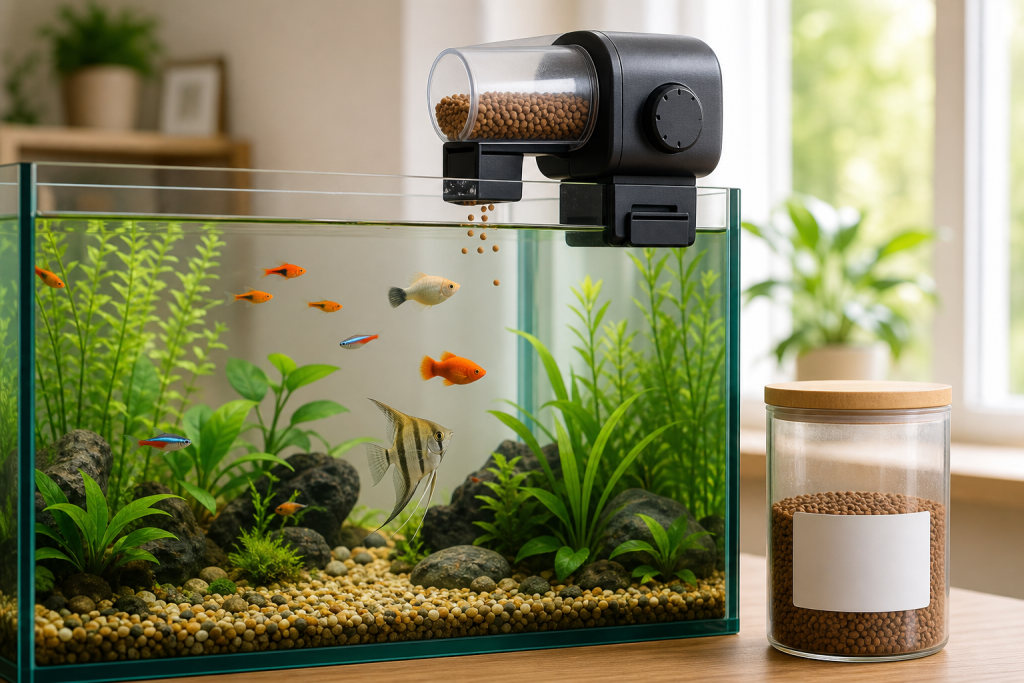
An automatic fish feeder can be a smart vacation buy, but only if it drops the right amount of dry food and fits your tank before you leave. The deal turns bad when the feeder clogs from moisture, dumps too much food, runs out of battery or sits over the wrong opening. Buy it early enough to test it for several days while you are still home.
Summer travel and deal events make automatic aquarium feeders tempting right now. They look simple in a cart: a timer, a food chamber and a promise that your fish will be fed while you are away. In practice, the cheapest feeder is not always the cheapest choice if it overfeeds the tank or cannot handle your food type.
Why This Matters Before Vacation
Fish feeding mistakes can affect more than the food bill. Aqueon warns that uneaten food can release ammonia and nitrite as it decomposes, and Petco’s fish-care guidance says overfeeding is one of the most common mistakes aquarium owners make. That is why an automatic feeder should be treated like a small life-support purchase, not a last-minute travel gadget.
Chewy’s vacation fish-care guide notes that automatic feeders are usually meant for dry foods such as flakes, pellets or freeze-dried foods. That detail matters. If your fish normally eat frozen food, wafers, very tiny fry food or mixed textures, a basic rotating drum may not feed evenly.
The Checkout Checks That Matter
Start with the food opening, not the headline discount. Some feeders need a hood cutout or a stable rim mount. Fish Mate F14 instructions say the feeder is normally positioned over a feeding hole, and the guidance cautions against placement on a condensation tray because excess moisture can cause food clogging.
Then check the food format. Flakes can bridge, pellets can pour too quickly and powdery foods can clump. If the listing only says “flakes and pellets” without showing portion adjustment, mounting options and battery access, treat the discount as incomplete information.
- Confirm the feeder fits your lid, rim or feeding hole.
- Check whether it handles your exact food type and pellet size.
- Look for adjustable portions, not just adjustable feeding times.
- Prefer a clear low-battery signal or an easy battery check.
- Make sure you can return it after a dry setup test if it does not fit.
Do Not Skip the Test Week
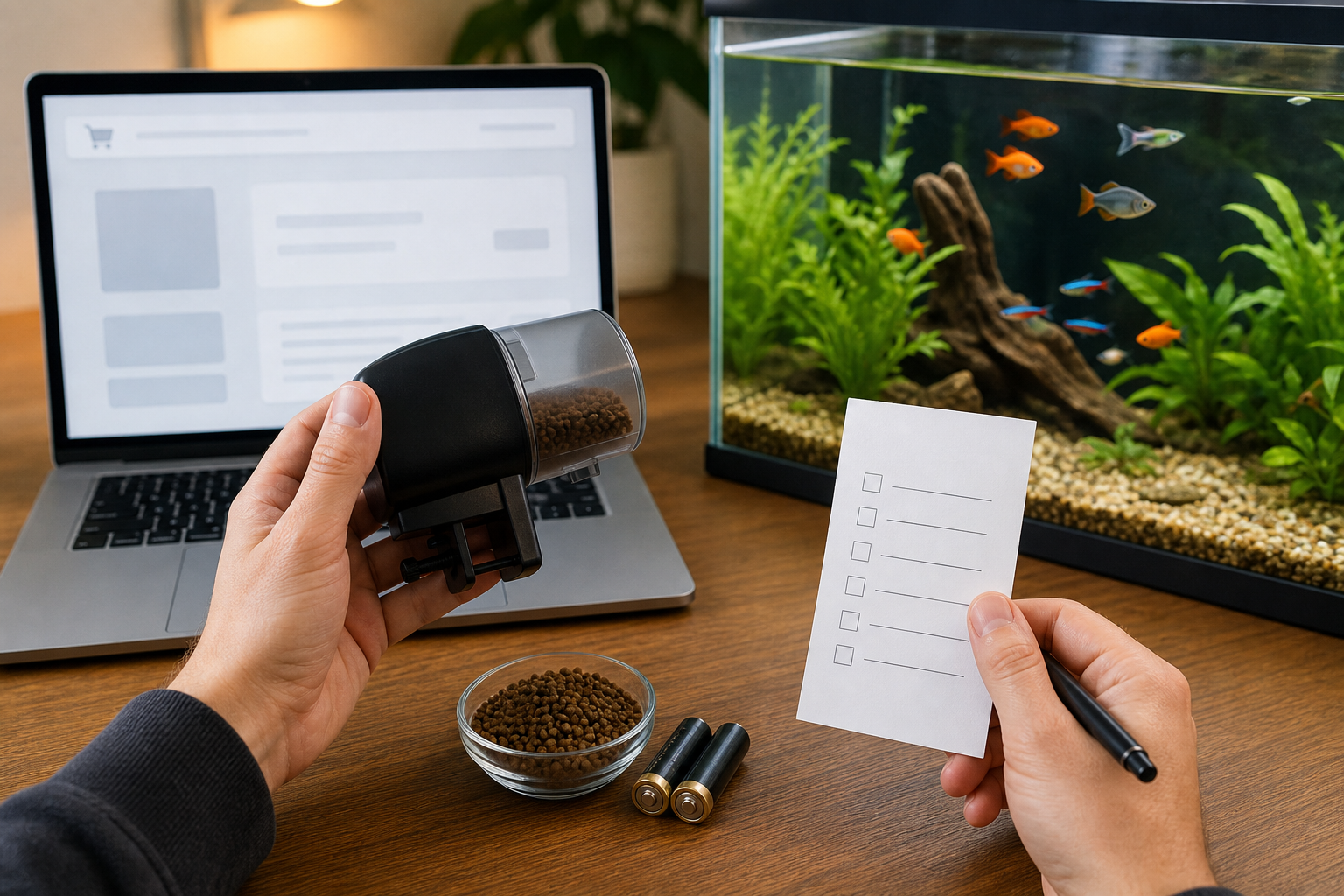
The most useful feature is not the app, the screen or the number of daily feedings. It is predictable portion control. Run the feeder into a cup first, then run it over the tank while you are home and remove any uneaten food after a normal feeding window.
Watch for food collecting at the opening, damp flakes, weak batteries, fish missing the food because of water flow, or a portion that looks small in your hand but clouds the tank after several cycles. If the feeder cannot pass a short home test, do not trust it during a trip.
Deal And Coupon Checks
Automatic fish feeders are often inexpensive compared with dog and cat tech, which makes a low price easy to overvalue. Before paying, compare the final delivered price, batteries, mounting accessories, return window and whether the same model is sold by a third-party marketplace seller. A cheap listing with vague instructions can cost more if you need a replacement before the trip.
Do not assume a sale badge means the feeder is the right one for your tank. If you are buying during Prime Day or another retailer event, verify the current cart price, shipping date and return policy. A feeder arriving the night before departure is not a deal because you lose the test period.
What To Avoid
Avoid using an automatic feeder for the first time after you have already left. Avoid filling it with damp food, mixed food textures or anything the manufacturer does not say it can dispense. Avoid placing it directly above heavy splash, bubbles or condensation, since moisture is one of the easiest ways to turn dry food into a plug.
Also avoid treating an automatic feeder as a substitute for all aquarium checks. It does not test water, replace evaporation, fix a failing filter or notice a power outage. For longer trips, a trusted person who can check the tank may still be worth more than another gadget.
Quick Answers
Can an automatic fish feeder overfeed?
Yes. If the opening is too large, the food is too small or the timing is too frequent, it can add more food than the tank can handle. Test the portion before relying on it.
Should I buy one right before leaving?
No. Buy early enough to test the mount, battery, portion and food flow for several days while you are home.
Are app-connected feeders automatically better?
Not necessarily. For a short trip, reliable dry-food dispensing, fit and battery performance matter more than an app feature you do not need.
What if my fish eat frozen or special food?
Check the feeder instructions closely. Many basic vacation feeders are designed for dry foods, not frozen food or every specialty diet.
Sources
Sources last checked June 26, 2026, 07:33 Europe/Rome.