
#pet tech
#reptile heat mat
#reptile supplies
#reptile thermostat
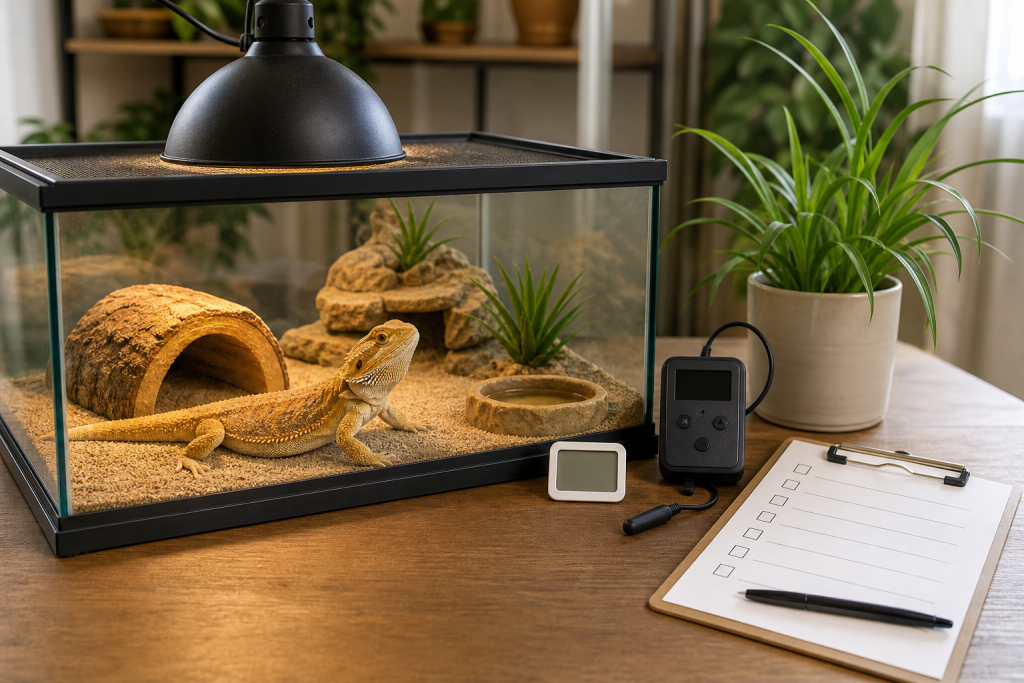
A cheap reptile thermostat deal can be a bad buy if it does not match the heater, probe placement and temperature range your enclosure needs. The real mistake is treating the thermostat as an optional add-on or trusting the controller display without a separate thermometer. Before checkout, make sure the controller type, wattage rating, return terms and backup temperature checks fit the species you actually keep.
That matters now because reptile heat mats and thermostat bundles are easy to find in pet-supply marketplaces, and many look similar at first glance. A low price can hide the part that matters most: whether the device can safely control the exact heat source you are buying and whether you can verify the temperature inside the terrarium after setup.
Why the thermostat is not the accessory to skip
Reptiles depend on their environment to warm up and cool down, so a terrarium should give them a usable warm end and cool end. The RSPCA’s corn snake guidance says a thermostat must be used with all heat sources, and it also says temperatures should be checked with separate digital thermometers because thermostats are not always accurate.
The same pattern appears across reptile species. RSPCA guidance for royal pythons says a heat lamp should be connected to a thermostat, with the probe placed at the animal’s level, and that heat mats used for smaller enclosures must also be controlled by an on/off thermostat. Its bearded dragon care sheet says heat lamps should be guarded and that a thermostat must be used with all heat sources.
For shoppers, the takeaway is simple: a bundle that includes a mat but no real controller is not automatically cheaper. You may still need to buy the thermostat, a thermometer for the warm end, another for the cool end and possibly an infrared thermometer before the setup is ready.
The checkout check most buyers miss
Do not buy by wattage, tank size or the word “digital” alone. Match the thermostat to the heat source first.
- Heat mat: look for an on/off thermostat and check where the probe is meant to sit.
- Heat lamp: check whether the thermostat type is suitable for a light-emitting heat source, and make sure the lamp has a guard where appropriate.
- Ceramic heater or non-light heat source: confirm the thermostat supports that device type and the total wattage.
- Multi-device setup: do not assume one bargain controller can safely run every heater in the enclosure.
- Species needs: check a species-specific care source or ask a reptile vet before setting the target temperature.
Retailer product pages can be useful, but they are not a full husbandry plan. For example, PetSmart’s Zoo Med ReptiTemp listing describes a digital thermostat with a stated temperature range and wattage capacity, while Zoo Med’s own product page lists the remote sensor cable and heating/cooling load limits. Those details are exactly the kind of specifications to compare before you click a discount badge.
Why a thermometer still belongs in the cart
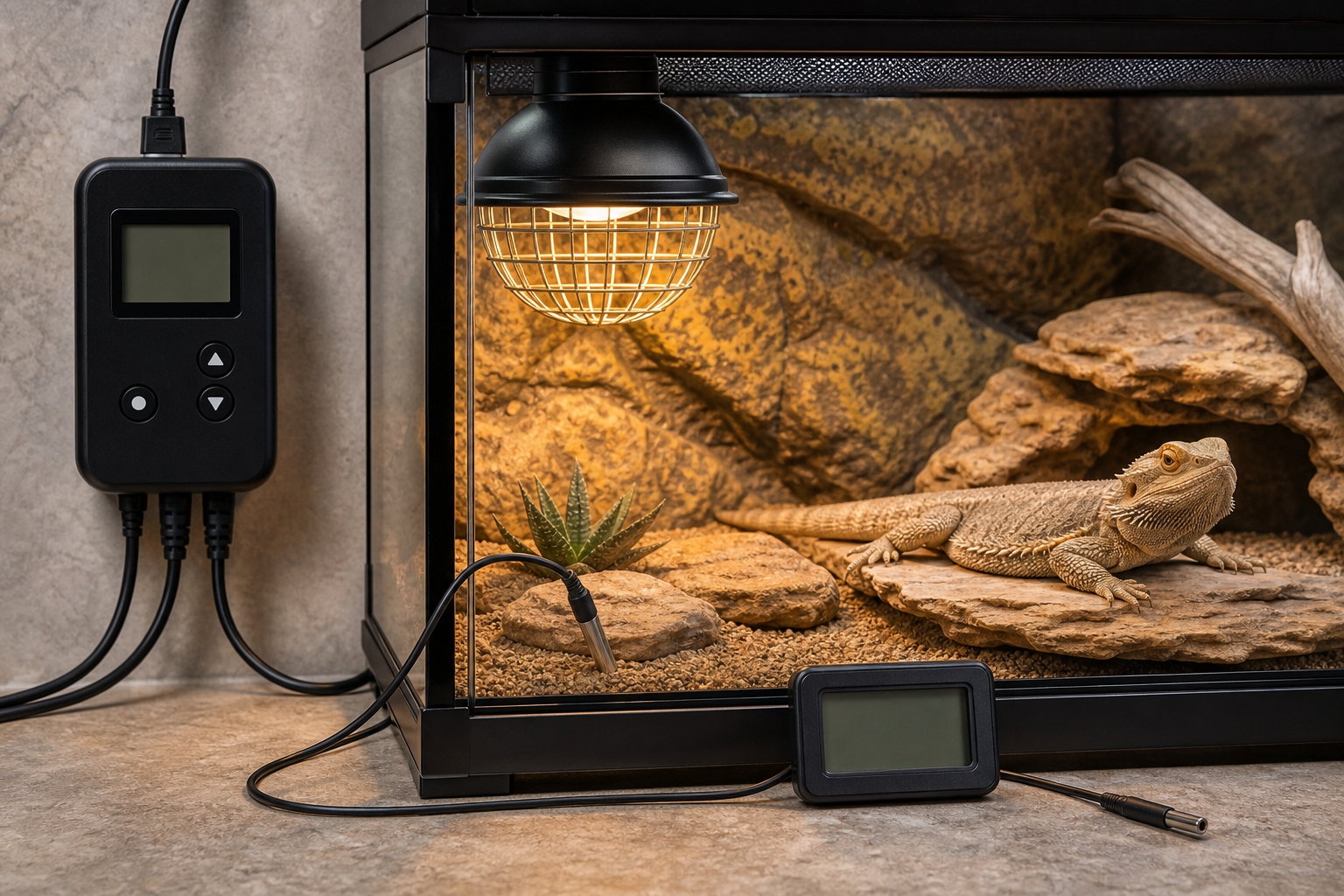
A thermostat controls power. A thermometer helps you verify what the animal is actually experiencing. Those are not the same job.
The RSPCA’s corn snake page recommends checking temperatures at the basking zone and cool end, and its royal python guidance says owners should record temperatures at each end of the enclosure with an infrared thermometer at the animal’s level. That is a shopping clue: if your cart has only a heat mat and a thermostat, it may still be incomplete.
Look for an independent thermometer that can be placed where it matters, not just a decorative display stuck to the glass. A second thermometer for the cool end can be worth more than a fancier thermostat screen, especially in a room that changes temperature during summer, winter or a heatwave.
Deal and coupon checks before you pay
Reptile heating gear is often sold as a bundle, which makes the deal look tidy. Before paying, compare the bundle against the same pieces bought separately.
- Check whether the thermostat is included or whether the mat only has a manual dial.
- Check the controller’s maximum wattage against the heater you plan to plug in.
- Read whether sale or promo-code exclusions apply to reptile equipment.
- Check return rules before opening adhesive heat mats, bulbs or electrical accessories.
- Keep screenshots of the exact product specs, not just the sale price.
PetSmart’s promotional-terms page is a good reminder that discounts can have exclusions, eligibility rules and checkout-code requirements. Retailer deal pages can also change quickly, so avoid treating a visible sale badge as proof that a complete setup is cheaper.
For electrical pet gear, the return window matters more than it does for a toy or bowl. You need enough time to set up the enclosure, monitor the warm end and cool end, confirm the probe placement, and decide whether the controller is easy enough to use every day.
What to avoid
Avoid any listing that makes temperature control sound automatic while hiding the actual controller type. Be cautious with vague claims such as “safe temperature” if the page does not state the range, load rating or intended heat source.
Do not place a new heater into service and leave the animal unattended before you have checked the enclosure over time. RSPCA guidance repeatedly warns that thermostats are not always accurate, so the first setup day is a test period, not a victory lap.
Also avoid buying a bigger heater just because it is discounted. More wattage is not automatically better in a small enclosure. The goal is a controlled gradient that lets the reptile choose a warmer or cooler area, not one hot box.
A practical buying checklist
- Find a species-specific temperature source before shopping.
- Choose the heat source first, then match the thermostat type.
- Confirm wattage/load capacity and sensor cable length.
- Buy separate thermometer coverage for the warm and cool zones.
- Check whether the lamp needs a guard or whether the mat must be outside the enclosure.
- Test the setup before relying on it for a full day or overnight.
- Keep packaging until the return window has passed.
Quick answers
Can a reptile heat mat be used without a thermostat?
You should not treat a thermostat as optional. RSPCA species guidance says heat mats and other heat sources should be controlled by suitable thermostats, and temperatures should still be checked separately.
Is the display on the thermostat enough?
No. Use an independent thermometer or infrared thermometer to verify the basking area and cool end at the animal’s level.
Is a thermostat bundle always a better deal?
No. It is only a good deal if the included controller matches your heat source, wattage, probe placement and return-window needs.
Should I choose temperatures from a product listing?
Use product listings for specifications, not as your only care source. Check species-specific guidance and ask a reptile vet if you are unsure.
Sources
Sources last checked: August 10, 2026, 04:37 CEST, Europe/Rome.
- RSPCA, How To Care For a Corn Snake.
- RSPCA, How To Care For a Royal Python.
- RSPCA, How To Care For a Leopard Gecko.
- RSPCA, Bearded Dragon Care Sheet.
- Zoo Med, ReptiTemp Digital Thermostat product information.
- PetSmart, Promotional Terms.