
#litter box odor
#pet room dehumidifier
#pet supplies
#pet tech
A dehumidifier can be a smart pet-room buy, but only if you treat it as moisture control, not a magic odor remover. The mistake is buying the cheapest compact unit for a litter area, food storage corner or basement pet room without checking capacity, drainage, noise, heat output and cleanability. In a humid home, the wrong unit can fill its tank constantly, run loudly near a nervous pet and still leave the real litter or ventilation problem untouched.
Why this matters now
Late June is a bad time to guess on indoor moisture. Many pet owners are dealing with summer humidity, closed windows, air conditioning, litter boxes, damp basements, wet towels, dog gear and bulk pet food stored in the same rooms. That is exactly when dehumidifiers, air purifiers and odor gadgets start showing up in seasonal deals.
The useful part is real: the U.S. EPA says moisture control is central to preventing mold growth, and ENERGY STAR notes that dehumidifier capacity should match both room size and dampness. For pet owners, that means a dehumidifier may help a humid litter room, basement feeding area or laundry space feel less damp. It does not replace scooping, washing bowls, sealing food bags, fixing leaks, running ventilation or choosing the right litter routine.
The checkout mistake: buying by square footage alone
Many product pages lead with a big room-size number, but the more useful spec is how much water the unit can remove in 24 hours and how it handles that water. A tiny tank in a damp room can become a daily chore. A larger unit without a drain hose may still be annoying if you have to empty it before work and again at night.
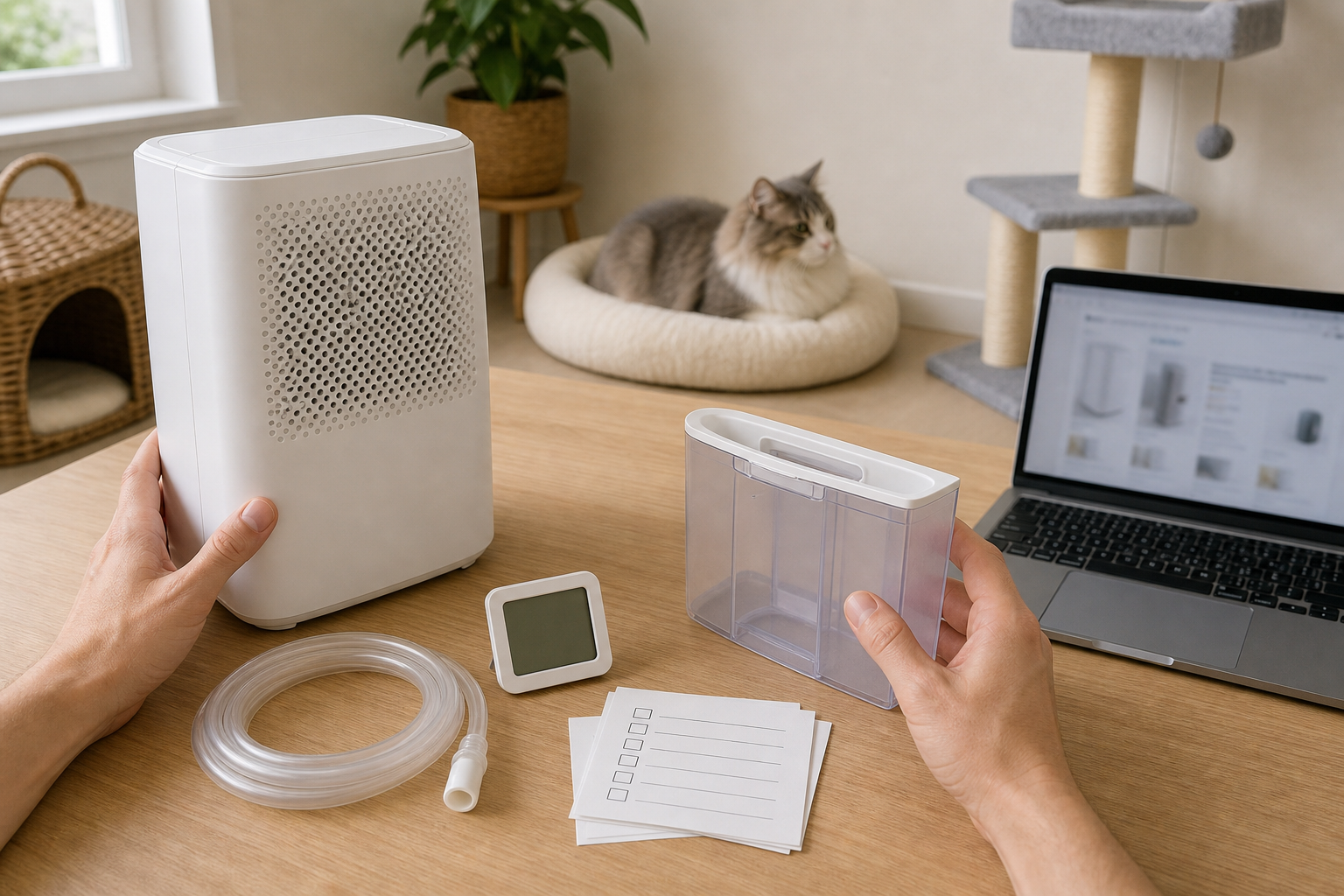
Before you buy, check these details in the listing and manual:
- Capacity: ENERGY STAR explains that capacity is measured in pints per 24 hours. A bathroom-sized mini unit may not be enough for a damp basement or multi-pet room.
- Tank size: The removal capacity and tank capacity are not the same thing. A unit can remove far more water per day than its bucket holds.
- Continuous drain option: If the room has a safe drain location, a hose can make the unit easier to live with. Check whether the hose is included.
- Auto shutoff and restart: Auto shutoff helps prevent overflow. Auto restart matters if the power blinks while you are away.
- Noise level: A loud compressor beside a litter box, crate, bed or feeding station may make the area less comfortable for your pet.
- Heat output: Dehumidifiers can warm a small room while running. That matters in summer pet areas.
- Filter and bucket cleaning: Pet hair and dust can build up fast. If cleaning is awkward, the deal gets worse.
Where a dehumidifier helps pet owners
A dehumidifier is most useful when the pet problem is tied to moisture. Think damp basement litter areas, musty laundry rooms where dog towels dry, humid mudroom feeding corners, or a room where clumping litter seems to break down faster than it should.
It is less useful when the problem is mainly waste, poor ventilation, dirty plastic, stale food, clogged filters or a product that simply does not fit your routine. If a litter box smells because it is not scooped enough, a dehumidifier may make the room feel drier but it will not fix the source. If pet food smells rancid, the better checkout move is to review storage and bag freshness, not to perfume or dry the air around it.
The deal section: what to verify before paying
Do not treat a dehumidifier discount as a simple appliance deal. Pet rooms add extra wear: fur, dust, litter tracking, water splashes, curious noses and cramped placement. A low price only works if the unit fits your room and routine.
Before checkout, verify the return window, shipping cost, warranty length, filter availability and whether the retailer treats opened appliances differently. If the deal is on a marketplace listing, confirm the seller name, model number and included accessories. A missing hose, small bucket or no clear warranty can erase the savings.
If the model is app-connected, use the same pet-tech skepticism you would use for a camera or smart feeder. Check whether the app is required for basic controls, whether schedules work from the device panel, what data the app collects and whether the product still works if the Wi-Fi is down. A dehumidifier should not become useless because a cloud feature changes.
What to avoid in pet rooms
Avoid placing the unit where a pet can chew the cord, tip the bucket, block the intake or sleep directly against warm exhaust. Keep it away from litter dust clouds when possible, because dust can shorten filter life and make cleaning harder. Do not put it where it blocks a litter box entrance or narrows a pet’s escape path.
Be careful with scented add-ons, ozone devices or odor claims that sound too broad. The EPA says moisture control matters for mold prevention, but a dehumidifier is not a medical device and is not a substitute for professional help if you see widespread mold, water damage or respiratory concerns in people or pets. If your pet is coughing, avoiding a room, having litter-box changes or showing any sudden behavior change, ask your veterinarian instead of treating the appliance as the answer.
A practical buying checklist
- Measure the room and note whether it is mildly damp, very damp or wet after rain.
- Choose capacity based on room size and dampness, not just the biggest marketing number.
- Decide whether you can use continuous drainage safely.
- Check tank access, filter access and cleaning instructions.
- Look for auto shutoff, restart behavior and a clear humidity setting.
- Keep cords protected and place the unit where pets cannot climb on it.
- Do not count it as a crash fix for litter odor, mold, leaks or food spoilage.
Quick answers
Will a dehumidifier remove litter box odor?
It may help if excess humidity is making the room feel damp or making litter clump poorly, but it will not replace scooping, washing the box, ventilation or using a litter your cat accepts.
Is a mini dehumidifier enough for a pet room?
Sometimes, for a small closet-like space with mild humidity. For a basement, laundry room or multi-pet area, check the pint-per-day capacity and tank size before trusting a compact model.
Should I buy a smart dehumidifier for pets?
Only if the core appliance specs are right first. App alerts and schedules are useful, but capacity, drainage, noise, cleaning and safe placement matter more.
Can I run it near pet food?
Do not rely on a dehumidifier to rescue poorly stored food. Keep dry pet food sealed in its original bag inside a clean container when possible, and follow FDA storage guidance.
Sources
Last checked: 2026-06-27 22:37 Europe/Rome.
- U.S. EPA, A Brief Guide to Mold, Moisture and Your Home.
- ENERGY STAR, Dehumidifiers.
- FDA, Proper Storage of Pet Food & Treats.
- CDC, Cats, Healthy Pets, Healthy People.