
#automatic litter box
#cat litter
#litter box refills
#pet tech deals
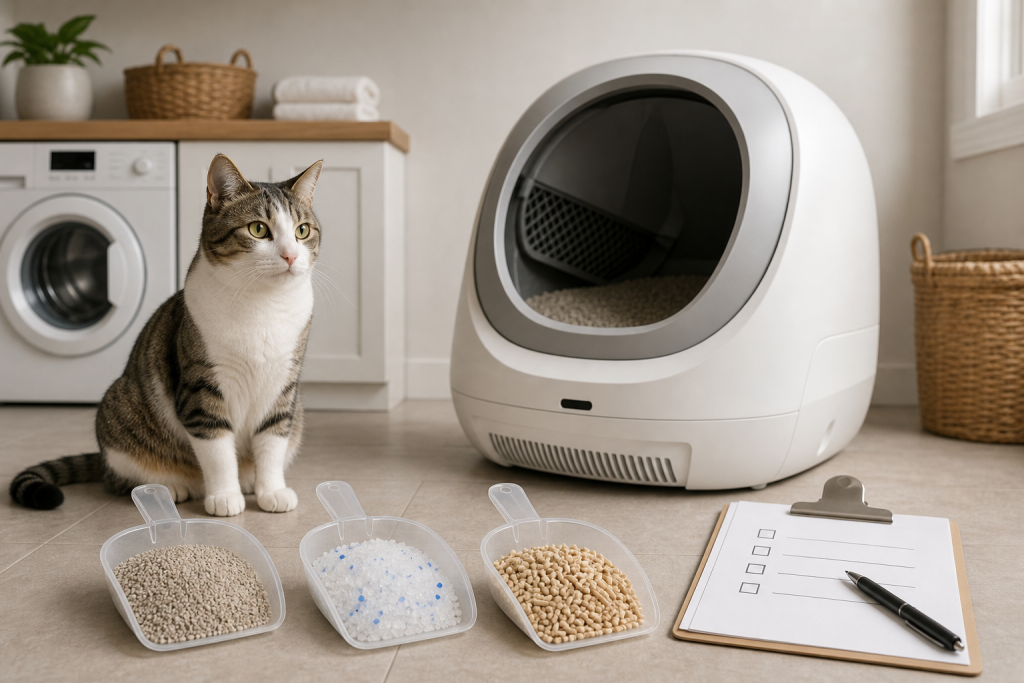
An automatic litter box deal can fail if the litter in your cart does not match the machine. Some models need fast-clumping clay, some rely on crystal trays, and some advertise wider compatibility but still perform best with a specific texture. Before you pay for the robot, check the litter rule, the refill cost and the return terms together.
That detail matters more right now because smart and self-cleaning litter boxes are still one of the most visible cat-tech upgrades. Trend Hunter’s pet category recently flagged “automatic box-specific cat litters” as a current pet-shopping signal, and official product pages show why: the box mechanism, sensors and waste drawer are often built around a particular litter behavior. A discount on the hardware is useful only if the recurring litter works for your cat and for the machine.
Why the wrong litter changes the whole deal
A self-cleaning litter box is not just a covered pan with a motor. It has to wait long enough for waste to clump, sift clean litter back into the bed, move clumps into a drawer and avoid cycling while your cat is inside. If the litter is too loose, too dusty, too large, too sticky or the wrong color for the sensors, the box can become messier and more expensive than the old scoop.
Whisker’s official Litter-Robot litter guide says its system requires clumping litter, and it warns that non-clumping, absorbent, newspaper-based and many pellet litters should not be used. The same guide notes that some translucent or white crystal litters can affect level and drawer-full accuracy on newer Litter-Robot models. That does not mean every other machine follows the same rule, but it does prove the checkout question is real.
PetSafe’s ScoopFree Crystal Classic takes a different route. Its product page describes crystal litter and disposable trays as part of the cleaning system, with sensors that keep scooping from happening while the cat is present. PetSafe’s own buying guide also says the mechanism determines the litter you can use, and it separates crystal-tray systems from clumping or “any litter” drum-style options.
The checkout checks to make before buying
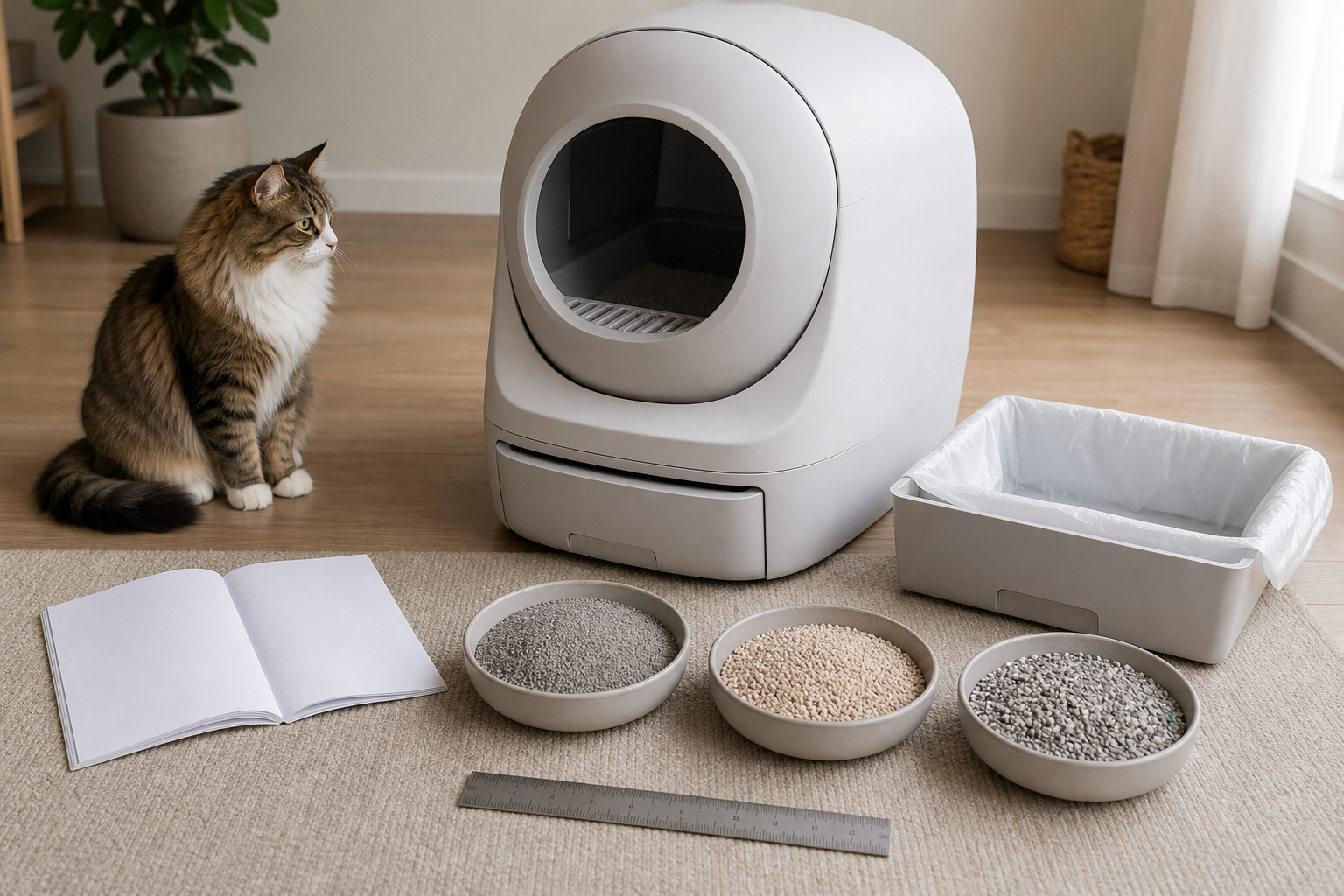
Start with the manual or official product page, not a short marketplace title. Search for the words “clumping,” “crystal,” “tray,” “pellet,” “tofu,” “sifter,” “warranty” and “sensor.” If the product page says “works with most litter,” look for the exception list. “Most” can still exclude the litter your cat already accepts.
- Litter type: confirm whether the box needs clumping clay, crystal trays, proprietary refills or a specific sifter.
- Clump timing: check whether the cycle delay can be adjusted. Fast cycling with weak clumps can smear the globe or rake.
- Particle size: pellets and oversized granules may not pass through some screens, while very fine litter can track or dust more.
- Sensor behavior: look for official notes about litter color, dust, drawer-full readings and weight tracking.
- Refill math: compare the cost of trays, liners, carbon filters, odor packs and brand-specific litter over several months.
- Return shipping: automatic boxes are bulky. A return window is less helpful if you must pay expensive return freight.
The strongest deal is often the one that lets your cat keep a familiar unscented litter while still letting the machine sift cleanly. If switching litter is required, do not assume your cat will accept the change just because the box is expensive. Buy from a seller with a realistic trial window, keep the packaging until your cat is using the box consistently and test the litter before stocking up on refills.
When a cheaper box becomes a refill bill
A low hardware price can hide a high repeat cost. Crystal-tray systems may simplify cleanup, but the tray is part of the ongoing purchase. Some rotating boxes work with common clumping litter, but may still sell branded liners, odor packs, filters, mats or litter subscriptions. None of that is automatically bad, but it belongs in the price comparison.
Before paying, build a three-month estimate. Include the box, the first litter fill, replacement litter, liners or trays, odor-control parts, shipping and any subscription or app cost if the model uses one. Then compare that number with your current litter setup. The robot may still be worth it, especially for people who struggle with daily scooping, but the honest deal price is the system price.
Also check whether the first bundle includes enough litter to test the box properly. A bundle that includes one small bag may not reveal tracking, odor or clumping problems until after the return period. If the seller offers a discount only when you add a large refill pack, make sure the refill is compatible with the exact model and not simply the same brand family.
What to avoid
Avoid buying an automatic litter box from a listing that does not clearly identify the litter type, compatible refill parts, cat weight range and safety sensors. Avoid using random pellets or non-clumping litter in a machine that requires clumps to sift. Avoid scented litter as a shortcut if your cat dislikes fragrance or has already shown litter-box avoidance. If your cat suddenly avoids the box, urinates outside it, strains or changes bathroom habits, treat that as a reason to call your vet, not as a reason to keep testing gadgets.
Be careful with “universal” claims. A box may physically run with many litters, but still clean better with a premium clumping litter. Another box may work well with crystal trays but become expensive if you dislike disposable refills. The right answer is not one litter for every cat. It is the litter your cat will use, in a machine that can actually process it.
Deal and coupon checks
If you find a coupon, apply it to the complete cart before deciding. Some offers exclude bundles, refills, replacement parts or subscription items. Some retailers show a sale price on the box but charge full price for the refills you will need next month. For marketplace listings, confirm the seller, warranty path and return address before you rely on the discount.
Do not buy extra litter just because it unlocks free shipping unless you know the cat and the machine both tolerate it. Cat litter is heavy, storage takes space and opened bags may not be returnable. A smaller first order can be the cheaper move when the whole setup is still untested.
Quick answers
Do all automatic litter boxes use the same litter?
No. Some need clumping litter, some are built around crystal trays, and a few advertise broader compatibility. Check the official manual for the exact model before buying refills.
Is proprietary litter always a bad deal?
No. It may be convenient and cleaner for a specific machine. The mistake is treating the hardware discount as the full cost while ignoring tray, liner, litter and shipping costs.
Should I switch my cat’s litter at the same time as the box?
Only if the machine requires it, and even then make the change slowly when possible. A new box and a new litter texture can be too much change for some cats.
Sources
- Whisker Litter-Robot official guide, “What’s the Best Litter for Litter-Robot?”
- Whisker Litter-Robot “How It Works” product information.
- PetSafe ScoopFree Crystal Classic official product page.
- PetSafe “Best Automatic Litter Box” buying guide.
- Trend Hunter Pets Trends page, used as a demand and trend signal.
Sources last checked: August 20, 2026, 12:35 CEST, Europe/Rome.