
#cat door latch
#cat litter box access
#dog proof litter box
#pet supply deals
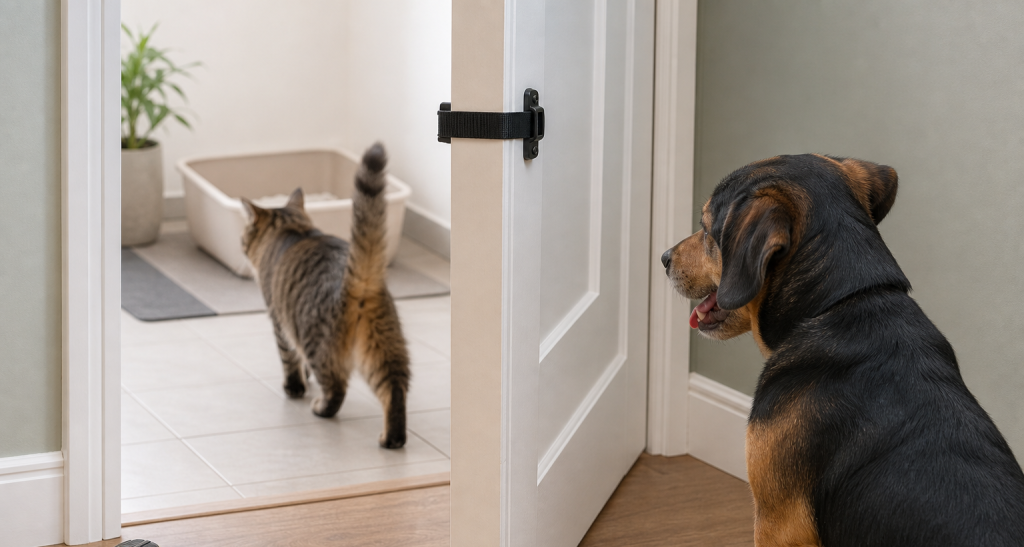
An indoor cat door latch can keep a dog out of the litter room, but only if the gap is sized for your cat and too narrow for your dog. The mistake is buying the cheapest strap or prop before checking the door, the mount and your pets’ actual body widths. If the dog can nose through, chew the strap or block the doorway, the deal has not solved the problem.
These simple latches are showing up across pet-supply search results because they promise a cheaper alternative to a pet gate, a cut-in cat door or a covered litter box. That can be a good buy for a mixed cat-and-dog home, especially when a dog raids the litter box or steals cat food. It is still a piece of access hardware, not magic. The wrong fit can make the cat avoid the box or give the dog a new puzzle to beat.
Why this little latch matters right now
Summer shopping tends to push owners toward travel carriers, flea products and cooling gear, but everyday house setup problems do not pause. Marketplace search surfaces currently show multiple adjustable “cat door latch” and “keep dog out of litter box” products, and the pitch is almost always the same: leave an interior door open just enough for the cat while stopping the dog.
The idea fits real behavior advice. The ASPCA says litter boxes should be easy to access and away from places where a cat may feel trapped or intimidated, including areas near a dog’s food and water. Wisconsin Humane Society also recommends giving cats easy access to food, water and litter without having to cross paths with a new dog. A latch can support that setup, but only if it protects the cat’s route instead of narrowing it into a stressful bottleneck.
The checkout check most owners skip
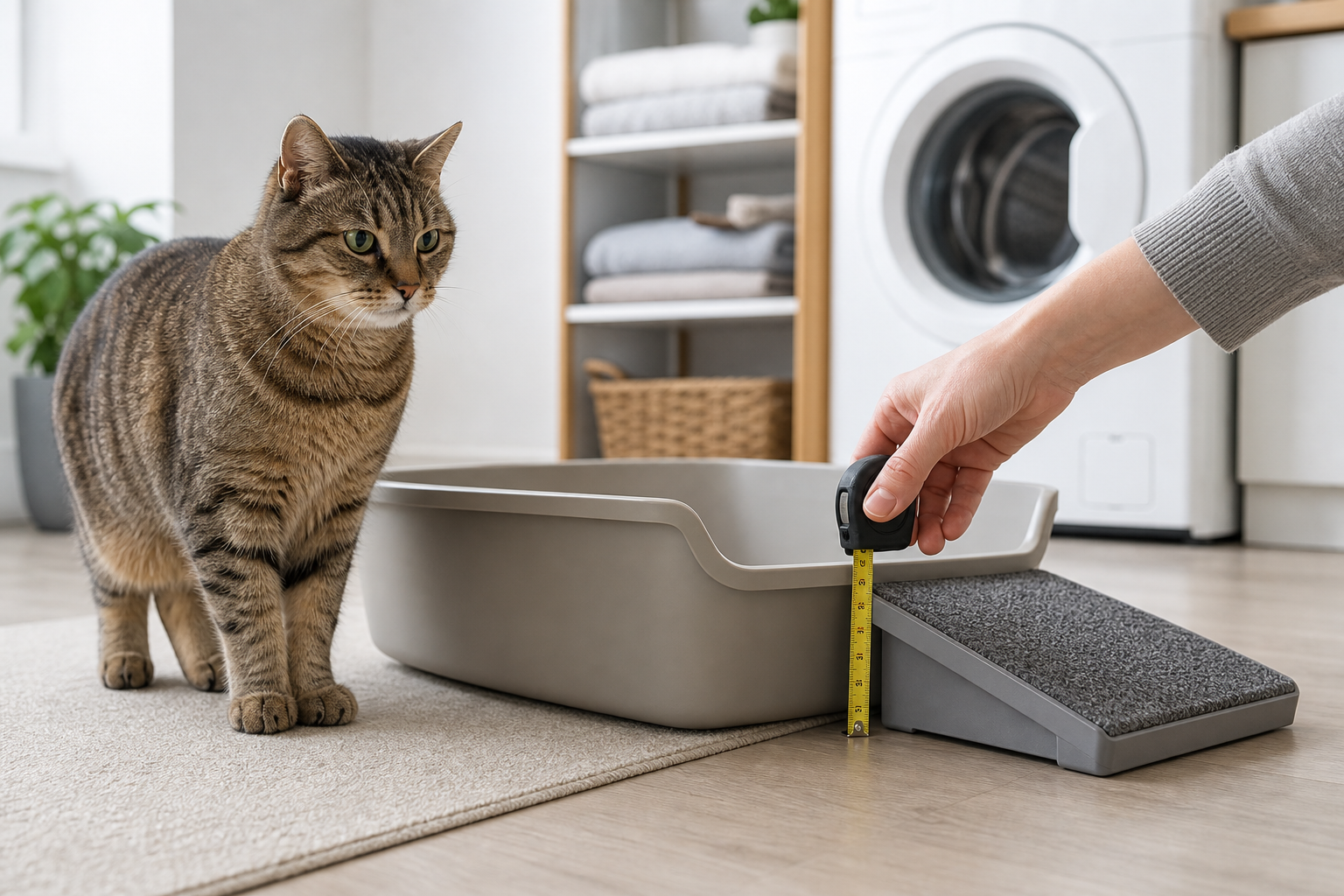
Do not buy by the product photo. Measure the opening your cat needs when walking normally, then compare that with your dog’s head, chest and shoulder width. A latch that works for a large cat and a medium dog may fail completely if the dog is small, long-nosed or determined enough to push the door wider.
Check the door swing, too. Some straps mount on the inside face of the door, some use adhesive, some use screws and some work more like a portable door prop. If your door opens toward the dog, pressure from the dog may stress the latch differently than the product photo suggests. If your door opens toward the litter room, make sure your cat cannot be pinned inside if the door shifts.
Before paying, confirm these details:
- Adjustable gap: the product should let you set a gap that is comfortable for the cat and too narrow for the dog.
- Mounting method: adhesive is convenient, but screws may be more secure on painted trim, textured doors or homes with strong dogs.
- Release style: adults should be able to enter the room without fighting the latch every time they scoop the box.
- Door compatibility: check whether it works on your door thickness, trim shape, knob placement and door swing.
- Damage risk: renters should read the adhesive and screw notes before assuming the product is truly damage-free.
- Pet size reality: kittens grow, senior cats may move less easily and small dogs may fit through gaps meant for cats.
When a cheap latch is a better deal than a gate
A latch can be the better buy when the dog is clearly larger than the cat, the cat already likes the room, and the door can stay partly open without creating a household hazard. It can also cost less than a freestanding gate, a furniture-style litter enclosure or cutting a permanent cat portal into the door.
The math changes if the first latch fails. A two-pack may look cheap, but it is not a deal if you need a stronger version, replacement adhesive, wall repair or a separate gate next week. Compare the full setup cost, not just the product price. Include any extra stopper, screws, adhesive pads, trim protectors and return shipping.
Coupon and return checks before paying
Small pet hardware is often sold by third-party marketplace sellers, so the discount badge is only part of the decision. Check who sells and ships the product, whether returns are free, whether opened adhesive products can be returned, and whether the listing includes replacement adhesive or spare hardware. If a coupon applies only to one color, one pack size or one seller, the cheaper version may not be the one that fits your door.
For retailer promos, read the cart terms instead of trusting the search-result price. PetSmart’s promotional terms, for example, show how pet deals can include date windows, reward-account requirements, eligible-product limits and maximum savings caps. Even when the latch itself is inexpensive, those rules matter if you are bundling it with litter, food or other supplies to reach a shipping threshold.
What to avoid
Avoid any setup that turns the litter box into a dead end. The San Francisco SPCA recommends litter boxes in different rooms for multi-cat homes and says boxes should be placed away from food, water, washers and dryers. If a dog can stand at the door and stare into the only exit, your cat may still feel blocked even if the dog cannot enter.
Also avoid using a latch as a substitute for supervision with a new dog, a dog that chews household hardware or a cat that is already avoiding the litter box. If your cat starts missing the box, straining, hiding or changing bathroom habits, treat that as a reason to call your veterinarian and reassess the environment, not as a reason to buy more gadgets.
A practical setup test
Install the latch, set the door gap wider than you think you need and watch both pets while you are home. Let the cat enter, turn around and exit without the dog nearby. Then narrow the gap gradually until the dog cannot fit through but the cat still moves naturally. If the cat crouches, hesitates or avoids the room, the gap is too narrow or the location is wrong.
Check the latch again after a few days. Adhesive can loosen, screws can shift, and a dog may learn to push from a new angle. The winning setup is boring: the cat uses the litter box without drama, the dog loses interest, and you can still clean the room without wrestling the door.
FAQ
Is a cat door latch safer than a pet gate?
It depends on the pets and the doorway. A latch can be simpler for cats that dislike jumping over gates, but a gate may be better if the dog is small enough to fit through a cat-sized gap.
Will it stop every dog from reaching the litter box?
No. A strong, small or persistent dog may still push the door, chew the strap or squeeze through. Measure first and supervise the test period.
Should I use adhesive or screws?
Adhesive is easier and more renter-friendly, but it may fail on some painted, textured or dirty surfaces. Screws can be stronger, but they leave holes and may not be allowed in a rental.
Can this replace a vet visit for litter-box problems?
No. A latch can improve access, but changes in litter-box use can have medical or stress-related causes. Ask your vet if your cat’s bathroom habits change.
Sources
Last checked: 2026-07-24 04:35 Europe/Rome.
- ASPCA, Litter Box Problems.
- Wisconsin Humane Society, Solving Litterbox Issues.
- San Francisco SPCA, Litter Box Problems.
- Amazon marketplace search surface, cat door latch keep dog out, used only as a live shopping-demand and listing-claim signal.
- PetSmart, Promotional Terms, used for deal-term context.