
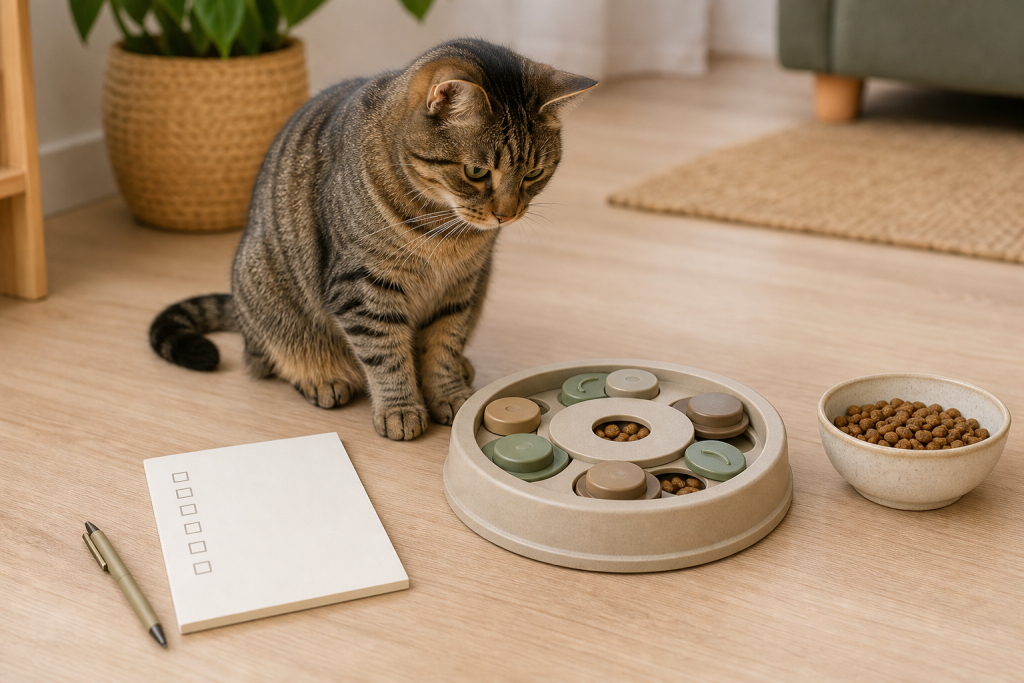
#cat enrichment
#cat feeding
#cat puzzle feeder
#cat toys
A cat puzzle feeder is worth buying only if it replaces part of your cat’s normal meal, not if it quietly adds a second snack budget. The useful deal is the one your cat can actually use, that you can clean daily, and that lets you measure food instead of guessing. If the product promises easy weight loss, treat that as marketing and ask your vet before changing your cat’s diet.
Cat puzzle feeders are getting fresh attention because indoor-cat enrichment and feline weight management keep showing up in pet-shopping searches. A July 2026 veterinary trade piece discussed cat running wheels as an exercise trend, while Cornell’s feline health guidance is more cautious about relying on exercise alone for weight loss in indoor cats. That makes puzzle feeders a smarter checkout topic: they can add movement and mental work at mealtime, but they can also turn into a treat dispenser that costs more and feeds more than owners meant to buy.
Why the deal can go wrong
The mistake is buying the puzzle first and deciding the feeding plan later. Many puzzle trays, wobble balls and maze bowls look inexpensive compared with bigger cat furniture, but the real cost comes from how you fill them. If you add treats on top of a full meal, the feeder is not slowing dinner down. It is adding calories.
VCA’s indoor-cat enrichment guidance stresses that cats need physical exercise, mental stimulation and chances to express normal behavior, while also noting that preferences vary. That matters at checkout. A confident food-motivated cat may work through sliders or cups quickly. A timid, senior or easily frustrated cat may need a very simple feeder, a few uncovered wells, or no puzzle feeder at all.
What to check before you buy
Start with your cat’s food type. Some puzzle feeders work with dry kibble but become messy or unsafe with wet food unless the parts are dishwasher-safe and easy to scrub. If your cat eats a prescription or measured diet, make sure the feeder can hold the right portion without hiding crumbs in hard-to-clean corners.
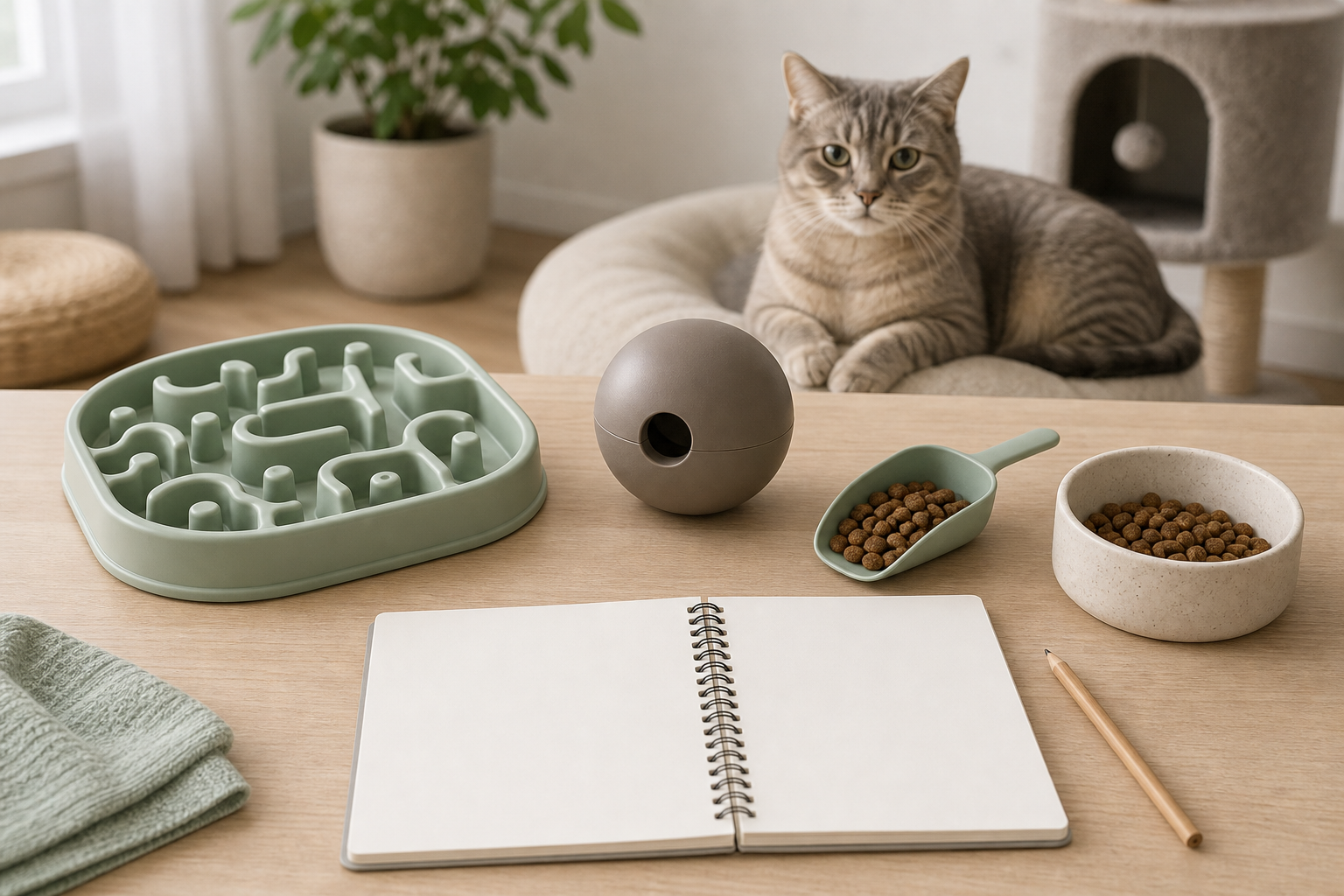
Check difficulty before price. A feeder with too many sliders can frustrate a beginner, while a shallow maze may be solved too quickly by a very food-driven cat. Look for a design that can start easy and become harder gradually. If the listing shows only a perfectly trained cat, read low-star reviews for comments about noise, tipping, stuck pieces and whether smaller kibble falls through gaps.
Measure the footprint. Puzzle feeders can be wider than a normal bowl, and wobble toys may roll under furniture. If you feed near a wall, door, litter area or multi-cat traffic lane, a cheap puzzle may create stress instead of enrichment. In a multi-cat home, one cat may guard the feeder while the other misses food, so supervised use may matter more than the gadget itself.
The checkout math
Do the serving math before chasing a discount. If you plan to fill the feeder with treats, compare the treat calories and daily serving instructions with your cat’s normal food plan. A small bag of treats can disappear quickly if the feeder becomes a daily boredom fix.
For dry-food use, calculate how much of the regular meal will move into the puzzle. If the feeder holds more than one meal, portion it with a measuring cup or kitchen scale instead of topping it off. For weight-loss goals, Cornell’s feline obesity guidance is a reminder that food amount and veterinary follow-up matter. A puzzle feeder should not be treated as a stand-alone diet plan.
Deal and coupon checks before paying
Do not judge the deal by the sticker price alone. Check whether replacement mats, lost sliders, rubber feet or cleaning brushes are sold separately. If the feeder has soft silicone or removable inserts, look for replacement availability before buying two units.
Also check the return window. Food-contact products may have stricter return expectations once used, and some marketplace sellers make returns harder than the headline retailer page suggests. If you are buying from Amazon, Walmart or another marketplace, confirm the seller name, return terms and whether the same item is sold under several random brand names. A low price is less useful if the toy arrives with loose parts, sharp edges or no support path.
What to avoid
Avoid any feeder that has small detachable pieces your cat could chew or swallow. Skip rough edges, strong chemical smells, unstable bases and tiny openings that trap wet food. Be cautious with electronic puzzle toys for cats unless the battery compartment is secure and the product is age-appropriate for any children in the home.
Do not use a puzzle feeder to force a cat to eat a therapeutic diet, change food abruptly or delay a veterinary conversation about vomiting, weight loss, appetite changes or obesity. The shopping decision can support enrichment, but diagnosis and diet changes belong with your veterinarian.
Quick answers
Are cat puzzle feeders good for indoor cats?
They can be useful enrichment for many indoor cats because they make mealtime more active and mentally engaging. They are not a universal fix, and some cats prefer wand play, climbing, scratching or simpler feeding routines.
Can a puzzle feeder help a cat lose weight?
It may help slow eating and add activity, but it should not be treated as a weight-loss plan by itself. Portion control, food choice and veterinary guidance matter more than the feeder.
Should I put treats or regular food in it?
Regular measured food is usually the safer starting point for everyday use. Treats can work for training, but they should be counted as part of the day’s intake.
What is the safest first puzzle feeder?
Choose a stable, washable, non-electronic feeder with large moving parts and an easy starter setting. Avoid tiny detachable pieces, hidden crevices and designs your cat has to fight to use.
Sources
Sources last checked: July 21, 2026, 16:35 Europe/Rome.
- dvm360, “Entertaining to watch, but is it safe for cats? Veterinarians weigh in”
- Cornell Feline Health Center, “Fat cats: How do management approaches measure up?”
- VCA Animal Hospitals, “Enrichment for Indoor Cats”
- International Cat Care, “Playing with your cat”
- Best Friends Animal Society, “The Best Indoor Cat Enrichment Ideas”
- Amazon Best Sellers in Pet Supplies, checked as shopping-demand context only