
#cat hydration
#cat water fountain
#pet deals
#pet fountains
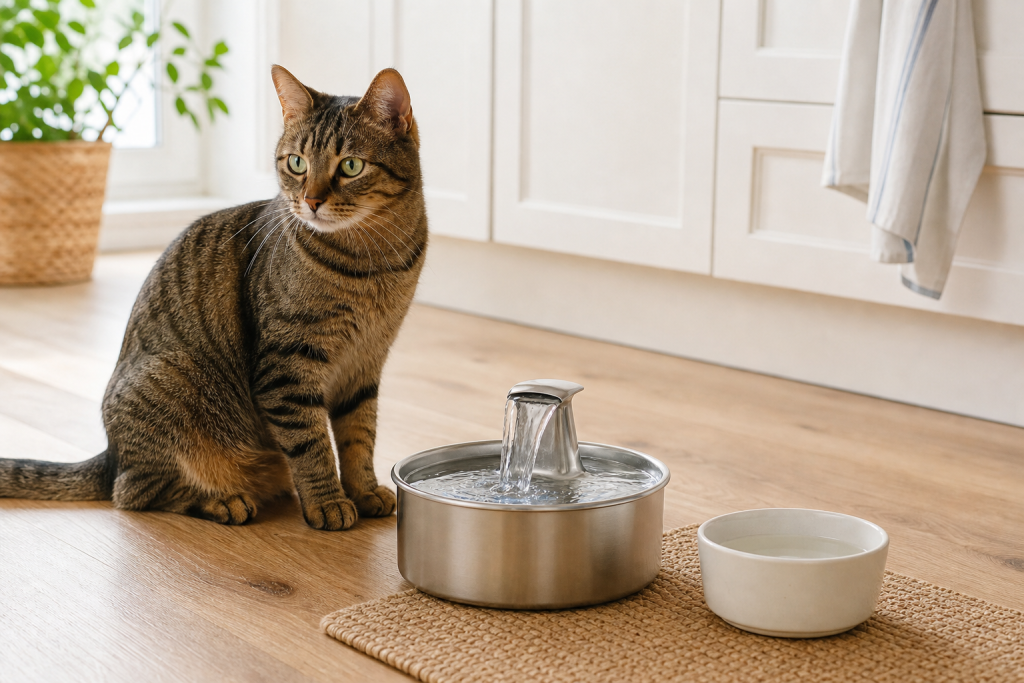
A cat water fountain deal can turn into a filter bill if you only compare the price of the fountain itself. The real cost is the replacement filters, pump cleaning, spare parts and return terms that decide whether the fountain stays useful after the first month. A fountain may encourage some cats to drink more, but it is still a small appliance that needs upkeep, not a one-time bowl replacement.
That matters more as warm-weather shopping picks up and owners look for easy ways to keep fresh water available. Cornell’s feline health guidance notes that normal hydration supports vital body functions, and its heat-safety advice says a running water source like a fountain may encourage some cats to drink more. The shopping mistake is assuming that any discounted fountain will be cheaper than a bowl once filters, cleaning tools and pump parts enter the cart.
Why the filter cost is easy to miss
Most cat fountains are sold like a simple gadget: a reservoir, a pump and a small filter. The ongoing spend is usually hidden in the accessories. Catit says its PIXI fountain filters should be replaced every 30 days for best results. PetSafe support pages describe carbon and foam filters for Drinkwell fountains and explain that the cleaning schedule changes with the household, especially when more than one pet uses the fountain.
That does not mean fountains are a bad buy. It means the cheapest checkout price is often the wrong number to compare. Before buying, look for the exact filter model, the number of filters included in the box, how often the brand says to replace them, and whether the same retailer stocks the filters separately. If replacement filters are hard to find, the fountain can become an awkward plastic bowl with a dead pump.
The checkout math to do before you buy
Use a simple one-year check before treating a fountain discount as a deal:
- Filter count: check whether the box includes one starter filter or a multi-pack.
- Replacement interval: use the manufacturer’s own guidance, then adjust if you have multiple pets or hard water.
- Filter compatibility: match the exact model name, not just the brand name.
- Pump access: confirm that the pump can be removed and cleaned without special tools.
- Spare parts: look for pump, adapter, lid, reservoir and filter housing availability.
- Cleaning time: check whether the parts are dishwasher-safe or hand-wash only.
- Return window: make sure you can return it if your cat refuses to use it or the noise is a problem.
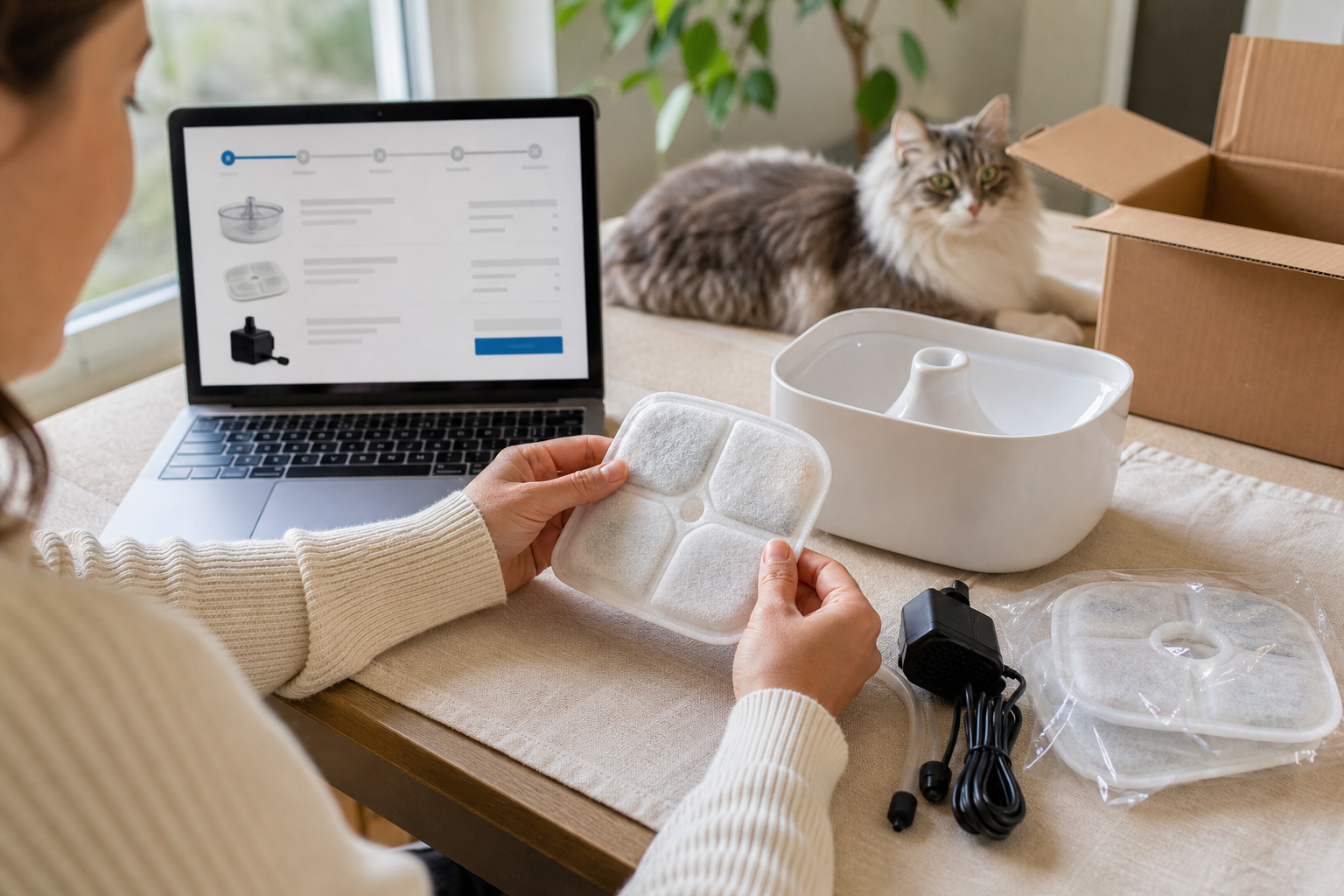
For a practical comparison, add the fountain price to the expected filters for 12 months and any cleaning brush or spare pump you would realistically buy. Then compare that total with a simpler stainless or ceramic water bowl setup. A fountain may still be worth it, especially for a cat that likes running water, but the better deal is the one you can maintain.
What to verify in the product listing
Start with the material. Stainless steel and ceramic surfaces are often easier to inspect and clean than complicated plastic shapes, but every design depends on how many crevices, tubes and pump parts it has. If the listing shows only a beauty photo and no exploded view, look for the manual or support page before buying.
Next, check the reservoir size against your routine. A larger tank can reduce refills, but it does not remove the need to wash the fountain. PetSafe support says cleaning frequency varies by home and that multi-pet homes may need more frequent cleaning. Catit sells a fountain cleaning set with tools made for narrow areas and pump parts, which is a useful reminder that maintenance is part of the product.
Finally, listen for the quiet-cost clues in reviews. Complaints about pump hum, weak water flow, filters clogging quickly or difficult disassembly are not just annoyances. They point to extra cleaning time, replacement parts or a return.
When a fountain deal is probably not a deal
A discount is less useful if it locks you into expensive or hard-to-find filters. Be cautious when a listing does not clearly name the replacement filter, shows generic filter packs that do not match the model, or advertises “compatible” accessories without a brand support page. If you are buying from a marketplace, check who the seller is and whether the warranty still applies.
Also check shipping. A low-priced fountain can lose its advantage if replacement filters ship separately, require a subscription you do not want, or fall below the retailer’s free-shipping threshold. If you use a coupon, verify that it applies to both the fountain and future filter purchases. Do not assume an introductory bundle discount will repeat when you reorder consumables.

Safety and cleaning checks to avoid
Do not treat a fountain as a medical fix for a cat that suddenly drinks more or less than usual. Cornell lists several diseases and conditions that can affect hydration and water loss, so a change in thirst, appetite, urination or behavior deserves a veterinarian’s guidance. The fountain is a shopping choice, not a diagnosis tool.
Avoid damaged cords, chewed cables and pumps that cannot be removed for cleaning. Unplug the fountain before taking it apart. If your cat chews cords, consider cord protection, placement changes or a non-electric bowl instead. A fountain that creates a new electrical or chewing risk is not a bargain.
Skip vague health claims. Filtration can help with hair, debris, taste and odor depending on the design, but a product page should not be your only source for urinary or kidney-health decisions. If your cat has a urinary condition, kidney disease, diabetes, vomiting, diarrhea or heat-stress symptoms, ask your vet what water setup and diet changes make sense.
Quick answers
Are cat water fountains worth buying?
They can be worth buying if your cat prefers moving water and you are willing to clean the unit and replace filters. They are less convincing if the filters are expensive, the pump is hard to clean, or your cat is already happy with fresh bowls.
How often do fountain filters need replacing?
Follow the manufacturer’s guidance for the exact model. Catit says PIXI fountain filters should be replaced every 30 days for best results, while PetSafe support describes filter changes as part of regular cleaning for its Drinkwell fountains. Multi-pet homes, hard water and visible debris may change the practical schedule.
Should I buy a smart cat fountain?
Only if the smart features solve a real problem for you. For app-connected fountains, check app support, alerts, replacement parts, warranty coverage and what happens if the app or Wi-Fi connection stops working. A quiet, easy-to-clean non-smart fountain may be the better deal.
What is the safest low-cost alternative?
Multiple clean water bowls in quiet locations are still a sensible baseline. Choose easy-to-wash bowls, refresh water often, and keep food and litter areas separate where possible. If your cat is not drinking normally, do not wait for a gadget to solve it.
Sources
Last checked: May 30, 2026, 10:34 Europe/Rome.