

#dog clicker
#dog training
#pet deals
#positive reinforcement
A cheap dog training clicker can be a good buy, but only if the sound is clear, consistent and easy for every handler in the house to use. The hidden mistake is treating a multipack like the whole training plan, then forgetting the treats, timing practice, wrist strap, backup clicker and return terms that make the tool useful. If your dog is fearful, aggressive or highly anxious, a clicker is not a shortcut around qualified help.
Clicker searches make sense right now because late summer is a busy time for puppy classes, back-to-school routines and owners trying to restart leash manners before fall. Retailers often bundle clickers with treat pouches, whistles, leashes or training treats, which can make a tiny accessory look like an easy add-on. The checkout question is not whether a clicker is expensive. It is whether the kit you buy will create one clear marker your dog can understand.
Why a cheap clicker can still waste money
A clicker is a marker. Used well, it tells your dog the exact moment they did something worth rewarding. The American Kennel Club describes clicker training as a way to make positive reinforcement more efficient after the dog has learned that the click predicts a reward.
That only works if the marker stays consistent. A bargain pack can fall apart if one clicker is loud and sharp, another is soft, and a third sticks after a few sessions. It can also fail if the clicker is too small for your hand, has no wrist strap, disappears into a coat pocket or scares a sound-sensitive dog. The purchase is tiny, but the wasted training time is not.
The checkout checks that matter
Before buying a clicker kit, check the basics:
- Sound: choose a click that is distinct but not startling. If reviews repeatedly mention a painfully loud click or a mushy button, move on.
- Grip: look for a shape you can press without staring at your hand. Timing matters more than color.
- Attachment: a wrist coil, lanyard hole or belt clip can stop the clicker from vanishing during walks or class.
- Multipack consistency: if several people train the same dog, matching clickers can help everyone mark behavior the same way.
- Treat plan: budget for small, high-value rewards. A click without a reward behind it quickly becomes background noise.
- Return terms: low-cost accessories are sometimes awkward to return, especially if they arrive in a bundle with treats or other gear.
What to buy with the clicker
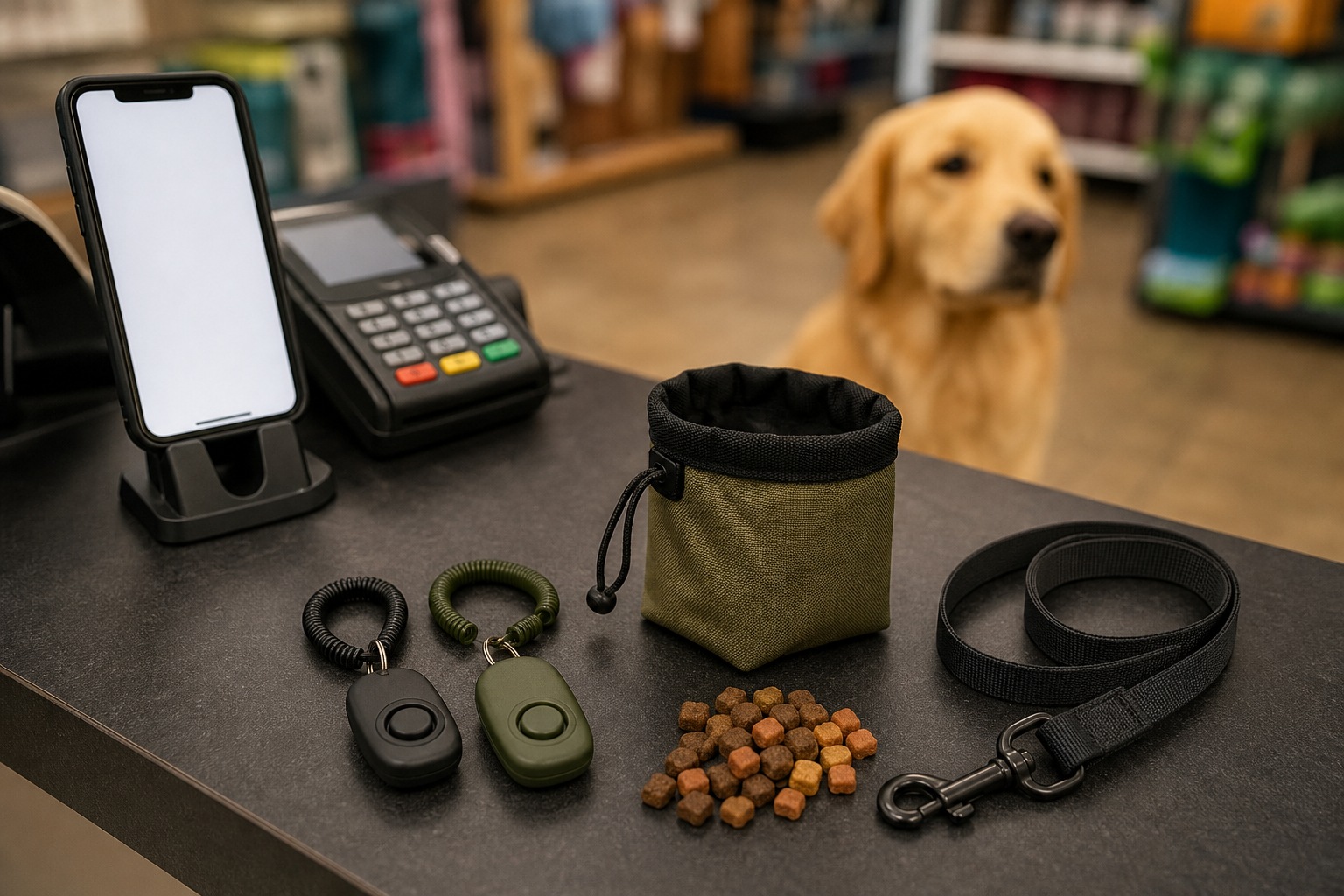
The useful bundle is usually simple: one or two clickers, a washable treat pouch, very small training treats and a normal leash. Skip oversized kits that pad the price with items you do not need. A whistle, retractable leash, correction device or mystery e-book does not automatically make the clicker more useful.
If your dog is sound-sensitive, consider a softer clicker or a verbal marker such as a short word, then ask a qualified trainer how to introduce it. For deaf dogs or dogs that cannot comfortably work with a sound marker, a visual marker may be more appropriate than a clicker. The key is consistency, not the gadget itself.
The deal math most owners miss
Clicker deals are easy to overbuy because the unit price looks tiny. A four-pack can make sense for a multi-handler household, a training bag, the car and a spare. It is less useful if three of them sit in a drawer while you reorder treats every week.
When comparing deals, check the total training setup. A $5 clicker with a durable strap and treats you already use may beat a larger kit with low-quality accessories. If a retailer advertises a coupon, verify the final cart price, shipping threshold and whether the code excludes training accessories. Do not assume a “training kit” is cheaper than buying a clicker and treat pouch separately.
Safety and behavior limits
Reward-based training sources are clear that the clicker is not a punishment tool. Humane World explains positive reinforcement as rewarding desired behavior with food, toys or praise. AVSAB’s humane dog training position statement recommends reward-based methods and warns against aversive methods for training and behavior work.
That matters at checkout because some listings mix clickers with shock collars, ultrasonic devices or correction language. Do not buy a kit because it promises fast control over barking, fear, aggression or separation anxiety. Those problems deserve careful assessment from a veterinarian, credentialed trainer or veterinary behavior professional.
Also avoid leaving loose clickers, cords or small plastic pieces where a dog can chew them. A clicker is a tool for supervised training sessions, not a toy.
A practical first-session test
When the clicker arrives, test it before the return window gets away from you. Press it several times away from your dog first. Then pair one click with one small treat for a short session. If your dog startles, freezes or avoids the sound, stop and switch to a softer marker or get training guidance.
If the clicker sticks, is hard to press with one hand, or the strap breaks immediately, return it instead of trying to adapt your timing around bad hardware. Clicker training depends on precision. A tool that makes timing harder is not a deal.
Quick answers
Do you need a clicker to train a dog?
No. A consistent verbal marker can work. A clicker can help because the sound is short, distinct and less emotional than a spoken word.
Is a clicker better than treats?
No. The clicker marks the behavior, but the reward is still what gives the marker value. Most owners still need treats, toys or another reward the dog wants.
Should every family member use the clicker?
Only if everyone understands the timing. If one person clicks late or clicks without rewarding, the dog may get mixed signals.
Can a clicker fix serious behavior problems?
Do not treat it that way. For fear, aggression, separation anxiety or sudden behavior changes, ask your veterinarian or a qualified behavior professional.
Sources
Sources last checked: August 5, 2026, 04:34 Europe/Rome.
- American Kennel Club, Mark & Reward Dog Training Using Clickers.
- Humane World for Animals, How to reward dogs with positive reinforcement training.
- American Veterinary Society of Animal Behavior, Humane Dog Training Position Statement.
- Best Friends Animal Society, A Guide to Clicker Training Pets.
- Amazon Best Sellers, Dog Training Clickers, used as a current demand signal, not as a product ranking.