

#cat toothbrush
#dog toothbrush
#finger toothbrush
#pet dental care
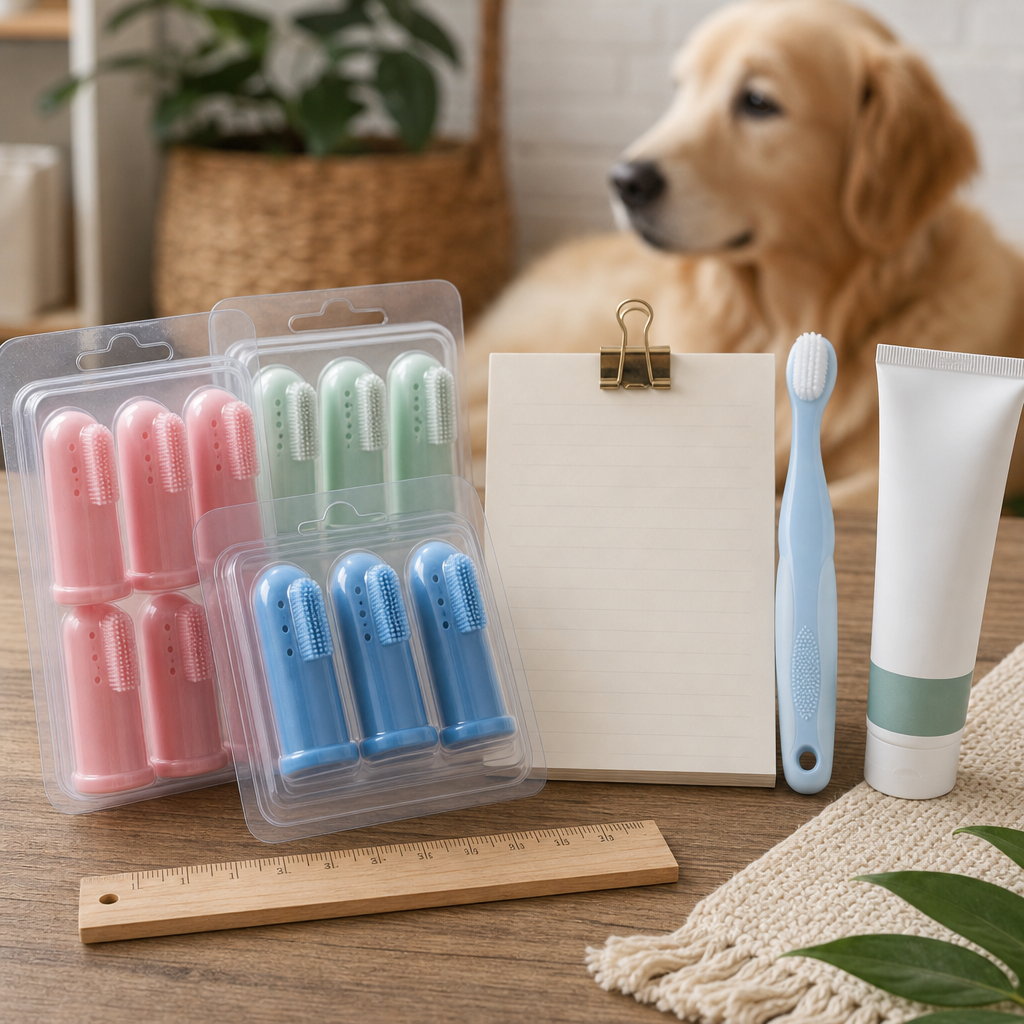
A cheap finger toothbrush can help some dogs and cats start a brushing routine, but it is not automatically the better dental deal. If the silicone sleeve is too loose, too bulky or sold without pet-safe toothpaste, it can slip, get chewed or clean less than a simple soft toothbrush. Before checkout, check the fit, bristle texture, pack count, replacement cost and whether your vet wants a different home-care plan for your pet.
Finger brushes are showing up in value packs across pet retailers because they look easier than a handled brush. That can be true for a calm pet who accepts mouth handling, but the low price hides the real question: will the brush let you clean the gumline consistently, or will it become another drawer item after two tries?
Why This Matters Now
Pet dental products are a steady shopping category, and finger toothbrushes are often marketed as a low-stress starter tool. Major retailers list soft silicone finger brushes for dogs and cats, often in multipacks that make the unit price look tiny. That demand makes the category worth a closer look, especially because oral-care products can sound more effective than they are when the routine is not realistic.
Veterinary dental guidance is clear that brushing has to be frequent and realistic to matter. The Veterinary Oral Health Council describes brushing as the gold standard for oral hygiene and says all teeth, ideally all surfaces, should be brushed daily. The AAHA dental-care guideline record also reinforces that home care is only one part of oral health, not a replacement for veterinary exams and professional treatment when needed.
When a Finger Brush Is Actually Useful
A finger toothbrush can make sense when your pet is new to brushing and you need a softer, less intimidating first step. It gives you more tactile feedback than a long handle, which can help with a small dog, a kitten or a pet that only tolerates very short sessions. It can also be convenient for travel or for rotating clean brushes in a multi-pet home.
But it is still a tool, not the treatment. A finger brush has to reach the outer surfaces of the teeth without forcing your finger too far into the mouth. If your pet clamps down, jerks away or guards the mouth, a cheap multi-pack is not a bargain. Pause and ask your veterinarian how to build a safer routine.
The Checkout Checks That Matter
Start with the opening size. Many silicone finger brushes are advertised as one-size-fits-most, but a loose sleeve can slide around when wet and a tight sleeve can be hard to control. If the listing gives an inner diameter, compare it with your finger before buying a bulk pack.
Check the bristles next. Very stubby silicone nubs may feel gentle, but they can also make it harder to work along the gumline. A handled soft pet toothbrush may reach back teeth better for some pets. If the bundle includes both, that is more useful than a large pack of identical sleeves.
Look for pet-specific toothpaste, not human toothpaste. Pet Food Institute dental-care guidance says pet toothpaste is formulated for dogs and cats and warns that human toothpaste can contain ingredients that are toxic to pets. Flavor matters too, because a pet that hates the paste will fight the brush.
Count the real replacements. A 10-pack looks cheap, but finger brushes can pick up odor, wear down or get chewed. The useful price is the cost per brush you will actually keep clean and use, not the lowest package price. If you have multiple pets, keep brushes separate and label them so one pet’s mouth bacteria are not shared with another.
Deal and Coupon Traps
Do not let a sale badge push you into the largest pack first. Buy the smallest reasonable set if you do not already know your pet tolerates a finger brush. A discount on 20 silicone sleeves is not useful if the brush slips off your finger or your cat refuses the texture.
Before paying, verify the return policy for opened hygiene items. Some retailers may limit returns once pet dental products are opened or used. Also check whether the bundle includes toothpaste, a storage case, instructions and a handled brush. A cheaper brush-only pack can cost more after you add pet-safe toothpaste separately.
If a listing claims veterinary approval, look for specifics. The VOHC Accepted Products list is a useful place to verify oral-care products that have earned its seal for plaque or tartar control. Do not treat a vague “vet recommended” phrase as the same thing as a recognized acceptance seal or a plan from your own veterinarian.
What to Avoid
Avoid brushes that are too bulky for your pet’s mouth. A large silicone sleeve may be fine for a big dog but awkward for a cat or toy breed. Avoid hard bristles, mystery materials, strong chemical odors and kits that show human toothpaste or unclear paste labels.
Do not use a finger brush if your pet is likely to bite down hard. A soft sleeve is not real bite protection, even if a product photo makes it look cushioned. Do not force brushing over bleeding, swelling, broken teeth, loose teeth, bad mouth pain or sudden behavior changes. Those are reasons to call your veterinarian, not reasons to buy a stronger brush.
Also avoid expecting a finger brush to fix bad breath by itself. Bad breath can come from dental disease or other health issues. Home brushing is prevention and maintenance. It does not replace veterinary exams, professional cleaning when needed or treatment for existing oral disease.
A Simple Buying Framework
- Best starter buy: a small pack with soft silicone sleeves, a handled soft pet toothbrush and clear cleaning instructions.
- Best for cats or tiny dogs: the smallest brush head that lets you touch the tooth surface without stretching the mouth.
- Best for value: a bundle that includes pet-safe toothpaste you will actually use, not just more sleeves.
- Best reason to skip: your pet snaps, has mouth pain or already needs a veterinary dental plan.
Quick Answers
Are finger toothbrushes better than regular pet toothbrushes?
Not always. They can be easier for training and short sessions, but a handled soft toothbrush may reach more tooth surfaces for many pets.
Can I use a finger brush without toothpaste?
You can use it gently as a training step, but pet-safe toothpaste can make the routine easier and more effective. Do not use human toothpaste.
Should I buy a bulk pack first?
Usually no. Try a small set first, then buy replacements once you know the size and texture work for your pet.
Does brushing replace dental cleanings?
No. Brushing helps control plaque, but it does not remove hardened calculus or replace veterinary dental care when your pet needs it.
Sources
Sources last checked: July 22, 2026, 01:33 Europe/Rome.
- Veterinary Oral Health Council, Brushing guidance and Accepted Products list.
- PubMed, 2019 AAHA Dental Care Guidelines for Dogs and Cats.
- Pet Food Institute, Dental Health for Pets.
- Walmart, Vet’s Best Dog Toothbrush listing, used as a current retailer example for silicone finger-brush pack details, not as an endorsement.