

#dog pool
#foldable dog pool
#pet deals
#summer pet supplies
A foldable dog pool can be a smart summer buy, but only if it is sized for your dog and tough enough for the surface where you will use it. The bad deal is the cheap pool that looks large online, then buckles, leaks at the drain, scratches on concrete or costs too much to return after one backyard test.
That matters right now because summer pet deals are pushing cooling beds, splash toys and collapsible pools at the same time heat warnings are making owners look for fast ways to keep dogs comfortable. A shallow pool can help with supervised play and cooling, but it is not a substitute for shade, fresh water, cooler walking hours or getting a hot dog indoors.
Why the cheap pool is not always the cheapest one
Most foldable dog pools look similar in a product grid: round walls, PVC-style panels, a drain plug and a promise that the pool folds flat for storage. The expensive part is not always the checkout price. It is the mismatch between the pool, your dog and your setup.
Large dogs need more floor space than the diameter on the listing may suggest. A pool can be wide enough for paws but too cramped for turning around. Small dogs, older dogs and short-legged breeds may need a lower wall or a clear way to step out without being lifted. If the listing only shows a tiny puppy in a wide-angle photo, look for the actual diameter, wall height and recommended pet weight before you add it to the cart.
Surface matters too. A foldable pool that works on grass may scrape or slide on rough concrete. A thin floor can wear faster under trimmed nails, toys and repeated folding. If your only outdoor space is a patio, balcony or deck, check whether the pool needs a protective mat under it and whether spilled water can drain safely.
The checkout checks owners skip
Start with the size chart, not the hero photo. Compare the inside diameter with your dog’s body length from chest to rump, then think about how your dog actually moves. A splash pool for standing and paw cooling can be smaller than a pool meant for lying down.
Check the wall height next. Tall sides can hold water better, but they also make entry and exit harder. A dog that jumps in and out may stress the seams and panels. A nervous dog may avoid the pool completely if the wall feels like a barrier.
Then inspect the drain. A wide-mouth drain or side outlet can make cleanup easier, but only if it is placed where water can run away from your house, deck boards, electrical outlets and slick walkways. If the drain cap looks proprietary, check whether replacements are sold or whether one lost cap turns the pool into a storage bin.
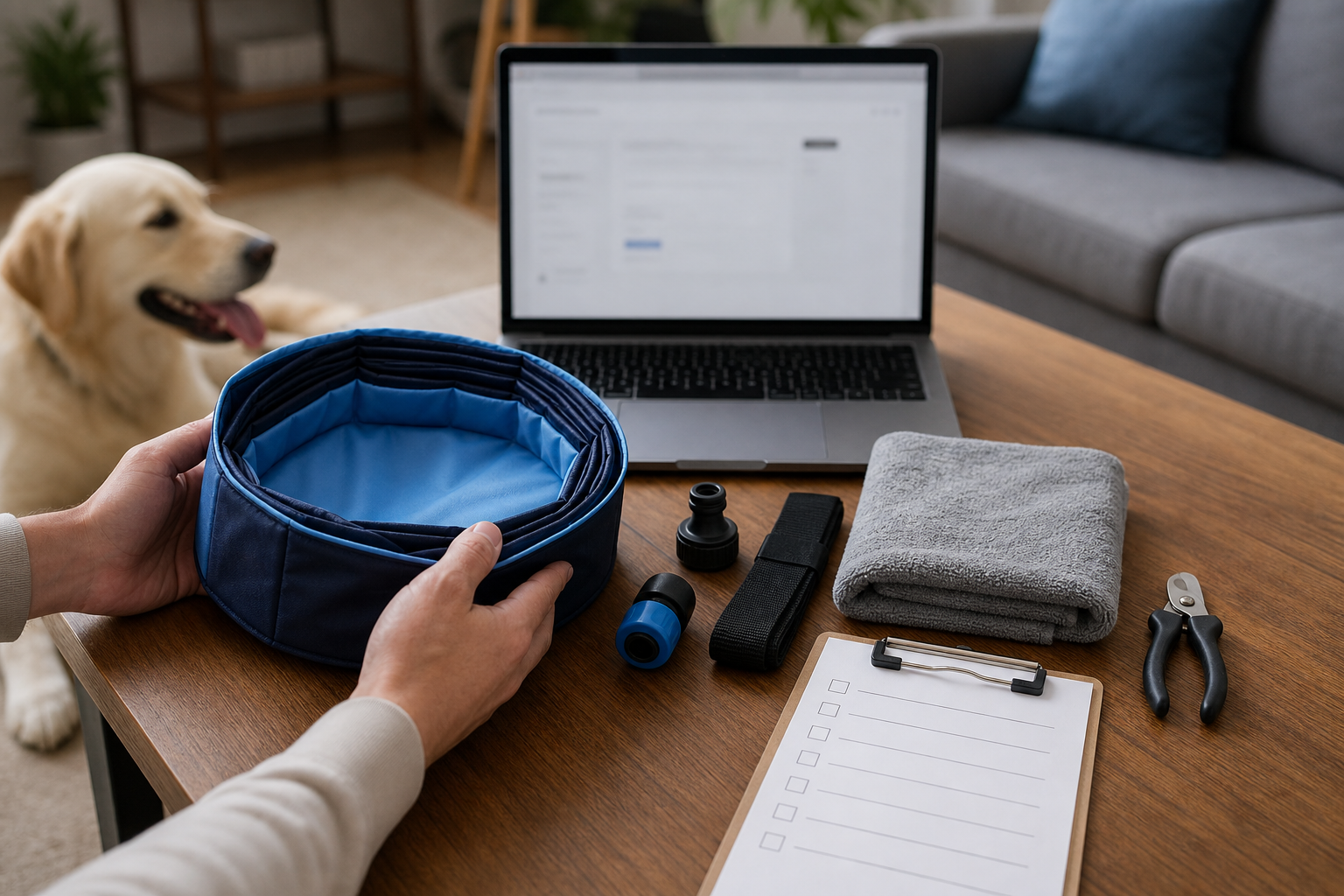
Before buying, verify these details:
- Actual diameter and wall height, not just “small,” “large” or “XL.”
- Weight guidance and whether the floor is reinforced.
- Drain location, cap type and whether a hose can attach.
- Folded dimensions for storage in a closet, trunk or shed.
- Cleaning instructions and whether mild soap is enough.
- Return rules after the pool has touched water or outdoor ground.
A dog pool is a cooling tool, not heat protection by itself
Reliable heat-safety guidance is consistent on the basics: dogs need shade, fresh water and reduced activity in hot weather. Cornell’s canine health guidance notes that heavy panting, seeking shade, reluctance to play and drooling can be early overheating signs. CDC heat guidance also stresses water, shade and avoiding dangerous heat exposure for pets.
That is why a backyard pool should be treated as one part of a safer summer setup. Put it in shade. Keep a separate bowl of fresh drinking water nearby. Empty and refresh the pool water often, especially if your dog tracks in dirt, grass or sunscreen from people nearby. If your dog seems weak, confused, unusually tired, disoriented or keeps panting hard after cooling down, stop shopping solutions and contact a veterinarian.
Water safety still applies in a shallow pool
A shallow dog pool may look harmless, but supervision still matters. The American Kennel Club warns that it is a myth that all dogs naturally swim well, and that body shape can make swimming harder for some breeds. A foldable backyard pool is usually for splashing, not swimming, but the same common-sense rule applies: do not leave a dog alone around water.
Teach entry and exit calmly. Do not toss a dog into the pool to see whether they like it. If your dog is unsure, start with very shallow water and treats away from the pool edge. For senior dogs, puppies, flat-faced breeds or dogs with mobility issues, ask your vet what kind of summer water play is appropriate.
Deal and coupon checks before paying
Dog pools often appear in summer promotions, pet-sale pages and marketplace listings. Treat the discount badge as a starting point, not proof of value. A lower price can disappear quickly if shipping is high, the return window is short or the pool is sold by a third-party seller with unclear support.
At checkout, verify the final price after shipping, whether the item qualifies for free returns, who pays return postage and whether a used outdoor item can be returned at all. If you are buying from a marketplace, confirm the seller name, not just the platform. Also check whether the same pool size is available locally, because a bulky return can erase the savings from an online coupon.
Do not buy extra-large by default. Larger pools take more water, need more space to dry and can be harder to empty. If you only need a paw-cooling station for a medium dog, a correctly sized smaller pool may be the better deal.
What to avoid
- A listing that uses only lifestyle photos and never gives usable dimensions.
- Very thin floors if the pool will sit on rough patio, gravel or deck hardware.
- High walls for short-legged, senior or hesitant dogs.
- Dark surfaces placed in direct sun, because they can heat up fast.
- Leaving filled water out for days as a dirt, mosquito or algae magnet.
- Assuming a pool prevents overheating during extreme heat.
FAQ
Is a foldable dog pool better than an inflatable kiddie pool?
Often, yes, for dogs that paw, step and scratch at the floor. Foldable pools usually avoid inflatable air chambers, but quality still varies. Check the floor thickness, seams, drain and return policy before assuming it will last.
How deep should the water be?
For cooling and supervised play, shallow water is usually enough. Your dog should be able to stand comfortably, turn around and leave the pool without struggling. Do not make the water deeper just because the wall can hold it.
Can a dog pool replace a cooling mat?
No. They solve different problems. A pool needs supervision, outdoor space and cleanup. A mat may be easier indoors or for dogs that dislike water. In hot weather, neither replaces shade, fresh water and cooler routines.
Should cats use a foldable dog pool?
Most cats will not want one, and forcing water play is a bad idea. If you are shopping for cats in summer, focus first on cool indoor rooms, fresh water, shade and safe hydration products.
Sources
Sources last checked June 20, 2026, 01:33 Europe/Rome.
- CDC, Heat and Pets
- Cornell Riney Canine Health Center, Summer heat safety tips for dogs
- ASPCA, Summer hot weather safety tips for pets
- American Kennel Club, Can all dogs swim?
- Target product listing example, foldable dog pool dimensions and drain features
- Lowe’s product listing example, foldable pet pool construction and storage features