
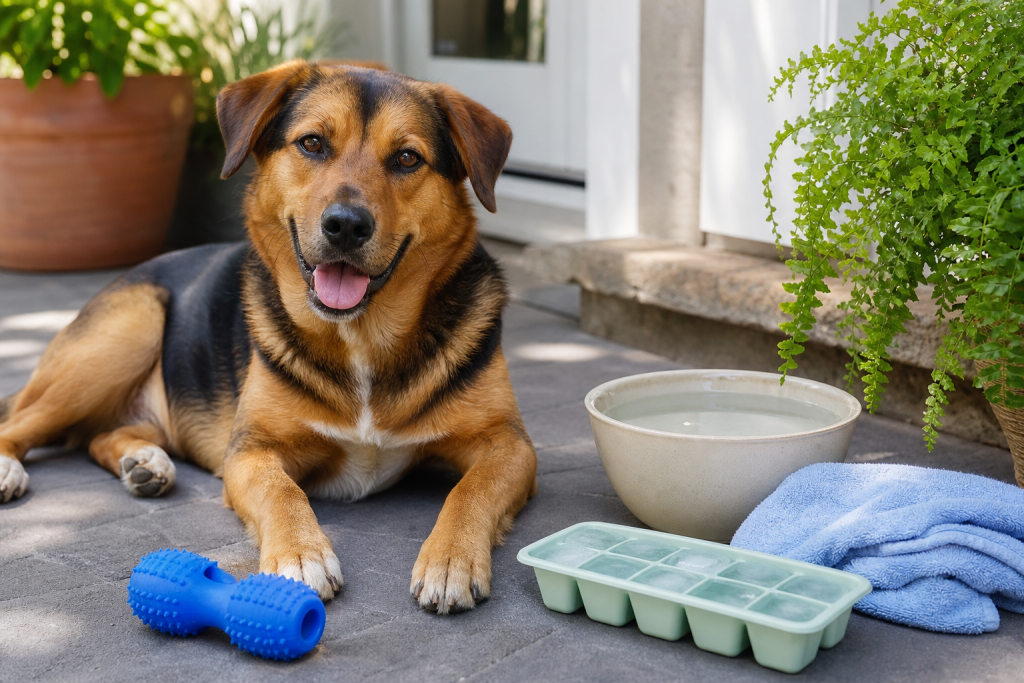
#dog cooling toys
#Dog enrichment
#frozen dog toys
#summer pet supplies
A frozen dog toy is only a good summer deal if it fits your dog’s mouth, chewing style and supervision routine. It can keep a dog busy and offer a cool treat, but it will not replace shade, water, shorter walks or real heat-safety planning. Before you buy a multipack, check the material, size, filling instructions and return terms so a cheap toy does not become a choking, mess or waste problem.
Cooling toys are showing up in summer pet aisles because owners want quick ways to help dogs stay comfortable during hot weather. That demand makes sense, but the checkout page can blur two different jobs: safe enrichment and heat protection. A frozen toy can support the first job. It should never be treated as the second job by itself.
Why this matters now
Summer shopping pushes cooling mats, pools, fans, frozen treat molds and freezer-safe chew toys into the same “keep your dog cool” bucket. Veterinary and animal-welfare sources are more cautious. Blue Cross warns that dogs are at higher risk of heatstroke in summer and that hard exercise in strong midday sun can be dangerous. AAHA suggests frozen toys and frozen treats as boredom busters, but also stresses supervision around water play and summer activities.
That distinction matters at checkout. A freezer toy may be a useful indoor or shaded-yard activity, especially when you fill it with dog-safe ingredients. It is not proof that your dog can stay outside longer, play harder or ride in a hot car.
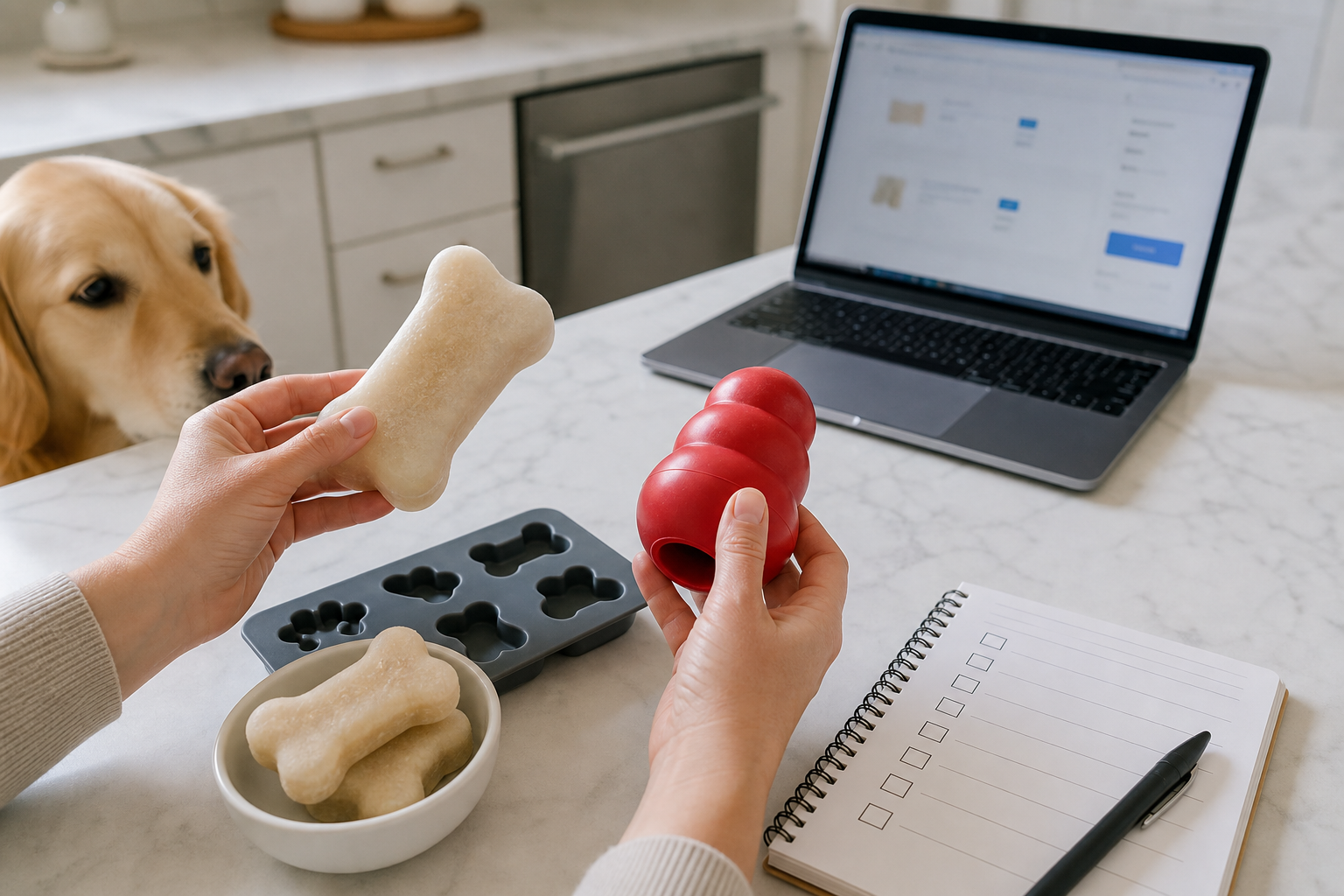
The checkout checks that matter
Start with size. A toy that is too small can become a swallow risk, while an oversized hard frozen item can frustrate a small dog or encourage unsafe chewing. Look for a size guide that matches your dog’s weight and chewing style, then read owner reviews for comments about splitting, sharp edges, pieces breaking off or dogs getting their tongue stuck in openings.
Check the material next. Freezer-safe rubber or silicone should feel flexible enough for chewing after it thaws slightly, but sturdy enough that your dog cannot remove chunks. Avoid mystery plastic, strong chemical odor, brittle parts, removable caps and toys with narrow holes that are hard to clean.
Read the filling instructions before you add the item to your cart. AKC notes that dog-safe liquids can be frozen in trays and that hollow rubber toys can hold frozen fillings, but labels still matter. Use plain, dog-safe ingredients, avoid xylitol, skip wooden popsicle sticks, and count frozen treats as calories rather than “free” cooling.
What a real deal looks like
A useful deal is not just the cheapest three-pack. It is a toy your dog can use safely, cleanly and more than once. Before paying, compare:
- Cost per usable toy: A cheap multipack is not cheaper if two pieces are too small, too flimsy or impossible to wash.
- Dishwasher and cleaning claims: Frozen broth, yogurt and peanut butter can leave residue inside grooves and hollow chambers.
- Return policy: Chewy lists a broad 365-day return window for many items, while Petco’s posted policy gives full refunds within 30 days for many online orders and merchandise credit from days 31 to 60. Always verify the current policy on the item page before opening or freezing a toy.
- Shipping timing: A summer toy arriving after a heat wave may still be useful, but it should not be the only comfort plan you were counting on.
- Replacement value: If your dog is a heavy chewer, a durable single toy may beat a bargain pack that sheds pieces.
What to avoid
Avoid any listing that promises a toy will prevent heatstroke. That is a medical-safety claim, not a normal toy benefit. Dogs still need fresh water, shade, cooler exercise times and a cool indoor space.
Do not use a frozen toy unsupervised the first time. Watch how your dog handles it as it melts. Remove it if the toy cracks, the dog chews pieces loose, the filling turns messy enough to attract gulping, or the dog becomes overexcited instead of slowing down.
Skip ingredients you have not checked. Ice cream, sweetened yogurt, high-fat leftovers, salty broth and nut butters with xylitol can turn a “cool treat” into a stomach or toxicity problem. If your dog has a medical diet, pancreatitis history, dental problems, swallowing issues or a very short nose, ask your vet before making frozen treats a routine habit.
Better ways to use frozen dog toys
Use them indoors, in shade or after a shorter walk, not as permission to extend activity in heat. Thaw the toy for a few minutes if it is rock hard. Fill it with small portions and test one recipe at a time so you can tell what agrees with your dog.
For puppies, seniors and aggressive chewers, keep the session short. Check the toy afterward for tooth marks, missing pieces and trapped food. If it cannot be cleaned fully, the deal is over.
FAQ
Are frozen dog toys safe?
They can be safe when they are the right size, made from durable freezer-safe material and used with supervision. They are not a substitute for heat-safety basics.
Can I freeze any dog toy?
No. Freeze only toys designed for freezing or toys with materials that stay safe and intact when cold. Brittle plastic, glued parts and toys with hidden chambers are poor choices.
What should I put inside a frozen dog toy?
Use small amounts of dog-safe food or liquid, such as no-salt-added broth or plain unsweetened yogurt if your dog tolerates it. Read every label and avoid xylitol, excess fat, excess salt and ingredients your vet has told you to avoid.
Should I buy a multipack?
Only if every toy in the pack fits your dog and you can clean each one properly. A mixed-size bundle can be a bad deal for one-dog households.
Sources
Last checked: 2026-06-19 16:34 CEST.
- AAHA, Keeping Cool: Summer Boredom Busters for Pets.
- American Kennel Club, Best DIY Frozen Dog Treats, updated Mar. 27, 2026.
- Blue Cross, Top tips for keeping your dog cool and safe in summer.
- American Kennel Club, How Cooling Mats for Dogs Can Help Beat the Heat.
- Chewy, Return policy.
- Petco, Return policy.