
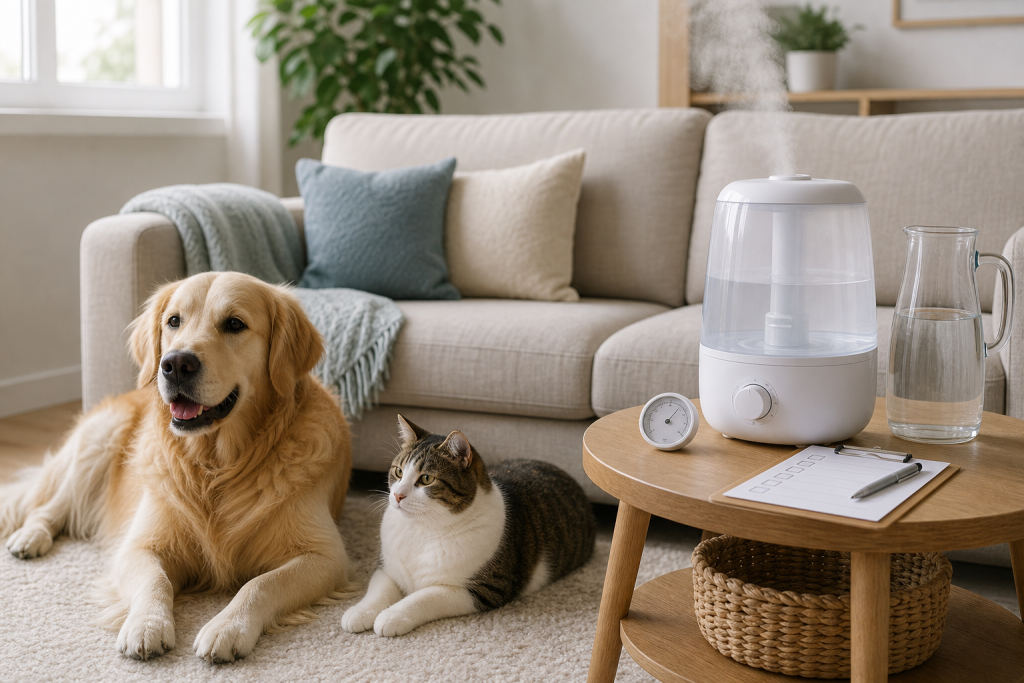
#humidifier pet room
#pet air comfort
#pet shopping mistakes
#pet tech deals
A humidifier deal can be useful for a dry pet room, but the mist is not the part to buy on impulse. The real checks are how often the tank must be cleaned, whether the unit can use distilled water or replacement filters affordably, and whether it is being confused with an essential-oil diffuser. If your dog or cat has breathing problems, ask your vet before making a humidifier part of the room setup.
Why this matters now
Late summer air conditioning, early fall heating, and closed windows can all make pet owners think about room air comfort before they buy beds, fountains, air purifiers or smart gadgets. At the same time, marketplace listings often blur humidifiers, aroma diffusers and “pet-safe mist” language in ways that make a cheap device look simpler than it is.
The Environmental Protection Agency says home humidifiers can help with dry indoor air, but too much moisture can encourage mold and other biological growth. It also warns that ultrasonic and impeller cool-mist humidifiers can disperse minerals and microorganisms from the tank if they are not maintained properly. That turns a small pet-room purchase into a cleaning and water-quality decision, not just a comfort gadget.
The checkout mistake
The mistake is buying the humidifier with the biggest mist cloud or lowest sale price before checking the maintenance plan. A unit with a tiny tank opening, unavailable filters or vague cleaning instructions can become more work than it saves, especially in a room with pet hair, litter dust or bedding fibers.
Before checkout, look for these details:
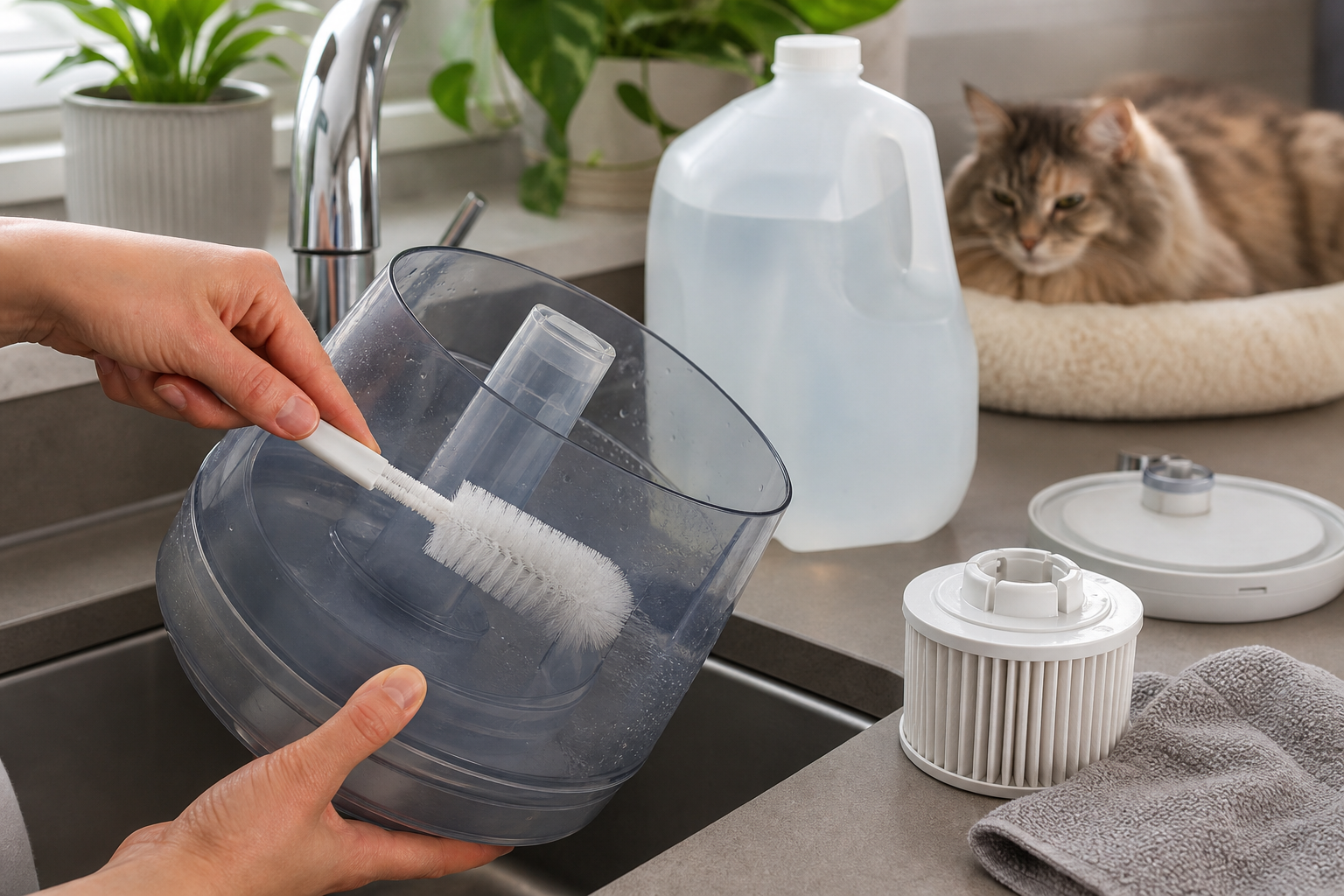
- Daily tank access: you should be able to empty the tank, wipe surfaces dry and refill it without awkward corners.
- Cleaning schedule: the EPA recommends cleaning portable humidifiers every third day, so the design has to make that realistic.
- Water requirement: ultrasonic and impeller models may need distilled or low-mineral water to reduce white dust and scale.
- Humidity control: a built-in humidistat or a separate hygrometer helps keep indoor humidity from getting too high.
- Filter and cartridge availability: check the exact model number, multipack cost and whether third-party replacements are actually compatible.
- Pet placement: the cord, tank, mist outlet and buttons should be out of paw reach and away from bedding that can become damp.
Cool mist, warm mist or evaporative?
Cool-mist models are common in pet rooms because they avoid hot steam at the outlet, but “cool mist” does not automatically mean low maintenance. EPA guidance says ultrasonic and impeller humidifiers are the types most associated with dispersing minerals and microorganisms from the tank into indoor air. That is why the water source and cleaning access matter.
Evaporative humidifiers use a fan and wick or filter to add moisture more invisibly. The EPA notes they are not expected to disperse substantial amounts of minerals, but the wick or filter becomes a recurring cost. Steam vaporizers heat water, which creates burn concerns if a pet or child can reach the unit, so placement and supervision become more important.
For a pet-shopping decision, do not treat one type as automatically best. Match the device to the room, cleaning routine, water cost and your pet’s behavior.
Do not buy it as an essential-oil shortcut
A humidifier is not the same purchase as a scent diffuser. The ASPCA says concentrated essential oils can be dangerous for pets through contact, grooming or ingestion, and animals with respiratory problems may be a higher-risk group around diffusers. ASPCApro also cautions that birds are more likely to have respiratory effects from diffusers and that pets should be able to leave the area if a scent is too strong.
That matters at checkout because many small mist devices are marketed with aroma pads, oil trays or “spa” language. If you are buying for a dog or cat room, prefer plain water operation and read the manual before adding anything to the tank. Do not rely on a marketplace phrase such as “natural,” “calming” or “pet friendly” as a safety check.
Deal and coupon checks before paying
Humidifier discounts can be real, but the useful deal is the one that still works after the first month. Check whether the coupon applies to the exact model, whether replacement filters are excluded, and whether a lower sale price is offset by proprietary cartridges or a short return window.
If you are buying through a pet retailer or marketplace, verify the return terms before filling the tank. PetSmart’s return page says online purchases can generally be returned in store for the purchase price minus shipping and other charges, with product condition and packaging rules. Petco’s return page also sets return conditions by product type. Chewy’s Autoship page and current deal pages may be useful for repeat supplies, but do not assume a humidifier or its filters qualify for every recurring discount.
Keep the product box until you have tested the tank fit, noise, controls, cord reach and cleaning access with plain water. Do not wait until scale, odor or a damaged filter makes the unit harder to return.
What to avoid
- Do not buy a unit with a tank opening too small to scrub.
- Do not place mist where it keeps bedding, carpet, drapes or furniture damp.
- Do not run humidity so high that condensation appears on windows or walls.
- Do not add essential oils unless your vet has cleared the setup and the product manual allows it.
- Do not assume “quiet” means your pet will accept it. Nervous cats and noise-sensitive dogs may avoid the room.
- Do not use a smart app feature as a substitute for checking the room and the tank yourself.
Quick answers
Is a humidifier automatically good for dogs or cats?
No. It may help dry indoor air feel more comfortable, but it is not a treatment plan. Pets with coughing, wheezing, skin problems or ongoing discomfort need veterinary guidance, not a gadget-only fix.
Should I choose ultrasonic because it is cheap?
Only if you are comfortable with the water and cleaning requirements. Ultrasonic models can be inexpensive, but EPA guidance highlights mineral dispersal and white-dust concerns with tap water.
Can I use essential oils in a pet-room humidifier?
Do not treat that as a normal add-on. ASPCA guidance urges caution around essential oils, especially concentrated oils, pets with respiratory problems and households with birds.
What is the simplest buying rule?
Buy the humidifier you will actually clean. A smaller, easy-to-open model with clear filter availability can be a better pet-room purchase than a larger unit with vague maintenance instructions.
Sources
Last checked: August 27, 2026, 01:32 CEST, Europe/Rome.