
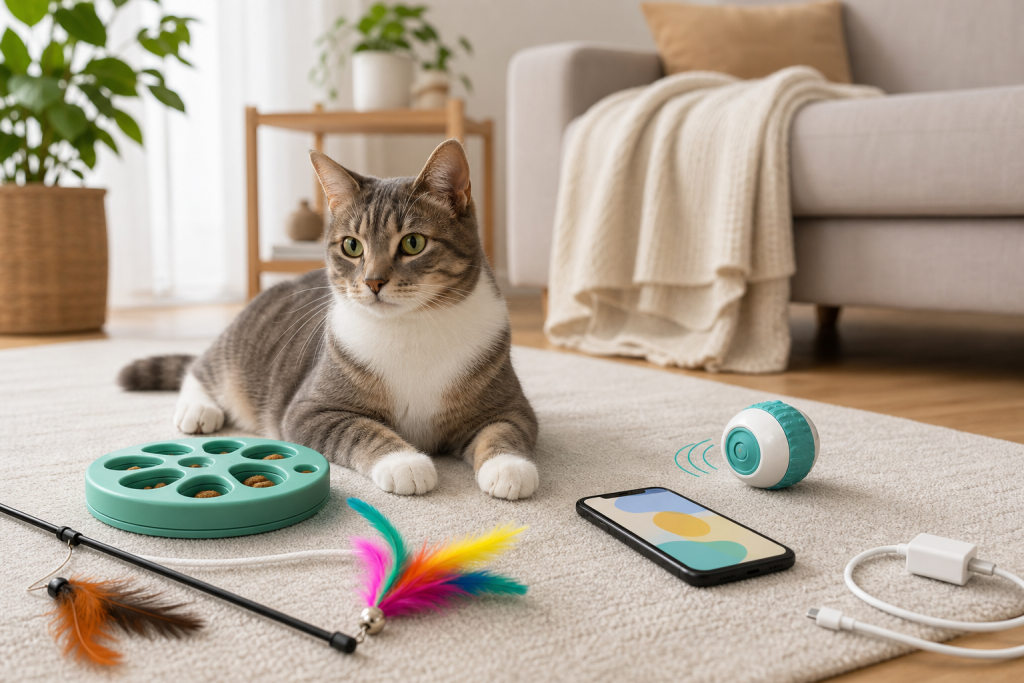
#cat enrichment
#cat toys
#interactive cat toys
#pet deals
#pet tech
#smart pet devices
A cheap interactive cat toy can be a bad deal if the motor, battery, app or replacement parts fail before your cat builds a habit around it. The better buy is the toy your cat can actually catch, the one you can clean, recharge, return and keep using without a surprise subscription or unsafe small parts. Before checkout, compare the play value and the after-purchase costs, not just the motion demo.
Interactive cat toys are easy to justify right now. Pet spending is still high, APPA projects $165 billion in U.S. pet industry sales for 2026, and the supplies, live animals and OTC medicine category alone is projected at $35.6 billion. Retailers also now sort cat toys into electronic, interactive and smart-home categories, which makes a moving mouse or app-controlled laser feel like a small tech upgrade rather than a simple toy purchase.
That is exactly where the mistake happens. A motorized toy can be useful enrichment, especially for indoor cats, but it is not automatically better than a wand, ball track, cardboard box, food puzzle or short human-led play session.
Why the first charge matters more than the first discount
The first charge tells you whether the toy fits your real routine. If it needs a proprietary cable, takes hours to charge, runs for only a short session, makes a noise your cat hates or has a fabric cover that traps hair, the sale price stops looking clever.
Ohio State’s Indoor Pet Initiative emphasizes that indoor cats need outlets for normal behaviors and that cats should be allowed to show preferences. Its enrichment guidance also says toys should be rotated to maintain novelty, and that play should let cats stalk, chase, pounce and bite. In other words, movement is only one part of the purchase. The toy still has to suit your cat’s comfort, confidence and hunting style.
For many cats, the best electronic toy is not the fastest one. It is the one that pauses, changes direction gently, works on your flooring, and gives the cat something physical to catch at the end.
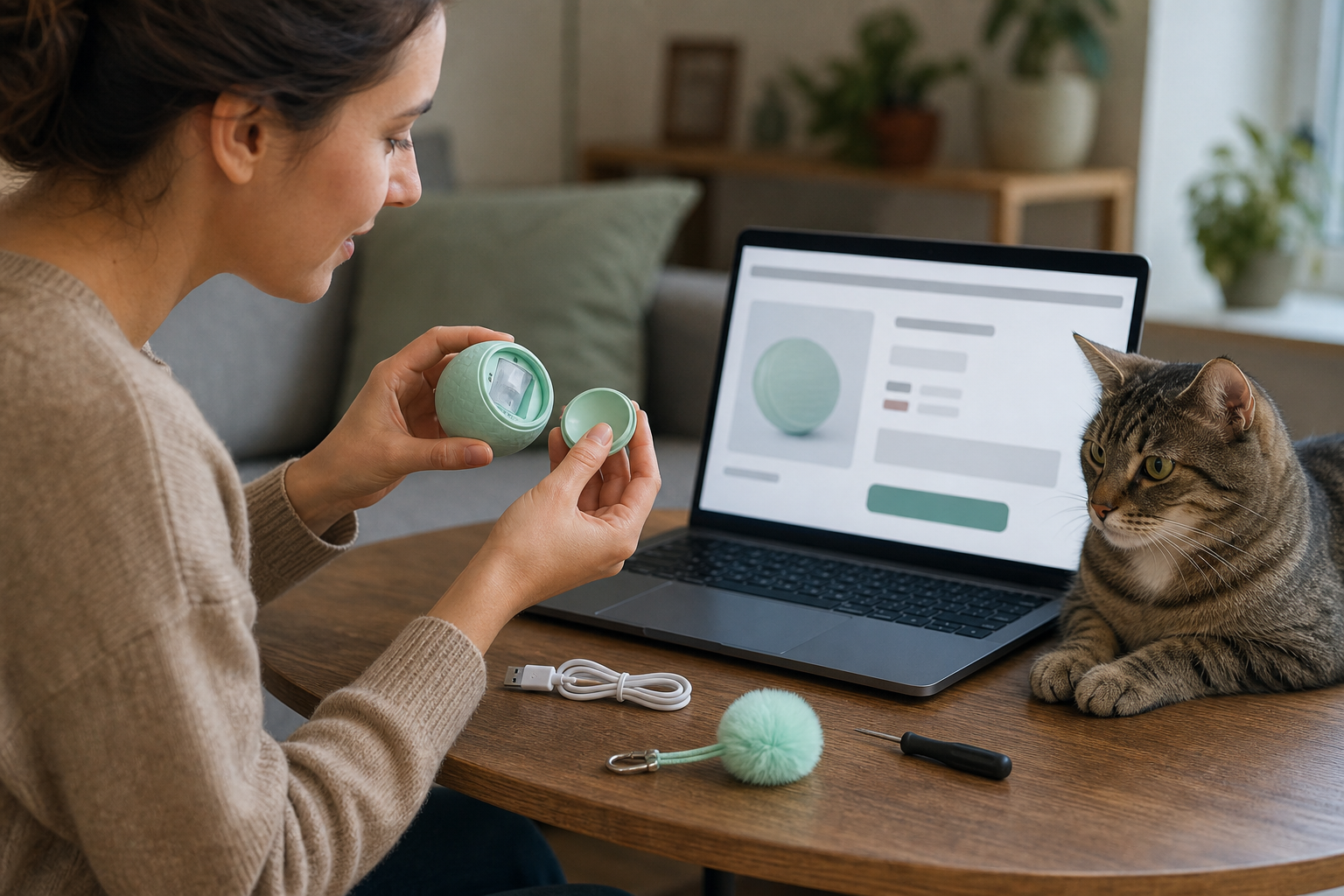
The checkout checks that separate a toy from clutter
Start with the play pattern. If your cat likes hiding and ambushing, a slow rolling toy or wand-style electronic attachment may work better than a frantic floor robot. If your cat is easily startled, check reviews for motor noise, sudden starts and whether the toy bumps into furniture.
Then check the power system. USB charging is usually easier to live with than disposable batteries, but only if the cable is standard and replaceable. If the toy uses coin or button batteries, inspect whether the compartment is secured with a screw or tool. The U.S. Consumer Product Safety Commission warns that button and coin batteries can be dangerous when accessible, and toy battery compartments should be secured. That warning is written for consumer safety, but pet owners should treat loose batteries as a serious household hazard too.
Look for replacement parts before you buy. Feather attachments, fabric covers, wheels, silicone tails and charging cables are often the first pieces to wear out. If the brand does not sell replacements, the real cost is the whole toy again.
Cleaning matters as much as movement. A toy that rolls through litter dust, cat hair and food crumbs should have removable, washable surfaces. Avoid designs with deep seams that trap grime or soft parts that cannot be replaced after chewing.
When app-connected cat toys deserve extra scrutiny
An app-controlled toy may sound convenient if you work long hours or want remote play, but it adds the same questions as other connected pet devices. The FTC advises owners of internet-connected devices to change default credentials, use available security features, keep firmware and apps updated, and disable or disconnect features they do not use.
Before buying a connected cat toy, check whether the app still receives updates, whether it requires an account, whether video or audio is involved, whether remote access can be turned off, and whether the device works without the cloud. A toy that becomes useless when an app is abandoned is not a durable deal.
Also check whether the advertised smart features are actually useful. Scheduled play can help some households, but it should not replace supervision for a cat that chews cords, swallows small pieces or gets overstimulated.
Deal and coupon checks before you pay
Do not let a coupon choose the toy. Let the return window, replacement-part access and total cost decide whether the coupon is worth using.
- Check the final cart price after shipping, taxes and any minimum-spend rule.
- Confirm whether the discount applies to the exact model, not just the brand or category.
- Look for subscription defaults, app memberships or paid cloud features on connected toys.
- Read the return terms for opened electronic pet items before assuming you can test it risk-free.
- Compare the cost of replacement attachments, batteries and charging cables.
- Save the order email and packaging until you know your cat will use the toy safely.
Retailer policies vary. Chewy lists a broad return window, while Petco describes 60-day returns with specific in-store and mail conditions. Policies can change and can include exclusions, so the product page and cart terms matter more than a general memory of a retailer’s return policy.

What to avoid
Avoid tiny detachable parts if your cat chews or if you have children in the home. Skip toys with loose battery doors, exposed cords, sharp plastic edges, unknown replacement parts or a return policy that does not fit the risk of your cat ignoring it.
Be careful with laser-only toys. Ohio State’s enrichment guidance notes that light-beam games should be followed by a treat or toy, so the cat gets a reward after the hunt. A toy that only creates frustration is not a bargain, even if the video looks impressive.
Do not buy a device because it promises to fix boredom by itself. If your cat is hiding, acting fearful, suddenly less active, chewing unusual objects or showing a major behavior change, ask your veterinarian before turning the problem into a shopping trip.
A better buying framework
Pick one primary job for the toy. Is it for solo batting, supervised chase, food-puzzle work, kitten energy, senior-cat gentle movement or remote check-ins? A focused toy is easier to judge than a gadget that claims to do everything.
For most homes, a sensible kit looks like this: one interactive electronic toy that can be cleaned and recharged, one wand or teaser toy for human-led play, one puzzle or treat toy, and a few low-cost objects you can rotate. That mix protects you from spending too much on one gadget your cat may not choose.
FAQ
Are interactive cat toys worth buying?
They can be worth buying when they match your cat’s play style, have safe parts, are easy to clean and do not rely on an app or battery system you will abandon. They are not automatically better than simple toys.
Should I buy a laser cat toy?
If you use one, avoid shining it near eyes and end the session with a physical toy or treat your cat can catch. A laser-only routine can frustrate some cats because there is nothing to grab.
What is the biggest hidden cost?
Replacement parts and power. Attachments, covers, batteries, cables and app support can decide whether a discounted toy lasts months or becomes clutter after one weekend.
Can an automatic toy replace playing with my cat?
No. It can supplement play, but your cat still benefits from routine, choice, observation and human interaction. Supervise new toys until you know how your cat uses them.
Sources
Last checked: 2026-06-01 07:31 Europe/Rome.
- American Pet Products Association, Industry Trends and Stats.
- Ohio State University Indoor Pet Initiative, For Cat Owners.
- Ohio State University College of Veterinary Medicine, Environmental Enrichment for Indoor Cats.
- U.S. Consumer Product Safety Commission, Button Cell and Coin Batteries.
- FTC Consumer Advice, Securing Your Internet-Connected Devices at Home.
- Chewy return policy.
- Petco return policy.