
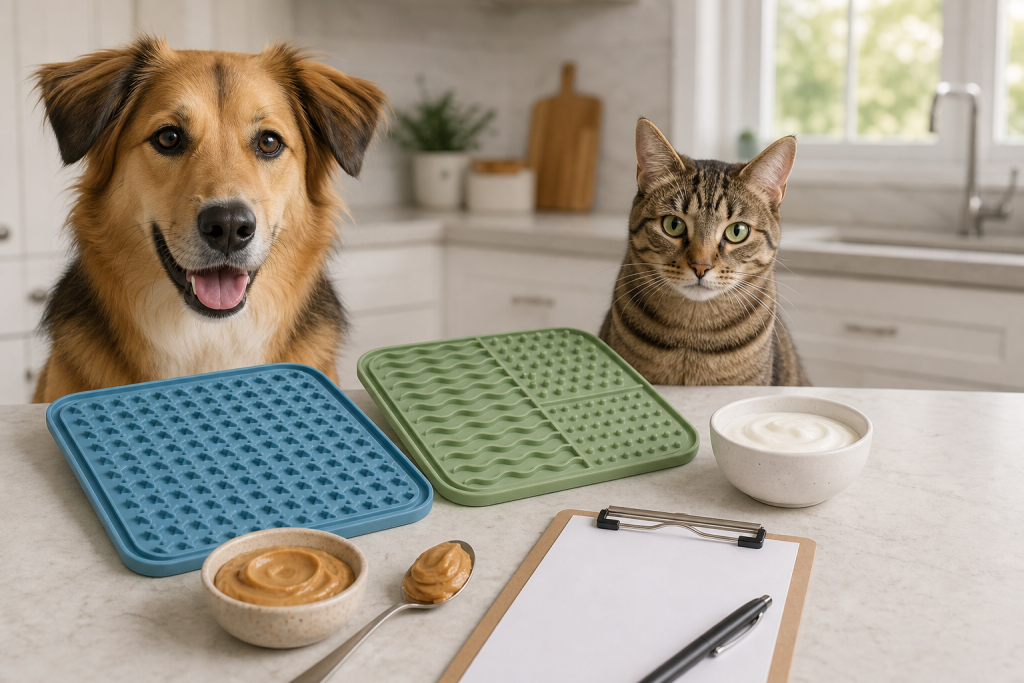
A lick mat deal is worth considering only if the mat is safe for food contact, easy to clean completely and matched to what your dog or cat can eat. The cheap part can disappear fast if leftover food dries in tiny grooves, the suction cups fail, or you load it with calorie-heavy spreads. Before checkout, treat the mat like a food bowl, not just a toy.
Lick mats are everywhere in pet shopping right now because they promise a simple win: spread a soft snack, slow your pet down and keep them busy during grooming, baths, crate time or a quiet afternoon. That idea can be useful, but the buying decision is not just about the cutest pattern or the biggest multipack. The better question is whether you can clean the mat after every use and whether the food you smear on it actually fits your pet.
Why this matters now
Late-summer shopping lists are full of boredom-busters, grooming helpers and slow-feeding products. Amazon surfaces lick mats in pet supply listings, and the American Kennel Club published fresh guidance on lick mats in August 2026, including cleaning and material checks. That combination makes lick mats a high-demand product, but also a product where owners can overbuy before thinking through maintenance.
The risk is not that every lick mat is bad. The risk is that shoppers see a low price, a pack of three and a few calming claims, then miss the practical details that decide whether the mat will be used safely more than once.
The checkout checks that matter
Start with the material. Look for clear wording that the mat is intended for food contact, such as food-grade silicone, food-grade rubber or another stated food-safe material. If the listing only says “pet safe” with no material detail, that is weaker than a product page that says what the mat is made from and how it should be cleaned.
Next, look at the groove depth. Very tight textures can keep a dog busy, but they also trap peanut butter, canned food, yogurt or wet food. If you cannot imagine a brush reaching the lowest parts, the mat may become a one-use frustration. Wide grooves are usually easier to wash. Very deep pockets may need soaking before scrubbing.
Check whether the mat is dishwasher-safe, freezer-safe or hand-wash only. The AKC notes that some food-grade silicone lick mats are dishwasher-safe, while natural rubber mats are often cleaned with warm water and soap. That difference matters if you plan to use the mat daily.
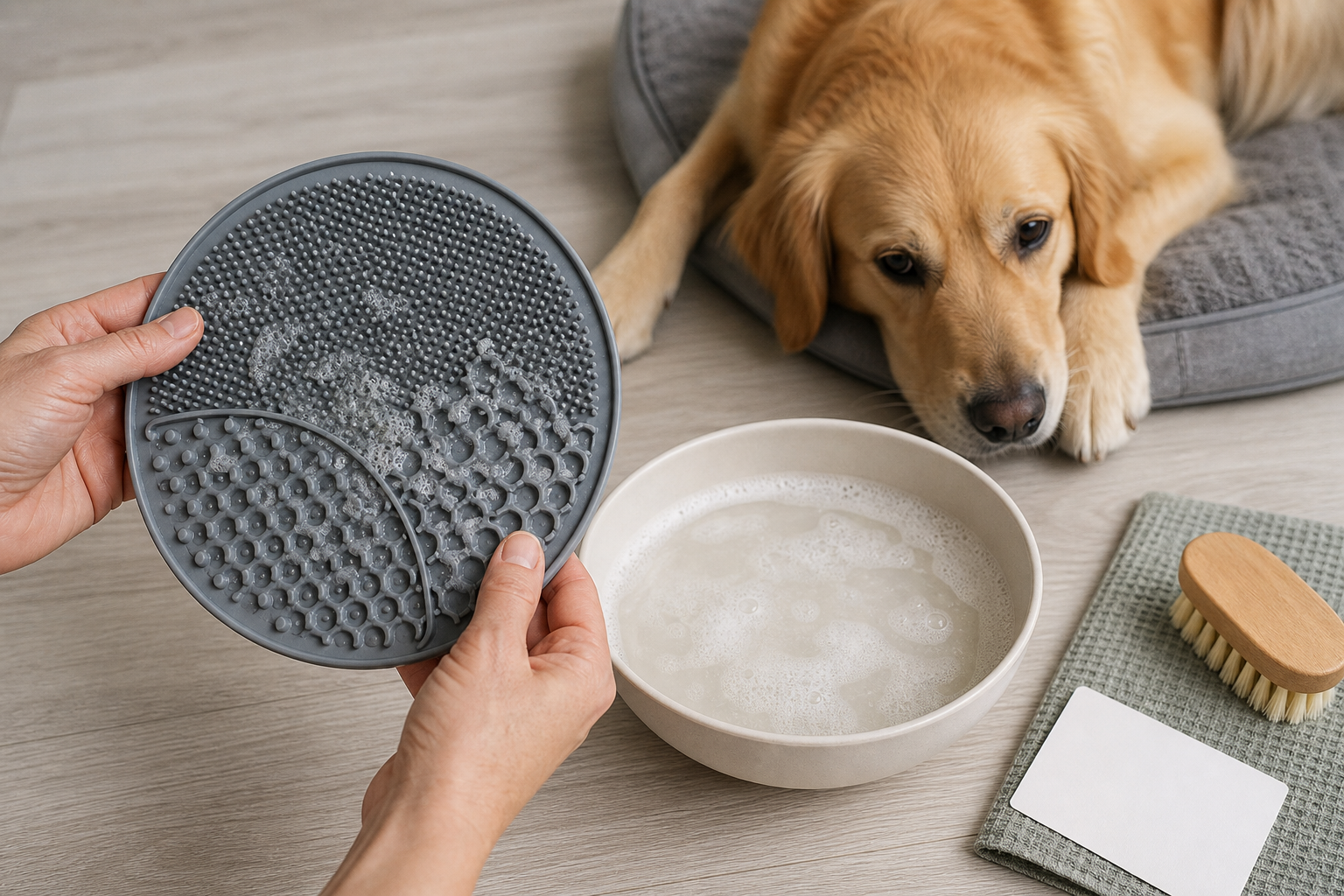
Also check the size and suction. A tiny mat can be fine for a small dog or cat, but it may be frustrating for a large dog with a wide tongue. Suction cups can help during baths or grooming, but only if the listing says what surfaces they are designed to stick to. Tile, glass and smooth tubs are different from textured floors.
The food mistake that makes a cheap mat expensive
The mat does not decide whether the snack is safe. You do. Plain wet food, a small amount of pet-safe peanut butter, pumpkin without sweeteners, or a vet-approved diet spread can work for many pets, but the ingredient label still matters.
For dogs, peanut butter is the classic lick mat spread, yet PetMD warns that it should not contain xylitol and should be fed in moderation because it is high in fat and calories. Some labels now use “birch sugar” for xylitol, so check the full ingredient panel rather than only the front of the jar.
Calories are the hidden cost. The AVMA advises keeping treats under 10 percent of a pet’s daily calorie needs. A thick layer of peanut butter or cream cheese can turn a “calming” mat into a daily calorie problem, especially for small dogs, indoor cats, senior pets or pets already on a weight plan. If your pet has pancreatitis history, food allergies, kidney disease, diabetes or another diet-sensitive condition, ask your veterinarian before turning any spread into a routine.
Deal and coupon checks before paying
A multipack is not automatically better. Two or three mats make sense if you freeze meals in advance or have multiple pets, but only if each mat is the right size and texture. A cheap bundle of flimsy mats can be worse than one sturdy mat you can clean properly.
Before using a coupon or sale filter, compare the actual use case:
- Material stated clearly as food-contact safe.
- Cleaning instructions you will realistically follow after every use.
- Texture that fits your pet’s tongue size and your cleaning brush.
- Freezer or dishwasher claims only if you need those features.
- Return policy in case the suction cups fail or your pet tries to chew the mat.
Do not buy by star rating alone. Read low-rated reviews for repeated complaints about odor, staining, tearing, suction failure and food trapped in grooves. If several buyers say the mat smells strongly of plastic out of the package, choose a different product.
What to avoid
A lick mat is not a chew toy. If your dog or cat tries to bite off the corners, remove it and use a sturdier enrichment product. Silicone and rubber are useful surfaces for licking, but they are not meant to be swallowed.
Avoid using a dirty mat twice. The AKC specifically advises cleaning lick mats after each use to help prevent mold and bacterial growth. If food residue remains after washing, do not just put the mat back in the freezer with another layer on top.
Avoid spreading anything just because it looks popular in a video. Chocolate, xylitol-sweetened products, heavily salted spreads, rich dairy and unknown supplement blends do not become safe because they are smeared thinly. For cats, be even more cautious with dairy and rich spreads, and favor foods already known to suit that cat.
Quick answers
Are lick mats good for dogs?
They can be useful for slow feeding, enrichment and short distractions, but they need supervision, safe food and thorough cleaning.
Can cats use lick mats?
Some cats enjoy them, especially with a small amount of wet food or a familiar treat paste. Choose a shallow texture and do not force it if your cat ignores the mat.
Is a dishwasher-safe lick mat always better?
It is convenient, but only if the manufacturer clearly says the mat is dishwasher-safe and the texture still comes clean. Hand-wash-only mats can be fine if the grooves are easy to scrub.
What should I put on a lick mat?
Use a small amount of food your pet already tolerates. For dogs, check peanut butter for xylitol or birch sugar and keep rich spreads occasional.
Sources
Sources last checked: August 22, 2026, 10:36 CEST, Europe/Rome.