
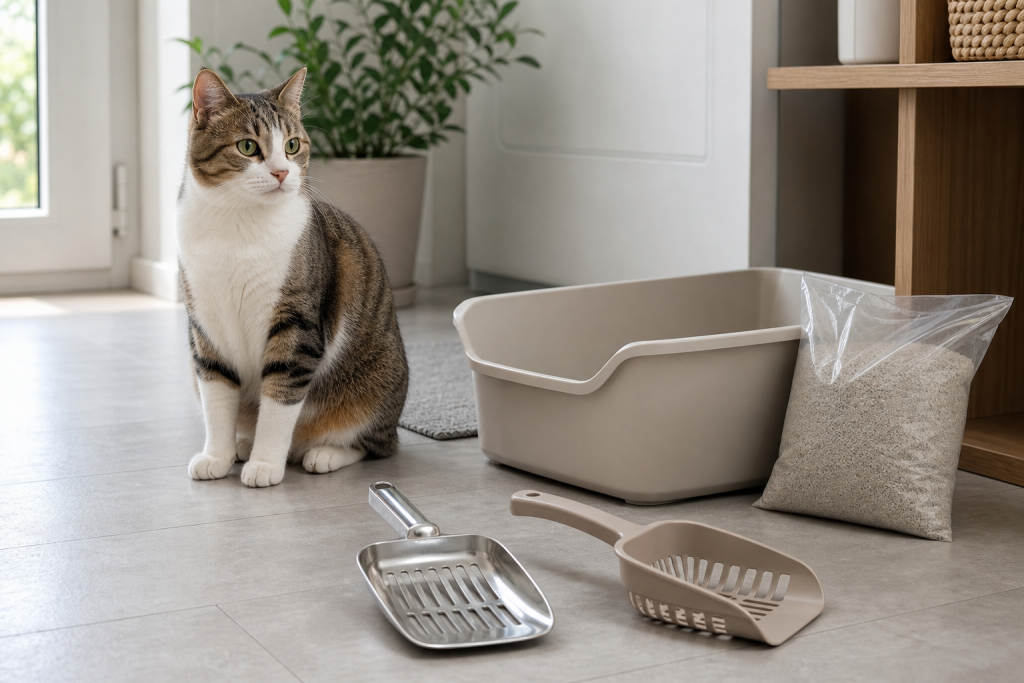
#cat litter scoop
#litter box cleaning
#litter scoop caddy
A litter scoop caddy looks like a tiny add-on, but it can make the litter area dirtier if it traps residue, tips over or cannot be washed properly. The deal is only useful when the holder keeps the used scoop off the floor, lets air move, and can be cleaned as easily as the scoop itself. Before checkout, check the base, drainage, scoop fit and return terms instead of buying the cheapest bundle.
Why This Small Litter Accessory Matters Now
Cat litter products keep getting split into smaller accessories: liners, mats, deodorizer pods, pails, scoops and matching holders. That can be helpful, but it also makes it easier to buy a low-cost bundle that solves one mess and creates another. A caddy is especially easy to overlook because it is not touching the cat. It is touching the tool you use in the box every day.
The hygiene angle is real. CDC guidance on pet supplies says pet items should be cleaned and disinfected as needed, and litter equipment belongs in that practical cleaning mindset. Cornell Feline Health Center also emphasizes clean litter box management as part of normal cat care. A scoop holder does not replace daily scooping or box cleaning, but it can make those habits easier or more annoying.
The Checkout Detail Most Cat Owners Miss
The important question is not whether the caddy looks tidy in a product photo. It is whether you can clean the inside corners after a used scoop sits there. Closed-bottom holders can collect damp litter dust, plastic edges can stain, and narrow slots can make it hard to rinse or dry the base.
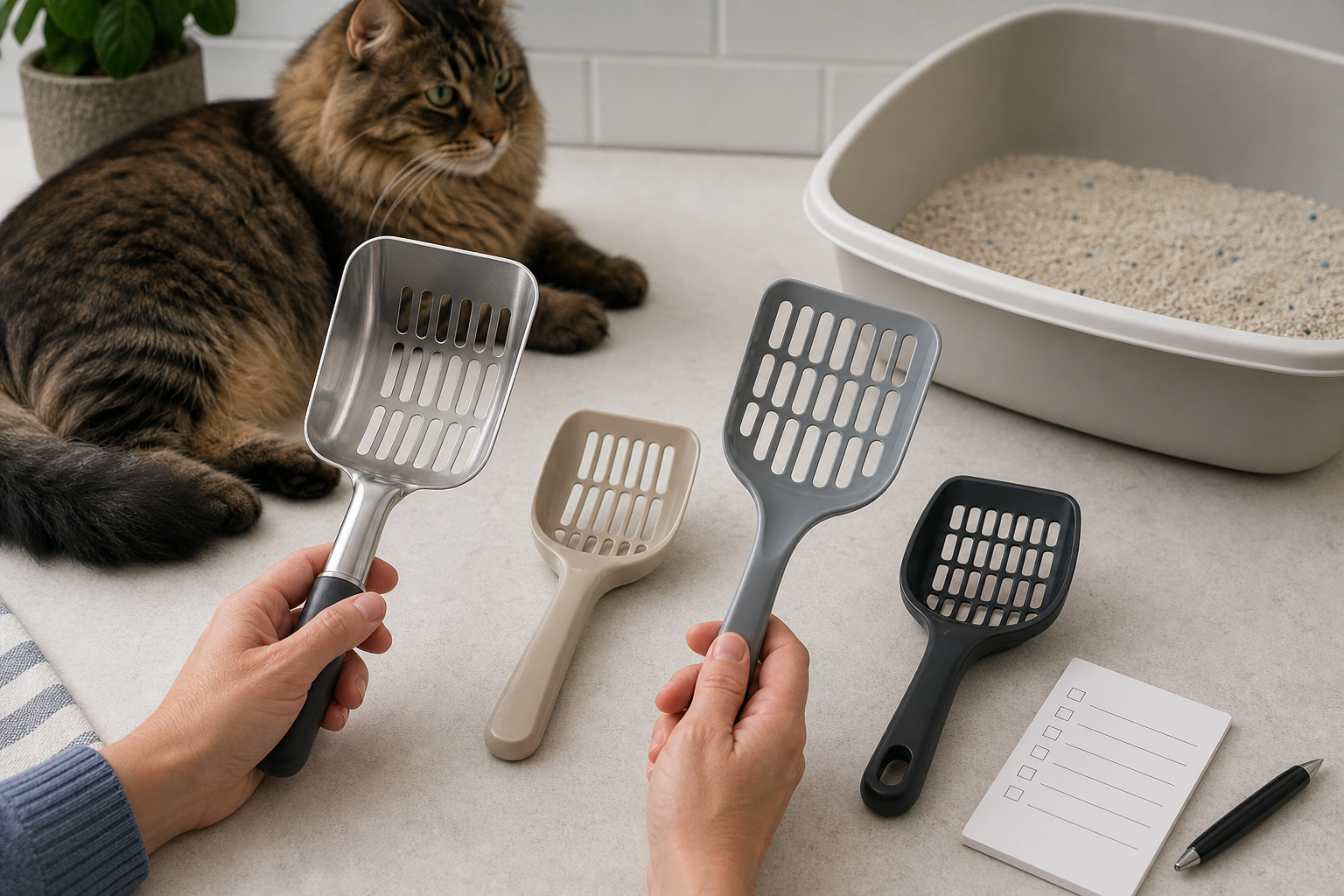
If the holder is bundled with a scoop, check the scoop too, but do not let the bundle distract you. A strong metal scoop in a badly designed holder can still leave the litter area messy. A plastic scoop and matching holder may look neat, but the caddy needs to be stable enough that the scoop does not fall onto the floor or behind the box.
What To Check Before Buying A Litter Scoop Caddy
- Washability: Look for smooth surfaces, accessible corners and a base that can be rinsed without trapping sludge.
- Ventilation: A fully sealed holder may hide the scoop, but it can also slow drying after cleaning.
- Stability: The caddy should stay upright when the scoop is dropped in quickly, especially near a covered or high-sided box.
- Scoop fit: If you already own a favorite scoop, compare handle width and blade depth before buying a holder-only deal.
- Material: Plastic is light and cheap, but check for flexing, sharp seams and whether the product page explains cleaning care.
- Placement: Measure the floor space beside the litter box. A caddy that blocks the cat’s entry path is not a good deal.
- Return terms: Litter accessories are easy to misjudge online. Check whether opened pet-supply returns are allowed and who pays return shipping.
When A Bundle Is Not Really A Deal
Retailer listings from Chewy and other pet-supply stores show that litter scoops and holders are often sold as low-cost add-ons, standalone tools or bundled sets. That makes comparison tricky. A bundle can be worthwhile if you need both pieces, but not if the scoop is flimsy, the caddy is hard to wash, or the set only fits one brand’s shape.
Before paying, compare the bundle against buying the scoop and holder separately. Check shipping thresholds, coupon exclusions and marketplace seller identity. Do not assume a coupon makes the better product cheaper. If the holder cannot be cleaned well, any small checkout savings can disappear into replacement costs and a dirtier litter area.
Safety And Hygiene Mistakes To Avoid
Do not store the scoop on a food-prep counter, bathroom sink edge or anywhere a child can play with it. Keep litter tools separate from kitchen cleaning tools, and wash your hands after scooping or handling the caddy. If someone in the home is pregnant, immunocompromised or has been told to avoid litter-box duties, follow medical guidance from their clinician.
A caddy should also avoid stressing the cat. Do not place a tall, wobbly holder where it narrows the litter-box entrance, scrapes the cat’s side or creates a noisy obstacle. If your cat starts avoiding the box after you rearrange the area, remove the new accessory and ask your vet if avoidance continues.
Best Uses For This Type Of Accessory
A litter scoop caddy makes the most sense when the box is in a laundry room, mudroom, bathroom corner or small apartment area where the scoop otherwise ends up on the floor. It is less useful if you already store the scoop in a washable bin, or if the box is inside furniture where a separate holder will crowd the cat.
For multi-cat homes, focus on cleaning speed. A holder that is easy to empty, rinse and dry is better than a decorative one. For covered litter boxes, measure the door side and the scoop handle. Some wide metal scoops are excellent tools but awkward in narrow holders.
Quick Answers
Is a litter scoop caddy necessary?
No. It is a convenience purchase. It is worth considering if it keeps the scoop off the floor and is easy to clean, but a washable utility bin can also work.
Should I buy a metal scoop with a caddy?
Only if the holder actually fits it. Metal scoops can feel sturdier than many plastic ones, but a heavy scoop may tip a lightweight caddy.
Can a caddy control litter-box smell?
Not by itself. Odor control still depends on scooping, litter choice, box cleaning, ventilation and whether the cat is using the box normally.
Sources
Sources last checked: September 12, 2026, 16:35 CEST, Europe/Rome.