
#cat costumes
#dog costumes
#Halloween pet safety
#pet costumes
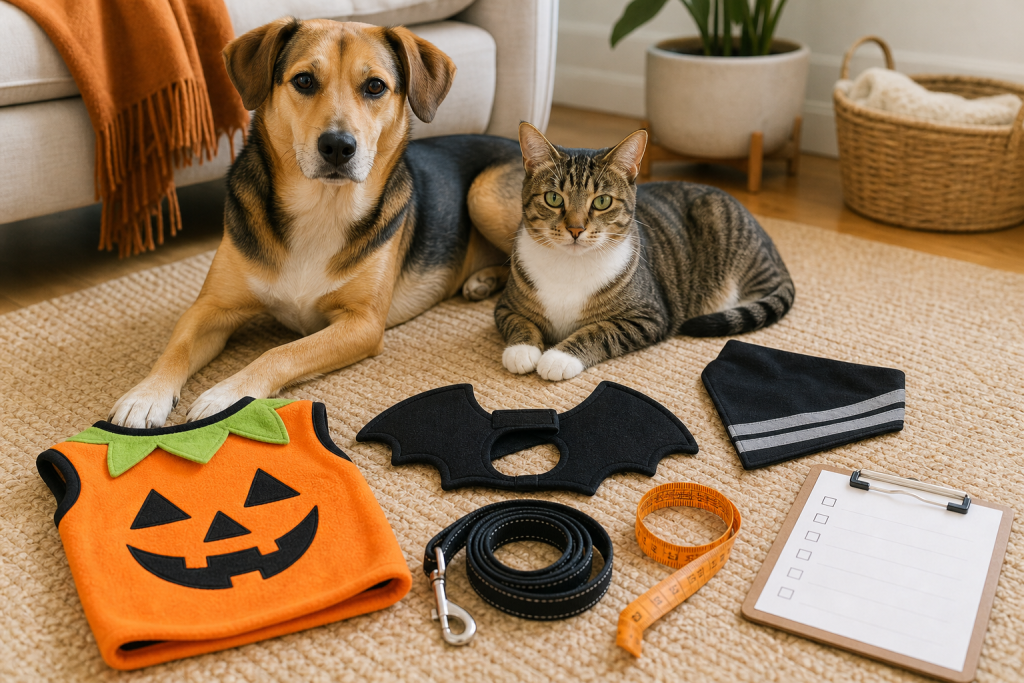
A cheap pet Halloween costume fails before the first photo when it blocks movement, covers the face, has chewable pieces or cannot be returned after a quick try-on. The safer buy is usually the boring one: a soft vest, bandana or simple wings that your dog or cat can wear briefly without stress. Before checkout, measure your pet, read the return terms and ignore any costume that needs a perfect pose to look safe.
Why this matters now
Pet costume shopping starts well before October. Target already shows a live pet Halloween costume category with dog and cat filters, pickup, same-day delivery and shipping options, while Amazon has active dog costume best-seller and new-release pages. That does not mean every early deal is worth grabbing.
The risk is that a low price can hide the real cost: a costume that twists, sheds small parts, traps heat, scares the pet or cannot be returned once opened. The ASPCA says costumes should not limit a pet’s movement, sight, breathing, barking or meowing, and that small dangling or chewable pieces can be choking hazards. The AKC gives similar dog-specific warnings about beads, snaps, buttons, ribbons, elastic and fabric that can become hazards.
The checkout test before you buy
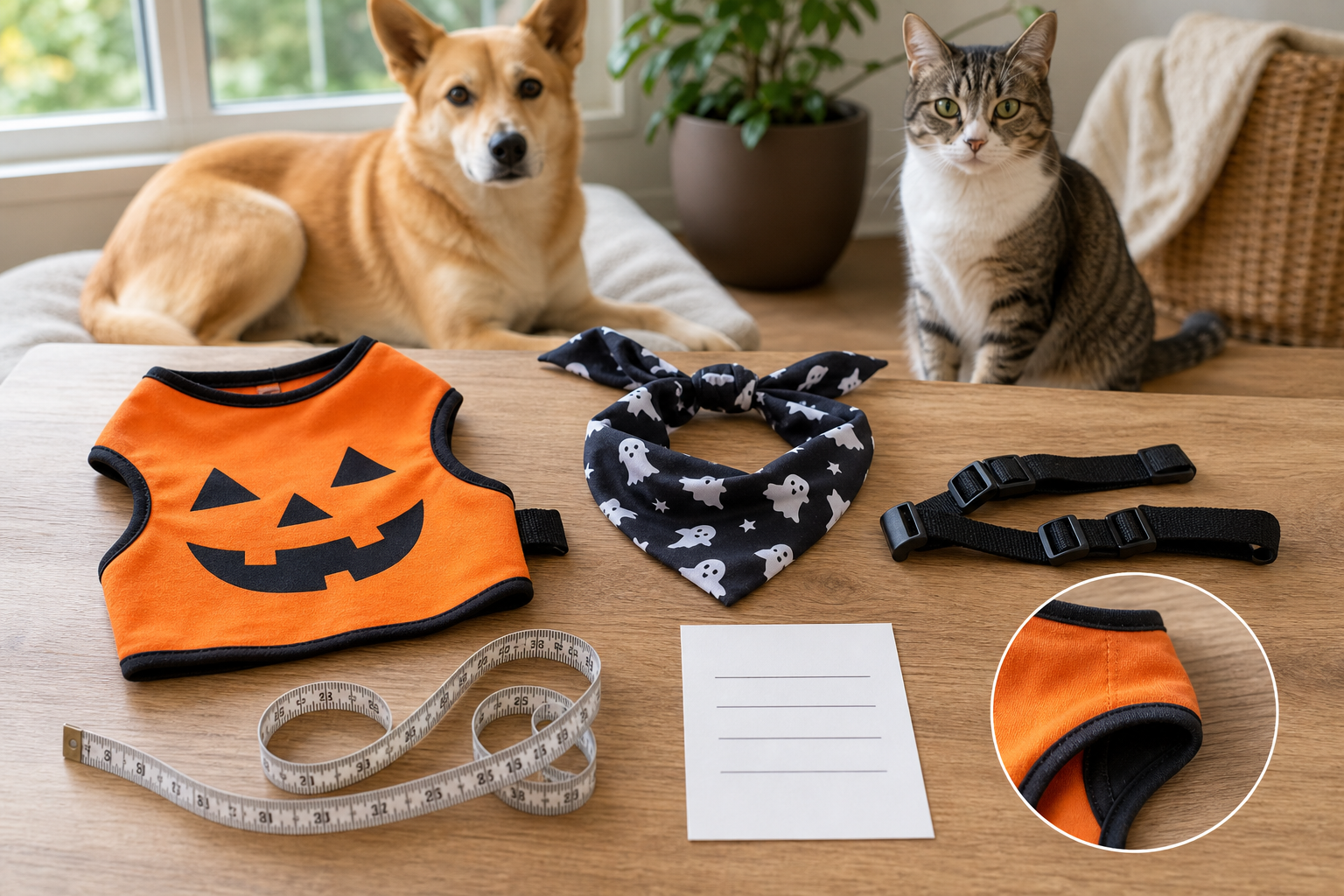
Start with fit, not the character. Measure your pet’s neck, chest and body length, then compare those numbers with the seller’s size chart. Do not buy by breed alone. A small terrier, a lean cat and a stocky puppy can all land in different sizes even when listings use the same “small” label.
Next, look at how the costume closes. Hook-and-loop straps, wide elastic and adjustable chest bands are easier to test than tiny buttons or tight sleeves. A costume should let your pet walk, sit, turn, drink and use the litter box or go outside normally. If the product photo only shows a pet sitting still, assume you need a better fit check at home.
For cats, be especially conservative. Many cats tolerate a loose bandana or themed collar better than a full-body outfit. If your cat freezes, hides, rolls, bites at the fabric or tries to back out, the costume has already failed the practical test.
What a good pet costume deal includes
A useful deal is not just the lowest sticker price. It should give you enough room to test the costume before the event and return it if the fit is wrong. Check these details before paying:
- Clear size chart with neck, chest and length measurements.
- Adjustable closure, not a fixed tight neck opening.
- No small bells, beads, snaps, loose buttons or dangling cords.
- No mask that covers the nose, mouth or eyes.
- Fabric light enough for indoor photos without overheating.
- Return window that still works after delivery and try-on.
- Seller name, shipping date and final cart price after any coupon or sale badge.
Target’s return help page says most unopened Target-sold items in new condition have a 90-day return window, but it also says some items have modified policies and opened or damaged items may be denied. Target Plus partner items have different return language. That is exactly why a pet costume deal needs a return check before checkout, not after your dog refuses to move in it.
The hidden cost in cute costumes
The most expensive costume is the one you buy twice. Full-body designs can be funny in a listing photo, but they can also rub under the front legs, catch on a harness, slide over the eyes or make a pet too warm indoors. Hats, wigs and headpieces are often worse because they move into the field of vision or invite chewing.
If you want the photo without the fight, buy a simpler item. A reflective Halloween hoodie, a light bandana, a soft collar accessory or loose wings can be enough for a quick picture. The ASPCA also suggests skipping the outfit or using a festive bandana if the pet seems distressed.
Deal and coupon checks
Do not treat a “sale” badge as proof that the costume is a deal. Seasonal items often move through promotions, clearance and marketplace listings quickly. Before paying, check the final cart price, shipping cost, delivery date, return route and whether the seller is the retailer itself or a marketplace partner.
If you are using a coupon, verify it on the final checkout screen. A buy-one-get-one promotion can be useful only if you actually need two sizes or two pets will wear the items. If you are buying a backup size, confirm whether you can return the unused one without losing the promotional value.
Pet owners should also avoid buying the costume so late that there is no time for a calm trial run. A rushed try-on on Halloween night is when sizing, stress and chewable trim become obvious too late.
What to avoid
Skip costumes that rely on tight neck loops, covered faces, stiff hats, loose ornaments, glitter that sheds, long dragging fabric or pieces that look like toys. Avoid anything your pet has to wear unsupervised. The AKC warns that dogs should not be left unattended while wearing clothing or decorative items, and the ASPCA warns that ill-fitting outfits can twist on objects or the pet.
Also avoid matching human accessories that end up within reach. Halloween candy, wrappers, glow sticks, batteries and decorations are separate hazards around pets. A pet costume purchase should not add more small parts to a room that is already busy.
Quick answers
Are pet Halloween costumes safe?
They can be safe for some pets when they are loose, simple, supervised and tested before the event. They are not safe if they restrict breathing, sight, movement or normal behavior.
Is a bandana better than a full costume?
Often, yes. A bandana or light accessory is easier to fit and easier to remove if your dog or cat seems stressed.
Should cats wear Halloween costumes?
Only if the individual cat clearly tolerates it. Many cats are better off with no costume, a loose bandana or a festive photo prop placed nearby.
When should I buy?
Buy early enough to test the fit calmly and still use the return window. Do not wait until the night you need the photo.
Sources
Sources last checked August 4, 2026, 19:33 Europe/Rome.