
#pet medications
#pet pharmacy
#pet safety
#pill organizer
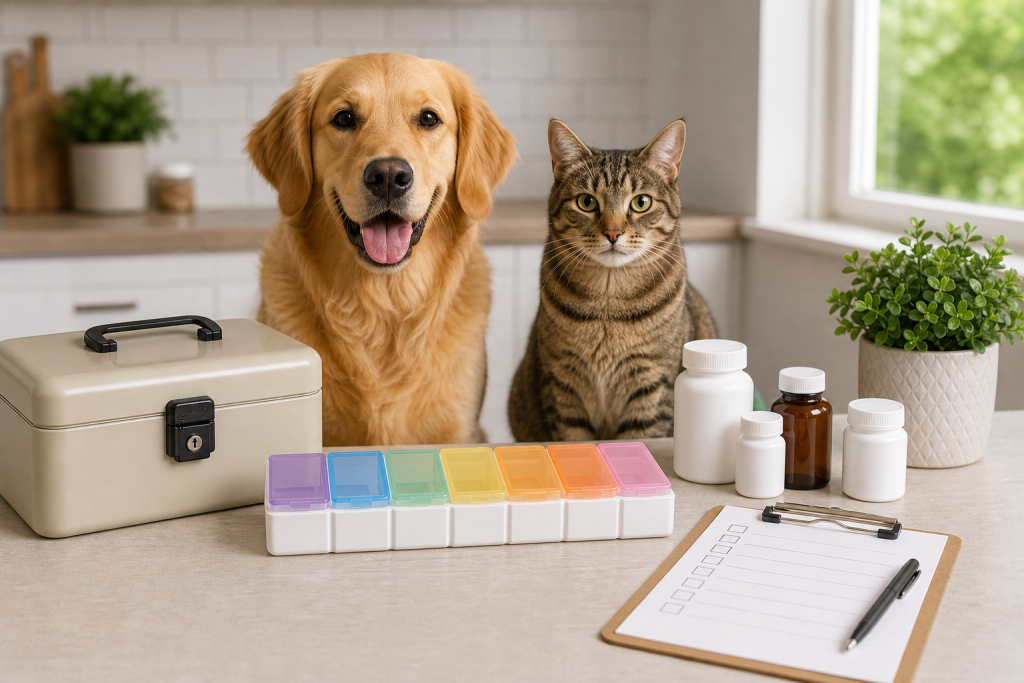
A pet pill organizer can be a bad deal if it makes medication easier to mix up, spill or separate from the original prescription label. The safer purchase is not the cutest weekly box. It is a setup that keeps each pet’s medicine clearly identified, sealed, out of reach and easy to double-check before you give anything.
This matters now because more pet owners are filling prescriptions online, using retail pharmacies and managing long-term refills at home. A low-cost organizer can help a routine, but it can also remove the label, storage directions and pet name from the dose. Before you add one to a cart, check whether it supports your vet’s instructions instead of replacing them.
Why This Matters Now
Pet medication shopping has become more convenient, with refill reminders, pharmacy apps, Autoship-style ordering and marketplace accessories sitting beside ordinary pet supplies. That convenience creates a new checkout mistake: buying a human-style pill case because it looks tidy, then using it in a way that makes pet medicine harder to verify.
The FDA tells pet owners to keep pet medications in their original containers with intact, legible labels. The AVMA also advises keeping medications sealed and stored securely away from pets. Those points do not ban every organizer, but they do change what a good organizer should do.
The Checks To Make Before You Buy
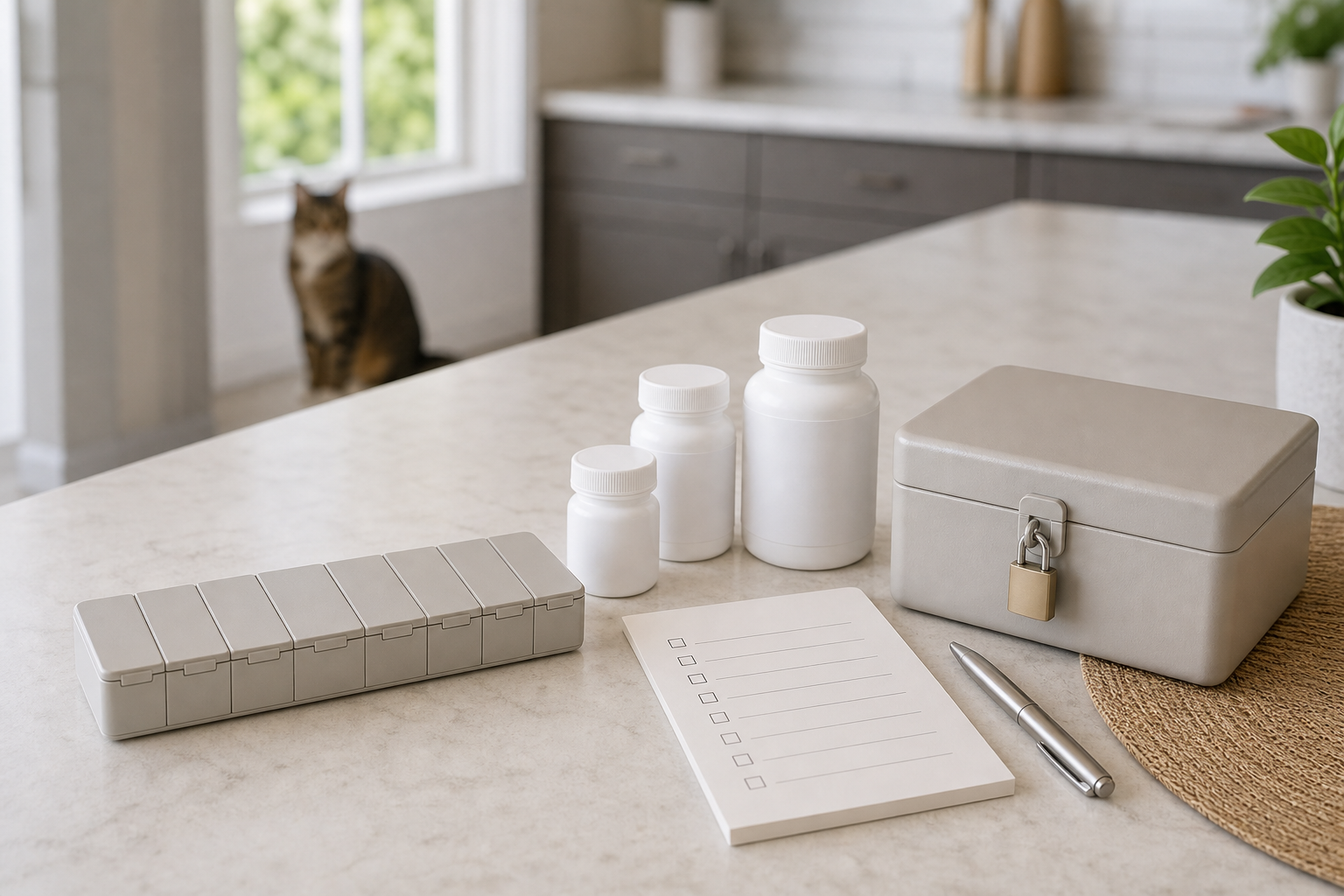
Start with the label problem. If the organizer requires you to dump every tablet into unlabeled compartments, it may be the wrong tool for a household with more than one pet, more than one medication or changing instructions. A better setup leaves room for the original bottle, blister card or a clearly labeled sealed bag inside a locked bin.
Check the closure next. Flip lids and cute travel cases can pop open in a purse, drawer or pet-supply tote. Look for a design that closes firmly, is not easy for a dog to chew open and can be kept behind a cabinet door or in another secure container.
Think about moisture and temperature. Some medicines have storage directions that do not fit a bathroom counter, sunny kitchen shelf or hot car. If a medication needs refrigeration or other special handling, do not move it into a generic box unless your veterinarian or pharmacist says that is appropriate.
Finally, plan for human medications. A pet organizer should not look exactly like the one used by a family member if both sit in the same area. Color, labels and storage location should make mix-ups less likely, not more likely.
Deal And Coupon Details To Verify
A discount on a pill organizer is only useful if the product fits the real routine. Count how many pets, doses and refill types you manage before buying a large weekly case. If the compartments are too small for wrapped pills, capsules or original blister pieces, the deal may push you toward unsafe repacking.
Check the return policy before opening multi-packs. Low-cost organizers are often sold in bundles, and the cheaper unit price may not matter if one lid is flimsy or the layout is confusing. If you are buying from a marketplace seller, check the seller name, materials, dimensions, closure photos and whether returns are handled by the retailer or a third party.
Do not count a pharmacy coupon, Autoship discount or accessory sale as proof that the organizer is right for the medication. Prescription directions, storage instructions and your vet’s advice should decide the system. The coupon should only decide where you buy it.
What To Avoid
Avoid organizers that erase the pet’s name, drug name, strength, expiration date or storage directions from the routine. If you use any organizer, keep the original container and label available so you can verify what you are giving.
Avoid leaving pill boxes on counters, nightstands, pet-food bins or treat shelves. Many pets investigate objects that smell like food, flavoring or people. A child-resistant cap is not the same thing as a pet-proof storage plan.
Do not use a pill organizer to change doses, split tablets, combine medicines or decide timing on your own. Those are veterinary or pharmacy questions. If a pet may have eaten medication by mistake, contact your veterinarian or an animal poison-control service promptly.
When It Can Be Worth Buying
A pet pill organizer can make sense when it acts as a secondary checklist, not as the only source of truth. It is most useful for a simple, stable routine where one adult fills it carefully, the original labeled containers stay nearby and the organizer is stored securely after each use.
It is less useful for short prescriptions, changing doses, refrigerated medicines, several similar-looking tablets, multiple pets with different instructions or households where children, sitters or relatives may give doses. In those cases, labeled original containers in a lockable storage box may be a cleaner purchase.
Quick Answers
Should pet medicine stay in the original bottle?
Yes, the original labeled container should stay part of the system. The FDA specifically points to intact labels because directions and the pet’s name need to remain legible.
Can I use a human pill organizer for my dog or cat?
Sometimes, but only if it does not create label, storage or mix-up problems. Ask your veterinarian or pharmacist if you are unsure about repacking a specific medication.
What feature matters most?
Clear identification matters more than color or size. Secure closure, separate pet labeling and locked storage are more important than a cute weekly layout.
What if my pet chews a pill box?
Do not guess from the package. Contact your veterinarian or an animal poison-control service, especially if any medicine could be missing.
Sources
- U.S. Food and Drug Administration, properly storing pet medications, FDA.
- U.S. Food and Drug Administration, animal drug frequently asked questions and client information sheets, FDA.
- American Veterinary Medical Association, household hazards and medication storage, AVMA.
- ASPCA Animal Poison Control Center, emergency poison-control resource, ASPCA.
- ASPCA, Top 10 Toxins of 2025, medication exposure context, ASPCA.
- University of Illinois College of Veterinary Medicine, safe disposal of pet medications, Illinois Veterinary Medicine.
- VCA Animal Hospitals, safe handling of medications at home, VCA.
Sources last checked: July 27, 2026, 22:34 Europe/Rome.