
#pet tech deals
#pet tech outage
#power bank
#smart pet tech
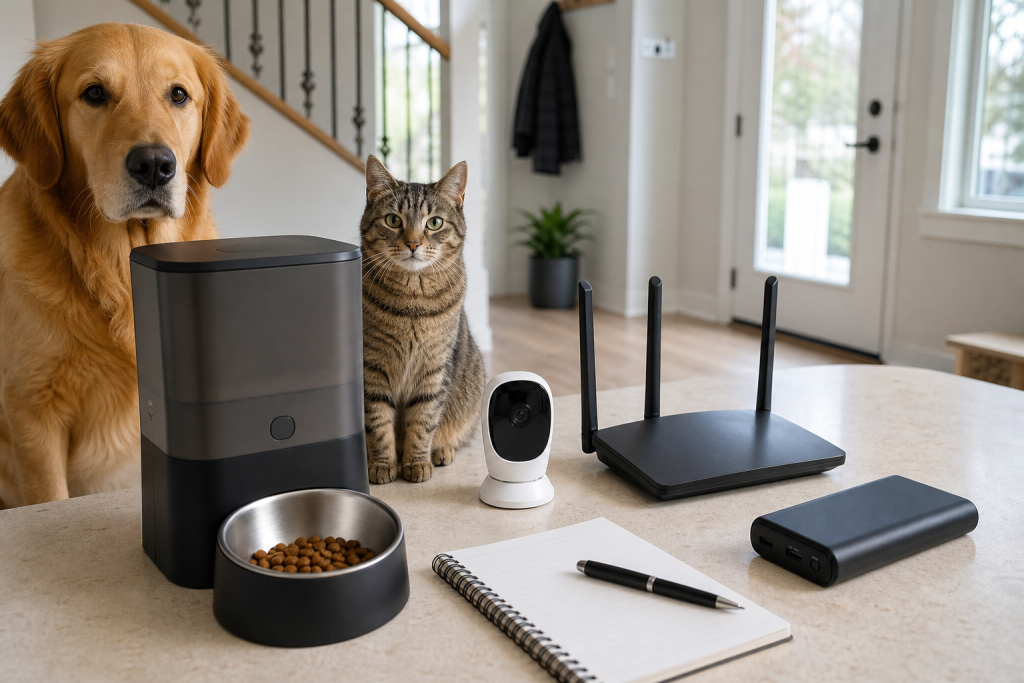
A cheap power bank can be a bad pet-tech deal if you buy it to keep a feeder, camera, fountain or router running without checking the battery safety first. The real risk is not that every backup battery is unsafe, but that low-quality or recalled lithium-ion products can overheat, ignite or fail when you are counting on them. Before checkout, treat backup power like a safety purchase, not just a capacity number.
The warning sign is current. On September 17, 2026, the U.S. Consumer Product Safety Commission told consumers to stop using certain Hererod jump starters and power banks because the internal lithium-ion batteries can explode and ignite. That product was not sold as pet gear, but the shopping lesson applies directly to pet owners who are buying portable power for smart feeders, pet cameras, travel gear, Wi-Fi routers, crate fans or emergency kits.
Why This Matters Now
Pet tech has made backup power feel like an easy add-on. If a feeder has a USB-C port, a camera sits near an outlet or a router needs to stay online during a storm, it is tempting to grab the cheapest high-capacity battery in the cart.
That shortcut can hide two different problems. First, the backup may not actually keep the pet device working as expected. A feeder may keep a stored schedule but drop Wi-Fi, camera or app features. A camera may stay powered while the router does not. A fountain may stop flowing if the pump needs more power than the battery can safely supply.
Second, lithium-ion batteries are not all equal. CPSC says the Hererod units it warned about were sold online from August 2024 through August 2026, and the agency was aware of 16 fire reports, including seven reports of property damage. That is enough reason to slow down before buying any portable battery from a marketplace listing you have not checked.
The Checkout Checks That Matter
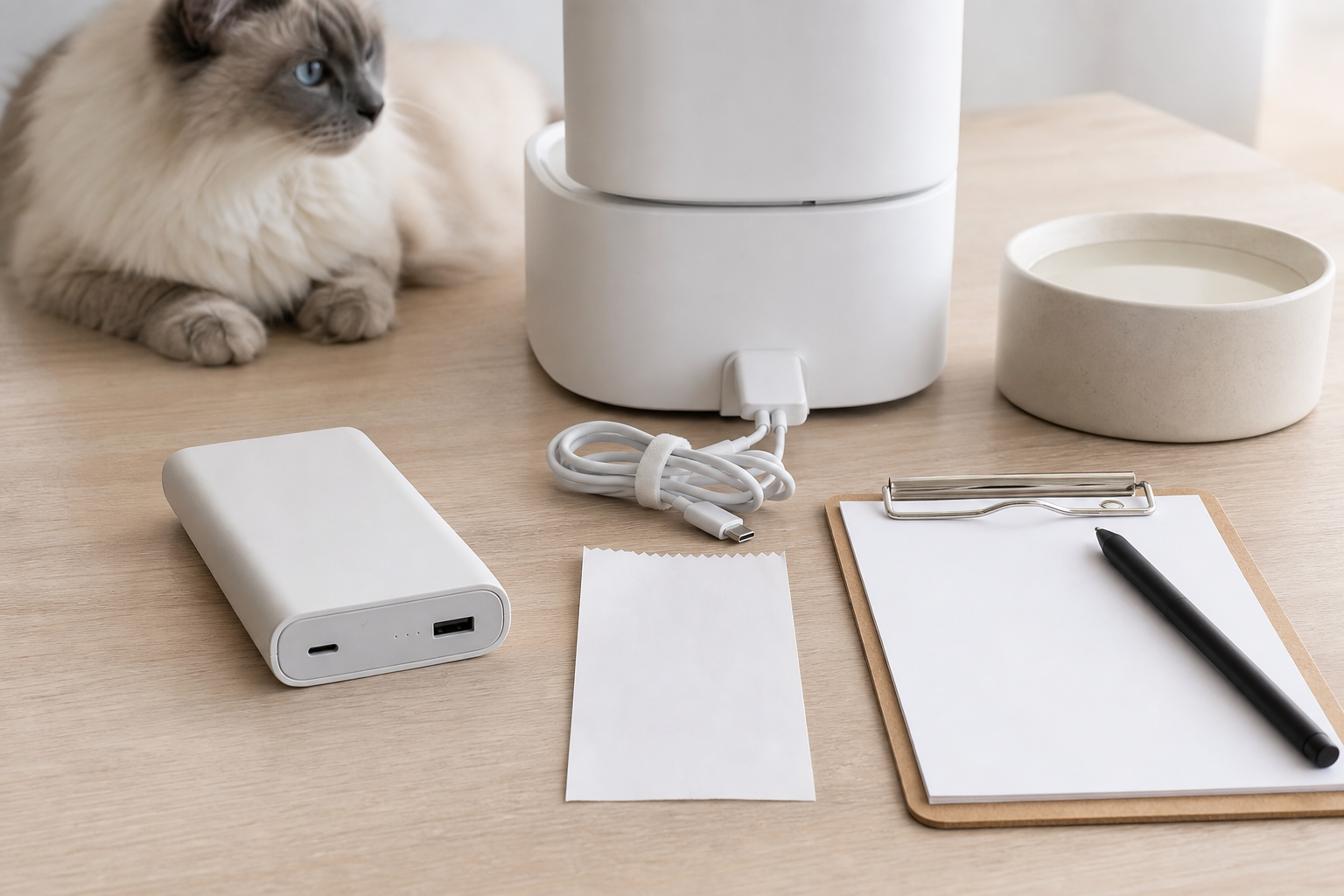
Start with the exact product name, model number and seller, not just the star rating. Search the product name with words like recall, fire, overheating, complaint and CPSC. If the listing uses multiple model names, vague brand names or copied photos, do not assume the item in your cart is the same one shown in a review.
Check whether the product is meant for the job. A jump starter, a portable phone charger and a small UPS-style backup are not interchangeable purchases. If your goal is to keep a pet feeder running, read the feeder manual first. Some devices only support internal batteries, some require a specific adapter, and some may not be designed to run from a random external battery at all.
Look for real safety and support signals. UL Research Institutes advises shoppers to stick with batteries and chargers that are safety certified by a nationally recognized testing laboratory and to buy directly from the original equipment manufacturer when possible. A cheap listing that uses vague certification language, blurry label photos or a seller name you cannot contact is not a strong backup plan for a pet device.
Match the charger and cable too. The National Fire Protection Association says lithium-ion battery safety includes using the cord and charger that came with the device and avoiding continued charging after the battery is full. For pet owners, that means the wall plug, cable, battery and pet device should be treated as one system, not a mix-and-match drawer of leftovers.
When A Deal Is Not Really A Deal
A sale price is weak evidence on a battery product. Before paying, verify who is selling it, who handles returns, whether the listing shows the exact unit you will receive and whether marketplace protection applies. The FTC advises marketplace shoppers to check seller ratings, recent comments, refund rules, return deadlines and whether the seller lists contact information.
Do not let capacity claims win the cart by themselves. A larger milliamp-hour number may look useful, but it does not tell you whether the battery has appropriate protections, whether it can supply the power your device needs, or whether the device will behave correctly during an outage. For pet tech, the better deal is the one with clear compatibility, safe charging instructions, a reachable seller and a return path if the setup does not work.
If the power bank is for travel, check airline rules separately. Many portable lithium batteries must travel in carry-on baggage, and pet travel rules are set by each airline. Do not buy a backup battery for an in-cabin carrier fan, tracker or travel camera until you have checked both the battery limits and the airline pet policy for your route.
What To Avoid
- Do not use a recalled or CPSC-warning product to power anything near a pet bed, crate, litter area or food station.
- Do not charge a battery on fabric, bedding, paper, pet blankets or inside a carrier.
- Do not leave a new power setup unattended with pets until you have tested it while you are home.
- Do not assume a smart feeder, camera or fountain stays fully functional just because a battery powers on.
- Do not buy from a marketplace seller that hides the model number, return rules or real support contact.
If you already own a product named in a CPSC recall or warning, follow the agency’s product-specific instructions. For the Hererod warning, CPSC says not to throw the hazardous lithium-ion device in household trash, curbside recycling or ordinary battery recycling boxes, and to check local hazardous waste procedures instead.
A Better Backup Plan For Pet Tech
For feeders, the safest backup is usually layered. Keep a tested manual feeding plan, a neighbor or sitter option and a simple bowl plan for water. A battery can help, but it should not be the only thing standing between your pet and a missed meal.
For cameras and routers, remember that one powered device may not be enough. A camera without internet may not send alerts. A router without modem power may still go offline. If remote monitoring matters, test the full chain before you leave, including the outlet, battery, router, camera, app and notifications.
For travel gear, favor simple, low-risk backups. A spare approved water bowl, printed reservation details, a non-smart ID tag and a charged phone may matter more than another gadget. If a battery-powered accessory is optional, do not make your pet’s comfort depend on it until you know the battery is safe, accepted and reliable.
Quick Answers
Can I use any power bank with a smart pet feeder?
No. Check the feeder manual and support page first. Some feeders use internal batteries or a specific adapter, and some battery modes limit Wi-Fi, camera or app features.
Should I buy the cheapest high-capacity power bank for pet cameras?
Not without checking seller identity, recall history, safety certification, charger compatibility, returns and whether the camera plus router setup actually stays online during an outage.
What if my power bank is recalled?
Stop using it and follow the official recall or warning instructions. Defective lithium-ion batteries may need hazardous waste handling and should not be tossed into regular trash or ordinary recycling.
Sources
- U.S. Consumer Product Safety Commission, Hererod jump starter and power bank warning, September 17, 2026.
- U.S. Consumer Product Safety Commission, Recalls and Product Safety Warnings page.
- UL Research Institutes, Safe Shopping Tips for lithium-ion batteries and chargers.
- Federal Trade Commission, Buying From an Online Marketplace.
- National Fire Protection Association, Lithium-Ion Battery Safety tip sheet.
- Federal Aviation Administration, Flying with Pets.
Sources last checked: September 26, 2026, 19:33 CEST, Europe/Rome.