
#pet hair
#pet tech
#Prime Day pet deals
#robot vacuum
A robot vacuum deal is only useful if it handles the parts of pet life that ruin cheap automation: fur, toys, cords, litter scatter and the occasional accident on the floor. Object avoidance can reduce the risk of a messy failure, but it is not a guarantee. Before you pay, check the exact pet-waste claim, app controls, replacement parts, return window and warranty promise, not just the discount badge.
Why This Matters Right Now
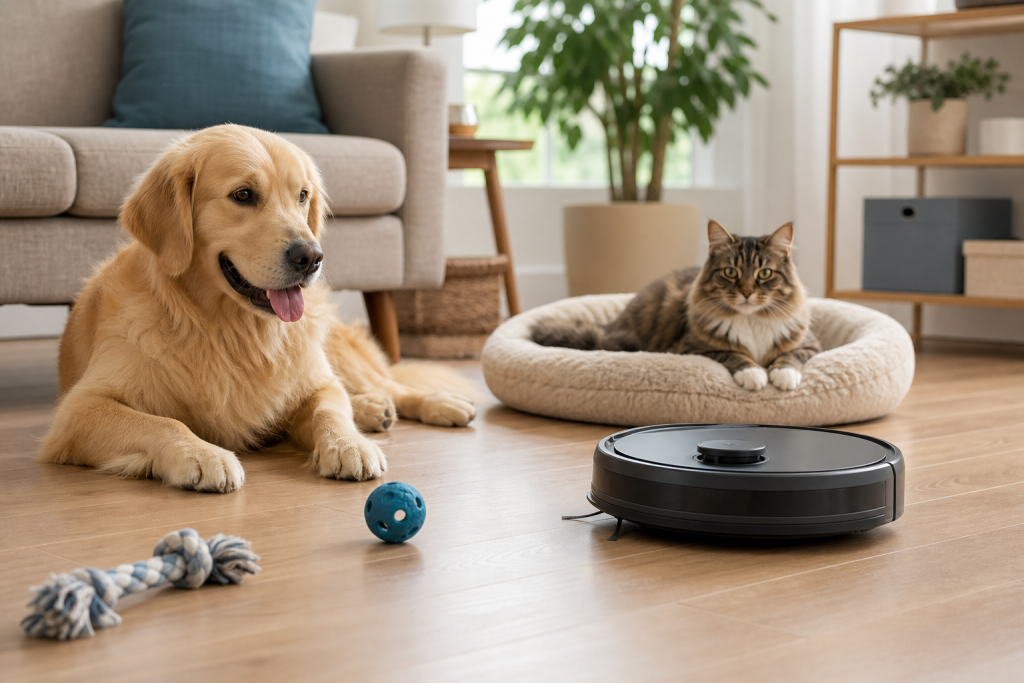
Robot vacuums are showing up in current Prime Day and early-summer deal coverage, and pet owners are an obvious target because fur cleanup is a daily chore. The catch is that a pet household is harder than a clean showroom floor. A robot has to deal with shedding, food crumbs, kibble, toys, charging cables, litter scatter, water bowls and pets that may not love a machine moving around their space.
That is why the most important claim on a pet-focused robot vacuum is often not suction. It is whether the model can recognize and avoid the problem objects that could turn a bargain into a cleanup project.
The Claim to Read Twice
Some robot vacuums now advertise pet-waste avoidance, obstacle recognition, AI cameras, LiDAR mapping or app-based no-go zones. Those features can be valuable, but the wording matters. iRobot, for example, promotes a pet-waste replacement promise for certain Roomba models and says the offer is limited to one year from purchase, replacement product only, solid cat or dog waste and additional terms.
ECOVACS also explains that many robot vacuums can use cameras, sensors, mapping and virtual boundaries to reduce pet-waste incidents, while still warning that there is no 100% guarantee in every situation. That is the practical shopping lesson: the better models may lower the risk, but you should not schedule a robot to clean an unsupervised pet area unless you are comfortable with the failure case.
What to Check Before Checkout
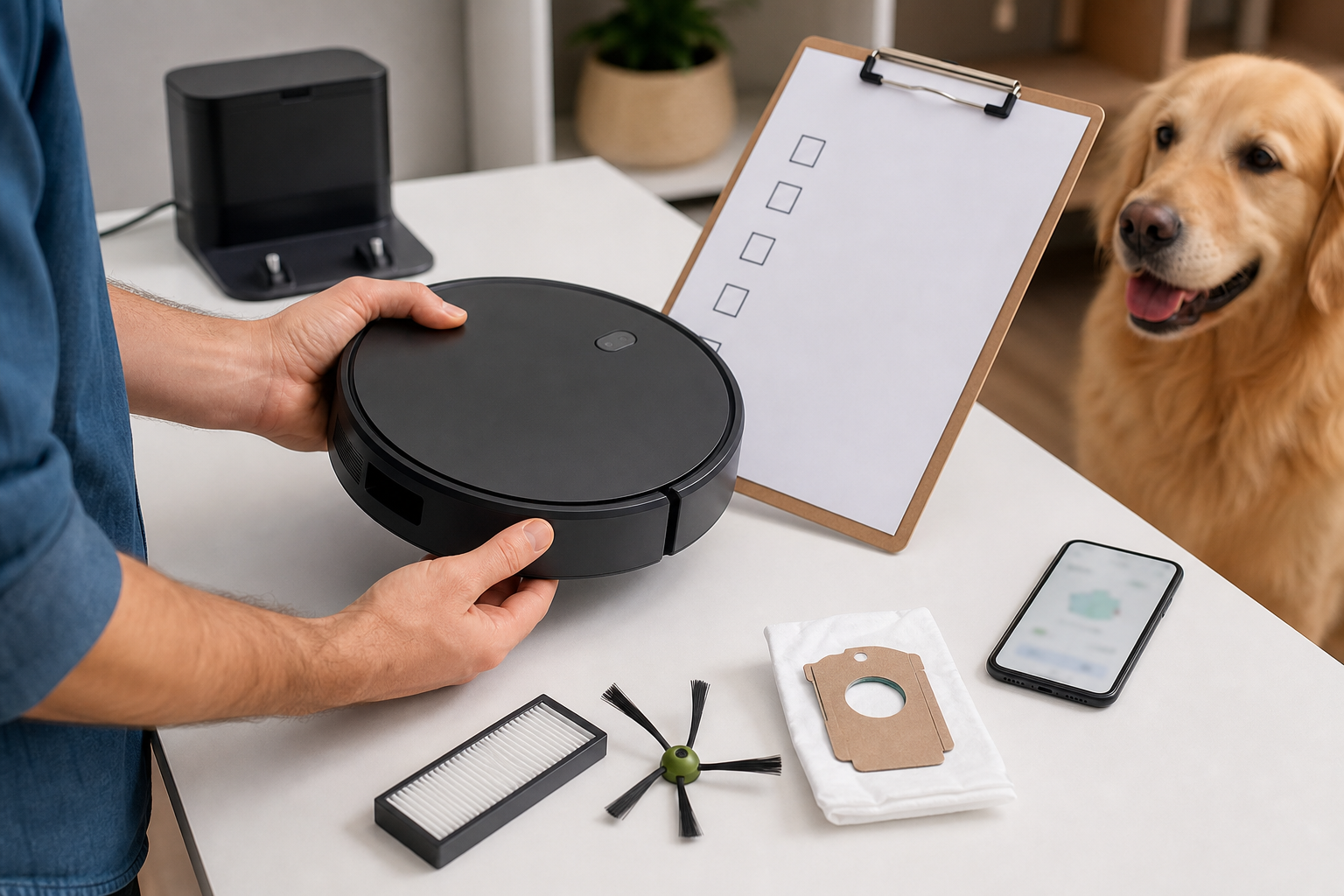
Start with the floor plan in your real home. If your dog drops toys everywhere or your cat tracks litter outside the box, a basic bump-and-go robot may spend more time stuck than cleaning. Look for a model that clearly describes obstacle avoidance, no-go zones, edge detection and multi-room mapping. If the product page only says “smart navigation” without explaining what the robot can actually detect, treat that as a weak claim.
Next, check the brush system. Pet hair can wrap around rollers and side brushes, especially in long-haired dog and cat homes. A robot vacuum may advertise strong suction, but you still need to know whether the brushes are designed to resist tangles, whether replacements are easy to buy and whether the dustbin or auto-empty bag is large enough for your shedding season.
Then check the app. A pet household benefits from no-go zones around food bowls, litter boxes, puppy pads, crate areas, loose cables and favorite toy piles. If those controls require a specific app, account, Wi-Fi band or cloud service, make sure your phone, router and privacy preferences fit before checkout.
The Hidden Costs That Make a Deal Smaller
The sale price is only the first number. Pet owners should price the first year of filters, side brushes, main rollers, mop pads, cleaning solution, dust bags and any optional warranty. A self-emptying dock can be convenient in a fur-heavy home, but it may also lock you into recurring bag purchases.
Also check return terms before opening the box. Robot vacuums are expensive enough that a short return window can matter, especially if the unit struggles with your rugs, thresholds, dark flooring, stairs, litter mats or pet bowls. A deal that cannot survive a real-home trial is not much of a deal.
Deal and Coupon Checks
Do not assume a robot vacuum is cheaper just because it appears in a Prime Day, pet-hair or smart-home sale roundup. Check the same model number at the manufacturer site and at major retailers, because bundles can differ. One package may include extra filters or bags, while another may only discount the base robot.
If a retailer coupon applies, read the exclusions. PetSmart’s coupon policy, for example, says coupons may not be valid with all offers and excludes some products from specific coupon programs. Chewy’s Autoship terms are useful for repeat pet supplies, but robot vacuums are not the kind of consumable purchase where an Autoship discount should drive the decision. The better deal is the one with the right model, usable accessories and a return policy you can actually use.
What to Avoid
Avoid buying a robot vacuum for a pet household based on suction alone. Strong suction helps with fur, but it does not tell you whether the robot can avoid a dog accident, stop before dragging a sock into the brush, or stay away from a litter box area.
Avoid vague “AI” claims without specific examples. You want to know what the robot recognizes, how it handles new objects, whether it works in low light and whether pet-waste coverage has written terms.
Avoid mopping robots in homes with unreliable pet potty habits unless you can create strong no-go zones and inspect the floor first. A vacuum-only mistake is bad enough. A wet mop pad can spread the problem farther.
Avoid buying from a marketplace listing when the seller, warranty path or replacement-part supply is unclear. Pet owners put more wear on brushes, filters and bins than a low-shedding household, so parts availability is not optional.
A Simple Buying Framework
Choose a pet robot vacuum in this order: obstacle avoidance first, hair handling second, real return terms third, consumable cost fourth and app privacy fifth. If you have a puppy, senior pet, cat with litter-box misses or any pet that has occasional accidents, give object avoidance and no-go zones more weight than suction claims.
If your pets are reliable and your main issue is shedding, the calculation changes. You may not need the most expensive camera-based model, but you still need tangle-resistant brushes, a bin that can handle fur, washable or affordable filters and a dock that does not become another recurring cost trap.
Quick Answers
Can a robot vacuum really avoid pet waste?
Some advanced models are designed to recognize and avoid pet waste, but no shopper should treat that as a perfect guarantee. Read the manufacturer’s terms and inspect risky areas before scheduled cleaning.
Is a robot vacuum with a camera better for pet owners?
It can be better for obstacle recognition and remote checks, but it also adds privacy and app-support questions. Check camera controls, account settings, software support and whether video features are required for the functions you want.
Should I buy during Prime Day?
Only if the model, warranty, return window and accessory bundle are right. A bigger discount on the wrong robot can cost more than a smaller discount on one that fits your floor plan and pets.
What should I do before the first run?
Pick up loose toys, cords and food bowls, set no-go zones, run the robot while you are home and watch how your pets react. Do not start with an overnight or away-from-home cleaning schedule.
Sources
Sources last checked June 22, 2026, 13:33 Europe/Rome.
- iRobot, P.O.O.P. Promise and pet-focused Roomba information.
- ECOVACS, Can Robot Vacuums Avoid Dog Poop And Pet Waste?
- NBC Select, early Prime Day 2026 vacuum deal coverage.
- ABC News / Good Morning America, Prime Day 2026 pet deal context.
- RTINGS.com, robot vacuum pet-hair testing context.
- PetSmart, coupon policy.
- Chewy, Autoship terms.