
#pet deals
#pet food portions
#smart pet bowl
#smart pet tech
A smart pet bowl deal is only useful if it measures meals accurately, fits your dog or cat’s real feeding routine and does not lock basic value behind an app you will stop using. The mistake is buying the bowl for the promise of “perfect portions” before checking serving units, cleaning rules, batteries, app support and whether your veterinarian has actually recommended a measured feeding plan.
This matters now because early summer sale events are pushing smart feeders, connected bowls and app-based pet tech into pet owners’ carts. Prime Day 2026 runs June 23-26, and competing retailers are also promoting smart-home and pet-supply deals, so a bowl-scale discount can look more urgent than it really is.
Why Smart Bowl Deals Look So Convincing
Measured feeding is a real need. Veterinary weight-management guidance commonly points owners toward accurate portions, because scoops and “cups” can vary, treats add up and a small daily overfeed can matter for cats and smaller dogs.
A smart bowl or feeder with an integrated scale tries to solve that problem at the counter. Some models weigh food as you serve it, some connect to an app, some pair with RFID or microchip access and some track feeding behavior over time. Those features can be useful, but they are not all the same product. A bowl that weighs kibble is not the same as an automatic feeder, a microchip feeder, a full pet scale or a veterinary diet plan.
The Checkout Checks That Matter Most
Before buying, check the measuring unit and accuracy claim. If your pet’s food plan is written in grams, a bowl that only nudges you by vague scoop sizes may not solve the problem. If the listing says it measures to the gram, check whether that applies to the bowl itself, the removable tray or only a connected accessory.
Look at the food type. Dry kibble, freeze-dried pieces, wet food and mixed meals behave differently in a bowl. A scale may weigh all of them, but app logs, removable trays and cleaning steps may be designed around only one style of food.
Check the cleaning path before the discount. The parts that touch food should be easy to remove and wash according to the maker’s instructions. If the scale base, battery compartment or charging contacts sit where wet food spills, a cheap smart bowl can become a hygiene and support problem fast.
For app-connected bowls, verify the phone requirements, Wi-Fi or Bluetooth setup, account requirement and what still works without the app. The FTC has warned that many smart-product pages do not clearly disclose how long software updates will continue. That matters for a feeding gadget because the hardware may outlast the app.
When a Smart Bowl Is Worth Considering
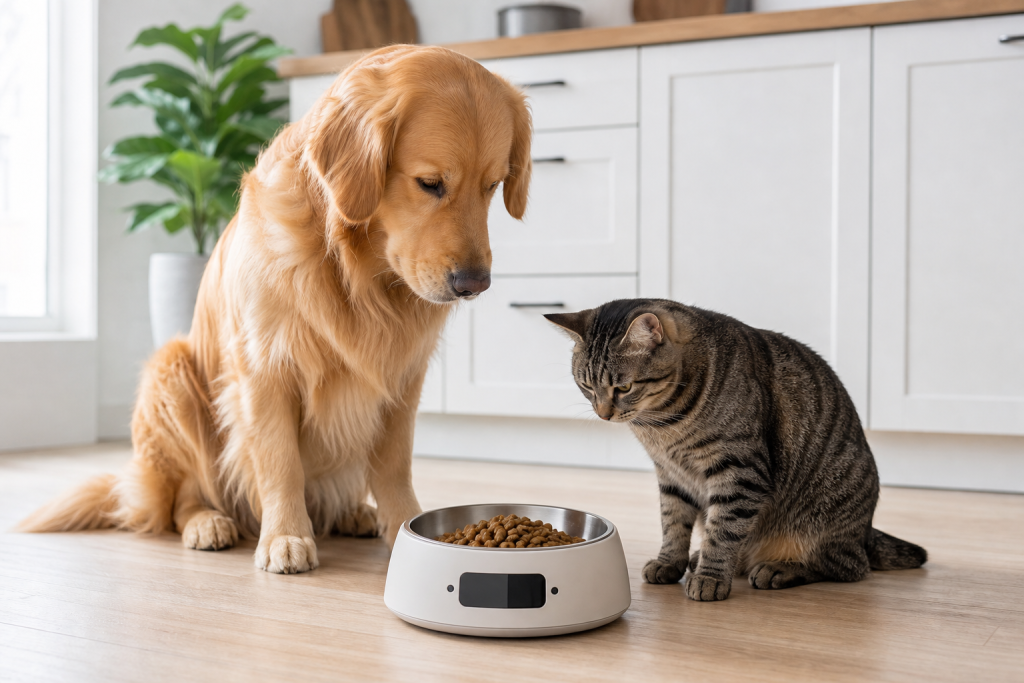
A smart bowl can make sense when a veterinarian has asked you to measure meals, when several people feed the same pet and portions keep drifting, or when one pet steals food from another. In multi-pet homes, access control can matter as much as the scale. Some microchip or RFID feeders are designed to open only for a recognized pet and to track food served through a connected hub.
It can also help if you are switching from free-feeding to scheduled meals. The value is not the app graph by itself. The value is repeatable measuring that the household can actually follow.
The Deal Section: What to Verify Before Paying
Do not judge the deal from the bowl price alone. Add the cost of the hub, collar tags, replacement trays, batteries, charging cable, subscription features, return shipping and any proprietary accessories. A low device price can be less attractive if the feature you wanted needs an add-on.
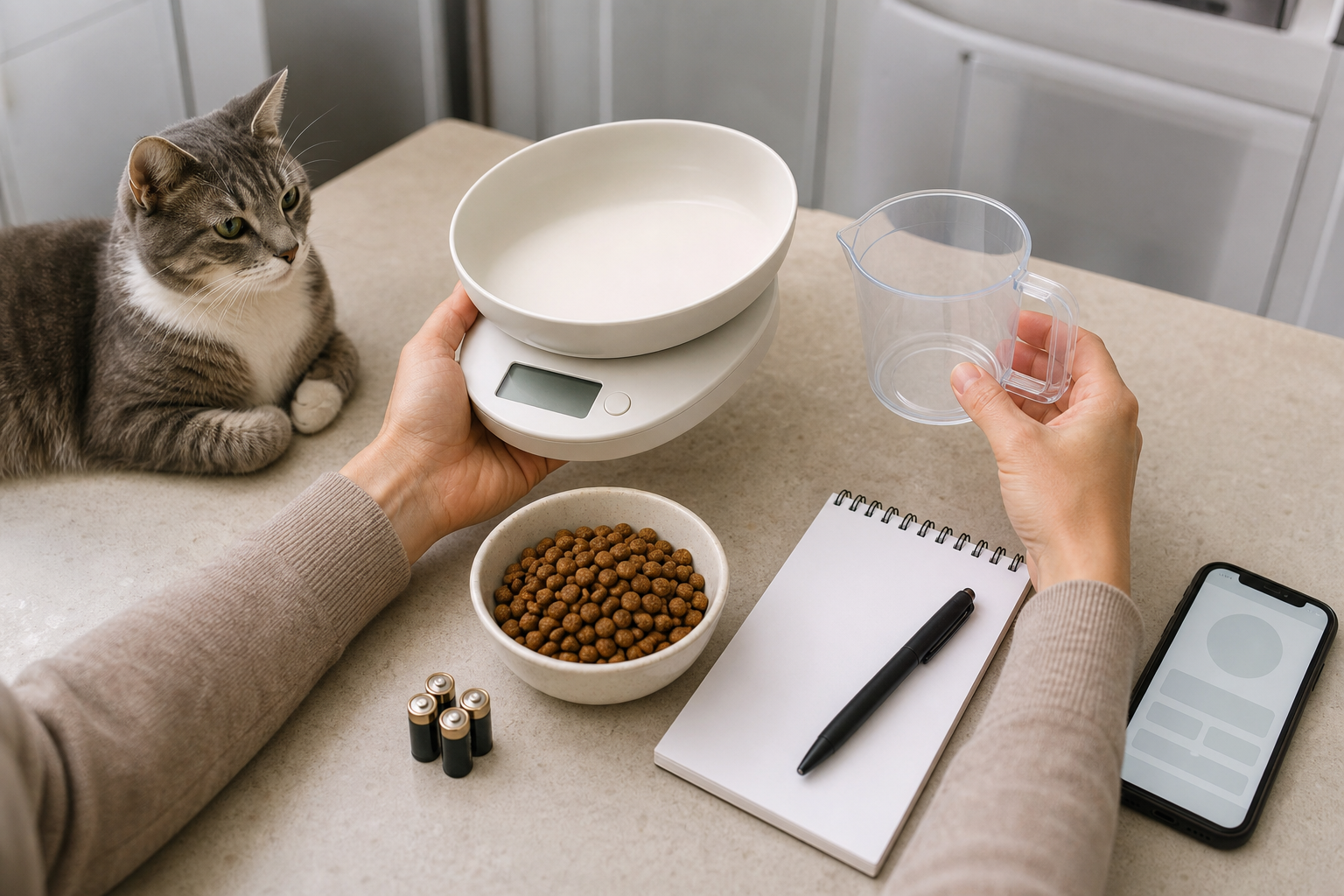
Compare the sale price with a simpler kitchen scale and a stainless-steel bowl. For many owners, that cheaper combination may be enough, especially if the pet eats one measured meal at a time and there is no food stealing problem. The smart option should earn its place by solving a specific routine problem, not by making ordinary measuring look outdated.
Read the return policy before food touches the bowl. Pet feeding products can become harder to return after use, and a smart bowl may need an account setup before you know whether it fits your phone, router or feeding area.
What to Avoid
Avoid any listing that implies the bowl can diagnose obesity, tell you whether your pet is healthy or replace veterinary guidance. Weight and appetite changes can have medical causes, and diet changes should be discussed with your veterinarian, especially for kittens, puppies, senior pets, diabetic pets or pets with kidney, digestive or prescription-diet needs.
Be cautious with vague “AI feeding insight” language if the seller does not explain what data is collected, where it is stored and what the device can do offline. Also avoid bowls with hard-to-clean seams, non-removable food contact parts, tiny displays you cannot read in normal light, or proprietary trays you cannot easily replace.
Quick Answers
Is a smart pet bowl better than a normal bowl?
Only if it solves a real problem, such as inconsistent portions, multi-pet food stealing or a vet-directed measuring plan. Otherwise, a washable bowl plus a reliable kitchen scale may be the better deal.
Do smart bowls need subscriptions?
Some do not, but connected feeding products vary. Check whether basic weighing, logs, alerts, cloud history or multi-pet features require an app, hub, account or paid service.
Can a smart bowl help a dog or cat lose weight?
It can help you measure food more consistently, but it does not create a safe diet by itself. Ask your veterinarian how much to feed, how quickly weight should change and whether treats or other foods need to be counted.
What is the biggest buying mistake?
Buying the gadget before checking the meal plan. Start with the portion target, pet behavior, cleaning routine and return terms, then decide whether smart features add enough value.
Sources
- Amazon Prime Day 2026, official event timing: https://www.amazon.com/primeday
- The Verge, Prime Day 2026 timing and competing sale context: https://www.theverge.com/gadgets/945942/prime-day-2026-frequently-asked-questions
- FTC, smart products and software-update disclosure: https://www.ftc.gov/news-events/news/press-releases/2024/11/smart-products-surveyed-fail-provide-consumers-information-how-long-companies-will-provide-software
- Petlibro automatic feeder product guidance, portion control and app-connected feeding examples: https://petlibro.com/collections/automatic-pet-feeder
- Sure Petcare Microchip Pet Feeder Connect, integrated scale and microchip/RFID access example: https://www.surepetcare.com/en-us/pet-feeder/microchip-pet-feeder-connect
- Cornell Richard P. Riney Canine Health Center, obesity and weight-management tips: https://www.vet.cornell.edu/departments-centers-and-institutes/riney-canine-health-center/canine-health-topics/obesity-and-weight-management-tips
- NIH/PubMed Central, Management of obesity in cats, food-measuring context: https://pmc.ncbi.nlm.nih.gov/articles/PMC7337193/
Sources last checked June 22, 2026, 04:34 Europe/Rome.