
#e-collar
#pet deals
#pet surgery supplies
#recovery cone
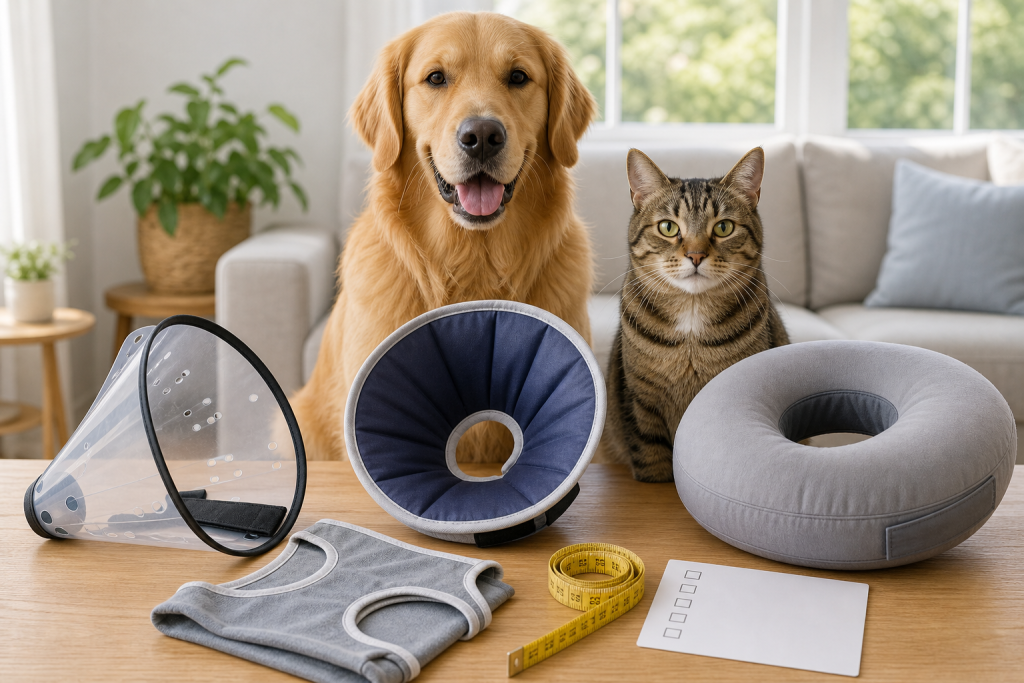
A cheap soft recovery cone is only a deal if it actually stops your dog or cat from reaching the sore spot. Donut collars, fabric cones and recovery suits can be more comfortable than a hard plastic cone, but they are not interchangeable. Before you buy, match the style to the body area your pet must not lick, measure the neck and cone depth, and ask your vet before swapping away from the collar they sent home.
Recovery collars are showing up in more pet-shopping searches because owners want less awkward options after spay, neuter, skin, ear and wound-care visits. That makes sense, but the checkout mistake is buying for cuteness or comfort first and protection second. If the collar lets a determined pet bend around it, the money you saved can disappear into a delayed-healing problem.
Why this matters before checkout
Veterinary guidance is consistent on the main point: an Elizabethan collar is meant to prevent licking, chewing or scratching while a wound, incision or irritated area heals. VCA says dogs and cats usually need to wear the collar until the wound has healed, with timing depending on the injury or procedure. ASPCApro’s post-surgery discharge instructions also warn that licking the surgery site can cause infection and that the e-collar should prevent access.
The shopping problem is that product pages often sell recovery collars as if comfort automatically equals safe coverage. A soft cone that works for a calm dog with a shoulder irritation may not stop a flexible cat from reaching a belly incision. An inflatable donut may leave paws, tail bases or rear-body areas reachable. A recovery suit may cover the torso well, but it can be the wrong answer for ear, face, paw or tail access.
The fit check that matters more than the discount
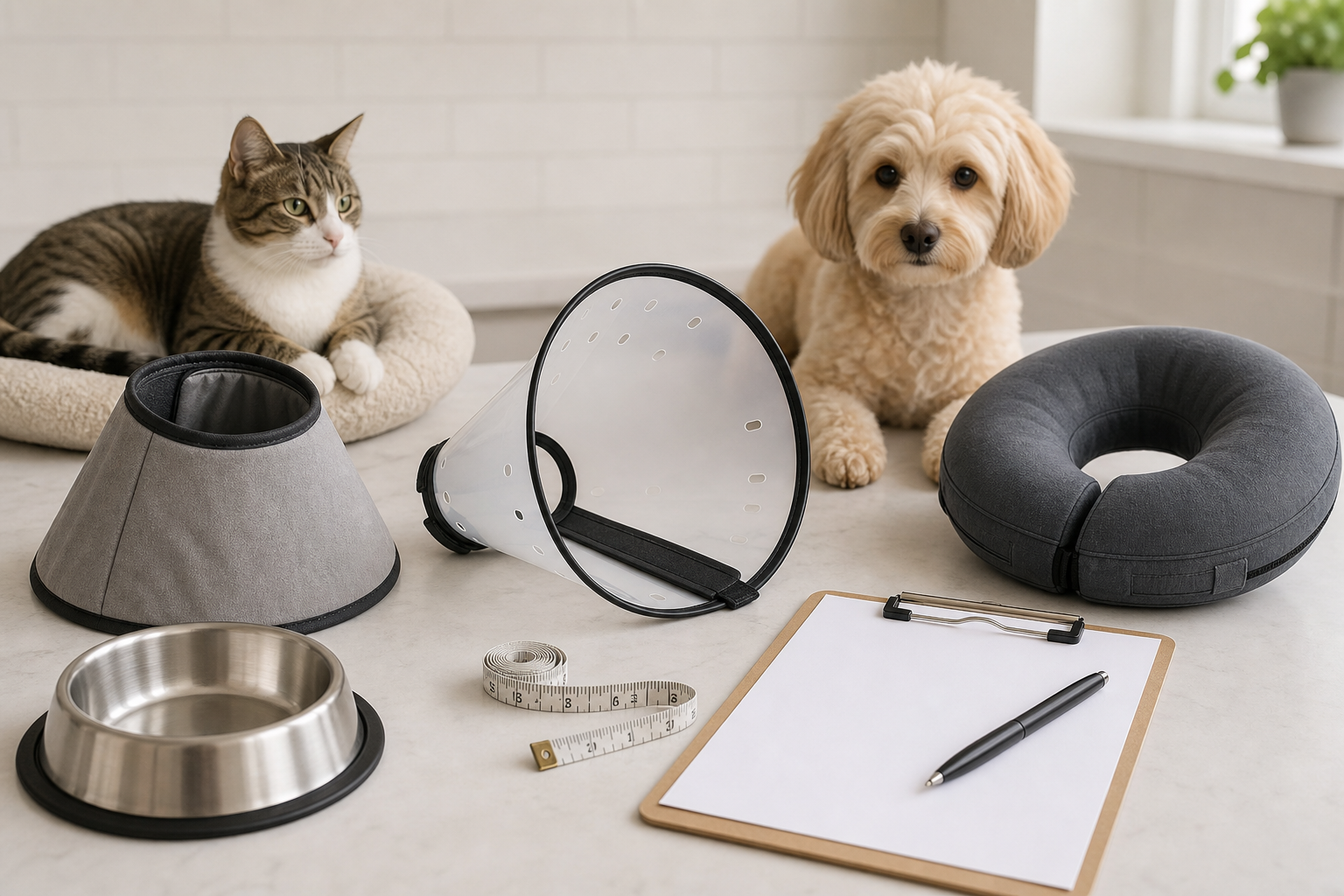
Start with your vet’s instructions, then use the product listing to answer four practical questions:
- Can your pet still reach the target area? The collar has one job. If the nose, paws or teeth can reach the incision or irritated skin, the style is not protective enough.
- Is the neck fit secure without choking? VCA’s dog and cat guidance says you should be able to fit two fingers between the e-collar and the neck when replacing it.
- Is the collar deep enough? Neck circumference alone is not enough. Compare cone depth to your pet’s muzzle length, flexibility and the body area being protected.
- Can your pet eat, drink and rest? A properly fitted collar should still allow access to food and water, though VCA notes that shallow dishes, plates or elevated bowls may help some pets.
If the listing only shows neck size and cute photos, keep looking. Better listings include neck range, cone depth, material, closure type, cleaning instructions and what body areas the design is meant to protect.
Plastic cone, soft cone, donut or recovery suit?
A traditional plastic cone is bulky, but it is often the strongest barrier. Chewy’s vet-reviewed guide notes that plastic recovery cones are commonly recommended for major surgeries or for dogs that are very determined to lick, chew or scratch. They are also usually easier to wipe clean than plush styles.
Soft fabric cones can be easier for sleeping and moving around the house, but they may bend when a pet pushes against furniture, bedding or their own body. Donut-style collars preserve more side vision and can feel less intrusive, but they do not block every angle. Recovery suits can work well for some torso coverage, yet VCA cautions that wraps, suits and bandages should not be too tight and should be kept clean.
The safest buying rule is simple: do not downgrade from a hard cone to a softer alternative unless your vet agrees that the alternative protects the exact spot your pet is trying to reach.
Deal and coupon checks
Recovery cones are easy to impulse-buy because many are inexpensive, but a low price can hide return and timing problems. Before paying, check these details:
- Delivery date: If your pet needs the collar now, a delayed online order is not useful. Same-day pickup may be worth more than a lower shipped price.
- Return condition: Many retailers will not want a used recovery collar back, especially after medical use. Read the return page before choosing between two sizes.
- Size overlap: If your pet is between sizes, check whether the closure has enough adjustment or whether you should buy two sizes and return the unused one.
- Cleaning: Plush donuts and fabric cones can trap food, water and odor. If the collar must be worn for days, washable materials matter.
- Spare plan: A second inexpensive collar can be useful if the first one gets wet or dirty, but only if both are protective enough.
Do not treat a coupon code as proof that the product is the right one. The better deal is the collar that fits, blocks access, arrives in time and can be cleaned during the recovery period.
What to avoid
Avoid collars that rely only on “comfortable” or “cute” claims without clear measurements. Avoid inflatable collars for a wound location the listing itself says they may not protect. Avoid removing the e-collar for meals unless your veterinarian has said that supervised breaks are acceptable, and replace it as soon as the meal is finished.
Also avoid turning a recovery product into a diagnosis tool. If your pet can still lick the area, refuses to eat or drink, panics in the collar, develops neck irritation, or the wound looks worse, contact your veterinarian. A different collar style may help, but the medical decision should not come from a product page.
Quick answers
Are soft recovery cones safe for dogs and cats?
They can be, but only when they stop access to the protected area. For some pets and wound locations, a soft cone bends too much.
Is a donut collar better than a cone?
It may be more comfortable, but it is not automatically better. Donut collars can leave some body areas reachable, especially on flexible pets.
Should I buy the cheapest cone before surgery?
Buy by fit and coverage first. If surgery is scheduled, ask the clinic what style and size they expect your pet to need before ordering extras.
Can my pet eat with an e-collar on?
Many pets can eat and drink with a properly fitted collar. Shallow dishes, plates or adjusted bowl height may help, but supervised collar removal should follow your vet’s instructions.
Sources
Last checked: 2026-07-19 01:33 Europe/Rome.
- VCA Animal Hospitals, Elizabethan Collars in Dogs
- VCA Animal Hospitals, Elizabethan Collars in Cats
- VCA Animal Hospitals, Alternatives to the Elizabethan Collar
- ASPCApro, Dog and Cat Post-Surgery Discharge Instructions PDF
- Chewy, How To Pick a Dog Cone for Your Pup
- Amazon New Releases in Pet Supplies, used only as a shopping-demand signal