

#bark control
#dog training
#pet tech
#ultrasonic bark device
A cheap ultrasonic bark device is not automatically a humane bargain. These gadgets work by making a high-pitched sound dogs can hear, so the real checkout question is not just whether it is “shock-free,” but whether it will stress the dog, affect other pets, or hide the reason the barking is happening. Before buying one, treat it as a behavior tool that needs a training plan, a return window, and a careful read of the claims.
That matters right now because pet-tech deals are still riding the summer sales cycle, and bark-control devices are easy to find in marketplace listings, coupon roundups and “2026 upgraded” product pages. The price can look small compared with hiring a trainer or changing a home setup, but the wrong device can simply suppress noise for a while, bother every dog in range, or do nothing once the dog gets used to it.
Why the “humane” claim needs a closer look
Many ultrasonic bark devices are marketed as gentle because they do not use shock. That does not mean they are neutral. The American Kennel Club describes ultrasonic bark-control tools as devices that produce a high-pitched sound in response to barking, with the tone acting as a correction that stops when barking stops.
That correction-based setup is why shoppers should be careful with words like “safe,” “humane,” “no harm” and “works on any dog.” The American Veterinary Society of Animal Behavior says reward-based methods should be used for dog training and behavior modification. Barking can come from boredom, alerting, fear, separation-related distress, pain or frustration, so a device that interrupts the bark may not solve the cause.
The checkout checks that matter before you buy
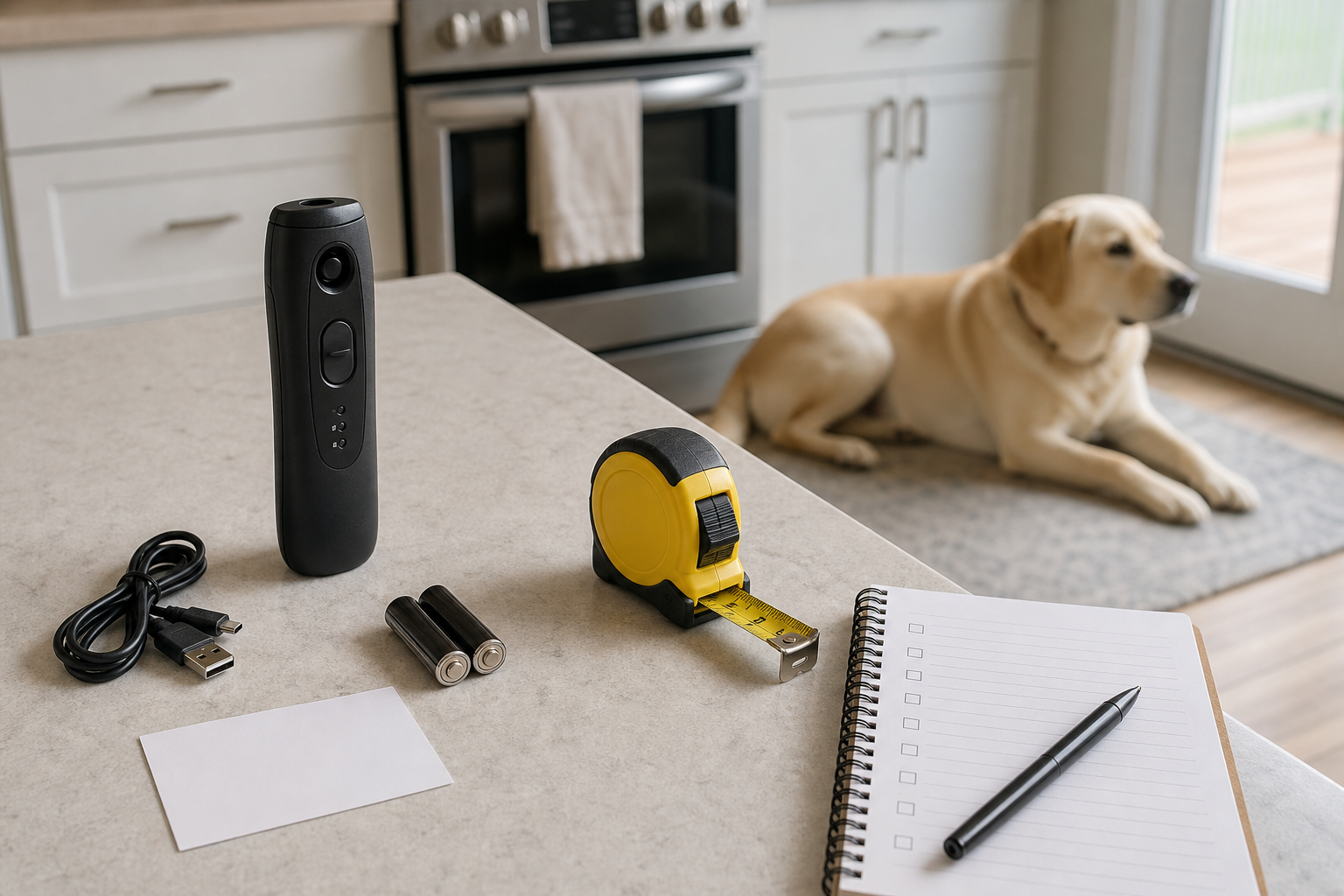
Start with the trigger. Some products activate automatically when a microphone hears barking. Others are handheld and require a person to press a button. Automatic boxes can react to the wrong sound, including another dog, a neighbor’s dog, a dropped object or a television. Handheld devices depend on timing, consistency and the person understanding what the dog is doing.
Then check range and layout. A device advertised for a yard or hallway may not behave the same way through doors, curtains, furniture, fences or street noise. If you live with more than one dog, a cat, a puppy, a senior dog or a sound-sensitive pet, assume the sound may affect animals that did nothing wrong unless the manufacturer clearly explains how the unit targets only one dog.
Battery and charging details also matter. Rechargeable units can be useless if they are dead when barking happens, while battery-powered outdoor boxes can become another recurring cost. Check whether replacement batteries are standard, whether the charger is included, whether the unit is weather-resistant for your intended placement, and whether it still works after being moved.
When the cheaper option may be better
A low-tech plan can be the smarter purchase if the barking has an obvious trigger. For window barking, that might mean blocking the view, using white noise, changing where the dog rests, adding enrichment, or rewarding quiet behavior before the dog gets worked up. For boredom barking, the better cart may be a food puzzle, longer decompression walks, training treats, or a trainer session instead of another device.
For barking when a dog is alone, be especially cautious. The ASPCA notes that separation-anxiety barking happens when the caretaker is gone or the dog is left alone, and it often appears with other distress signs. If that sounds like your dog, a bark device is a poor substitute for veterinary or qualified behavior help.
Deal and coupon checks before paying
Do not judge this category by the biggest percentage-off badge. Check the seller name, return window, warranty, replacement policy, battery type, customer support and whether the listing explains frequency, volume levels and use limits in plain language. Be wary of listings that promise instant results, “works for every dog,” “stops all behavior,” or “100% humane” without a meaningful training explanation.
If a coupon only applies to a multipack, ask whether you actually need several emitters in your home. More units may mean more accidental exposure for other pets and more points of failure. A single returnable device from a seller with clear support is usually a better test than a bargain bundle you cannot use responsibly.
What to avoid
- A device you plan to use on a neighbor’s dog without addressing the owner, local rules or the animal’s welfare.
- Automatic activation in a multi-pet home where another dog or cat may receive the correction.
- Using the device for fear, separation-related distress, aggression or pain-related barking without professional guidance.
- Listings that hide the return policy, battery requirements or support contact.
- Any product that encourages constant use instead of a specific, supervised training plan.
Quick answers
Is an ultrasonic bark device the same as a shock collar?
No. It does not deliver an electric shock, but it still uses an unpleasant sound as a correction. That is why shoppers should evaluate welfare, timing and training context, not just the absence of shock.
Can it work for every barking dog?
No device should be assumed to work for every dog. Barking has different causes, and VCA says a good behavior history is important when deciding how to address a barking problem.
Is it worth buying during a sale?
Only if the listing is specific, the return policy is clear, the device fits your home and you have a reward-based training plan. If the product is replacing diagnosis, behavior help or basic management, the sale is probably not the deal it appears to be.
Sources
Last checked: 2026-07-19 07:36 Europe/Rome.
- American Kennel Club, Bark Control Tools to Help Stop Nuisance Barking
- American Veterinary Society of Animal Behavior, Position Statements and Humane Dog Training guidance
- ASPCA, Barking
- ASPCA, Separation Anxiety
- VCA Animal Hospitals, Barking in Dogs
- Federal Trade Commission, Solving Problems With Products and Services