
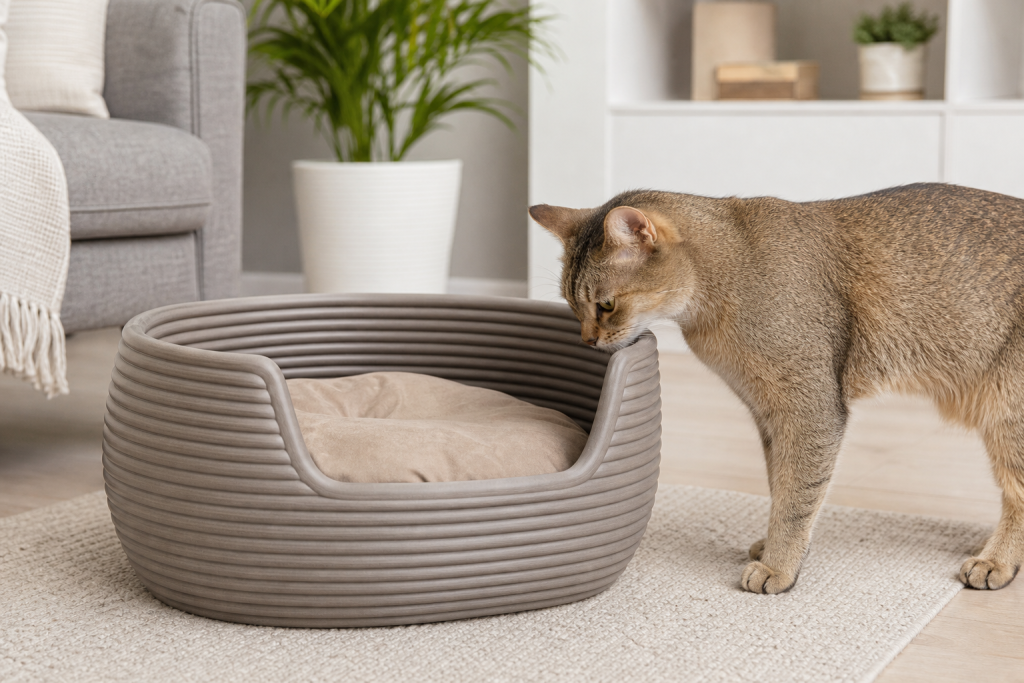
#3D printed cat bed
#cat beds
#cat furniture
#pet tech deals
A 3D-printed cat bed becomes a bad deal when the shape photographs better than it works for your cat. Before paying extra for the sculpted look, check the inside dimensions, edge finish, cushion washability, return terms and whether the material is actually comfortable enough for daily use.
The trend is easy to understand. Ribbed, shell-like beds look cleaner than a fuzzy cave bed, and trend trackers are surfacing 3D-printed cat beds alongside other cat-home products this month. The shopping mistake is treating “3D-printed” as a quality claim instead of a construction detail that still needs the same checks as any other cat bed.
Why this matters now
Cat furniture is having a design moment. Shoppers are seeing more sculptural beds, plastic shells and modern lounge shapes, often promoted as washable, durable or space-saving. That can be useful, but cats do not choose beds because the product looks clever in a listing photo.
Reliable cat-welfare sources keep returning to the same basics: cats need quiet, comfortable places to rest, hide and feel in control of their environment. A bed that is too exposed, too hard, too small or difficult to escape from may end up as expensive floor decor.
The print-specific checks most listings make easy to miss
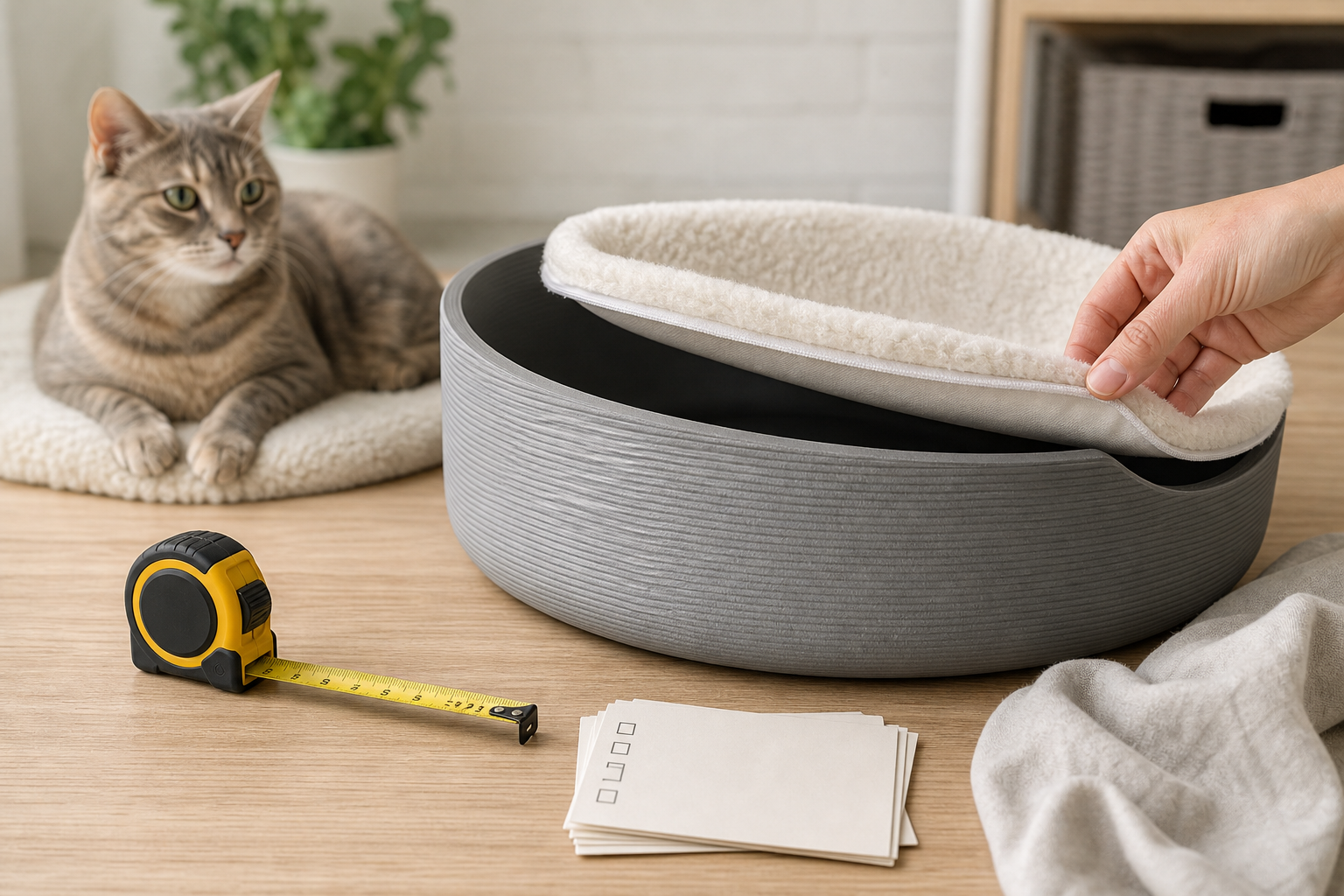
Check the real sleeping space, not the outside width. A thick printed wall can make a bed look roomy while shrinking the inside cushion. Look for usable inside length and width, then compare that with how your cat actually sleeps. A curled sleeper may accept a smaller oval. A long side-sleeper needs more uninterrupted space.
Look closely at the edge finish. A printed ribbed shell should have rounded, smooth contact points where the cat steps in, turns and rests its chin. Skip listings that only show distant lifestyle photos and no close view of the rim, entrance and inside wall.
Separate the shell from the cushion. The printed frame may wipe clean, but the cushion is what collects hair, dander and accidents. A bargain is weaker if the cushion is not removable, the cover is not washable, or the seller does not offer replacement cushions.
Check weight and stability. Lightweight plastic can slide when a cat jumps in. A non-slip base or stable low profile matters more than a dramatic shape, especially on hard floors.
When the deal is worth considering
A 3D-printed style bed can make sense if it solves a real problem in your home. Good reasons include a wipe-clean outer shell, a compact footprint, a replaceable cushion, a low entrance for an older cat, or a shape that gives partial cover without trapping heat.
It is less compelling if the only benefit is novelty. If your cat already ignores enclosed beds, dislikes plastic surfaces or prefers soft fabric edges, a cheaper washable bed or a cardboard hideaway may be a better first test.
Deal and coupon checks before paying
Do not compare only the sale price. Add shipping, oversized-item fees and return shipping before deciding that a discount is real. Some sculptural beds are bulky enough that the return cost can erase the savings.
Check whether the seller is the brand, a marketplace seller or a print-on-demand shop. This matters for replacement cushions, warranty help and returns. If the bed is customized by color or size, confirm whether it becomes final sale.
Read the return window before your cat tests it. Cat beds often need a few days of placement and scent familiarization, but you still need the packaging and receipt if the bed is ignored. Do not assume an opened pet bed can be returned under the same terms everywhere.
Be careful with coupon stacking. A coupon that applies to the shell but not shipping, custom colors or replacement cushions may not beat a simpler washable bed at full price.
What to avoid
Avoid listings that make comfort claims without showing the cushion, the entrance height and the inside dimensions. Avoid sharp-looking rims, narrow openings, tall walls without an easy exit, decorative holes that could catch claws, and listings that use only renderings instead of real product photos.
Also avoid treating the bed as a medical or behavior fix. A better resting place can support a cat-friendly home, but hiding, pain, litter-box changes or sudden avoidance of usual spots should be discussed with a veterinarian.
Quick answers
Is a 3D-printed cat bed better than a fabric bed?
Not automatically. It may be easier to wipe down, but the cushion, placement and usable inside space matter more than the printing method.
What size should I buy?
Use inside dimensions, not the outside shell. Your cat should be able to enter easily, turn around and rest in its normal sleeping posture.
Should I buy one if my cat ignores beds?
Only if returns are easy or the price is low enough to test. Put the bed in a quiet familiar spot, add a washable cushion or familiar blanket, and give your cat time without forcing use.
Are printed plastic beds safe?
They can be fine when the surface is smooth, stable and easy to clean. Skip anything with rough edges, brittle parts, strong chemical odor, unstable feet or unclear material information.
Sources
- VelocitySpy, trending pet supplies page, used only as a demand signal for 3D-printed cat bed interest: https://velocityspy.com/trending/pet-supplies/
- Ohio State Indoor Pet Initiative, Resting Areas: https://indoorpet.osu.edu/node/450
- International Cat Care, Home Modifications guide: https://icatcare.org/resources/cat-carer-guide-changes-to-the-home-environment.pdf
- Cats Protection, Cats Hiding and Hide & Sleep resources: https://www.cats.org.uk/help-and-advice/cat-behaviour/cats-hiding and https://www.cats.org.uk/help-and-advice/home-and-environment/hide-and-sleep
- AAFP and ISFM Feline Environmental Needs Guidelines: https://journals.sagepub.com/doi/full/10.1177/1098612×13477537
Sources last checked: September 25, 2026, 22:35 CEST, Europe/Rome.