
#cat food
#pet food costs
#pet food deals
#wet cat food
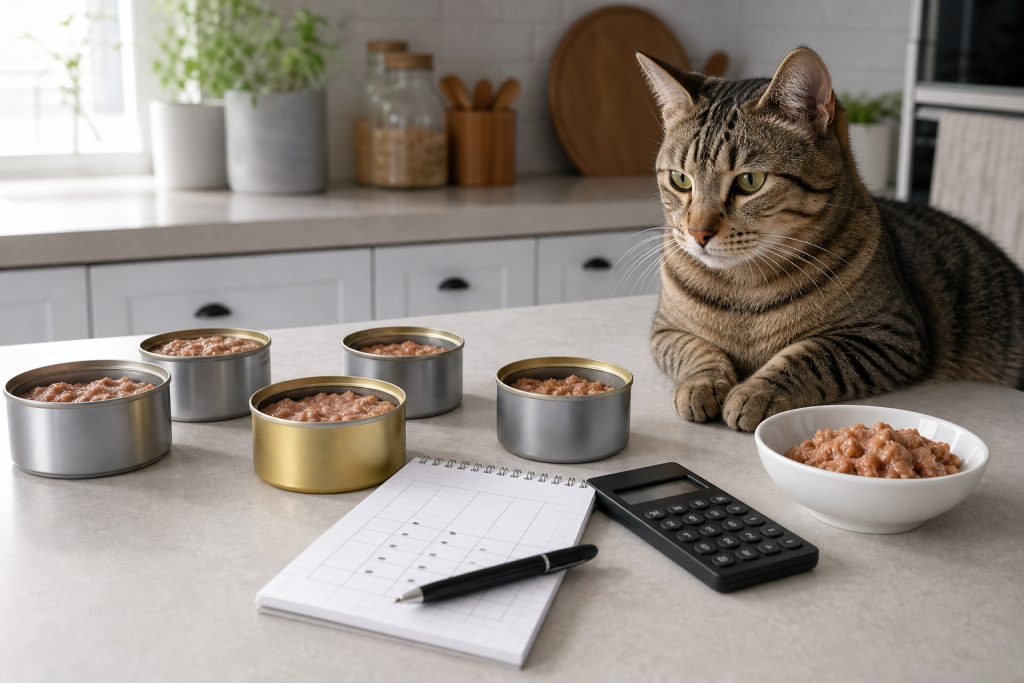
A cheap-looking cat food deal can cost more if you compare cans by shelf price instead of by how many days they actually feed your cat. Wet cat food prices remain close to recent highs, and current industry reporting shows canned and wet cat food has been one of the pressure points. Before you stock up, check calories, feeding directions, can size, return rules and whether the discount only applies to the first order.
Why this matters now
Pet food inflation has cooled from its worst spike, but it has not gone away for cat owners. Petfood Industry reported this week that retail pet food prices remained within 0.6% of their recent peak after easing in April and May 2026, while canned and wet cat food manufacturer prices rose faster than several other dog and cat food segments over the May 2024 to May 2026 window.
The Federal Reserve Bank of St. Louis series sourced from the U.S. Bureau of Labor Statistics shows the pet food and treats CPI at 193.229 for May 2026, with the next release scheduled for July 14, 2026. That does not tell you which food your cat should eat, but it does explain why a small checkout mistake can matter more than it did a few years ago.
Wet food also creates a particular shopping trap. Two cans can look similar on the shelf, but one may be larger, more calorie-dense, or meant to be fed in a smaller daily amount. Another may be cheaper per can but more expensive per day.
The can price is the wrong first number
Start with the label, not the sale badge. AAFCO says pet food labels should identify the species, net quantity, feeding directions, calorie content and nutritional adequacy statement. FDA guidance also warns that nutrient comparisons between wet and dry foods can be misleading unless moisture is accounted for.
For ordinary shopping, you do not need to run a nutrition spreadsheet in the aisle. You do need three numbers:
- The can size or total weight in the multipack.
- The calorie statement, usually listed as kcal per can, cup, tray or kilogram.
- The feeding direction for your cat’s weight, age and life stage.
Then estimate the real daily cost. If a food looks cheaper but the label says your cat needs more cans per day, the deal may shrink or disappear. If you are changing food type, life stage or therapeutic diet, ask your veterinarian before making the switch, especially for kittens, senior cats, cats with chronic conditions or cats on prescription food.
A simple checkout test before you stock up
Use this quick test before buying a full case or setting up a repeat delivery:
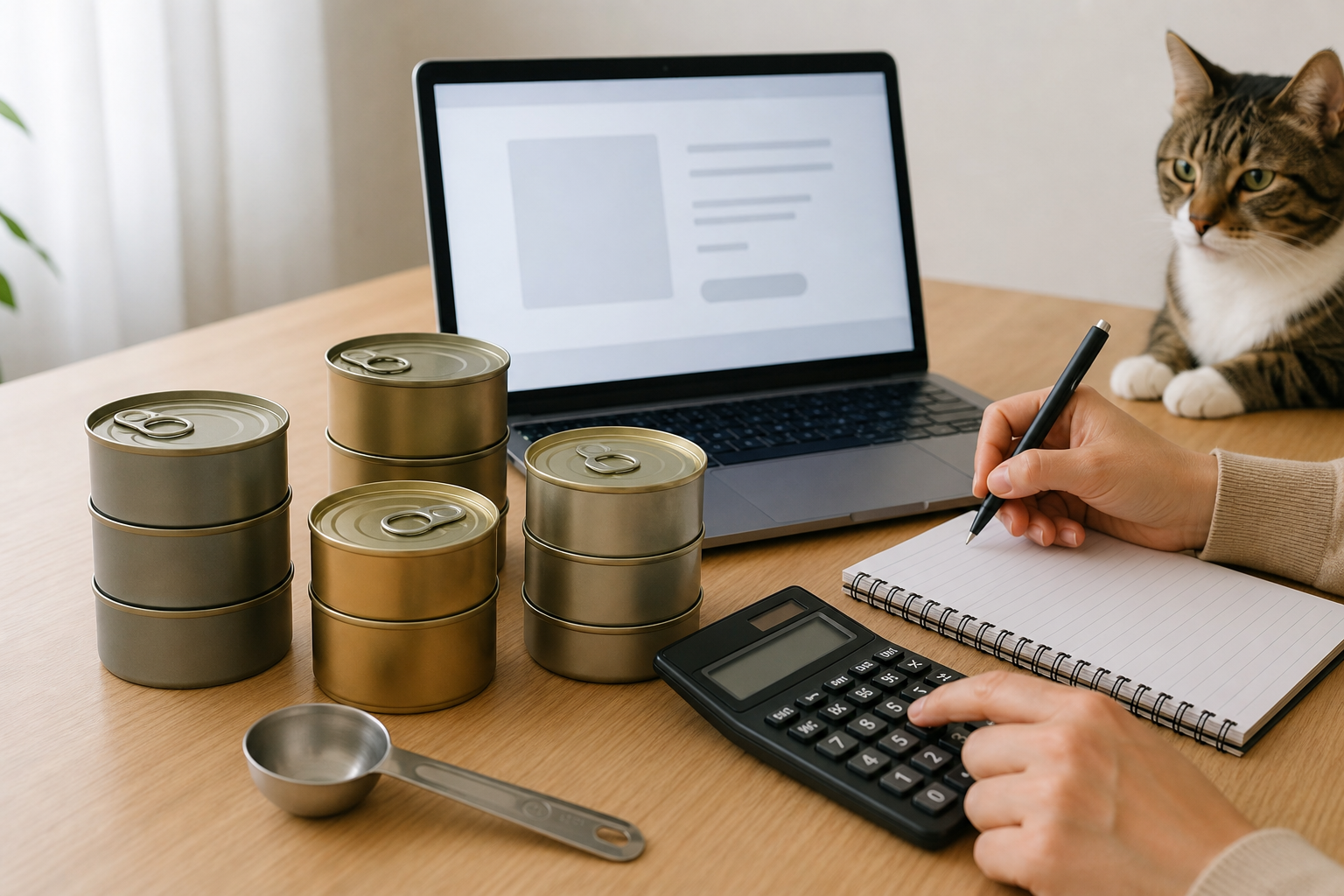
- Compare daily feeding cost. Divide the case price by the number of days the case should feed your cat, not by the number of cans.
- Check the calorie statement. Larger cans are not always better value if your cat wastes leftovers or the food has to be discarded after opening.
- Read the nutritional adequacy statement. Make sure it fits your cat’s species and life stage, such as adult maintenance, growth or all life stages.
- Confirm the texture your cat actually eats. A pate, chunks in gravy or minced formula can have very different acceptance in a picky household.
- Check the lot code and date before storage. Keep the original packaging or record the lot information so you can act quickly if a recall affects that food later.
- Buy a small amount first when switching. A bulk deal is not a deal if half the case sits untouched.
The deal section: what to verify before paying
Autoship, Subscribe and Save and first-order discounts can be useful for food your cat already eats. They can also hide the real ongoing cost. Before you accept the discount, check whether the offer applies only to the first order, whether future orders receive a smaller discount, whether the price can change before shipment and how easy it is to pause or cancel.
Free shipping thresholds deserve the same attention. Adding extra cans to reach free shipping may make sense for a food your cat reliably eats. It is weaker math for a new flavor, a new texture or a food with a short trial history in your home.
Return policies are another overlooked cost. Some retailers are flexible with unopened food, but pet food return rules can vary by seller, marketplace, prescription status, delivery method and time since purchase. If you are buying from a third-party marketplace seller, confirm who actually handles the return before you order.
What to avoid
Avoid treating “premium,” “human-grade,” “natural” or “high protein” as automatic proof of better value. Those claims do not replace the nutritional adequacy statement, calorie content, ingredient list, feeding directions or your veterinarian’s advice for a cat with medical needs.
Do not assume a dog-and-cat multipet bargain is appropriate for both species. AAFCO notes that the species should be conspicuously displayed on the principal display panel, and a picture of an animal is not enough. Cats need cat food unless your veterinarian has specifically advised otherwise.
Also avoid stockpiling a new food during a recall-heavy news cycle without checking official sources. Current FDA recall listings include several recent pet food recalls and withdrawals in 2026. That does not mean most foods are unsafe, but it does mean shoppers should keep lot codes, dates and receipts accessible instead of dumping cans into unlabeled bins.
When a higher can price can still be the better buy
The cheapest can is not always the cheapest meal. A higher-priced food may work out better if your cat eats it consistently, needs fewer cans per day, wastes less after opening, or fits a veterinarian-approved diet plan. The reverse can also be true: an expensive formula with a persuasive label can be poor value if the feeding amount is high and your cat does not finish it.
For multi-cat homes, run the math separately for each cat if their sizes, ages or diets differ. One “case per week” estimate can be badly wrong when a senior cat, kitten or prescription-diet cat is part of the same household.
Quick answers
Is wet cat food always more expensive than dry food?
Often it is more expensive per calorie, but not always by the same amount. Compare daily feeding cost and ask your veterinarian before changing diets for budget reasons.
Should I buy the biggest case if the per-can price is lower?
Only if your cat already eats that exact food and you can store it properly. For a new food, a smaller trial order can save more money than a wasted case.
Can I compare wet foods by protein percentage on the label?
Be careful. FDA explains that the guaranteed analysis on wet and dry products is listed on an as-fed basis, so moisture can make direct comparisons misleading.
Are first Autoship discounts worth using?
They can be, but calculate the second and third shipment too. The first discount may not reflect the ongoing price, and repeat shipments can change if the base price changes.
Sources
- Petfood Industry, “Petflation in June slows as cat food prices climb” (published July 8, 2026).
- Federal Reserve Bank of St. Louis, Consumer Price Index for All Urban Consumers: Pet Food and Treats in U.S. City Average, sourced from U.S. Bureau of Labor Statistics.
- AAFCO, “Reading Labels.”
- FDA, “Complete and Balanced Pet Food.”
- FDA, Animal & Veterinary Recalls & Withdrawals.
Sources last checked: 2026-07-10 19:34 Europe/Rome.