
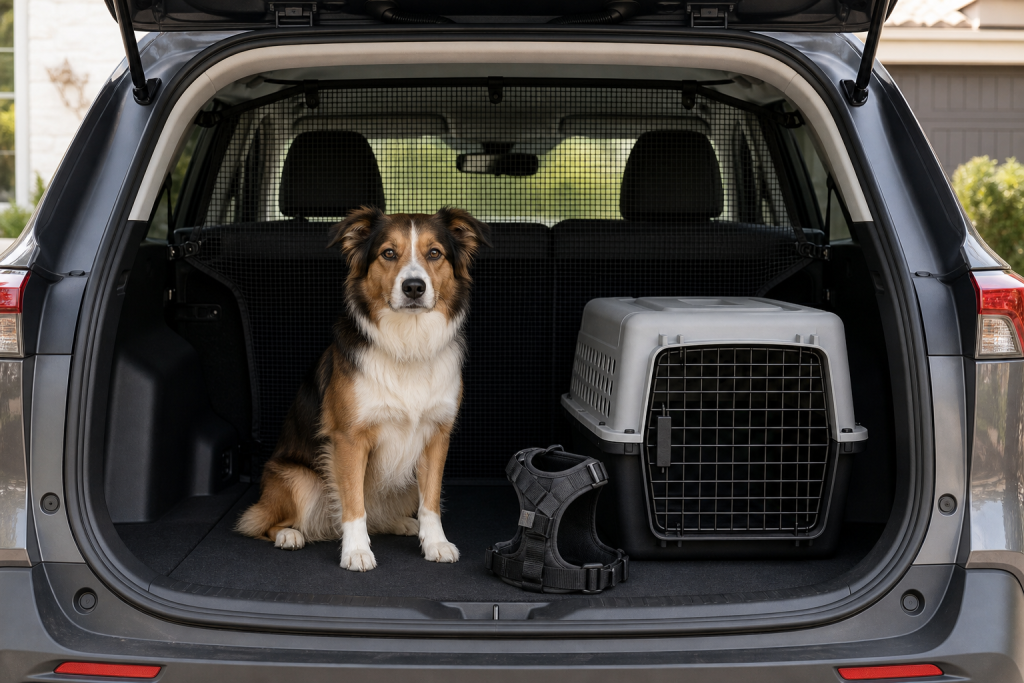
A cheap dog car barrier can keep a curious dog out of the front seat, but it should not be treated as crash protection by itself. For road trips, the safer shopping decision is to pair any divider or back-seat platform with a properly fitted crash-tested harness, secured carrier or anchored crate. The deal is only useful if it fits your vehicle, stays tight, lets your dog ride comfortably and does not replace real restraint.
Why this matters before summer road trips
July travel season makes pet car accessories look especially tempting: mesh barriers, metal cargo gates, hammock extenders and back-seat bridges all promise a cleaner, calmer ride. The real checkout mistake is buying one because it looks sturdy in product photos, then using it as the only thing between your dog and a sudden stop.
AVMA travel guidance says dogs should be safely restrained and kept out of the driver’s lap and front passenger seat, especially where airbags are present. FDA travel guidance, citing AVMA, also points pet owners toward the back seat with a crate, carrier or safety harness rather than a loose pet in the vehicle. A barrier can reduce distraction, but it is not the same promise as a crash-tested restraint.
The barrier is for distraction control, not full crash protection
A dog car barrier has one main job: it helps keep your dog from climbing into the front seat, blocking mirrors, stepping on controls or distracting the driver. That is useful, but it is a different job from holding the dog’s body during a collision.
Before you buy, look for the words the seller is actually using. “Keeps pets in the back” is not the same as “crash tested.” “Universal fit” is not the same as secure in your SUV, hatchback or sedan. If the listing shows only lifestyle photos and no installation details, measure twice and assume the return window matters.
What to check before paying
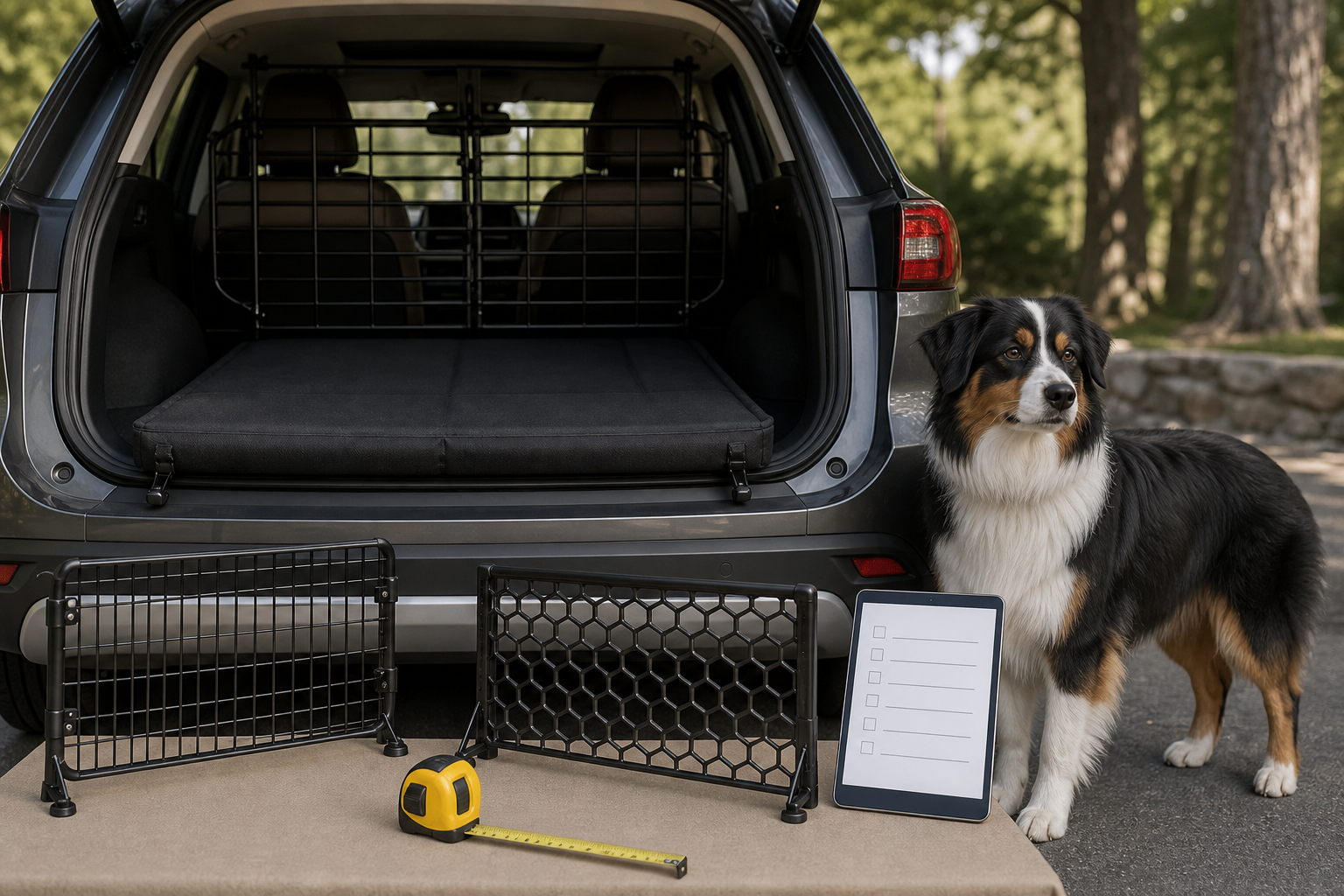
- Vehicle fit: measure the seat width, cargo width, headrest spacing and ceiling height. Many barriers rely on pressure, straps or headrest posts, and one loose anchor can make the whole setup noisy or useless.
- Restraint plan: decide whether your dog will ride in a secured crate, carrier or crash-tested harness. The barrier should support that plan, not replace it.
- Airflow and heat: avoid blocking vents in hot weather. A back-seat extender or hammock can make a cozy platform, but it can also change airflow around a panting dog.
- Escape points: check gaps at the side doors, center console and cargo edge. A flexible net that sags under paw pressure may not stop a determined dog.
- Cleaning and storage: muddy paws, shedding and drool matter. Removable, washable panels are more useful than a cheap divider that becomes a permanent mess.
- Return terms: oversized car accessories can be awkward to return. Confirm whether opened, assembled or used items are eligible before relying on a sale price.
Back-seat extenders have a separate catch
Back-seat extenders and dog hammocks solve a different problem. They can reduce the gap between the front and rear seats, give a dog more room to settle and protect upholstery. They still do not turn a loose dog into a restrained dog.
If you buy an extender, check the weight limit, board stiffness, strap placement and whether it leaves room for the seat belt hardware your harness needs. A platform that covers the buckle or bends under your dog can make the restraint setup worse, not better.
Deal and coupon checks that actually matter
A discount on a bulky car barrier is only a deal if the size and return terms survive checkout. Compare the final price after shipping, because long panels and rigid platforms can trigger oversized-package costs or marketplace seller rules. If a coupon applies only to select colors or sizes, do not downsize just to make the code work.
For marketplace listings, check the seller name, warranty contact and replacement-part availability. Small straps, clips and headrest loops are the parts most likely to decide whether the barrier stays useful after the first trip.
What to avoid
- A barrier listing that implies crash safety but does not show independent crash-testing details.
- A soft mesh divider for a large dog that leans, paws or pushes into the front cabin.
- A cargo setup that puts the dog behind loose luggage, coolers or hard objects.
- A back-seat extender that hides the harness buckle or blocks seat-belt routing.
- Leaving a dog unattended in a parked car because the car has shade, fans or a barrier installed.
Quick answers
Is a dog car barrier better than nothing?
It can be better for driver distraction, especially if your dog tries to climb forward. It should not be your only crash-safety purchase.
What should I buy first?
Start with a restraint plan: a properly secured crate, carrier or crash-tested harness that fits your dog and vehicle. Add a barrier only if you still need cabin separation.
Can cats use a car barrier setup?
Cats are usually safer in a secured carrier. A loose cat can hide under pedals or escape when a door opens, so a barrier is not a substitute for a carrier.
Does “crash tested” always mean safe?
Not automatically. Check who tested it, what standard was used and whether the product has an independent certification or published test detail.
Sources
Last checked: 2026-07-10 07:35 Europe/Rome.
- American Veterinary Medical Association, Traveling with your dog or cat
- U.S. Food and Drug Administration, Travel Training for You and Your Pets
- CDC, Pet Travel Safety
- Center for Pet Safety, CPS Certified
- Center for Pet Safety, Pet carrier and crate crash test research
- Cornell Riney Canine Health Center, Traveling safely with your dog