
#dog water bowls
#no-spill water bowl
#pet bowl cleaning
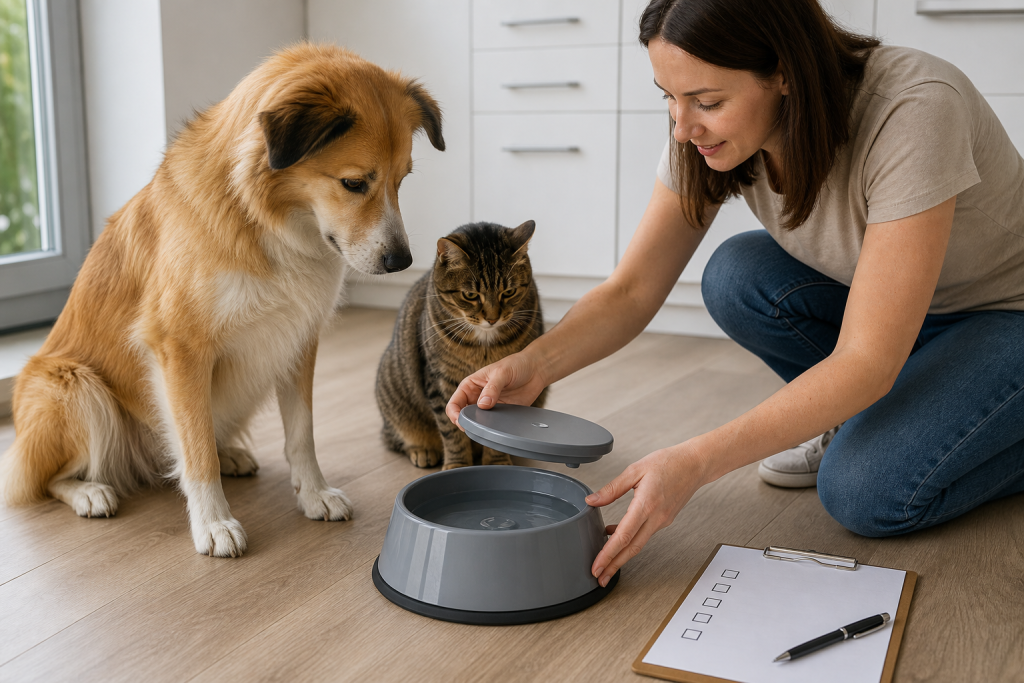
A no-spill dog water bowl can be a smart buy if your main problem is splashing, car-crate slosh or a dog who dunks half their muzzle into the bowl. The catch is that many splash-proof designs add floating disks, rims and inserts that make cleaning harder and can reduce the open water surface your dog is used to. Before you grab the cheapest deal, check whether the bowl is easy to take apart, large enough for a full day and comfortable enough that your dog will actually drink from it.
No-spill and slow-drink water bowls are showing up across pet-supply search results and marketplace new-release pages right now, especially in large-capacity and stainless-steel versions. That makes sense in late summer, when owners are still dealing with wet floors, travel crates, patio bowls and dogs coming in hot after walks. But this is one of those pet deals where the feature that looks clever in the listing can become the chore you stop doing after a week.
Why This Bowl Trend Is Easy to Misread
Most no-spill bowls try to solve mess by limiting how much water is exposed at once. Some use a floating disk with a small drinking opening. Others use raised edges, anti-slip bases, baffles or a covered center that slows lapping and reduces splash.
That can help for sloppy drinkers, road trips and dogs who paw at the water. It does not make the bowl self-cleaning, and it should not be treated as a medical fix for coughing, gagging, vomiting, excessive thirst or sudden changes in drinking. If your dog is drinking far more or far less than usual, the product page is the wrong place to solve that question. Ask your vet.
The Checkout Checks That Matter
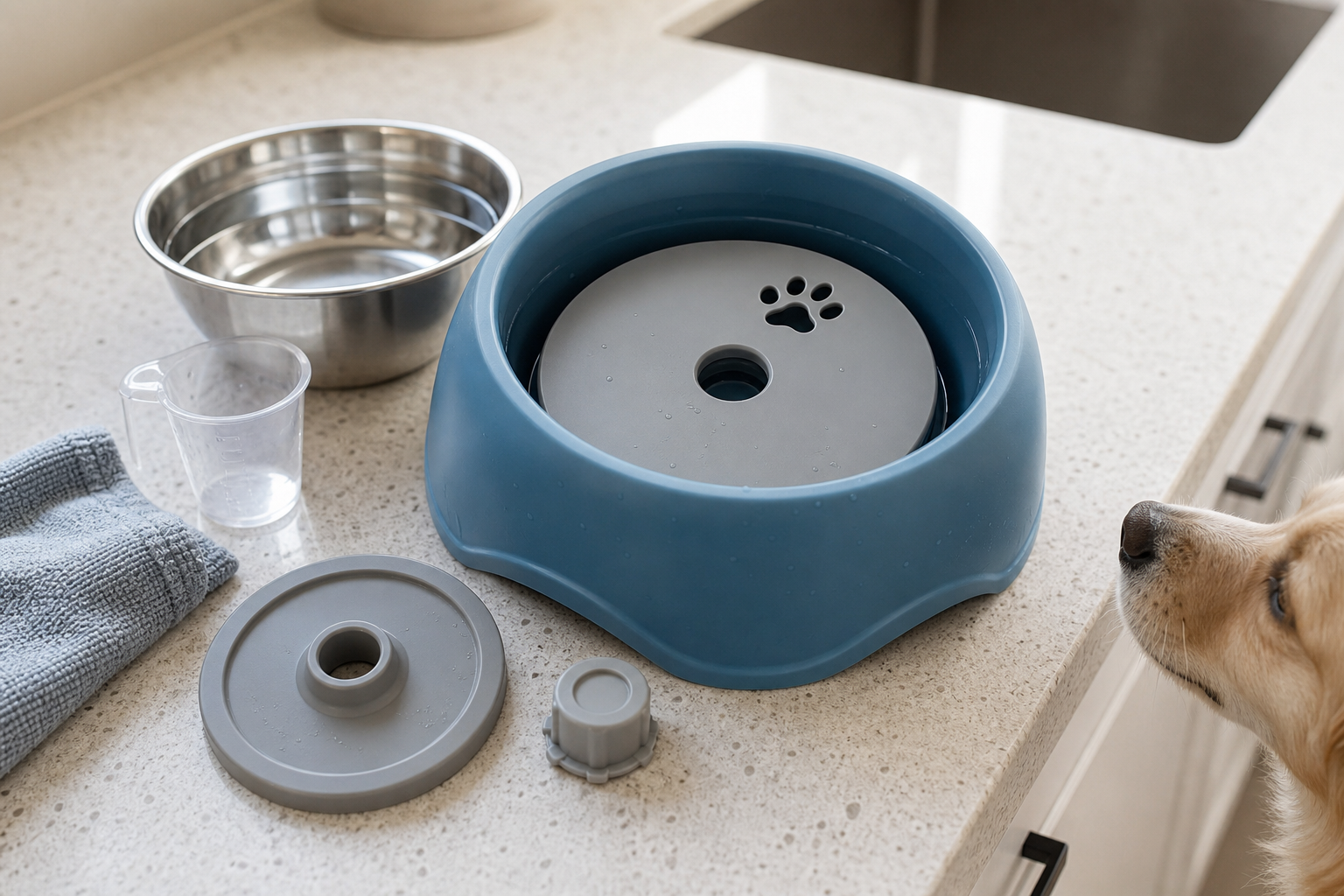
Start with the parts count. A simple stainless-steel bowl has one main surface to wash. A no-spill bowl may have a floating plate, silicone seal, center plug, rim, base channel and small gaps where biofilm can build up. If the listing does not show how the bowl comes apart, assume cleaning will be more annoying than the hero photo suggests.
Next, check the drinking opening. A narrow opening can reduce splash, but it can also frustrate a flat-faced dog, a senior dog with limited neck mobility or a puppy that is still learning. The best deal is not the one with the most aggressive splash control. It is the one your pet can use comfortably while still getting regular access to fresh water.
Capacity matters too. Some listings advertise a big outer bowl, but the floating disk limits how quickly water returns to the drinking surface. For a large dog, multi-dog home or hot-weather setup, compare the usable capacity, not just the outside dimensions. Keep a plain backup bowl available until you know your dog drinks normally from the new one.
When a Deal Is Actually Useful
A no-spill bowl is most useful when the mess is predictable. Think dogs who splash near the kitchen island, crates that get damp during short car rides, or bowls placed on hard floors where a wide anti-slip base can prevent sliding. It is less convincing as a cure-all for anxiety, gulping, nausea or obsessive drinking.
Before paying, verify these details:
- Dishwasher guidance: Look for clear instructions for every removable part, not just the main bowl.
- Material: Stainless steel is often easier to clean than scratched plastic, but many no-spill lids and inserts are plastic or silicone.
- Replacement parts: If the floating disk, seal or plug is proprietary, check whether replacements are sold separately.
- Return terms: A bowl your dog refuses after two days is not a bargain if opened pet items are difficult to return.
- Mat compatibility: A feeding mat may solve enough of the problem without adding moving parts.
The Cleaning Problem Hidden in the Price
The hidden cost is time. Pet bowls can collect residue, food debris and biofilm, and the problem is worse when water sits in small channels or under removable pieces. A cheap no-spill bowl that takes ten minutes to disassemble may get washed less often than a basic bowl that goes straight into the sink.
That is why the cleaning design is the first deal check, not the last. Look for smooth surfaces, rounded corners, removable pieces you can actually reach and a base that does not trap water underneath. If the product photos show a complicated disk but no underside view, zoom in before buying.
Also be cautious with “BPA-free” claims that distract from daily use. The label may be relevant, but it does not tell you whether the seams are easy to scrub, whether the insert floats smoothly after washing or whether the bowl smells after a week of use.
What to Avoid
Avoid any listing that implies your dog no longer needs frequent water changes. Fresh water still matters. A covered or floating design may look cleaner from above while hiding residue below the insert.
Avoid tiny travel bowls as your dog’s main home bowl unless the capacity truly fits your pet. A compact no-spill design can be handy in the car, but home hydration needs are different from a short trip.
Avoid buying only by breed label. “For large dogs” can mean a wide base, a taller side wall or simply a larger outer shell. Measure the actual capacity and drinking opening instead of trusting the product title.
Avoid using a slow-water bowl to manage a health change without advice. PetMD notes that water needs vary by individual circumstances, and a sudden shift in drinking or urination can be a reason to contact a veterinarian. The bowl can manage mess. It cannot diagnose why the drinking changed.
Deal and Coupon Checks Before You Pay
If the bowl is on sale, compare the final cart against a simple stainless bowl plus a washable mat. Sometimes the no-spill version costs more because it bundles a lid, filter-like insert, travel plug or elevated stand you do not need.
Check whether the deal applies to the size you want. Small and medium bowls often get the steepest discount because they ship cheaply and fit more listings. A large dog may need the larger model, and the bigger version may not carry the same coupon.
Watch shipping thresholds and marketplace sellers. A low item price can disappear if the seller charges shipping, sells replacement disks separately or has weaker return terms than the retailer’s own stock. Do not assume a coupon code applies to every color, size or third-party seller.
Quick Answers
Are no-spill dog water bowls worth it?
They can be worth it for splashy drinkers, travel crates and slippery floors. They are less useful if the design is hard to clean or your dog avoids the smaller drinking opening.
Should I replace my regular bowl?
Not immediately. Keep a plain clean bowl available while you test the no-spill bowl, especially in hot weather or with a dog that is picky about new feeding gear.
Is stainless steel always better?
Stainless steel is usually durable and easy to wash, but a no-spill bowl may still use plastic or silicone inserts. Judge the whole design, not just the main bowl material.
Can a slow-water bowl help a dog that drinks too fast?
It may slow access to water, but it is not a substitute for veterinary advice if your dog coughs, vomits, gulps obsessively or suddenly changes drinking habits.
Sources
Sources last checked: August 23, 2026, 13:37 CEST, Europe/Rome.
- Amazon new-release pet-supply surfaces and related marketplace searches, used only as demand signals, not as proof of quality or current price.
- Walmart slow-drinking water bowl category, checked for common retailer descriptions of floating disks, splash control and anti-slip bases.
- American Kennel Club guidance on washing dog bowls, used for bowl-material and hygiene context.
- PetMD guidance on how much water dogs need, used for cautious hydration framing.
- Pet feeding habits and microbiological contamination of pet food and water bowls, open-access research used for bowl-cleaning context.