
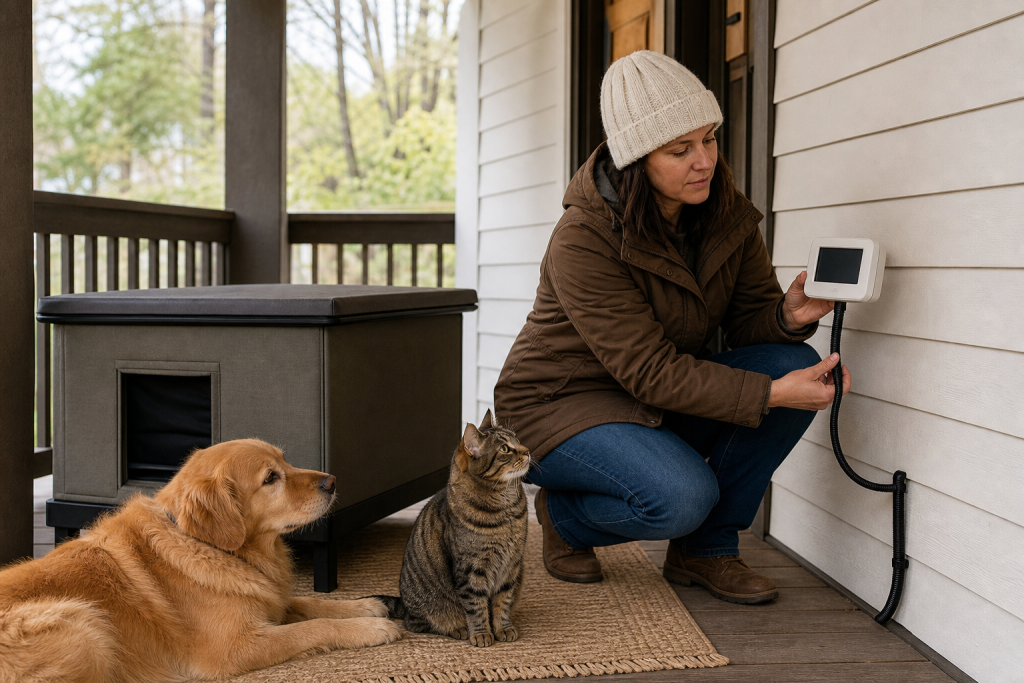
#heated cat houses
#pet house heaters
#smart pet house
An app-controlled dog house heater can be useful, but only if the shelter, outlet, cord route and thermostat range fit the way your pet actually uses the space. The risky bargain is the heater that looks smart in the listing, then needs an unsafe extension-cord setup or a shelter that traps heat, moisture or a pet. Before you pay, treat the app as a convenience feature, not the safety feature.
That matters now because pet owners are seeing more outdoor heated cat houses, dog house heaters and Wi-Fi pet-house warmers show up in marketplace searches ahead of colder weather. Some listings emphasize remote control, timers and adjustable temperatures, but the details that decide whether the deal is practical are usually lower on the page: electrical listing, outdoor rating, cord length, wattage, mounting clearance, return shipping and whether your pet can leave the shelter easily.
Why the “smart” part is not the first thing to check
A connected heater can make a pet house easier to monitor, especially if it has a temperature probe, timer or app alerts. It does not replace the basic checks that make an outdoor shelter usable: a dry raised floor, wind protection, ventilation, correct size and a safe exit. The AVMA’s cold-weather guidance says cats and dogs should generally be kept indoors in cold weather and warns against space heaters and heat lamps because of burn and fire risks.
For shoppers, that means the best question is not “Does it have Wi-Fi?” It is “Would this still be a sensible heater if the app stopped working?” A pet-house heater that needs constant app correction, lacks a clear manual control, or gives vague safety language deserves more skepticism than a simpler listed product with a clear manual and realistic installation instructions.
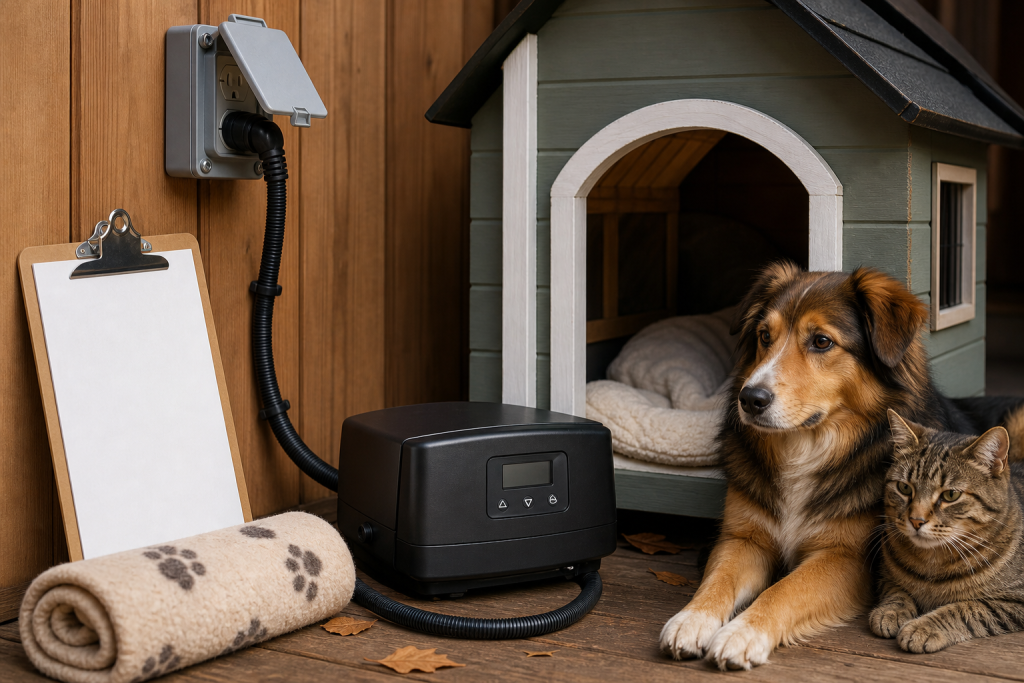
The checkout checks that matter most
Electrical listing: Look for a safety listing for the whole product, not only a component inside it. K&H Pet Products, which sells outdoor heated pet products, advises checking that electrical pet products are properly safety tested and warns that some online sellers may advertise partial or misleading certification claims.
Outdoor rating: A heater used in a porch, garage, barn or outdoor shelter needs instructions that clearly allow that environment. “For pet houses” is not the same as weatherproof. If the manual says indoor use only, do not treat a covered patio as a loophole.
Cord length and outlet location: This is where many cheap listings become expensive or unsafe. The CPSC says portable electric space heaters should be plugged directly into a wall outlet, not into an extension cord or power strip. The CPSC also says extension cords lacking basic safety features can present shock or fire risks. If the product’s own cord cannot reach a suitable protected outlet, that deal may not work for your setup.
Mounting and clearance: Check whether the heater must be wall-mounted, how far it must sit from bedding, whether the intake can clog with fur, and whether your dog or cat can rub, scratch or chew near the unit. A heater that fits the product photo may still be wrong for a small shelter with loose blankets.
Thermostat behavior: Read whether the thermostat measures room air, floor temperature, pad temperature or probe temperature. Those are not the same thing. If the product only lists a wide adjustable range but does not explain where the sensor sits, you may not know what your pet is actually experiencing.
When a deal is not really cheaper
A low sticker price can disappear once you add a suitable shelter, mounting hardware, a weather-protected outlet, replacement parts or return shipping for a heavy item. Marketplace listings also vary widely in seller support. Before ordering, verify whether the brand sells replacement probes, cords, pads, fans or mounting parts, and whether warranty support requires shipping the whole heater back.
For cat shelters, compare heated and unheated versions instead of assuming the warmest model is the best value. Retailer category pages now commonly show heated outdoor cat houses with claims around low-voltage pads, chew-resistant cords, internal thermostats and weather-resistant materials. Those features are useful only if they match the placement you have. A self-warming shelter, better insulation or moving the pet indoors may be the better purchase for some homes.
For dog houses, be careful with high-watt heaters sold as quick fixes. A larger heater is not automatically safer or more comfortable. If the product reads like a mini space heater, the safety instructions, outlet requirements and clearance rules matter more than the app screenshot.
What to avoid before you click buy
- A listing that says “safe” but does not name a recognized testing mark or provide a manual.
- Any setup that depends on a long extension cord, daisy-chained cords or a power strip.
- A heater or pad placed under loose straw, blankets or bedding unless the manual specifically allows that use.
- A one-door cat shelter for outdoor or community cats where a predator could block the exit.
- An app-only heater with no usable physical control if Wi-Fi, the app account or the cloud service fails.
- A return policy that excludes used installed items or makes you pay high return freight.
A practical buying checklist
Measure the shelter before shopping, including floor space after bedding is inside. Confirm the heater’s dimensions, clearance, cord length and wattage from the manual, not just the product title. Check that the outlet location is protected, grounded where required and reachable without improvising with cords.
If the listing includes app control, read recent reviews for setup problems, cloud outages, forced account creation and missing manual controls. If you are buying from a marketplace seller, check who actually handles warranty service. A familiar retailer’s checkout page does not always mean the manufacturer will support the item like a direct purchase.
For health decisions, ask your veterinarian whether an outdoor heated shelter is appropriate for your pet. Senior pets, puppies, kittens, thin-coated dogs, cats with medical conditions and outdoor community cats can have very different needs. The purchase should support a care plan, not become the plan.
Deal and coupon checks
Do not buy a pet-house heater only because a coupon makes the upfront price look low. Verify the final cart price, shipping, return window, seller name, warranty path and replacement-part availability before paying. If a coupon applies only to the heater but not the shelter, outlet cover or safer installation supplies, the real project cost may be higher than a complete heated shelter kit.
Also check seasonal return timing. Buying early can make sense, but it can also start the return clock before you have weather cold enough to test the setup. If the product is heavy or installed with screws, read the return policy before opening the box.
Quick Answers
Is a Wi-Fi dog house heater safer than a regular one?
Not automatically. Wi-Fi can help with convenience, but the product still needs proper safety listing, outdoor-use instructions, safe placement, a suitable outlet and a shelter your pet can use safely.
Can I use an extension cord with an outdoor pet-house heater?
Do not assume that you can. Follow the product manual and electrical safety guidance. CPSC guidance for portable space heaters says to plug them directly into a wall outlet rather than an extension cord or power strip.
Are heated outdoor cat houses worth it?
They can be useful for some outdoor or community cats when the product is weather-appropriate, safety listed and placed correctly. Indoor shelter is still preferable for many pets in cold weather, and cats need a way to leave if they feel trapped.
What is the biggest checkout mistake?
Buying the heater before checking the cord path and shelter fit. If the safest installation does not work in your porch, garage, barn or yard, the discount is not the real price.
Sources
Sources last checked: August 23, 2026, 07:37 CEST, Europe/Rome.
- American Veterinary Medical Association, Cold weather animal safety
- U.S. Consumer Product Safety Commission, winter heater safety guidance
- U.S. Consumer Product Safety Commission, extension cord business guidance
- K&H Pet Products, electrical safety for pet products
- Chewy, heated cat houses shopping category and product claims
- Chewy, app-controlled dog house heater product surface
- K&H Pet Products, Thermo Outdoor Kitty House product details