
#cat furniture
#cat tree
#pet deals
#pet supplies
#scratching post
A cheap cat tree is not a good deal if it wobbles, sits too short for a full stretch, or costs more to return than you saved. Before checkout, compare the base, height, scratching surface, replacement parts, assembly hardware and return terms, not just the discount. The right buy gives your cat a stable place to climb and scratch, while the wrong one becomes expensive furniture your cat ignores.
Why This Cat Furniture Mistake Matters Now
Cat trees and scratching posts sit in the awkward part of the pet budget: they look like one-time purchases, but poor materials, weak bases and awkward returns can turn them into repeat expenses. PetPlace’s 2026 cost guide, citing Rover’s 2025 cat cost report, lists scratching posts and cat trees among common first-year cat purchases, with a wide price range. That spread is exactly why the cheapest large tower is not always the lowest-cost choice.
There is also a behavior reason to choose carefully. Cats scratch to stretch, mark territory and maintain their claws. If the post shifts, collapses or uses a surface your cat dislikes, the bargain may fail before it protects your couch.
The Checkout Test: Height, Wobble And Surface
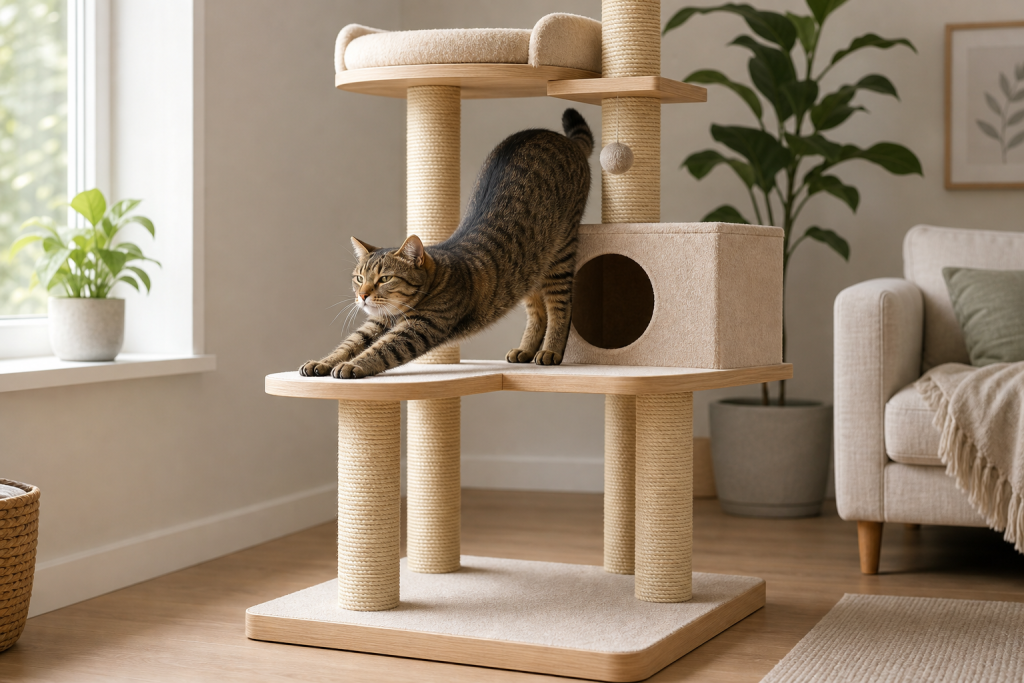
Start with the scratching post, not the decorative perches. The ASPCA says cats need a sturdy scratching post at least three feet high, stable enough that it will not wobble during use, and covered with a rough material such as sisal, burlap or tree bark. That is a useful shopping filter because many cute cat trees are built around plush platforms but give the cat only short, skinny posts.
For a normal adult cat, look for enough vertical height for a full body stretch. For a large cat, a multi-cat home or a cat that launches hard from furniture, check the base width, total weight, wall anchor option and whether the tall section is centered or top-heavy. If the product page hides dimensions, skips weight limits or shows only close-up lifestyle photos, treat the deal as incomplete.
Surface matters too. Sisal rope, sisal fabric, cardboard, wood and carpet do not feel the same to a cat. The ASPCA’s destructive-scratching guidance recommends offering different scratching surfaces and choosing sturdy posts that will not shift or collapse. A discount on the wrong texture can be a waste if your cat already prefers cardboard scratchers or a flat horizontal pad.
The Hidden Costs Owners Miss
The first hidden cost is shipping. Cat trees are bulky, and a low sale price can be offset by oversized delivery fees, slow freight, apartment delivery limits or a return process that requires repacking a heavy box. Check whether shipping is free only above a threshold, whether oversized items are excluded, and whether the retailer supplies a prepaid return label.
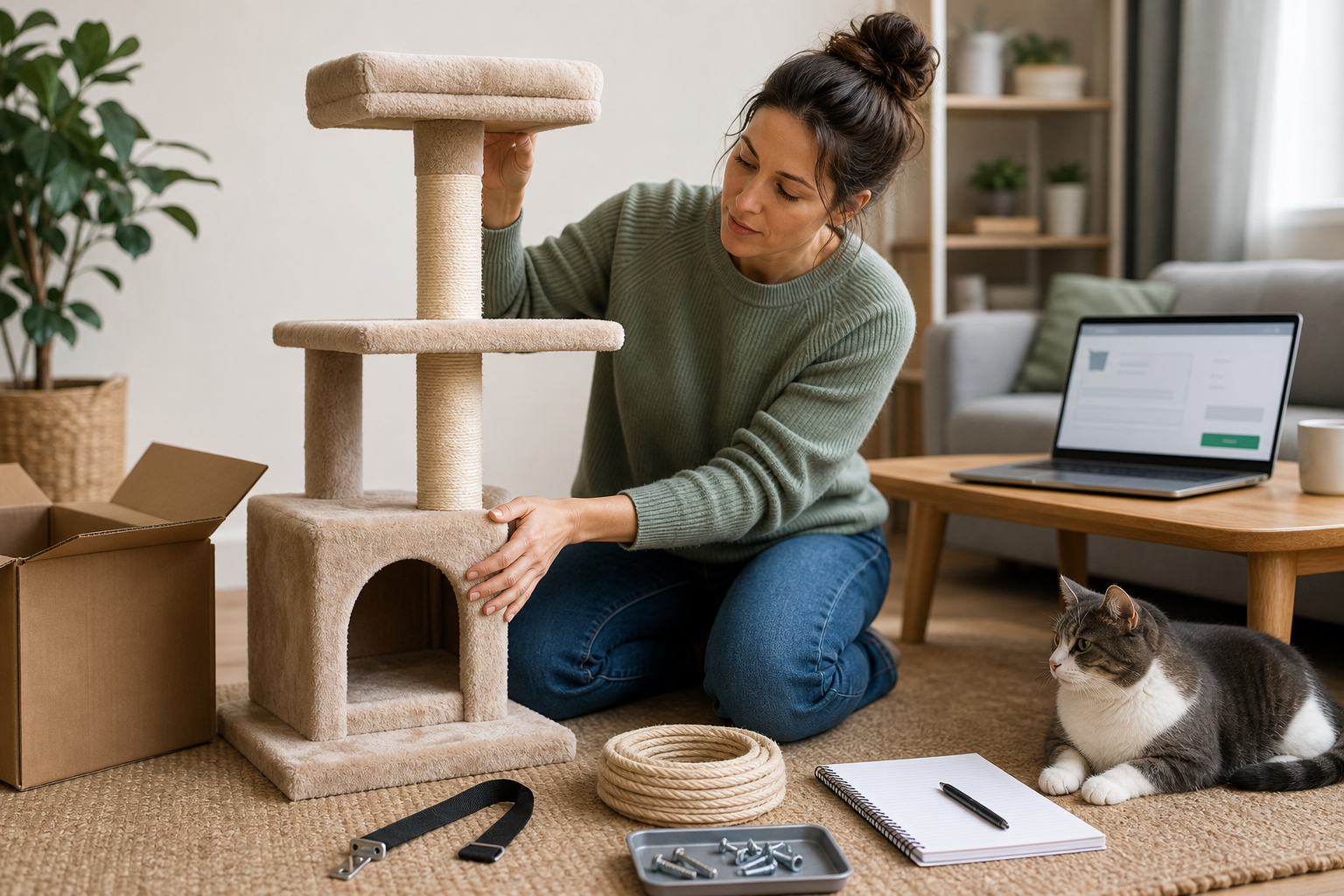
The second hidden cost is repair. A good cat tree should not become trash when one post gets shredded. Before buying, look for replacement sisal rope, replaceable posts, spare screws, clear assembly instructions and customer support for missing parts. If a tower has proprietary posts and no replacement path, the upfront deal may only delay the next purchase.
The third hidden cost is floor space. Measure the exact corner, doorway and window area before ordering. A tall tower that blocks a heat vent, tips into a curtain, or cannot fit through a narrow room layout may be technically usable but practically wrong for your home.
Deal And Coupon Checks Before Paying
Do not judge a cat tree deal by the strike-through price alone. Compare the delivered price, return terms, assembly requirements and part quality against similar towers. If the coupon applies only to select colors or excludes oversized items, the checkout total matters more than the product tile.
For major pet retailers, read the return policy before ordering. Chewy’s public return policy says customers can request returns within 365 days if they and their pet are not satisfied. Petco’s return policy describes a 60-day return window, with different refund treatment after the first 30 days for some online orders. Policies can change and item-specific exclusions may apply, so verify the terms in your cart before paying.
Also check whether the retailer allows returns after assembly. A cat tree can be hard to repack once built, and missing hardware or damaged panels are easier to document before your cat starts using it. Photograph the box, parts and instructions during unboxing if the item arrives damaged.
What To Avoid
Avoid towers that are tall but narrow at the base, especially if the product photo shows a kitten rather than an adult cat. Avoid plush-only towers with little usable scratching surface if your goal is to redirect clawing from furniture. Avoid listings that do not show dimensions, material details, hardware, anchoring options or a clear return path.
If children live in or visit the home, think about stability beyond the cat. The U.S. Consumer Product Safety Commission’s Anchor It campaign warns that furniture that can topple should be secured in homes with young children. A cat tree is not a dresser, but the same practical question applies: could this object fall if climbed, pulled or bumped? If the answer is yes, choose a safer location, use the supplied anchor if appropriate, or skip that design.

A Practical Buying Checklist
- Measure your cat’s stretch, not just your room’s empty corner.
- Choose a sturdy base and check whether a wall anchor is included.
- Match the scratching surface to what your cat already uses.
- Confirm total delivered price, not only the sale price.
- Read the return policy before assembly.
- Look for replacement posts, sisal, screws or customer support.
- Keep the box and hardware photos until the tree is stable and accepted.
FAQ
Is a taller cat tree always better?
No. Taller can be useful, but only if the base, construction and location are stable. A shorter, sturdier tree with a good scratching surface can beat a tall tower that shakes.
Should I buy the cheapest cat tree first to see if my cat likes it?
Sometimes, but a very flimsy post can teach you little because the cat may reject the wobble rather than the idea of a tree. A basic, stable scratching post or cardboard scratcher is often a better trial purchase.
Can a cat tree stop furniture scratching?
It can help, but it is not automatic. Place the scratcher near the furniture or sleeping area your cat already targets, use a texture your cat likes and reward appropriate scratching. If behavior changes suddenly or scratching seems linked to pain, ask your veterinarian.
What should I do if the cat tree arrives damaged?
Take photos before assembly, keep the packaging, check the retailer’s return or replacement process and contact customer support quickly. Do not assume an oversized item will be easy to return after it is fully built.
Sources
Last checked: June 2, 2026, 16:45 Europe/Rome.
- ASPCA, General Cat Care.
- ASPCA, Destructive Scratching.
- U.S. Consumer Product Safety Commission, Anchor It tip-over safety release.
- PetPlace, Average Cost of Owning a Dog or Cat in 2026.
- Chewy, Return Policy.
- Petco, Return Policy.