
#dog harness
#dog walking gear
#harness fit
#pet deals
A dog harness deal is not a bargain if it only fits your dog while they are standing still. The right buy starts with your dog’s neck and chest measurements, then checks whether the straps clear the shoulders, elbows and throat when your dog walks, sits and turns. Before checkout, treat size charts, return terms and adjustment points as part of the price.
Why harness fit matters now
Dog supplies remain a major part of pet spending, and the American Pet Products Association says the U.S. pet industry reached $158 billion in 2025, with continued growth expected in 2026. That means owners are seeing more harness styles, seasonal walking gear and online promotions, but more choice can also make the wrong fit easier to buy.
Harnesses can be useful because they spread leash pressure across more of the body than a neck collar. They can also be a poor purchase if the shape rubs under the front legs, blocks natural shoulder movement, slips over the head, or cannot be returned once your dog has tried it outdoors.
The checkout mistake: buying by breed or weight
Breed and weight labels are only rough shortcuts. Two dogs can weigh the same and have very different chest depth, shoulder width, neck shape and coat thickness. A narrow-headed dog may need a more secure design, while a broad-chested dog may need more front and belly adjustment than a basic step-in harness offers.
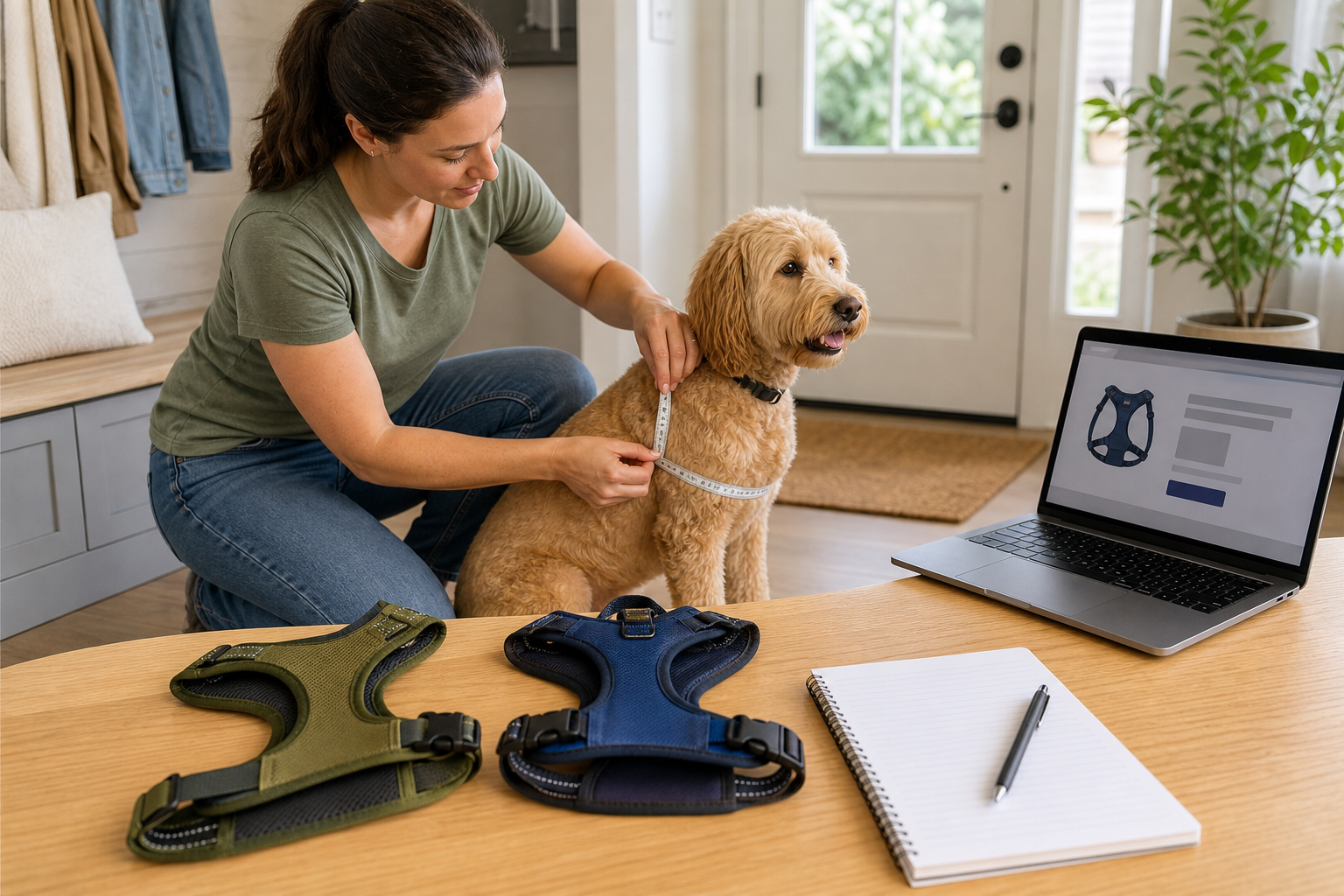
Before you add a discounted harness to the cart, measure the base of the neck and the widest part of the chest, usually just behind the front legs. Then compare those numbers with the brand’s own size chart, not a generic chart from another seller. If your dog lands between sizes, check whether the larger size can tighten enough and whether the smaller size would pinch when your dog sits.
What to verify before buying a dog harness
- Adjustment points: Look for neck and chest adjustment, and consider a third belly strap for dogs that back out of gear.
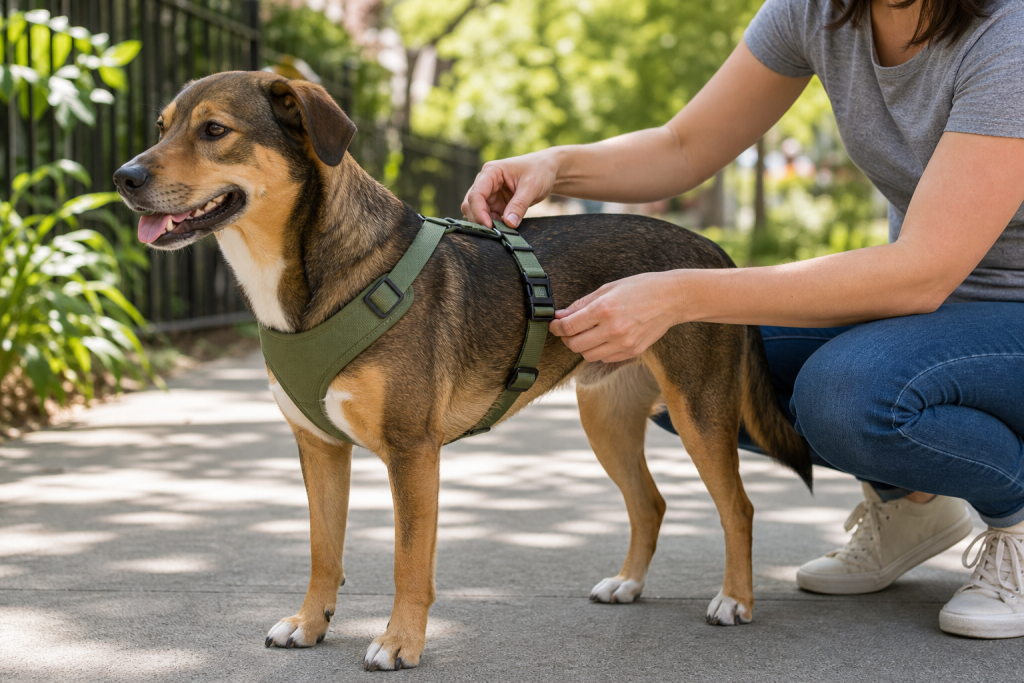
- Shoulder clearance: The front design should let the front legs reach forward naturally instead of cutting across the shoulder.
- Elbow clearance: Straps should not sit tight in the armpit area, where rubbing can show up quickly on summer walks.
- Throat position: A good walking harness should not ride high against the throat when the leash tightens.
- Leash attachment: Back clips can suit casual walking. Front clips may help with steering, but they still need correct fit and training.
- Coat and growth: Puppies, newly adopted dogs, thick-coated dogs and recently groomed dogs may need rechecking as their body or coat changes.
- Cleaning: If the harness will be used for muddy parks or beach trips, check washing instructions before buying a heavily padded style.
How to test fit when it arrives
Try the harness indoors first, before tags are removed if the retailer requires them for returns. You should be able to slide two fingers under the straps without the harness hanging loose. Watch your dog walk, turn, sit and sniff. If the harness twists, drops behind the ribs, presses into the elbows, or causes your dog to change their gait, the discount has already failed.
Do a short leash check near home before relying on it for a long walk. If your dog pulls, panics, backs up, or has a history of slipping gear, use extra caution and ask a qualified trainer or veterinarian for guidance. Do not wait for a busy street, trailhead or vacation day to discover the fit is wrong.
Deal and coupon checks before paying
A coupon can hide a bad return window. FTC online shopping guidance says buyers should read deal terms and check shipping, refund and return policies before ordering. That matters with harnesses because a size problem may not be obvious until the item is adjusted on your actual dog.
Check whether the retailer allows returns after a try-on, who pays return shipping, and whether sale or clearance items have different rules. Chewy’s posted return policy says returns are available within 365 days for customers who are not satisfied, while Petco’s posted return policy describes a 60-day return window with timing details for store returns and merchandise credit. Policies can change, so verify them in the cart before you pay.
Also compare the final price after shipping. A cheaper marketplace listing may lose its advantage if the size chart is vague, the seller has no clear return process, or replacement clips and buckles are not available.

What to avoid
Avoid harnesses that rely only on breed names, vague sizes like “medium dog,” or photos that never show the underside and front strap placement. Be careful with very stiff straps, bulky chest plates on small dogs, and designs that sit directly behind the front legs. Avoid leaving a harness on an unsupervised dog, especially if the dog chews straps or could get caught on furniture or crate hardware.
If your dog develops redness, hair loss, sores, sudden reluctance to walk, coughing, breathing changes, or pain after using walking gear, stop using that harness and ask your veterinarian for advice. Shopping guidance cannot replace an exam when discomfort or health signs appear.
Quick answers
Should I size a dog harness by weight?
No. Weight can narrow the search, but chest and neck measurements matter more. Always compare your dog’s measurements with the specific brand’s chart.
Is a front-clip harness always better?
Not always. A front clip can help redirect some dogs, but poor fit can twist the harness or affect movement. Training and correct adjustment still matter.
How tight should a harness be?
It should be snug enough that your dog cannot slip out, but not so tight that it pinches. The common two-finger check is a starting point, then you need to watch movement.
When should I return a harness?
Return it if it cannot clear the shoulders and elbows, rides into the throat, twists during normal walking, or needs to be tightened so much that it pinches.
Sources
Last checked: 2026-06-03 16:32 CEST, Europe/Rome.
- American Pet Products Association, 2026 State of the Industry pet spending release: americanpetproducts.org
- American Kennel Club, dog harness fit and choosing a harness: akc.org and akc.org
- Frontiers in Veterinary Science, 2026 review of physical risks from dog-worn equipment: frontiersin.org
- FTC Consumer Advice, online shopping and return-policy checks: consumer.ftc.gov
- Chewy return policy: chewy.com
- Petco return policy: petco.com