
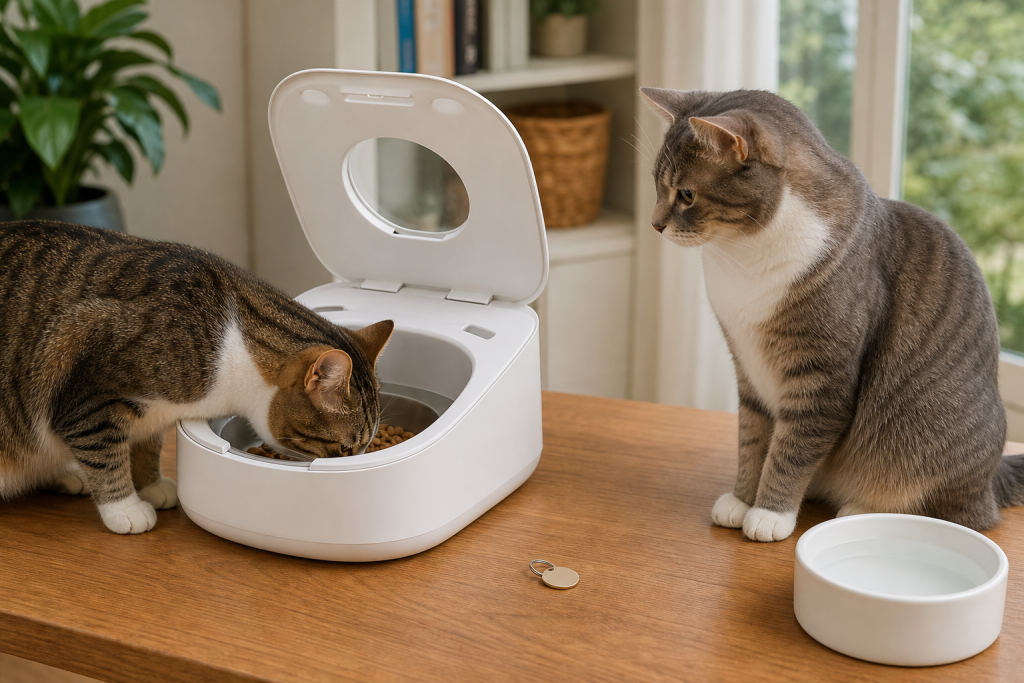
#cat feeding
#microchip cat feeder
#multi-cat household
#pet tech
A microchip cat feeder can still be a bad deal if it only solves part of the feeding problem. Before buying one, check whether it reads your cat’s actual microchip or collar tag, whether the lid design stops food stealing in your home, and whether replacement bowls, batteries, returns and app features add cost after checkout.
That matters more now because pet-tech deals are easy to compare by the headline gadget feature, while multi-cat feeding is a real household problem. APPA’s 2026 pet industry release says U.S. pet spending reached $157 billion in 2025 and is projected to keep rising in 2026, so a discounted feeder can look sensible when owners are also paying more for food, litter, veterinary care and subscriptions. But an identity-gated feeder is not just a bowl with a chip reader. It is a small feeding system, and the weak point is often the detail you did not price in.
Why This Feeder Deal Can Fail
The promise is simple: one pet gets access to one portion, and the other pet does not. That can help in a multi-cat home where one cat eats too fast, one cat steals food, or one pet needs a different diet chosen with a veterinarian. Cornell’s Feline Health Center notes that controlled meal feeding can be useful for monitoring intake, and separate feeding can matter when cats in the same home have different food needs.
The catch is that a feeder cannot make the whole room behave. If another cat can push in beside the authorized cat, reach around the lid, tip the unit, or wait for leftovers, the product may not solve the problem you bought it for. That is why the cheapest listing is not automatically the cheapest result.
Check The Reader Before You Check The Price
Start with identification. Some feeders open for an implanted microchip, some use an included collar tag, and some support both. If your cat is not microchipped, a collar tag may work, but you should price spare tags and think about whether your cat safely tolerates a collar. If your cat is microchipped, confirm that the feeder supports your chip type and that the learning process is realistic for your pet.
Then check the access shape. A feeder with a top lid may protect food from quick nibbling but still leave gaps for a determined second cat. A rear cover, side guards or a more enclosed design can matter in homes where the wrong pet is persistent. Reviews are useful here only if they describe a household like yours: number of cats, food type, cat size, collar-tag use and whether the unauthorized pet was able to sneak in.
Finally, check the food style. Dry food is usually simpler. Wet food raises questions about freshness, bowl shape, cleaning and how long food sits out. A microchip feeder is not the same thing as a refrigerated feeder, so do not treat a lid as a food-safety feature it does not claim to be.
The Hidden Costs Are Usually Small Parts
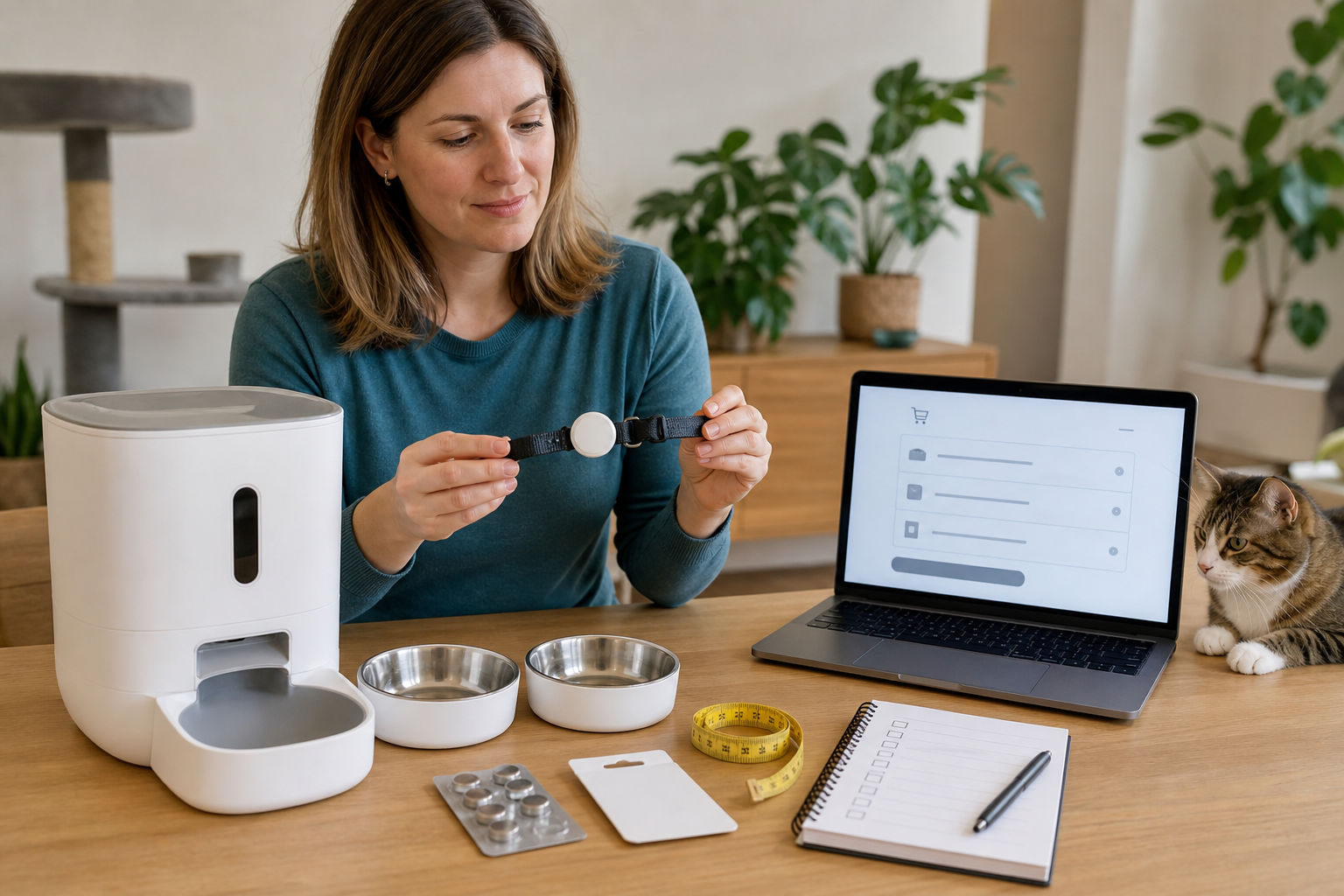
The accessory list is where a deal can quietly shrink. Look for replacement bowls, mats, split bowls, seals, rear covers, collar tags, batteries, power adapters and warranty terms before you buy. If the feeder uses batteries, check the battery size and whether the listing includes them. If it has an app-connected version, check whether a hub, bridge or subscription-like service is needed for the features you want.
Connected features deserve a separate look. The FTC advises shoppers to think about updates, passwords and security for internet-connected devices. For a pet feeder, that means checking whether the app still works with your phone, whether the company explains software support, and whether you can still use the feeder for basic feeding if the app, hub or cloud service is unavailable.
Buying Checklist Before Checkout
- Identification: Confirm implanted microchip compatibility or collar-tag requirements.
- Pet fit: Check opening size, bowl height and whether large cats can eat comfortably.
- Household fit: Read reviews from owners with more than one pet, not just single-cat homes.
- Food type: Verify whether the feeder suits dry food, wet food or both.
- Cleaning: Look for removable bowls and parts that are simple to wash.
- Accessories: Price spare bowls, tags, mats, batteries and covers before treating the sale price as final.
- Returns: Check whether the retailer accepts returns after setup, and whether original packaging is required.
- Support: For connected models, check app support, hub requirements and warranty language.
Deal And Coupon Checks
A coupon is useful only if it applies to the exact model and accessories you need. Compare the feeder, spare tag, rear cover, bowls and shipping together, because a discounted base unit may cost more once you add parts. Also check whether the retailer’s return policy fits a product that may need real-world testing with your cats.
Chewy’s return policy says customers can return eligible items within 365 days, but you still need to check the current policy page and any product-specific terms before ordering. Petco’s return information also depends on timing and item type. Do not assume every opened electronic feeder can be returned in the same way as a bag of food.

What To Avoid
Avoid buying only because the listing says “microchip” or “RFID.” Those words do not prove the feeder will stop food stealing in your specific home. Avoid vague marketplace listings that do not show replacement parts, warranty support or the exact identification method. Also avoid treating a feeder as a substitute for veterinary guidance if a cat is losing weight, gaining weight, vomiting, refusing food or eating a prescription diet.
If one pet needs a medical diet, ask your veterinarian how strict separation needs to be. A feeder can help with a feeding plan, but it cannot diagnose appetite changes or guarantee that another pet never gets a mouthful.
FAQ
Do microchip cat feeders work without a microchip?
Some models can use a collar RFID tag instead, but not every cat tolerates a collar. Check the exact model page and price spare tags before buying.
Are these feeders worth it for one cat?
Sometimes, but the strongest reason is usually controlled access in a multi-pet home. For one cat, a simpler bowl, timed feeder or portion plan may be enough unless your veterinarian or routine points to a clear need.
Can a smart feeder replace watching my cat’s appetite?
No. It can make portions easier to manage, but appetite changes, weight changes and diet concerns should be discussed with a veterinarian.
What is the biggest checkout mistake?
Buying the feeder without pricing the parts that make it work in your home: spare tags, rear covers, bowls, batteries, shipping and return terms.
Sources
Last checked: 2026-06-03 13:32 Europe/Rome.
- American Pet Products Association, 2026 State of the Industry pet spending release
- Cornell Feline Health Center, How Often Should You Feed Your Cat?
- Merck Veterinary Manual, Proper Nutrition for Cats
- AAFP and ISFM Guidelines on intercat tension, including separate feeding resources
- Sure Petcare, Microchip Pet Feeder support
- Sure Petcare, Microchip Pet Feeder Connect product information
- FTC Consumer Advice, Securing Your Internet-Connected Devices at Home
- FTC Consumer Advice, smart-device software updates
- Chewy return policy
- Petco returns