

#dog food labels
#older dog nutrition
#pet food deals
#senior dog food
A senior dog food deal can be misleading when the front of the bag says “senior” but the label, calories and feeding directions do not match your dog’s real needs. The safer move is to check the nutritional adequacy statement, calories per serving, protein and fat levels, bag size and return terms before you stock up. If your older dog has weight loss, kidney disease, dental pain, appetite changes or medication changes, treat food shopping as a vet conversation, not just a coupon decision.
Why this matters now
Pet food is still one of the biggest repeat costs in dog ownership, and 2026 shopping coverage keeps pointing to more price comparison, bulk buying and deal hunting. That makes senior dog food especially easy to misread. A larger bag, autoship discount or “healthy aging” label can look like the obvious value until you calculate how much your dog actually eats, how long the opened bag will stay fresh and whether the formula is appropriate for your dog’s body condition.
The label details matter because “senior” is a marketing description, not a veterinary diagnosis. The U.S. Food and Drug Administration explains that AAFCO nutrient profiles are built around growth and reproduction or adult maintenance, and AAFCO tells shoppers to use the nutritional adequacy statement to confirm the species and life stage a food is intended to support. Many senior dog foods are complete and balanced for adult maintenance, but that does not mean every older dog needs the same calories, texture or nutrient profile.
The label mistake owners make
The mistake is buying the front-of-bag promise and skipping the back-of-bag math. “Senior,” “healthy aging,” “mobility support” and similar phrases may describe the product’s positioning, but the useful shopping information is usually in smaller print.
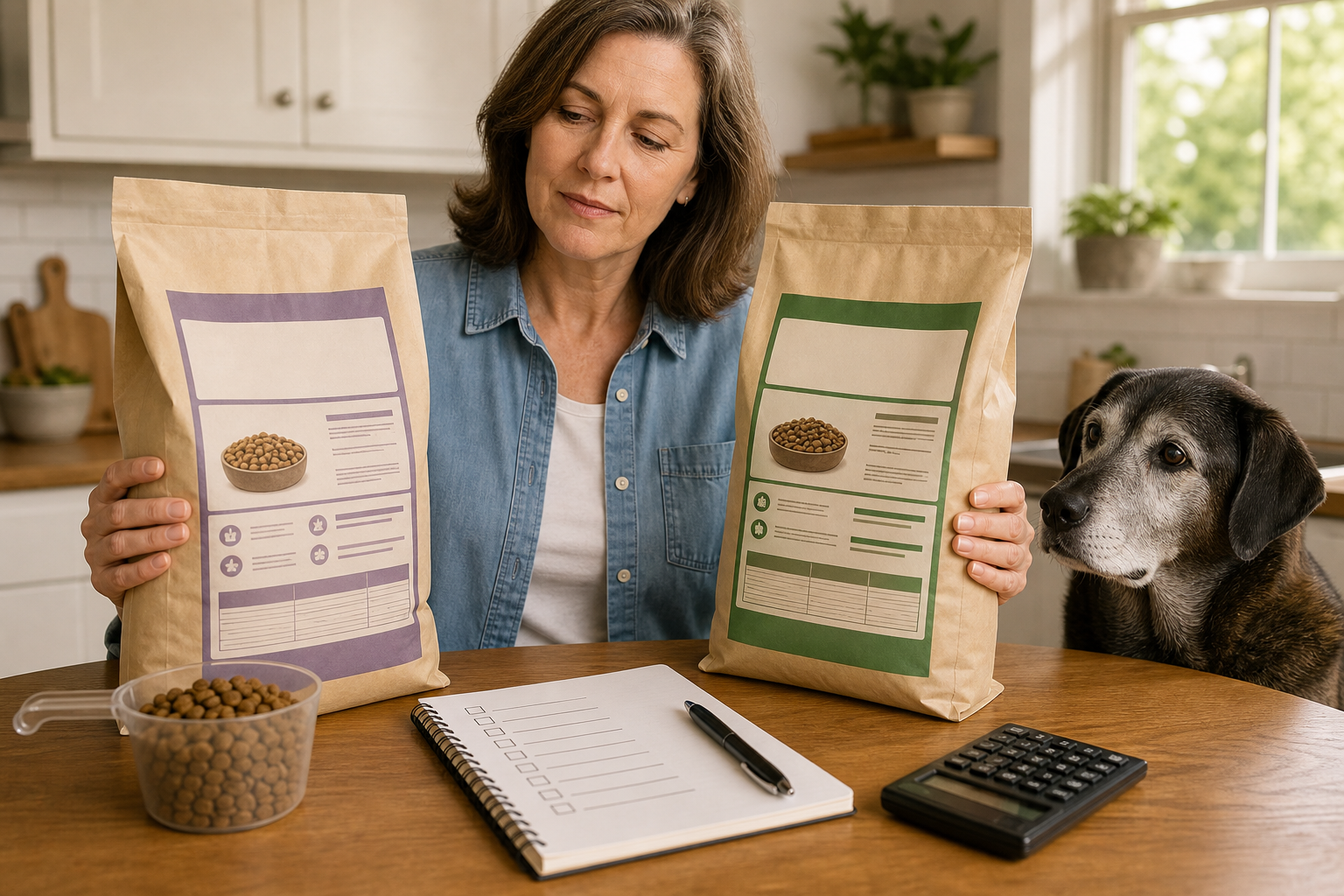
- Nutritional adequacy statement: confirm whether the food is complete and balanced for adult maintenance, all life stages, growth or supplemental feeding only.
- Calories: compare calories per cup, can or pouch, not just bag price. A cheaper food can cost more if your dog needs a larger daily amount.
- Feeding directions: check whether the suggested amount is for your dog’s current weight, ideal weight or a broad range that needs adjustment.
- Protein and fat: do not assume “senior” always means low protein or low fat. Ask your vet what fits your dog’s body condition and health history.
- Texture and kibble size: an older dog with missing teeth, dental disease or a weaker appetite may not use a hard large kibble well, even if the formula looks good.
- Bag size: bulk is only a deal if your dog finishes the food while it is still fresh and tolerates the formula after a gradual transition.
Before you buy a bigger bag
Start with your dog’s current daily amount and convert the deal into cost per day, not cost per bag. If two foods have different calorie densities, comparing only the sticker price can be useless. A 24-pound bag may look cheaper than a 12-pound bag, but it is not a bargain if your dog eats more cups per day, refuses the texture or needs a different diet after a vet visit.
Also check the expiration date and storage plan. Buying two large bags during a sale can backfire if one sits open too long or the original lot code gets lost after you pour the food into a bin. Keep the package or at least the lot code and best-by date until the food is finished, especially during a year when pet food recalls and advisories remain part of routine shopping checks.
When a senior formula is not enough
A regular senior dog food is not the same thing as a prescription or veterinary therapeutic diet. If your dog has kidney disease, heart disease, diabetes, pancreatitis, food allergy concerns, unexplained weight change or ongoing gastrointestinal signs, do not try to solve it by switching between sale bags. Ask your veterinarian what nutritional target matters before you order.
The same caution applies to supplements built into food. Joint-support, skin-support or digestive-support language may be useful context, but it should not replace a diagnosis or a plan. WSAVA nutrition guidance encourages nutrition assessment as part of regular veterinary care, which is a better standard than guessing from a product headline.
Deal and coupon checks before paying
Senior dog food is a repeat purchase, so deal terms can matter as much as the first checkout price. Before using a coupon, autoship discount or sale badge, verify these points:
- whether the discount applies only to the first autoship order;
- whether the product is eligible for returns after opening;
- whether the formula, size and flavor are the exact ones your dog already tolerates;
- whether the food is sold by the retailer directly or a third-party marketplace seller;
- whether the coupon excludes veterinary diets, food, bulk sizes or autoship items;
- whether you can pause, cancel or adjust delivery before the next order ships.
Chewy’s Autoship page, Petco’s return policy and PetSmart’s coupon policy all show why shoppers should read retailer terms instead of assuming a pet food discount works the same way everywhere. Policies can change, and food returns may be handled differently from toys or unopened supplies.
What to avoid
- Do not switch an older dog abruptly just because a new senior formula is on sale.
- Do not buy a giant bag before confirming your dog likes and tolerates the food.
- Do not assume “all life stages” is automatically better for an older, less active dog.
- Do not replace vet advice with joint, kidney, weight or digestive claims on a retail page.
- Do not throw away lot codes, best-by dates or original packaging until the food is gone.
- Do not judge value by protein percentage alone. Calories, digestibility, feeding amount and your dog’s condition all matter.
Quick answers
Does every older dog need senior dog food?
No. Some older dogs do well on their current adult maintenance food, while others need a calorie change, texture change or vet-directed diet. Age alone is not enough to choose the bag.
Is a senior dog food coupon worth using?
It can be, but only if the formula fits your dog, the discount is real at checkout and the next autoship or refill price still makes sense. Calculate cost per day after feeding directions, not just the sale price.
Should I buy a small bag first?
Usually yes when the formula is new to your dog. A small bag or a few cans reduce waste if your dog refuses the food or has digestive trouble during the transition.
What is the first label line to check?
Check the nutritional adequacy statement. It tells you whether the food is complete and balanced and for which life stage or use.
Sources
Last checked: 2026-06-06 04:34 Europe/Rome.
- FDA: “Complete and Balanced” Pet Food
- FDA: Pet Food
- AAFCO: Reading Labels
- AAFCO: Selecting the Right Pet Food
- WSAVA Global Nutrition Guidelines
- Morgan Stanley: Pet Industry Outlook 2026
- PetfoodIndustry: Petflation holds at 3.3% in February 2026
- Chewy Autoship & Save
- Petco Return Policy
- PetSmart Coupon Policy
- FDA Recalls & Withdrawals