
#cat litter deals
#cat urinary health
#color-changing cat litter
#health-monitoring cat litter
#pet tech
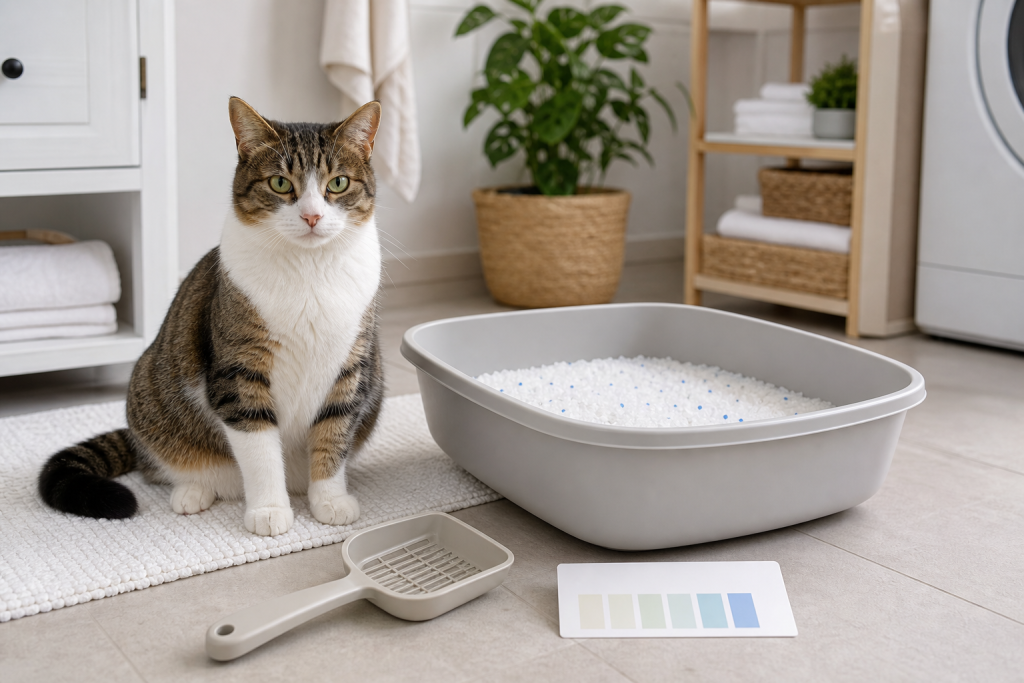
Health-monitoring cat litter can be worth buying if you treat it as an extra clue, not as a diagnosis. The mistake is assuming a color change tells you exactly what is wrong, or that a normal-looking box means your cat is fine. Before paying more for color-changing litter, check what it monitors, how quickly the color fades, whether your cat will use crystal litter and what the retailer will do if the first bag fails at home.
That matters now because cat owners are shopping for more at-home monitoring tools, while litter itself is already a repeat purchase that can quietly raise the monthly pet budget. Color-changing formulas and litter-box monitors are marketed as smart ways to spot changes earlier, but the useful part is the routine they create: you look at the box daily, compare changes over time and call your veterinarian when signs do not make sense.
What health-monitoring litter actually does
Most color-changing cat litters are designed to react to urine chemistry, especially acidity, alkalinity and in some products the possible presence of blood. PrettyLitter, one of the best-known examples, says its litter reacts to urinary elements such as acidity, alkalinity and blood visibility. Its own help page also says the product is a tool for insight, not a medical diagnostic product.
That difference is the whole buying decision. You are not buying a lab test. You are buying a litter that may make some changes easier to notice while your cat is already using the box. Cornell’s Feline Health Center lists signs of lower urinary tract disease that include painful urination, more frequent urination, crying while urinating, blood in urine, urinating outside the litter box and frequent licking. Those signs still need veterinary judgment, because Cornell also notes that urinary signs can have many causes.

The checkout mistake: buying the color chart, not the use case
A health-monitoring litter deal looks better when the product matches your cat’s actual routine. Start with the basics: your cat has to accept the texture, the box has to stay clean enough for you to notice changes and the color guide has to be easy to read in your lighting. If your cat refuses crystal litter or uses several boxes around the house, the most advanced color chart may not help much.
Also check the timing. PrettyLitter says a color change is strongest during the first 5 minutes to 1 hour after a fresh urine mark, then slowly fades, with most color change fading after 3 to 4 hours. That is a practical detail many shoppers miss. If you only check the box once at night, you may miss the strongest color shift from a morning visit.
For multi-cat homes, ask a harder question before subscribing: can you tell which cat used the box? If two cats share one litter box, a color change may tell you that something changed in the box, not which cat caused it. That can still be useful, but it may mean you need temporary separate boxes, a camera aimed only at the litter area, or a veterinarian’s advice on how to identify the right cat without delaying care.
What to verify before you pay more
- Diagnostic wording: Avoid treating “monitoring,” “insights” or “may signal” as the same thing as a diagnosis.
- Color duration: Check how quickly the color fades and whether your household will actually see it in time.
- Cat acceptance: Crystal and silica-style textures can feel different from clay, pellets or natural litter. A trial bag is safer than a bulk order.
- Dust and tracking: Look for the brand’s dust claims, customer photos and return terms, especially if anyone in the home is sensitive to dust.
- Number of boxes: Cornell recommends an adequate number of litter boxes, usually one more than the number of cats in the household.
- Subscription terms: If the best price requires autoship, check cancellation timing, delivery frequency and whether sale pricing applies only to the first shipment.
- Return policy: Opened litter is not always treated the same by every seller. Chewy says opened items like pet food and litter can be returned within its policy, while Petco’s return page has its own timing and refund rules.
When a coupon is not really a deal
A coupon can make a first bag cheaper and still be a poor buy if it pushes you into too much litter before you know your cat will use it. This is especially true for health-monitoring litter because the value depends on observation. If the color change is hard to read, your cat avoids the box, or the subscription ships faster than you use it, the discount did not solve the real problem.
Before checkout, compare the cost by month, not by bag. Check how long one bag is supposed to last for one cat, what changes in a multi-cat home and whether the brand’s estimate assumes a specific litter depth. Then compare that to your current litter. A higher price may be reasonable if the product improves daily monitoring and your cat accepts it, but it should not crowd out regular veterinary care, clean water, food and enough litter boxes.
Also read coupon exclusions. Some retailer codes exclude subscriptions, autoship orders, sale items, specific brands, repeat orders or marketplace sellers. Do not assume a headline discount will still apply after litter weight, shipping rules and subscription terms are added to the cart.

Safety notes: what not to ignore
Do not wait for a perfect color reading if your cat is showing concerning litter-box behavior. Cornell describes urethral obstruction as a true medical emergency, especially when a cat strains, makes frequent attempts and produces little or no urine. This article is shopping guidance, not veterinary advice, so call your veterinarian or an emergency clinic if you see urgent signs, especially in a male cat.
Do not use health-monitoring litter to choose medications, urinary diets or supplements on your own. A color change can be affected by timing, saturation, diet, hydration, multi-cat sharing and the product’s own chemistry. A veterinarian may need a physical exam, urinalysis or other testing to understand what is actually happening.
Finally, do not let the “smart” label make the box less cat-friendly. A litter that tracks health poorly because your cat hates it is worse than an ordinary litter box your cat uses consistently. Keep boxes clean, place them in quiet accessible areas and make any litter switch gradually unless your veterinarian tells you otherwise.
Who should consider it
Health-monitoring litter makes the most sense for owners who already check the box daily, have one cat or can separate boxes, and want a visible nudge to notice urine changes sooner. It can also be useful for owners who travel less, work from home, or can look at the box soon after use.
It is less compelling if your cat is picky about texture, your household cannot identify which cat used the box, or the price would make you delay veterinary care. In those cases, a clean ordinary litter, enough boxes and a habit of watching for behavior changes may be a better first purchase.
FAQ
Is health-monitoring cat litter diagnostic?
No. PrettyLitter’s help page says its color-changing technology is a tool for insight and not a medical diagnostic product. A licensed veterinarian is the person who can diagnose a medical condition.
Can a normal color mean my cat is healthy?
Not by itself. A normal-looking box does not rule out every urinary, kidney, behavioral or stress-related issue. Watch your cat’s behavior, appetite, water intake and litter-box pattern, and ask your vet about changes.
Is it worth buying a large subscription right away?
Usually no. Try a smaller quantity first if possible. Confirm that your cat accepts the texture, you can read the color changes and the delivery schedule matches your real use.
What should I do if the litter changes color?
Take a photo, note when it happened and contact your veterinarian if the change persists or your cat shows signs such as straining, frequent trips, crying, blood, licking or urinating outside the box. Do not self-treat based on the color chart.
Sources
Last checked: 2026-06-06 07:33 Europe/Rome.