
#cat bowls
#dog bowls
#pet bowls
#pet supplies
#stainless steel pet bowls
A stainless steel pet bowl deal is only a good buy if the bowl is easy to wash every day, stable enough for your pet and made well enough to resist damage. The hidden mistake is treating “stainless steel” as a hygiene guarantee. A discounted bowl can still collect biofilm, trap food around rubber bases or become annoying enough that owners stop cleaning it properly.
That matters right now because summer shopping pushes many owners to replace water bowls, travel bowls and feeding stations while Prime Day and competing pet sales are live. A shiny multipack can look like the practical choice for dogs and cats, but the checkout decision should be about cleaning, fit and daily use, not just the material name.
Why stainless steel bowls are popular
Stainless steel is durable, usually dishwasher-friendly and less likely than scratched plastic to hold odors. It also avoids the chip risk that comes with ceramic bowls. For many homes, that makes it a sensible everyday food or water bowl material.
But “stainless” does not mean self-cleaning. The FDA and CDC both treat pet food and treat handling as a household hygiene issue, especially because pet food residue can expose people and animals to bacteria when bowls, scoops and counters are not cleaned well. A peer-reviewed study on pet feeding habits also found that bowl contamination is affected by owner practices, not only by what the bowl is made from.
The checkout detail owners miss
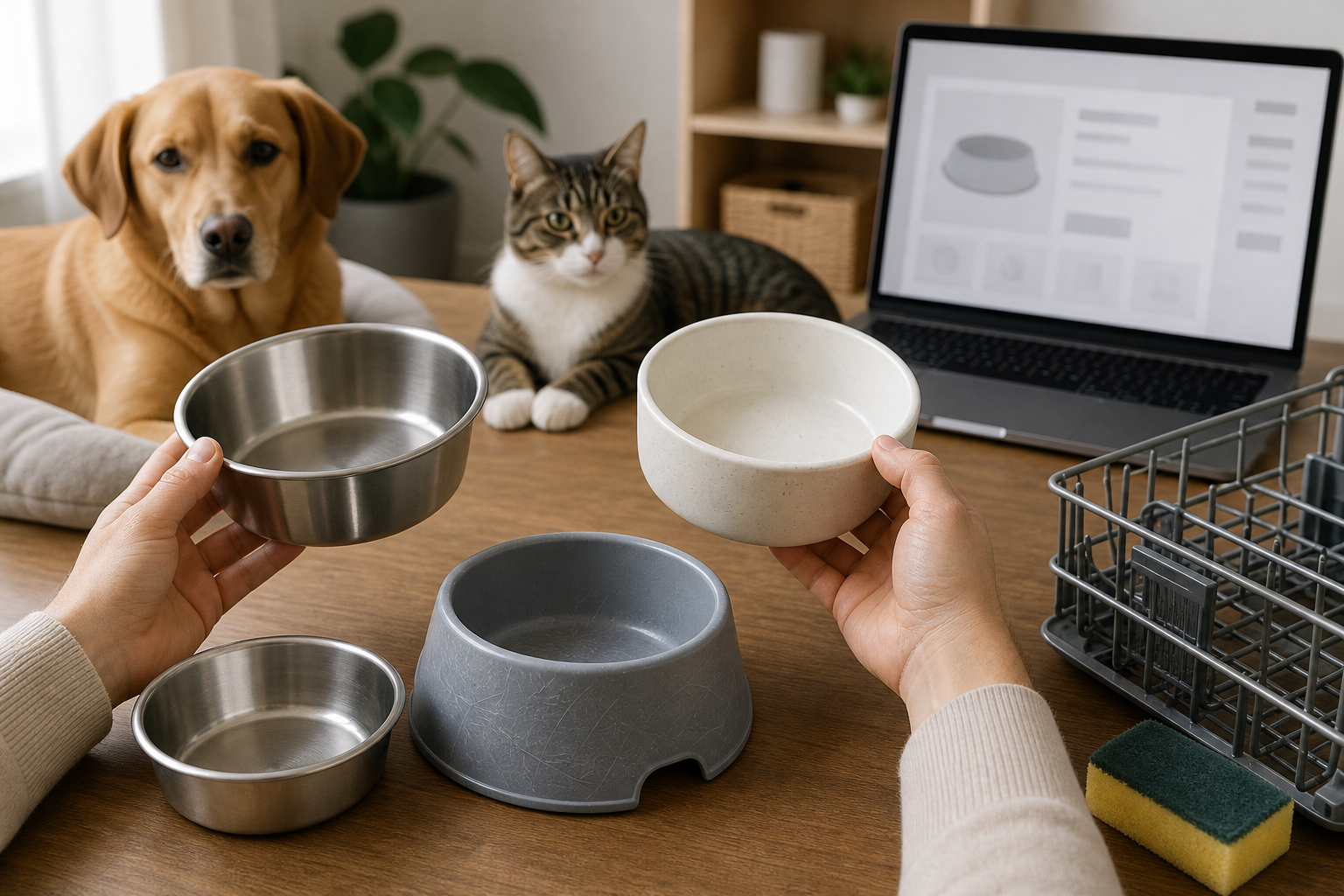
Before you buy a discounted bowl set, check whether you can actually clean every part of it. Removable rubber rings, raised seams, decorative coatings and glued-on anti-skid bases can turn a simple bowl into a dirt trap if they are hard to remove or dry.
Look for a smooth interior, a wide opening, a stable base and clear dishwasher guidance from the seller or manufacturer. If the product page avoids the cleaning question, uses vague phrases like “premium metal” without saying what grade or care routine is expected, or shows a bowl with complicated crevices, the lower price may not be the best value.
What to check before buying
- Size: the bowl should hold a normal meal or water serving without forcing whiskers, ears or muzzles into the sides.
- Weight: very light bowls can skid, flip or rattle, especially for eager dogs and cats that paw at water.
- Base design: non-slip feet help, but rubber rings should be removable or easy to clean around.
- Dishwasher claim: confirm whether the entire bowl is dishwasher-safe, or only the metal insert.
- Surface quality: avoid bowls with rough seams, peeling coatings, deep scratches or decorative interiors.
- Replacement plan: a cheap multipack is less useful if one bowl rusts, dents or traps grime after a few weeks.
Deal and coupon checks
For Prime Day, Chewy, Petco, PetSmart, Walmart or Amazon pet-supply deals, compare the price per bowl rather than the headline discount. A four-pack is not automatically better if two bowls are too small, too light or not dishwasher-safe.
Also check seller identity and return terms before paying. Marketplace listings can look similar, and bowl photos often hide thickness, base design and interior finish. If you are replacing a bowl because your pet had chin irritation, food sensitivity concerns or recurring mess around the feeding area, ask your veterinarian whether a material or shape change makes sense before stocking up.
What to avoid
Avoid plastic bowls with deep scratches, chipped ceramic bowls, rusty metal bowls and any bowl that smells bad after washing. Do not keep using a bowl because it was cheap or came in a matching set. The cost of replacing one bad bowl is small compared with fighting daily slime, spills or a pet that refuses to use it.
Be careful with bowls that are marketed with broad health promises. A bowl can make cleaning easier or feeding more comfortable, but it does not replace safe food handling, fresh water, portion control or veterinary care.
How often should you wash pet bowls?
Food bowls should be washed at least daily, and wet-food bowls should be cleaned after meals. Water bowls need frequent washing too, because biofilm can build up even when the water looks clear. AKC guidance recommends daily washing for dog bowls, and the same practical rule works for most cat bowls.
Quick answers
Are stainless steel bowls always better than ceramic?
Not always. Stainless steel is durable and practical, while ceramic can work if it is intact, lead-safe and easy to wash. Replace ceramic bowls that are chipped or cracked.
Are plastic bowls a bad deal?
Plastic can be inexpensive and useful for travel, but scratches and odors are a common problem. If a plastic bowl is rough, chewed, stained or hard to clean, replace it.
Should cats use wide shallow bowls?
Many cats prefer wider, shallower dishes because they keep whiskers from pressing into the sides. If your cat pulls food out of the bowl or avoids the dish, shape may matter as much as material.
Is a raised bowl safer?
Not automatically. Raised bowls are a separate fit and health question, especially for large dogs. Ask your veterinarian if you are buying one because of digestion, neck comfort or gulping concerns.
Sources
Last checked: June 23, 2026, 10:35 CEST.
- FDA, Pet Food
- CDC, About Pet Food Safety
- American Kennel Club, How Often Should You Wash Dog Bowls for Food and Water?
- Pet feeding habits and microbiological contamination of dog and cat bowls, peer-reviewed open-access study
- NSF, pet feeding system materials and food-contact safety context
- Amazon, Prime Day 2026 official dates and updates