
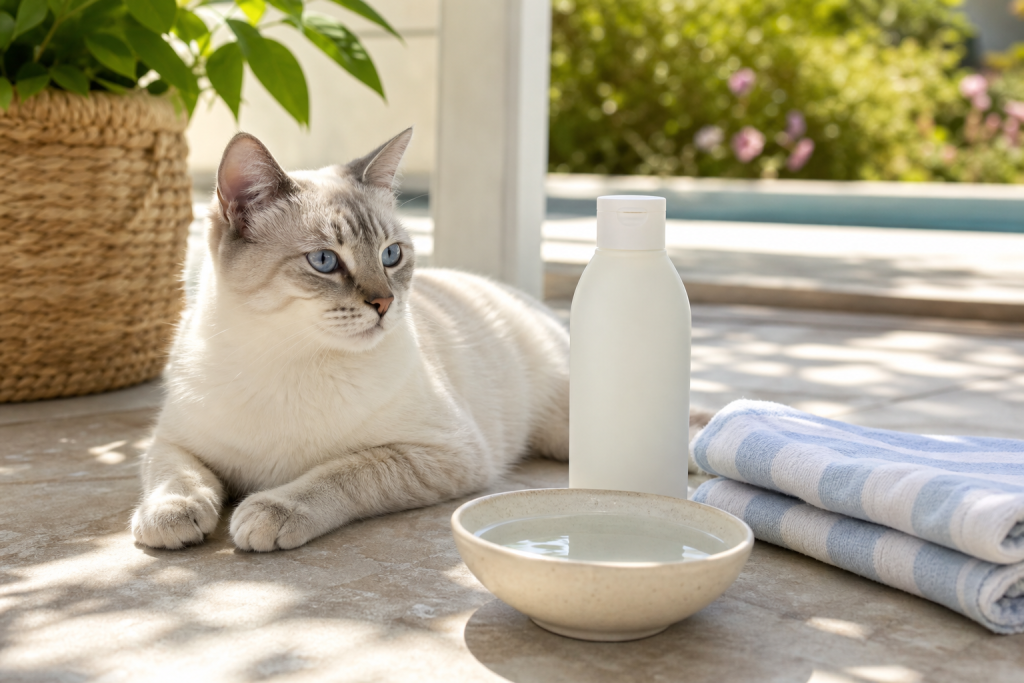
#cat sunscreen
#pet deals
#pet sun protection
#summer pet supplies
A cat sunscreen deal is only useful if the product is clearly safe for cats, not just marketed for pets in general. Cats lick their fur and skin while grooming, so a formula that looks harmless on a product page can become a problem if it contains ingredients cats should not ingest. Before buying, check the label, the ingredient list, the return terms and whether shade or indoor time would solve the same problem with less risk.
Summer searches for pet sun protection are climbing alongside heat-wave advice, beach trips and Prime Day pet supply deals. Light-colored cats, cats with thin fur on the ears or nose and cats that spend time in sunny windows or outdoor spaces are the shoppers most likely to make this purchase. The mistake is treating sunscreen like a normal accessory instead of a label-sensitive product your cat may lick.
Why This Matters Now
Hot-weather guidance from the ASPCA says sunscreen or insect repellent used on pets should be labeled specifically for animals. Cats Protection goes further for cats, warning owners to avoid sun cream with zinc oxide and salicylates because cats can become very unwell if exposed to those ingredients. International Cat Care also notes that vulnerable areas such as the nose and ear tips may need protection in some cats.
That does not mean every indoor cat needs a new bottle in the cart. It means that if you are shopping for a pale cat, a hairless cat, an outdoor catio setup, a beach rental stay or a cat that bakes in a sunny window, the product label matters more than the discount badge.
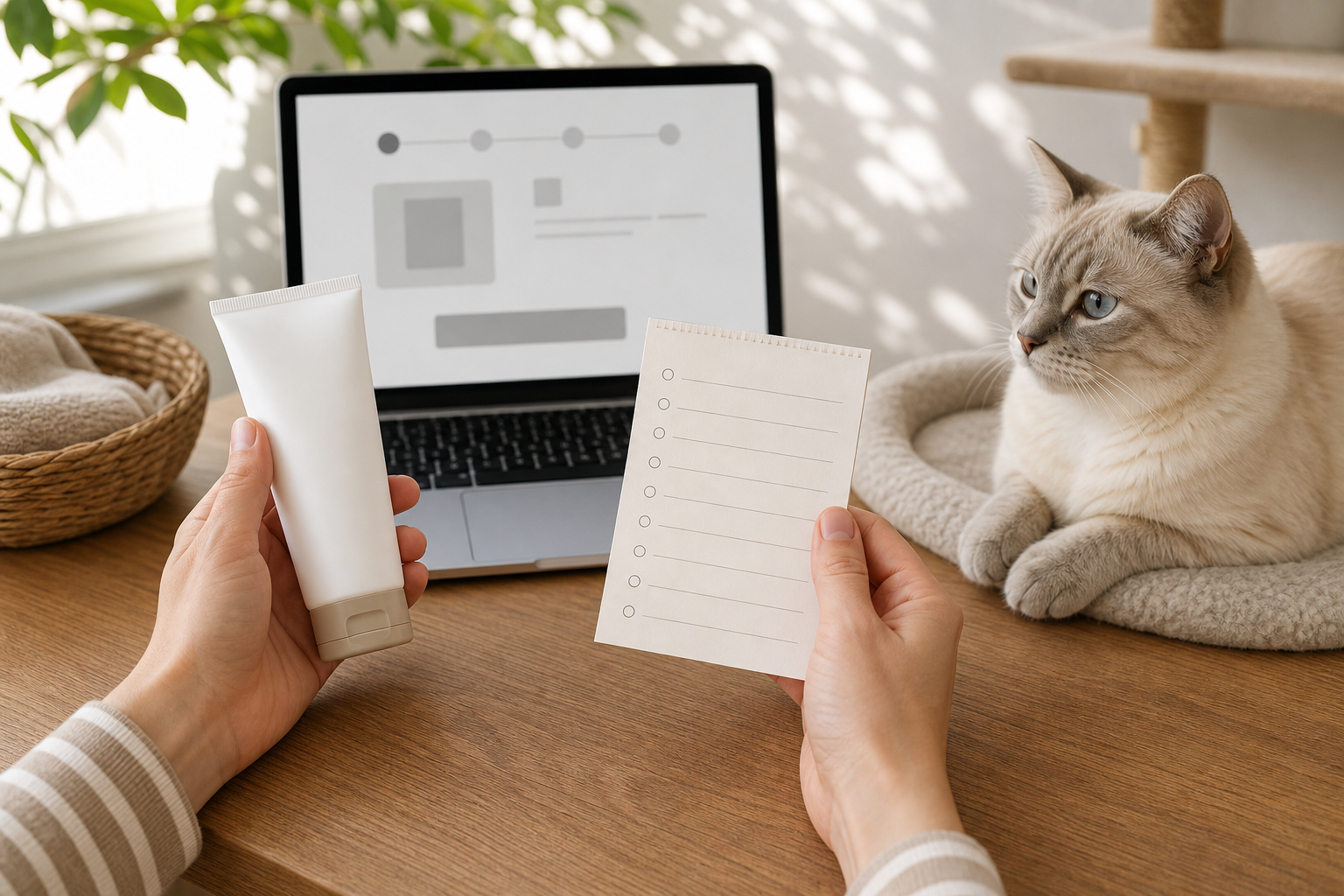
The Label Checks That Matter Before Checkout
Start with the exact species language. A bottle that says “dog sunscreen” or “pet sunscreen” is not automatically a cat sunscreen. Look for wording that specifically says the product is suitable for cats, or ask your veterinarian before using it on a cat that will groom the area.
- Ingredients: screen for zinc oxide and salicylates, two ingredient groups flagged by ASPCA and Cats Protection.
- Application area: check whether the label allows use on ear tips, nose or other thin-fur areas, and whether it warns against eyes, mouth or broken skin.
- Grooming risk: avoid products that rely on heavy fragrance, sticky residue or directions that assume the animal will not lick the area.
- Directions: read how often it must be reapplied and whether the product is practical for your cat’s temperament.
- Support path: choose a seller that shows the full ingredient list and accepts unopened returns if the label is not what the listing promised.
The best checkout question is not “Is this cheap?” It is “Would I still buy this if my cat licked it five minutes after application?” If the listing hides the full ingredients, choose a different product or skip the purchase until you can verify the label.
When Shade Beats a Sunscreen Deal
Sunscreen is not a substitute for managing heat and direct sun. For many cats, closing blinds during the strongest sun, adding shade to a catio, moving beds away from a harsh window, using a screened shaded area or keeping the cat indoors during peak heat is simpler and lower risk. If your cat hates handling, the stress of repeated application may also make the product less useful than the listing suggests.
Buying sunscreen makes the most sense when a veterinarian has advised protection for exposed skin, when a light-colored cat has unavoidable sun exposure, or when you have a controlled outdoor setup and can apply a cat-suitable product calmly. It makes less sense as a casual add-on because a summer sale page suggested it.
Deal And Coupon Checks
Prime Day and summer pet sales can make small seasonal products look like easy cart fillers. Do not let a coupon or multi-pack discount override the ingredient check. A two-pack is not a deal if one tube expires before you use it, if the product is dog-only, or if the seller does not show enough label detail to confirm it is appropriate for cats.
- Compare the price per ounce only after confirming the cat-safe label.
- Check expiration dates when buying multi-packs or marketplace listings.
- Avoid listings that show generic bottle photos without a clear ingredient panel.
- Confirm whether the retailer allows returns on unopened pet topical products.
- Do not assume “natural,” “baby,” “mineral” or “sensitive” means safe for cats.
What To Avoid
Avoid human sunscreen unless your veterinarian has specifically approved that product for your cat. Avoid dog-only sunscreen for cats unless the manufacturer clearly says it is cat-safe. Avoid applying any sunscreen to irritated skin, wounds or areas your cat is aggressively licking without veterinary guidance.
Also avoid the false comfort of a sun-protection purchase. If your cat is panting, weak, vomiting, unusually lethargic or seems ill in hot weather, do not treat that as a shopping problem. Contact a veterinarian or local emergency clinic for advice.
Quick Answers
Can cats use dog sunscreen?
Only if the label or manufacturer clearly says it is safe for cats, or your veterinarian approves it. Cats groom differently from dogs, so dog-focused marketing is not enough.
Which cats are most likely to need sun protection?
Light-colored cats, hairless cats and cats with thin fur on the nose or ear tips are commonly mentioned in cat sun-safety guidance. Ask your vet if your cat has a skin condition, prior sun damage or unusual hair loss.
Is a sunscreen deal better than shade?
Usually no. Shade, indoor time and limiting direct sun are often the first shopping-free fixes. Sunscreen is a targeted tool for exposed skin, not a license for longer heat or sun exposure.
Sources
- ASPCA, Pets and Sunscreen: Don’t Get Burned by the Myths!
- ASPCA, Hot Weather Safety Tips
- ASPCA, How To Make Sure Your Pet Beats the Heat This Summer
- Cats Protection, Cats and Warm Weather
- International Cat Care, Should I Use Sunscreen on My Cat?
- Amazon, Prime Day 2026 dates and event details
Sources last checked June 24, 2026, 04:34 Europe/Rome.