
#air fresheners
#home fragrance
#pet deals
#pet odor
A pet odor candle or air freshener is only a good deal if it solves the right problem without adding a new one. Before buying, check the ingredient transparency, scent strength, ventilation advice and return terms, especially if you have a cat, a small dog, a bird or a pet with breathing issues. If the product mainly hides litter, urine, damp bedding or dental odor, the cheaper fix is usually cleaning, laundry, box maintenance or a vet call, not a stronger fragrance.
Why this matters during pet-deal season
Prime Day and summer pet-cleanup deals make odor-control products look like easy add-ons: room sprays, plug-ins, scented candles, wax melts, litter-room deodorizers and “pet-safe” fragrance bundles. They are small-ticket purchases, so owners often throw them into the cart without checking what the scent is, how it is dispersed or whether the pet can avoid the room.
The risk is not that every candle or spray is automatically dangerous. The problem is that “natural,” “fresh,” “odor eliminator” and “pet friendly” are not the same as a clear ingredient list, safe use instructions and a practical odor plan. ASPCA guidance says concentrated essential oils can be dangerous for pets, especially when oils get on fur or skin and are later groomed off. The American Lung Association also recommends reducing strongly scented indoor products because they can add pollutants to indoor air.
The checkout checks that matter
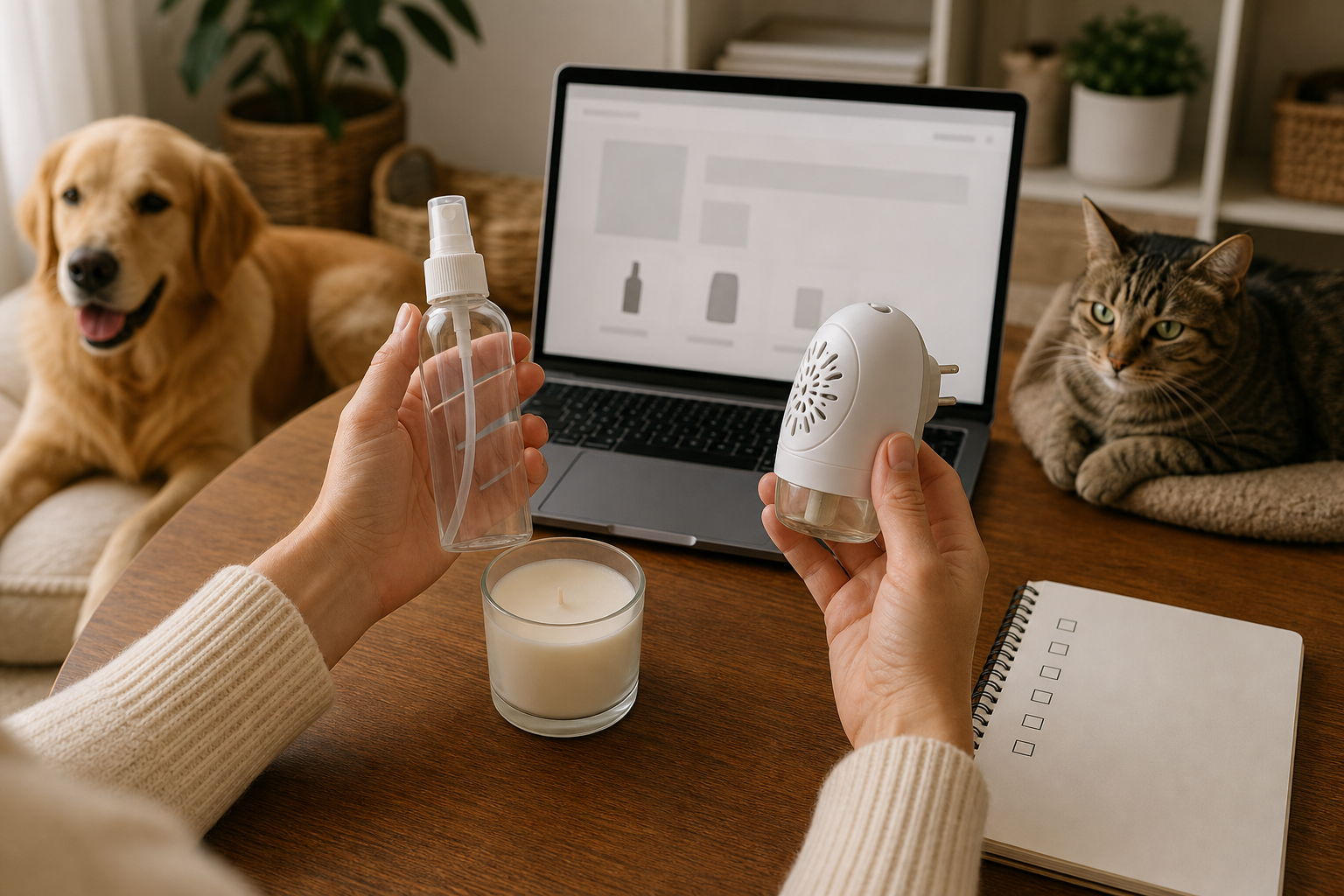
Start with the product type. A solid odor absorber or washable mat has a different risk profile from a constantly heated plug-in, a misting diffuser or a spray used near bedding. If the listing does not explain where to use it, how long to use it, whether pets should be out of the room during use and what ingredients create the scent, treat the discount as incomplete information.
Look for a full ingredient list rather than a vague fragrance claim. “Essential oil blend” is not very helpful when cats, puppies and sensitive pets live close to the floor and groom their coats. Avoid products that encourage spraying directly on pets, pet beds, litter, crates or carriers unless the label is clearly meant for that use and the directions are specific.
Check the room setup before you buy a bulk pack. A plug-in or candle in a small bathroom with a litter box is not the same as occasional use in a ventilated living room. Pets should be able to leave the area. A product that smells mild to you may still be strong at nose level for a cat or dog.
When the deal is not really solving odor
If the smell is coming from the litter box, buy time with scooping, washing the box and checking litter acceptance before adding fragrance. Cornell and ASPCA litter-box guidance both point owners toward litter-box setup, cleanliness and veterinary attention when elimination changes appear. Heavy fragrance can make some cats avoid the box, which turns a cheap odor product into a bigger household problem.
If dog bedding, blankets or crate pads smell, laundry habits usually matter more than a room spray. Washable covers, drying fully, cleaning the washer filter or lint area and replacing worn bedding can do more than covering the smell. If a pet has a new strong body, ear, mouth, urine or stool odor, do not shop around it. Ask your veterinarian, because odor can be a clue that a product cannot fix.
Deal and coupon checks before paying
Do not buy a multi-pack first. Start with one small unit, especially if the product is scented, heated, aerosolized or used in a closed room. Check whether the retailer accepts returns after opening, because many scent products are hard to judge from the listing.
For Subscribe & Save or Autoship-style orders, confirm the second-shipment price, cancellation steps and how quickly the product is used. A low first-order price can turn into clutter if the scent is too strong or your pet avoids the room. If a coupon only applies to a bundle, compare the unit price against buying one fragrance-free cleaning product, one washable cover or one odor absorber first.
What to avoid
- Vague “pet-safe scent” claims without ingredient detail or use instructions.
- Diffusers or sprays placed where pets cannot leave the room.
- Products that tell you to apply fragrance directly to a pet without clear veterinary or product-label support.
- Strong scents used to cover litter-box avoidance, urine accidents or sudden body odor.
- Bulk packs bought before testing one unit in your actual room.
A practical buying framework
For litter odor, prioritize scooping frequency, box washing, unscented litter acceptance and ventilation. For bedding odor, prioritize washable covers and complete drying. For room odor after cleaning, choose the lowest-intensity option with the clearest label and use it only where pets can move away.
If you still want a candle, spray or plug-in, buy the smallest size from a seller with a clear return policy. Use it lightly, avoid closed rooms and stop using it if your pet coughs, hides, drools, vomits, paws at the face or behaves unusually. Those signs are not a reason to try a different scent. They are a reason to call your veterinarian or a pet poison hotline for situation-specific guidance.
Quick answers
Are pet odor candles worth buying?
Sometimes, but only after cleaning the odor source. Choose low-intensity products with clear ingredients, good ventilation and no direct pet-contact claims.
Are essential oil air fresheners safe around cats and dogs?
Do not assume so. ASPCA says concentrated essential oils can be dangerous for pets, and cats are a special concern because they groom and process some compounds differently. Ask your veterinarian before using diffusers or concentrated oils around sensitive pets.
What is the safest odor-control purchase for a pet home?
The safest first purchase is often not scented: washable bedding, a good cleaning routine, a litter-box setup your cat accepts, ventilation and a product with transparent directions. Fragrance should be the last layer, not the fix.
Sources
Sources last checked June 24, 2026, 07:33 Europe/Rome.
- ASPCA, The Essentials of Essential Oils Around Pets.
- ASPCApro, Are Essential Oils Dangerous to Pets?.
- American Lung Association, Source Control.
- U.S. EPA, Volatile Organic Compounds’ Impact on Indoor Air Quality.
- Cornell Feline Health Center, Feline Behavior Problems: House Soiling.
- ASPCA, Litter Box Problems.
- Amazon, Prime Day 2026 dates and event details.