
#dog cooling towel
#dog grooming
#dog heat safety
#pet deals
#summer pet supplies
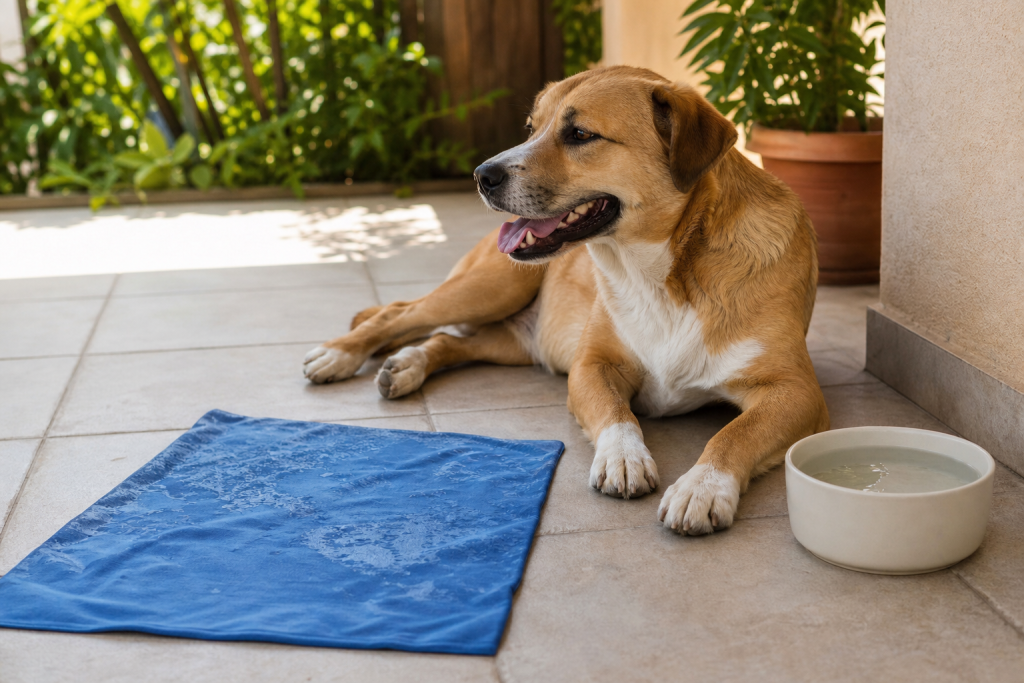
A dog cooling towel deal is only useful if you use the towel the right way. The mistake is draping a damp towel over a hot dog, which the RSPCA warns can trap heat instead of helping the dog cool down. If you are buying one for summer walks, beach trips or a heatwave backup kit, check whether it is meant to be a mat to lie on, a wipe-down towel, a drying towel or a wearable cooling product before you pay.
Cooling towels are getting attention because summer pet deals are full of low-cost heat accessories: mats, bandanas, pools, frozen toys, travel bottles and towels. The price can look harmless, but this is a product where the instructions matter more than the sale badge. A towel that is too small, hard to re-wet, slow to dry or marketed with vague “instant cooling” claims can become clutter in the car rather than a useful safety item.
Why this matters right now
Heat is not a cosmetic comfort issue for dogs. The CDC says pets need plenty of fresh water on hot days, and the ASPCA advises limiting exercise, providing shade and avoiding overexertion when it is hot or humid. RSPCA guidance is even more specific on towels: damp towels can be placed underneath a dog and re-wetted often, but they should not be placed directly over the dog’s body because they may trap heat.
That does not mean every cooling towel is a bad buy. It means the product should match the job. A thin towel that lies flat in the shade is different from a heavy wet towel wrapped around a dog’s back. A microfiber drying towel for after a bath is different from a cooling mat. A wearable towel or scarf should be judged like any other summer gear: fit, breathability, supervision and clear instructions matter.
What to check before adding one to cart
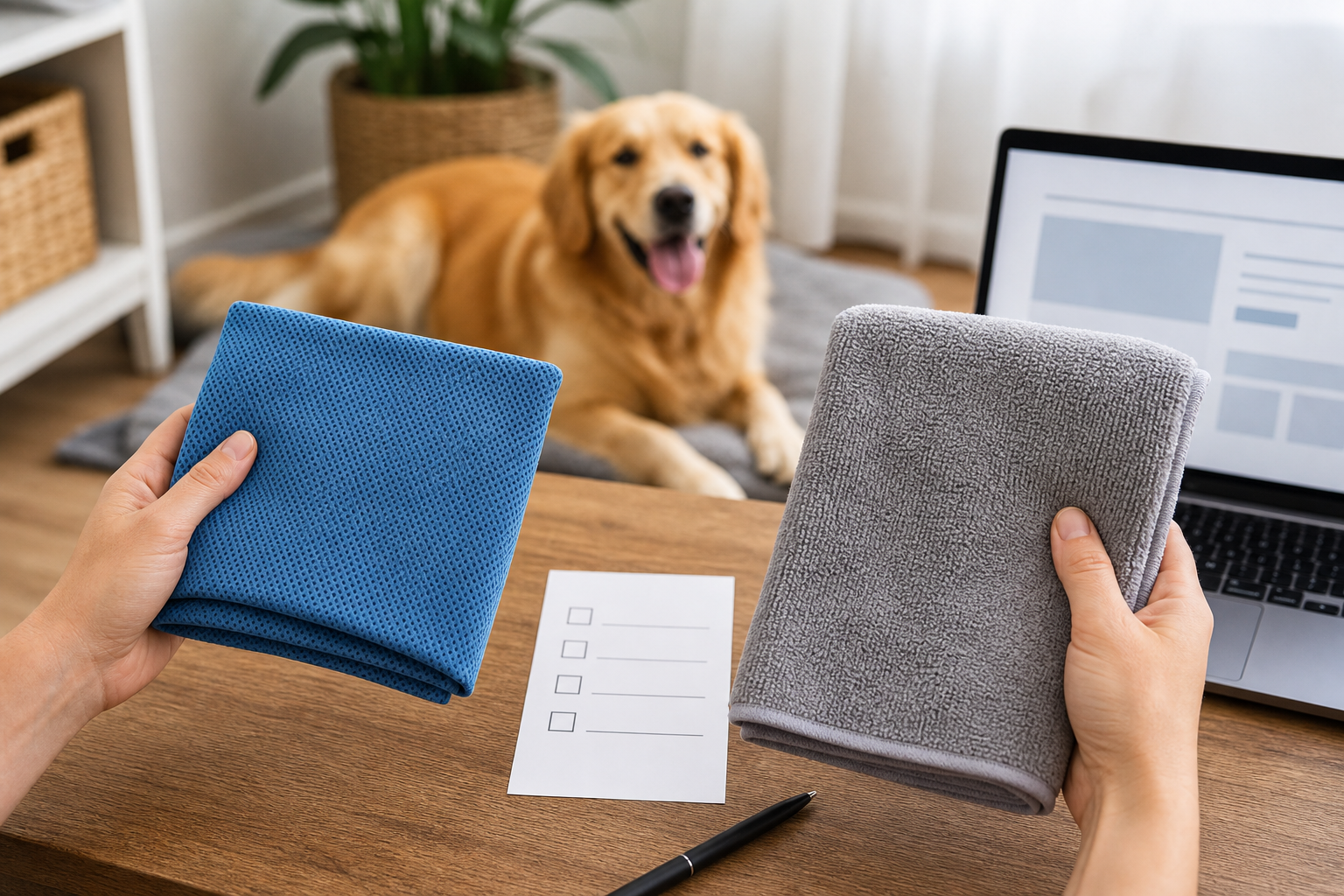
Start with the use case. If you want something for the dog to lie on in the shade, look for a towel or pad that stays flat, can be re-wetted quickly and is large enough for your dog to choose contact with it. If you want something for wiping paws and belly after water play, choose absorbency and fast drying over dramatic cooling claims. If you want a wearable cooling towel, check that it does not cover too much of the body, restrict movement or sit tightly around the neck.
Read the care instructions before the price. A summer towel that must be hand-washed, line-dried for hours or kept damp in a sealed bag may smell quickly. If it is going in a car, crate or beach tote, check whether it comes with a breathable storage pouch and whether it can be rinsed clean after sand, pool water or mud.
Measure size realistically. A towel that looks large in a product photo may only cover a small dog. Check dimensions in inches or centimeters, not just “small,” “medium” or “large.” For a larger dog, two smaller towels may be more practical than one heavy towel that becomes awkward when wet.
Look for plain safety details. Useful listings explain how to wet, wring, re-wet and clean the towel. Be cautious with products that make broad claims such as “prevents heatstroke” or “keeps dogs safe in any heat.” No towel replaces shade, fresh water, airflow, cooler walk times and veterinary help when a dog is overheated.
The deal section: what to verify before paying
A cheap two-pack can be sensible if you need one towel for the car and one for the door. It is less sensible if the towels are too small, single-purpose or impossible to clean. Before checkout, compare the real unit cost, dimensions, shipping threshold and return policy. If the towel is bundled with a cooling mat, water bottle or bandana, check whether each item is actually useful or whether the bundle is just making the discount look bigger.
For marketplace listings, verify the seller name, delivery date and return window. Summer accessories often arrive after the hottest spell has passed. If the listing uses vague product photos, unreadable care labels or copied claims, pick a clearer listing rather than gambling on a low price.
What to avoid
Avoid using a damp towel as a blanket over a dog in hot weather. That is the exact mistake the RSPCA warns about. Avoid leaving a wet towel on a dog in a crate, car, stroller or carrier where airflow is poor. Avoid forcing a dog to lie on a towel if the dog keeps moving away from it.
Also avoid buying a towel as your only heat plan. If your dog is panting heavily, drooling, weak, confused, vomiting, collapsing or acting unusually distressed in heat, treat that as urgent and contact a veterinarian. Shopping advice cannot diagnose heatstroke, and a towel should not delay professional help.
A smarter cooling-towel checklist
- Use it underneath the dog or for wiping, not as a heavy wet cover over the body.
- Choose breathable, quick-rinse material that will not stay musty in a bag.
- Check exact dimensions against your dog’s body size.
- Make sure you can re-wet it often if it is used outdoors.
- Keep water, shade and airflow as the main plan.
- Stop the walk or activity if the dog seems uncomfortable, overheated or unwilling to continue.
Quick answers
Is a cooling towel better than a cooling mat?
Not always. A towel is easier to rinse, pack and use briefly, while a mat may be better for resting in one place. The safer choice is the one your dog will use comfortably without being covered, restricted or left without airflow.
Can I use a regular bath towel?
For lying underneath or wiping, a regular towel can help in some situations if it is kept cool and re-wetted as needed. Do not drape a damp towel over a hot dog’s body as a cover.
Should I buy a cooling towel for every summer walk?
It can be a useful backup, but it should not make you walk during unsafe heat. Cooler walk times, shade, fresh water and shorter outings matter more than any accessory.
Sources
Last checked: 2026-06-24 13:38 Europe/Rome.
- RSPCA, How to recognise and treat heatstroke in dogs.
- RSPCA, Caring for your dog in hot weather.
- CDC, Heat and Pets.
- ASPCA, Hot Weather Safety Tips.
- American Kennel Club, Summer grooming tips to keep dogs cool.