
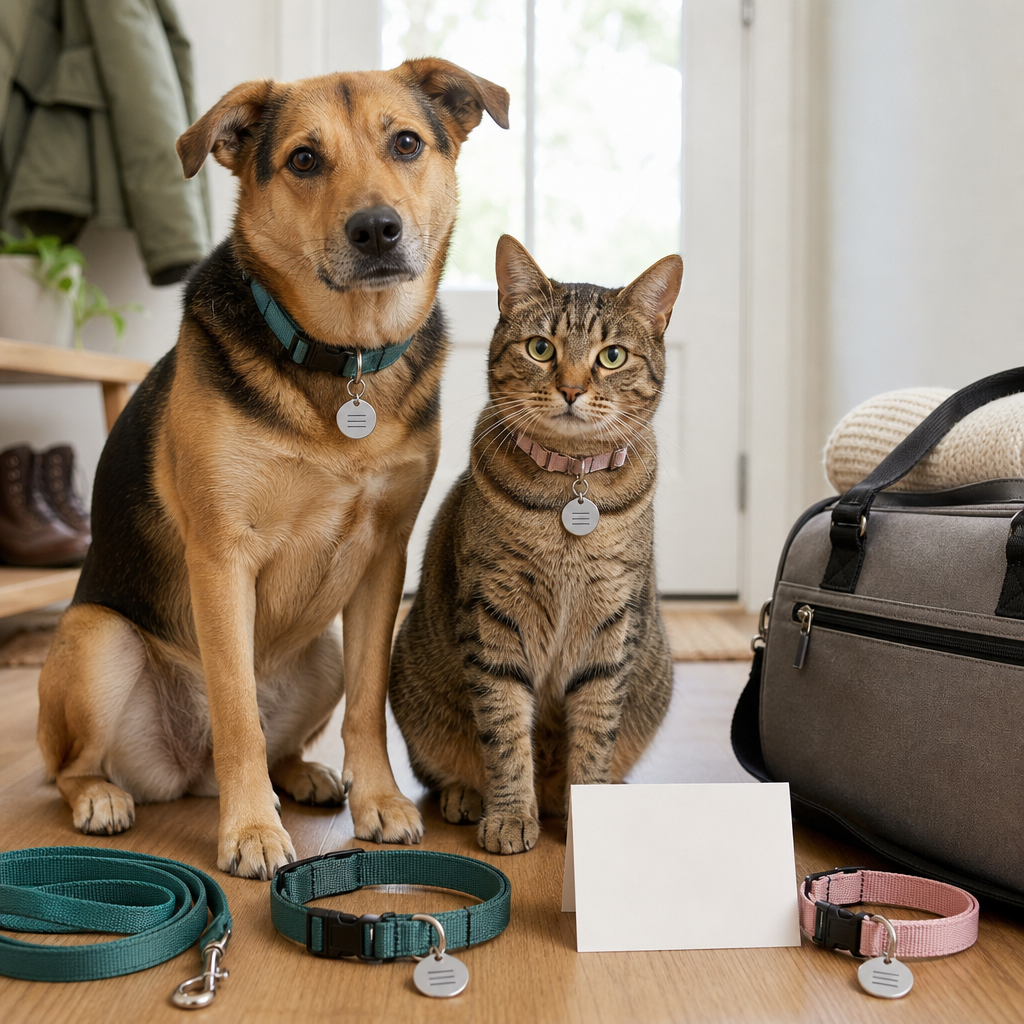
#engraved pet tags
#lost pet prevention
#pet ID tags
#pet travel
#summer pet travel
A cheap engraved pet ID tag is only a good deal if a stranger can read it fast, call the right number and your pet will actually keep wearing it. The mistake is buying the cutest or cheapest tag before checking engraving depth, line length, attachment hardware, collar fit and whether your travel contact info is current.
This matters more during summer travel, fireworks season and busy pet-sale periods, when owners are buying new collars, harnesses and travel gear at the same time. A visible tag is not a replacement for a registered microchip, GPS tracker or QR profile, but it is still the fastest low-tech way for a neighbor, hotel worker or dog-park visitor to contact you if your dog or cat slips out.
Why the tag itself matters
Personalized tags look simple, but the small checkout choices decide whether they work. A tag with shallow engraving, cramped lettering or a tiny decorative shape can become hard to read after a few months of rubbing against a collar ring. If the listing gives you multiple lines, do not treat that as a challenge to fill every line with tiny text.
The most useful tag usually has one clear phone number, your pet’s name if you are comfortable sharing it and a short cue such as “microchipped” or “indoor cat” when space allows. For travel, American Humane suggests using a temporary tag with contact information for someone who knows how to reach you. That can be more useful than an old home number if you are away from your normal address.
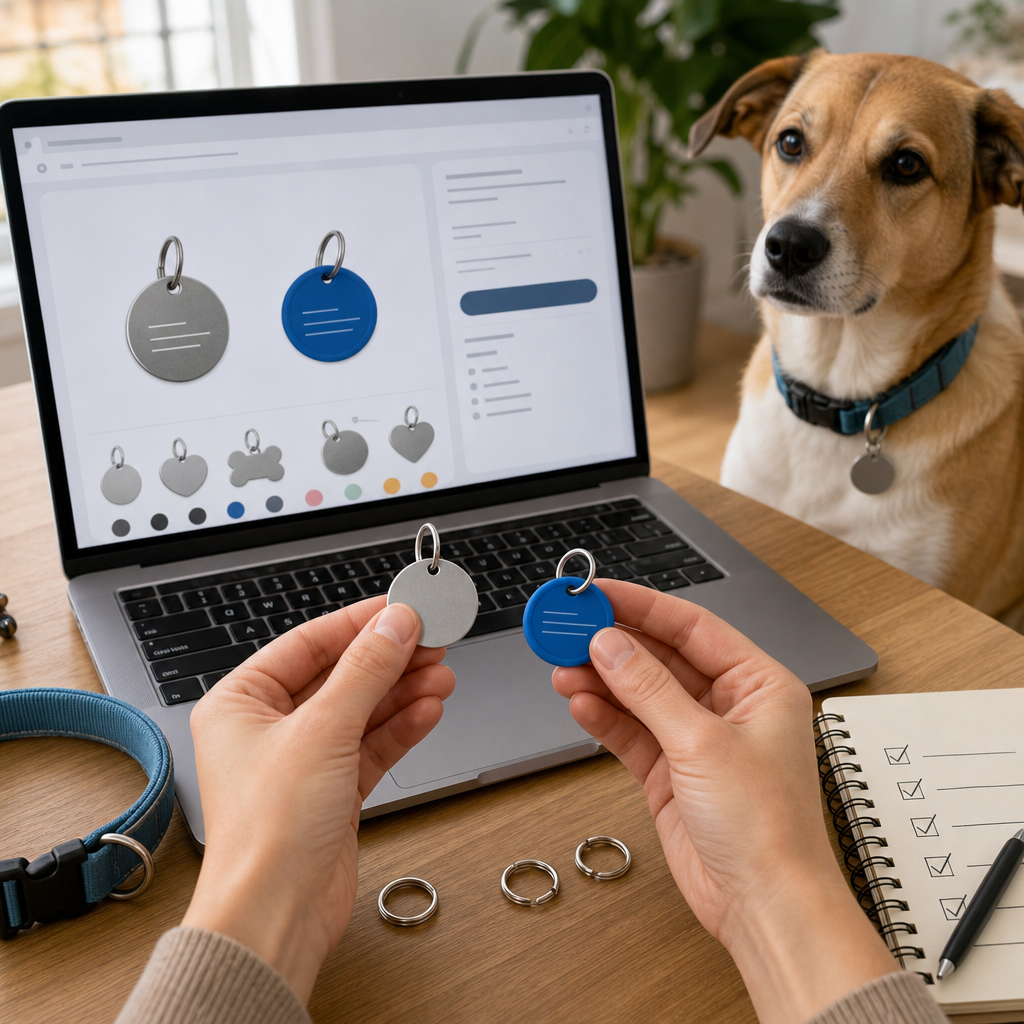
What to check before checkout
Start with readability. Look for a plain shape with enough flat space for large characters, not a novelty tag that forces the phone number into a curve or tiny corner. If the product preview makes the text look crowded on your screen, it will probably be worse on a moving pet.
Check the engraving method and return terms. Personalized tags are often excluded from ordinary returns unless the seller made an error, so proofread the number, area code, spelling and line breaks before you place the order. If the retailer offers a preview, compare it with the collar size and your pet’s weight. A heavy metal tag can annoy a small cat, while a very thin tag may wear quickly on an active dog.
Do not ignore the split ring or clip. A readable tag does not help if the attachment opens, rusts or catches on the collar hardware. For cats, American Humane recommends safety collars designed to release if caught. For dogs, make sure the tag hangs where it can be seen but does not cover the leash clip, harness ring or license tag.
The deal section: when a multipack is not really cheaper
Multipacks can be useful for a collar, harness, travel bag and backup key hook, but only if every tag can carry the same clear information. A four-pack of tiny tags is not a better deal than one readable tag and one travel spare.
Before paying, verify whether the discount applies to personalization, whether shipping changes after engraving is added and whether a coupon excludes customized items. If you are ordering from a marketplace seller, check the seller name, production time and replacement policy. “Arrives before your trip” is only helpful if the tag also leaves time to fix a typo.
What to avoid
Avoid putting private details on a tag just because there is space. Your phone number is usually the most important contact point. A full street address may not be necessary for every pet or every owner, especially if the tag will be visible in public places.
Do not use an ID tag as your only plan. The ASPCA says collars and tags can come off, while microchips require accurate registry information. The strongest setup is layered: a readable tag for immediate contact, a registered microchip for backup and current photos in case you need to make a lost-pet report.
Also avoid tags that make medical or service-animal claims you cannot support. If your pet has a real health need, ask your veterinarian what emergency wording is appropriate. Do not rely on a tiny tag to explain complex care instructions.
Quick answers
Should indoor cats wear ID tags?
Yes, if they tolerate a properly fitted safety collar. ASPCA guidance says even indoor-only pets should have a collar with an ID tag because they can slip out through a door or window.
Is a microchip enough without a tag?
No. A microchip is important backup identification, but it has to be scanned by a vet, shelter or rescue. A visible tag can let the finder call you immediately.
What should go on an engraved pet tag?
Use clear contact information first. A phone number matters more than decoration. Add your pet’s name, “microchipped” or a temporary travel contact only if the text remains easy to read.
Sources
Sources last checked June 25, 2026, 10:35 Europe/Rome.