
#breakaway cat collar
#cat collars
#cat safety
#pet deals
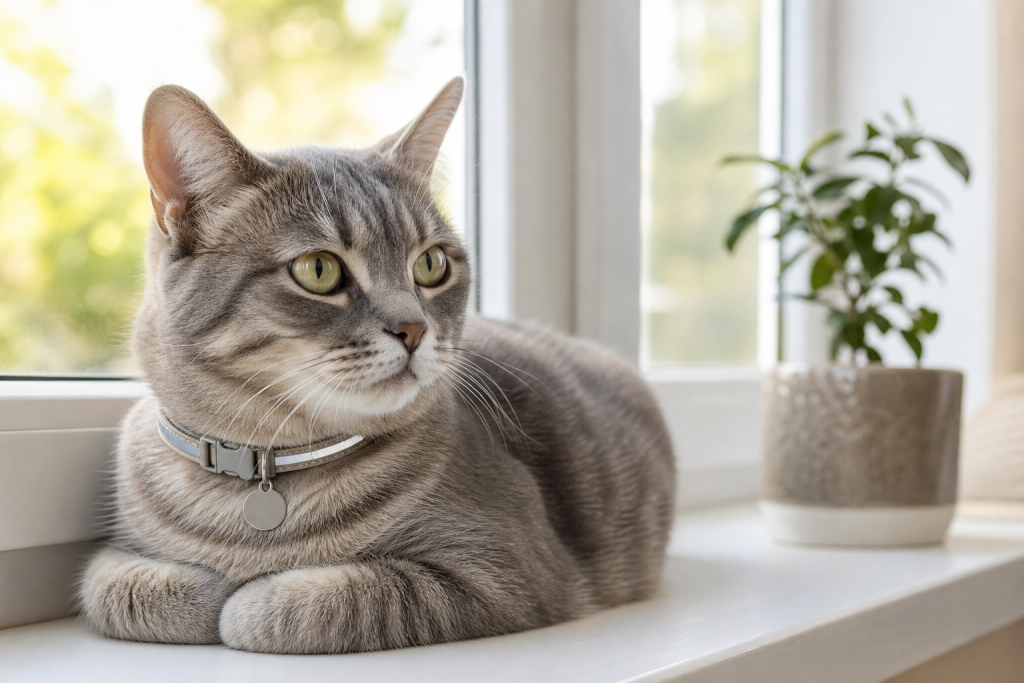
A cheap cat collar is only a good deal if the buckle releases when it should and the fit stays safe after your cat wears it. Breakaway or quick-release collars are meant to come apart if they snag, but bargain multipacks can still be a bad buy if the clasp is too stiff, the collar is too loose, or decorative parts create new hazards.
That matters right now because pet-supply deal pages are full of multipacks, reflective collars, bell collars and AirTag-style collar accessories. The tempting part is obvious: collars are small, easy to stock up on and often look interchangeable. The risky part is that a cat collar is not just a color choice. It is a safety item your cat may wear while jumping, squeezing under furniture, scratching, grooming or slipping outside.
Why the buckle matters more than the pattern
For cats, the key feature is not the print, the bell or the discount. It is the release mechanism. International Cat Care says collars that are too loose can let a cat get a leg or jaw stuck, while collars that are too tight can injure the cat. Cats Protection recommends quick-release collars and warns against elasticated collars because a cat can become further tangled while trying to free itself.
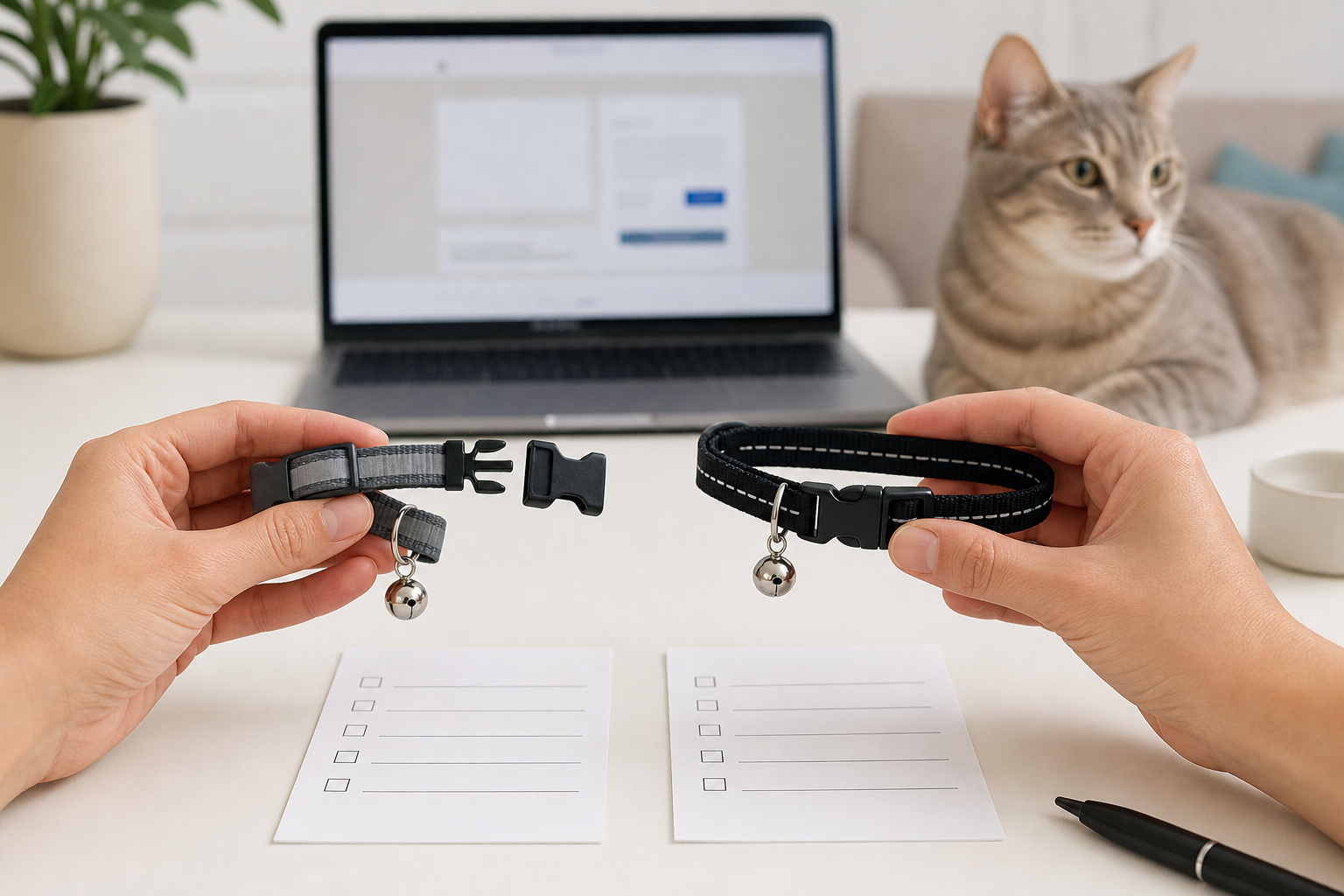
That does not mean every product with the word “breakaway” is automatically worth buying. The release needs to open with a firm tug, but not pop off so easily that the collar is useless. Product listings rarely prove that balance. Before checkout, look for a clear photo of the buckle, an adjustable size range, a plain strap, and reviews that mention the clasp and fit rather than only the color.
The checkout checks that decide whether it is a deal
Start with your cat’s neck size, not the package count. A five-pack is not cheaper if every collar is too short for a larger cat or too loose for a kitten. If the listing gives only vague wording like “fits most cats,” treat that as a reason to slow down. You want a real adjustable range and enough room to fit comfortably without sliding over the jaw.
Next, check the buckle style. A quick-release plastic buckle is the usual safer choice for ordinary ID collars. Avoid traditional belt-style buckles for cats unless your veterinarian or another qualified professional has a specific reason. Be careful with elastic-only “safety” claims, since multiple cat welfare groups advise that elasticated collars can create entanglement problems.
Then look at the extras. Bells, charms, bows and decorative studs can make a cheap collar look more valuable, but they can also annoy the cat, catch on things or become chewable parts. A reflective strip can be useful for visibility, especially for cats who may slip outdoors, but it should not replace an ID tag or a registered microchip.
When a multipack is not really cheaper
Multipacks make sense when you already know the style fits your cat and releases correctly. They are less sensible as a first purchase. If you are switching from no collar, a flea collar, a tracker collar or an old elastic collar, buy one or two first and test the fit indoors under supervision.
Check the return terms before paying. Low-cost marketplace listings can have short return windows, return shipping deductions or third-party seller rules that make a failed fit hard to fix. Amazon’s general return policy says most items can be returned within 30 days if they meet the condition requirements, but eligibility can vary by item and seller. Chewy advertises free returns within 365 days on many products, while PetSmart says online purchases can be returned in store for the purchase price, minus shipping and other charges, if policy conditions are met. Always read the actual item page before counting on a return.
What to avoid
- Collars that do not clearly say quick-release, breakaway or safety release.
- Elasticated collars marketed as the main safety feature.
- Heavy tracker holders on a small cat’s everyday collar.
- Loose charms, sharp decorative parts, large bows or dangling pieces your cat can chew.
- Listings with no real size range, no buckle photo or only glamour photos.
- Using a collar as the only lost-cat plan. Keep the microchip registration current too.
How to test it after delivery
Fit the collar when your cat is calm, then watch how they move, scratch, eat and groom. You should be able to check comfort without forcing the collar tight. If your cat panics, paws at the collar repeatedly, gets a jaw near it or seems distressed, remove it and reassess. For kittens, senior cats, outdoor cats or cats with skin problems, ask your vet for guidance before leaving a collar on long term.
Test the buckle with your hands before your cat wears it. It should release under a firm pull. It should not require extreme force, and it should not fall apart from ordinary movement. Recheck the release regularly, because dirt, grease, worn plastic and bent hardware can change how a buckle behaves over time.
Deal and coupon notes before you pay
Do not let a coupon push you into the wrong type of collar. A real discount is useful only if the collar has the right release, size range and return terms. If a listing bundles collars with bells, charms or tracker holders you will remove anyway, compare the price against a simpler single collar.
Also compare the total delivered price. A low item price can lose to shipping, marketplace return costs or a multipack that creates waste. The best deal is usually the collar your cat can wear safely and comfortably, not the biggest bundle.
Quick answers
Should every cat collar be breakaway?
If a cat wears a collar, welfare groups commonly recommend a quick-release or breakaway design because cats can snag collars while climbing, grooming or squeezing through tight spaces.
Are bells on cat collars a good idea?
A bell may help you hear your cat and may be chosen for wildlife reasons, but it should be lightweight, securely attached and not something your cat can chew or catch. If your cat seems stressed by it, choose a simpler collar.
Is a collar enough if my cat gets lost?
No. A collar and ID tag can help someone contact you quickly, but it can come off. Keep your cat’s microchip details current and use a readable ID tag if your cat tolerates one safely.
Sources
Last checked: 2026-06-27 01:35 Europe/Rome.
- International Cat Care, “Should my cat wear a collar?” https://icatcare.org/articles/should-my-cat-wear-a-collar
- Cats Protection, “Choosing a Cat Collar.” https://www.cats.org.uk/help-and-advice/getting-a-cat/choosing-a-cat-collar
- PDSA, “Cat collars.” https://www.pdsa.org.uk/pet-help-and-advice/looking-after-your-pet/kittens-cats/cat-collars
- BC SPCA, “Cats and collars: Why breakaway design is so important.” https://spca.bc.ca/news/cats-collars-breakaway-design-important/
- Amazon Customer Service, return policy. https://www.amazon.com/gp/help/customer/display.html?nodeId=GKM69DUUYKQWKWX7
- Chewy Help, start a return. https://www.chewy.com/customer-care/returns/making-a-return/start-a-return
- PetSmart, returns and refunds. https://www.petsmart.com/help/returns-and-refunds-H0008a.html