
#cat enrichment
#cat furniture
#cat wall shelves
#indoor cats
A cheap cat wall shelf can turn into a bad deal if it is too shallow, mounted into the wrong wall, or rated only for a still cat instead of a jumping one. Before you buy, check the shelf depth, bracket material, wall type, installation hardware, return terms and whether your cat has a safe route up and down. Vertical space is useful for many indoor cats, but the lowest-priced kit is not automatically the safest or cheapest choice.
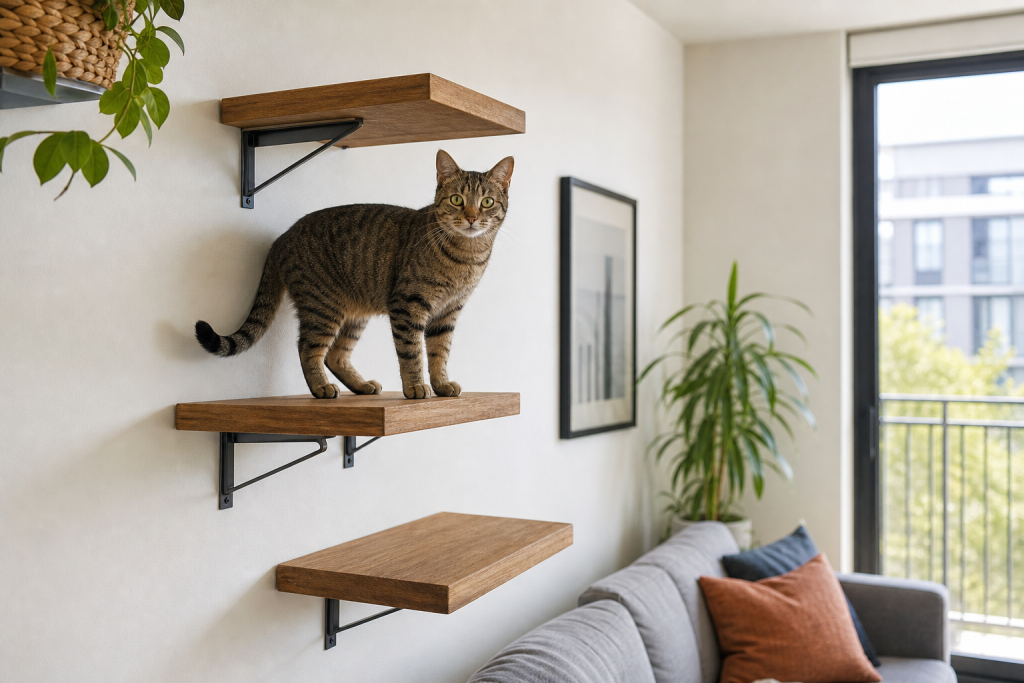
Cat shelves are getting more attention because they promise enrichment for cats with less floor clutter for people in apartments or small homes. That is a real benefit, especially for indoor cats that need perches and elevated resting spots. The shopping mistake is treating a wall-mounted cat shelf like normal decor when it has to handle claws, running starts, repeated landings and a cat that may be heavier than the listing photo suggests.
Why cat shelves are worth checking carefully right now
Indoor enrichment is not just a cute add-on. The AAFP and ISFM feline environmental needs guidelines note that elevated areas increase a cat’s vertical space and let the cat monitor its environment. Ohio State University’s Indoor Pet Initiative also describes perches as a must-have resource for cats, because they let cats rest, watch and get above ground level.
That helps explain why wall shelves, bridges and climbing steps are showing up in pet deals and home-design feeds. They can be useful, but they are also more installation-dependent than a cat bed or tunnel. A wobbly shelf, weak bracket or poor layout can waste money and make your cat avoid the setup completely.
The checkout checks that matter before you buy
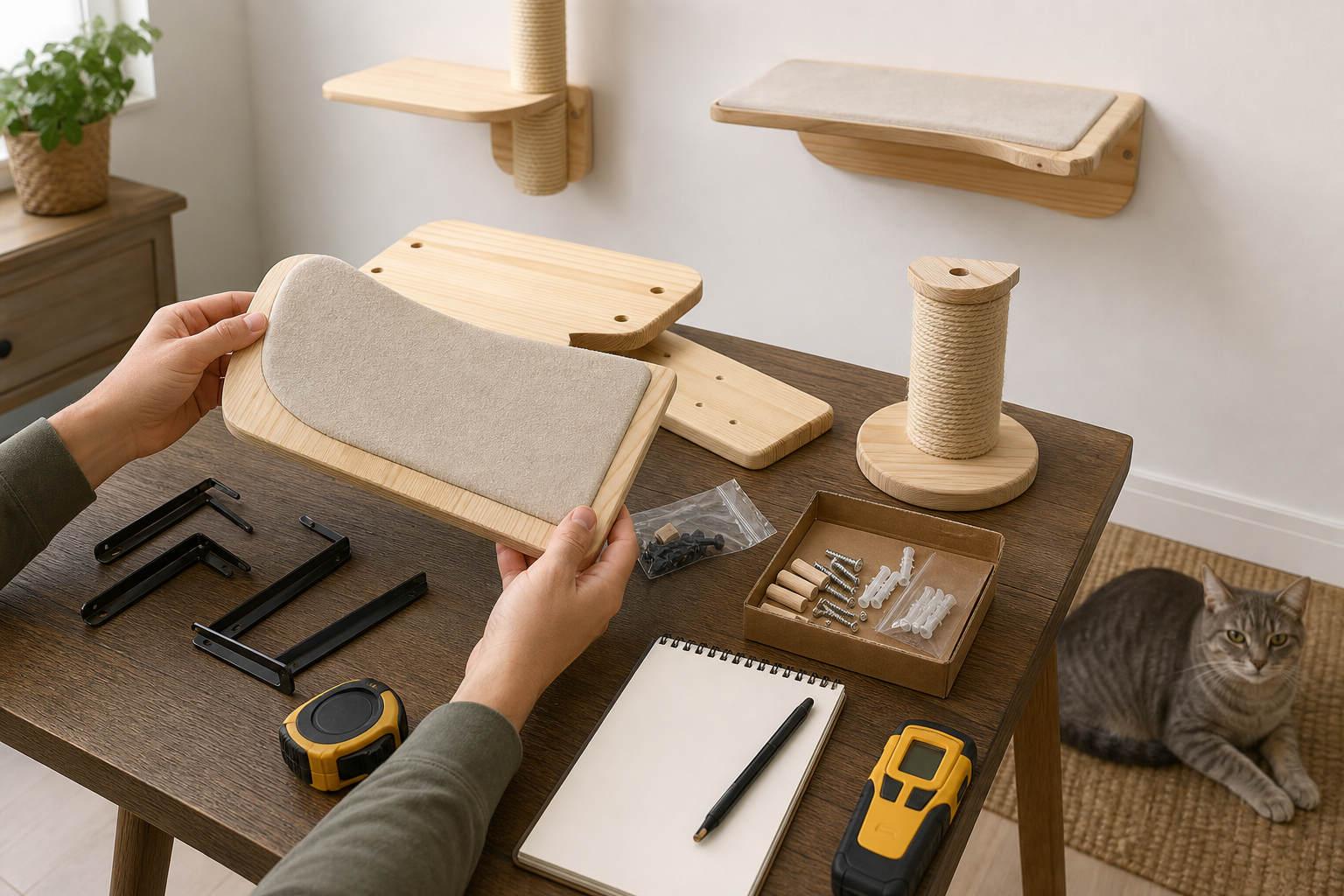
Start with the weight rating, but do not stop there. A cat does not place weight on a shelf like a book. Jumping and landing can add force, so a thin board with small plastic anchors may be a poor choice even if the product page lists a number that looks high enough for your cat’s body weight.
- Measure your cat, not the product photo. Large cats need enough depth to turn and lie down without backing off the edge.
- Check the wall type. Drywall, plaster, masonry and studs need different hardware. If the kit does not explain that clearly, budget for better fasteners or professional help.
- Look for real brackets or a tested mounting system. Thin decorative brackets may look cleaner but flex under repeated landings.
- Plan the full route. Shelves need an easy entry point, reachable spacing and a safe exit. A single high perch with no step-down path is a common mistake.
- Check the surface. Smooth wood can be slippery. Removable, washable pads are easier to keep clean than glued carpet if your cat sheds or vomits.
- Read the return policy before drilling. Some retailers may not take back installed, scratched or hardware-missing furniture.
When the deal is not really a deal
A low shelf-kit price can hide the real cost. You may still need a stud finder, heavier anchors, extra brackets, washable pads, wall repair supplies or a handyman visit. If the product ships with vague instructions or hardware that does not match your wall, the cart price is not the total cost.
Before paying, compare the kit against a freestanding cat tree, a window perch or a smaller starter shelf. If you rent, also check your lease or building rules before drilling. A returnable freestanding product may be a better first purchase than a discounted wall system that leaves holes you have to repair.
What to avoid with cat wall shelves
Avoid shelf listings that show dramatic leaping cats but do not give shelf dimensions, hardware details or a realistic weight rating. Be careful with very narrow steps for senior cats, kittens, large breeds or cats with mobility issues. If your cat has pain, balance problems or recent behavior changes, ask your veterinarian before adding a high climbing setup.
Do not install shelves above fragile furniture, hot radiators, aquariums, stovetops, litter boxes, food bowls or places where a fall would be dangerous. Multi-cat homes need extra care too. International Cat Care recommends providing enough resources and spaces so cats can avoid conflict, and a narrow one-way shelf route can create a traffic jam between cats that do not always get along.
A simple pre-buy plan
Choose one wall, then map the route with painter’s tape before ordering. Mark the height of each platform, the expected jump distance and where your cat can turn around. If the layout looks awkward on the wall, it will probably feel awkward for the cat.
Then price the complete project, not just the shelf kit. Add hardware, pads, tools and any professional installation. A slightly more expensive kit with clear dimensions, sturdy brackets and replaceable surfaces can be cheaper than a bargain set that has to be reinforced after the first week.
Quick answers
Are cat wall shelves good for indoor cats?
They can be. Reliable feline-environment sources support elevated resting and observation areas for cats, but the setup still has to fit the individual cat, home and installation quality.
Is a wall shelf better than a cat tree?
Not always. A wall shelf saves floor space, while a cat tree is easier to move and usually does not require drilling. Renters and first-time buyers may prefer a freestanding option before committing to a wall system.
What is the biggest buying mistake?
Buying by style alone. The safer checkout order is wall type first, then dimensions, hardware, weight rating, route design, cleanability and return terms.
Should I buy a cat shelf during a sale?
Only if the sale item gives enough installation detail. A discount is useful when it applies to a shelf you can mount correctly, clean easily and return if the parts or dimensions are wrong.
Sources
Sources last checked June 17, 2026, 01:33 Europe/Rome.
- AAFP and ISFM Feline Environmental Needs Guidelines
- Journal of Feline Medicine and Surgery, AAFP and ISFM feline environmental needs guidelines
- Ohio State University Indoor Pet Initiative, Perches
- Ohio State University Indoor Pet Initiative, Basic Indoor Cat Needs
- International Cat Care, Making your home cat friendly
- International Cat Care, Multi-cat households
- American Pet Products Association, Pet Industry Market Size, Trends and Statistics