
#pet food deals
#pet food labels
#pet food storage
#pet shopping mistakes
A clearance pet food deal only saves money if your dog or cat can safely finish the food while it is still fresh and appropriate for their diet. The hidden problem is not just the shelf tag, it is the best-by date, the bag size, storage after opening, and whether the food is complete and balanced for your pet’s life stage. Before you buy the marked-down bag, do the meal math and make sure the discount is not asking you to rush a diet change.
Short-dated pet food is showing up in more deal searches because owners are trying to protect the essentials, not just toys and treats. That can be sensible shopping, especially when a retailer is clearing seasonal packaging or a brand is rotating formulas. It becomes a bad deal when the date is too close, the package is too large, or the food would replace a vet-directed diet without a proper plan.
Why This Matters Right Now
Pet food is one of the least optional items in a pet cart. Recent retail signals show shoppers are being more careful with discretionary pet spending, while food, litter and routine care remain the products owners keep buying. That makes clearance shelves and online markdown filters tempting.
The catch is that pet food is not like a toy that can sit in a closet until later. Food quality depends on the formula, packaging, storage conditions and how soon the bag or case will be used after opening. A large discounted bag can still be wasteful if your pet eats slowly, refuses the flavor, or needs a gradual transition from the current food.
The Best-By Date Is Only The First Check
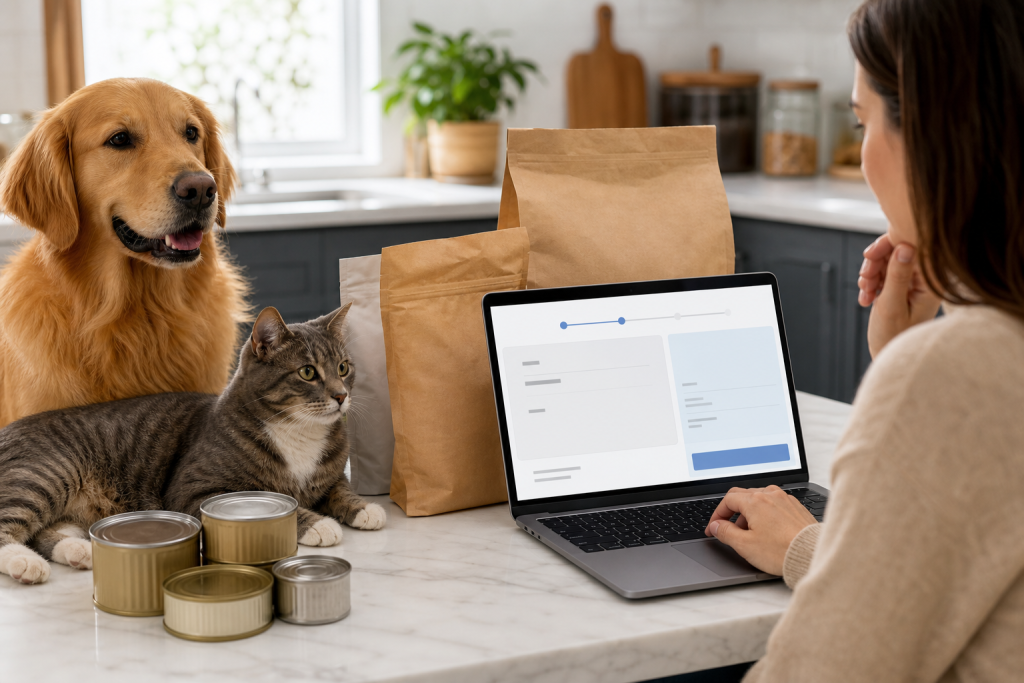
On many food labels, “best if used by” language is about peak quality rather than a simple purchase deadline. Pet owners should still treat the date seriously because nutrition, palatability and freshness can decline, especially after a dry bag is opened or stored in heat and humidity.
When you are looking at a clearance bag, check three things before the discount: the printed date, the lot code, and the package condition. Skip torn bags, dented cans with sharp seams, swollen containers, broken seals, damp packaging or any food that smells stale, sour, rancid or moldy. If a retailer has covered the date with a markdown sticker, do not guess. Ask staff to show you the date or leave it behind.
Do The Meal Math Before You Pay
The easiest way to test a clearance deal is to count days, not pounds. Find the feeding guide, estimate your pet’s daily amount, then divide the bag or case by realistic daily use. Build in a transition period if you are changing foods. Many pets need time to move from one diet to another, and rushing that transition can cause stomach upset.
- For one cat eating a small daily amount, a huge dry-food bag near its best-by date may be too much.
- For a large dog already eating that exact formula, a short-dated bag may be reasonable if it will be finished quickly.
- For a multi-pet household, do not assume every pet can share the food. Species, life stage and medical diet needs still matter.
- For treats and toppers, check calories and serving size. A discount is not useful if you overfeed to finish the package.
Complete And Balanced Still Comes First
A cheap bag should not replace your pet’s main food unless the label supports that use. The FDA explains that a pet food labeled “complete and balanced” is intended to be nutritionally balanced as a sole diet, while treats, snacks and supplements usually are not. Look for the nutritional adequacy statement, the intended species and the life stage.
This is especially important for kittens, puppies, pregnant or nursing pets, seniors and pets with known health conditions. If your veterinarian has recommended a therapeutic or prescription diet, do not swap it for a clearance food because the price is attractive. Ask your vet before changing that plan.
Storage Can Kill The Savings
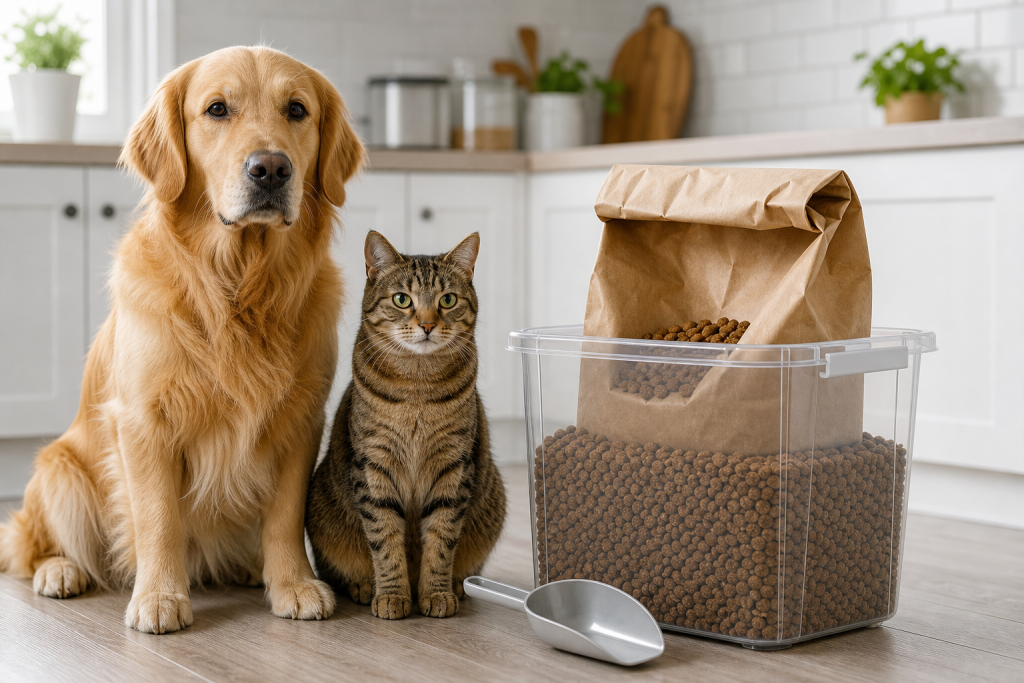
The FDA recommends storing dry pet food and unopened canned food in a cool, dry place, below 80 degrees Fahrenheit. Excess heat or moisture can damage food, and the original package carries useful details such as the product name, UPC, lot number and best-by date. If you use a storage bin, the FDA advises placing the whole bag inside the container when possible, rather than pouring kibble directly into the bin.
That matters for clearance shopping because the clock feels shorter once the package is open. If you pour kibble directly into a bin and throw away the bag, you can lose the recall code and date. If the bin still has old oils or crumbs, a new bargain bag can pick up stale residue. Keep the bag, clip it closed, and clean storage containers between refills.
Deal And Coupon Checks Before Checkout
Do not stack a clearance sticker, coupon and bulk size automatically. First, confirm the final unit price, the best-by date and the return policy for pet food. Some retailers handle opened food generously, while others may treat clearance, final sale or third-party marketplace items differently.
- Check whether the sale is sold by the retailer or a marketplace seller.
- Photograph the best-by date and lot code before opening.
- Confirm shipping time if the food is already close to the date.
- Do not buy multiple bags until your pet accepts the food and you know the date window works.
- Compare cost per day, not just cost per bag.
What To Avoid
Avoid any deal that requires your pet to eat faster than normal, change diet abruptly, or consume food past the point where you are comfortable with freshness. Avoid buying short-dated raw or fresh food unless you can keep it at the proper temperature and use it on schedule. Frozen and refrigerated products have less room for storage mistakes than shelf-stable dry food.
Also avoid using clearance food to test a major diet claim, such as grain-free, raw, fresh, weight-control or senior nutrition, without checking the label and your pet’s needs. The discount should come after the food passes the basic fit test, not before.
Quick Answers
Is short-dated pet food always unsafe?
No. A short-dated product can be a reasonable buy if the package is intact, the food is appropriate for your pet, storage has been good and you can finish it in time. The closer the date, the more conservative you should be.
Should I buy the biggest bag if the discount is high?
Only if your pet already eats that food and will finish it while it remains fresh. A smaller full-price bag can be cheaper than wasting half of a large clearance bag.
Can treats replace meals if they are complete enough?
Usually no. Treats, snacks and supplements are typically not intended as a sole diet. Check the nutritional adequacy statement, and ask your vet if you are unsure.
Sources
Sources last checked: September 16, 2026, 13:32 CEST, Europe/Rome.