
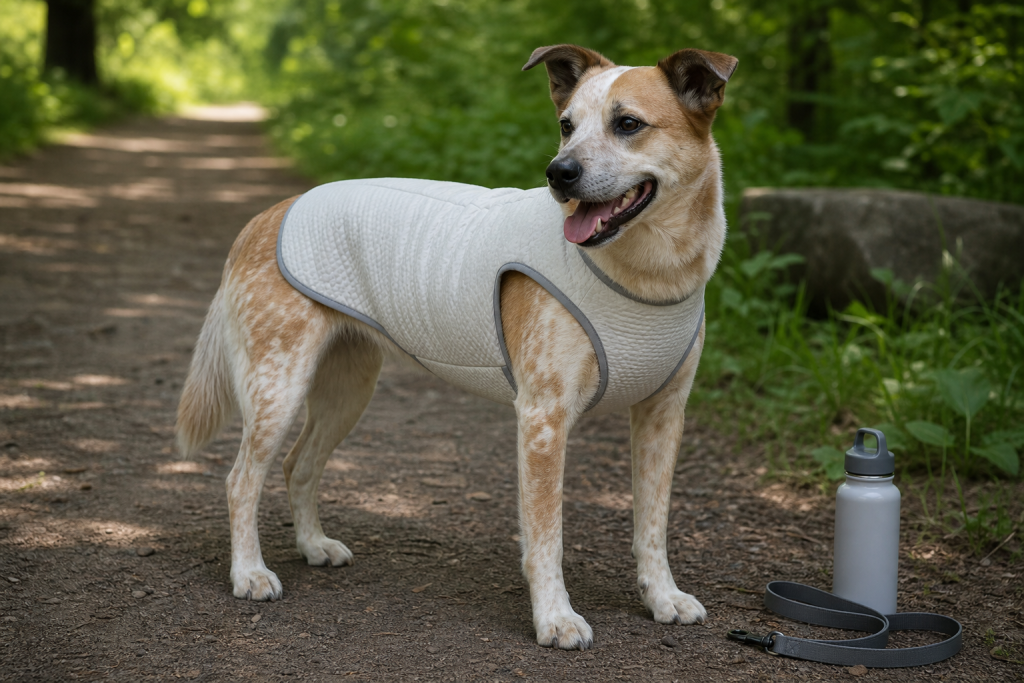
#dog cooling vest
#dog deals
#dog heat safety
#pet supplies
#summer dog gear
A dog cooling vest deal can be a waste if the vest fits loosely, traps heat, dries too fast or cannot be returned after a careful indoor try-on. These vests are useful only as one heat-management tool, not as permission to walk longer in dangerous weather. Before buying, check the size chart, wetting instructions, fabric layers, leash compatibility and return terms.
Why this matters during summer shopping
June is when pet retailers push cooling mats, pools, water bottles, sun gear and wearable cooling products. That timing makes sense, but it also makes it easy to treat a cooling vest as a shortcut. The CDC warns that pets can be affected by heat, and major veterinary and animal-safety groups keep repeating the same practical point: shade, water, timing and rest matter more than any single product.
A cooling vest can help some dogs stay more comfortable during short, managed outings. It cannot fix extreme heat, hot pavement, poor ventilation, heavy exertion or a dog that is already struggling. If your dog has breathing problems, heart disease, heat sensitivity, age-related issues or any unusual symptoms, ask your veterinarian before relying on wearable cooling gear.
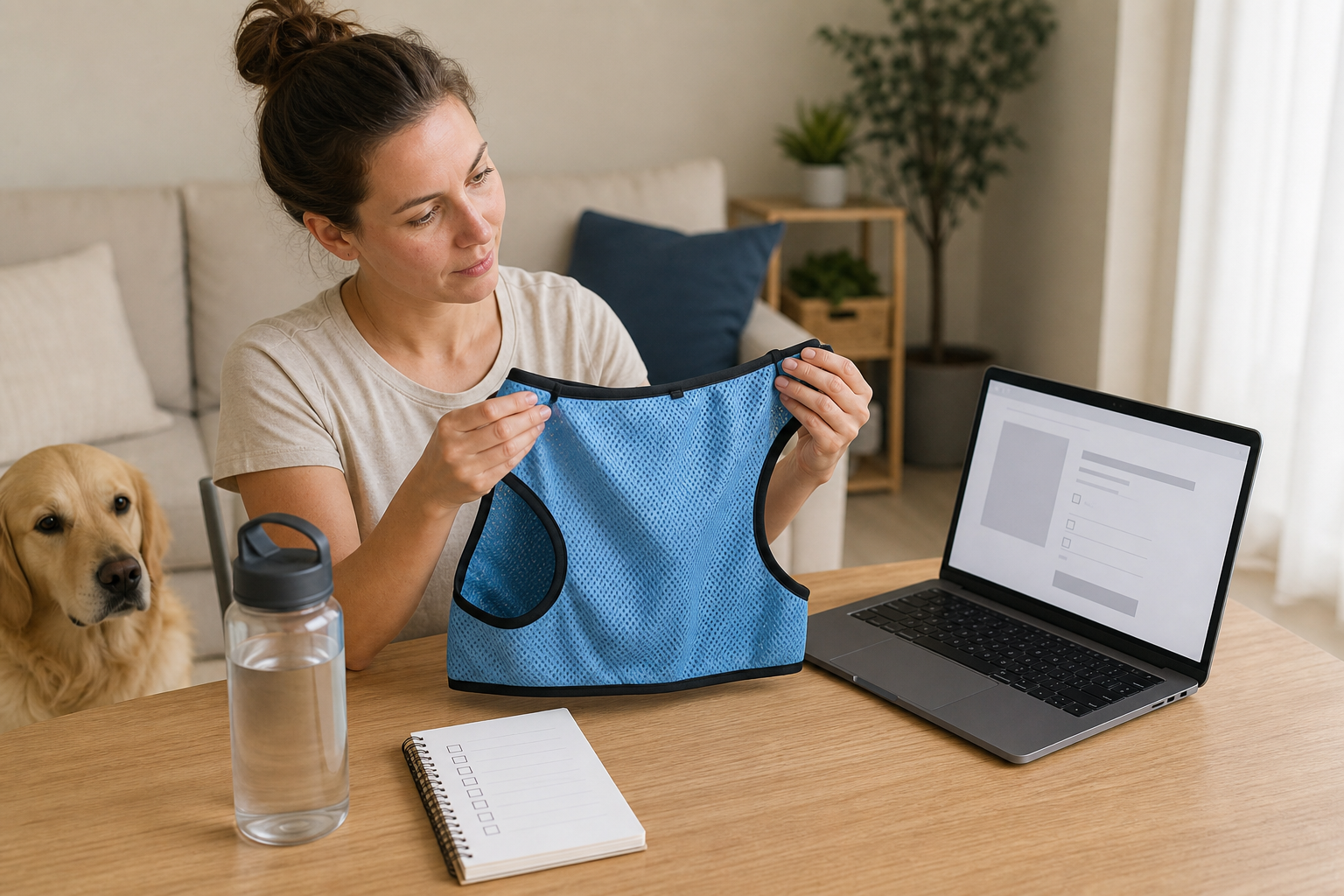
The checkout mistake: buying the discount before checking the fit
The biggest cooling-vest mistake is ordering by weight alone. A vest that slides, twists, rubs behind the legs or leaves the chest uncovered may not help much, even if the product page says it is the right size for your dog’s weight range.
Measure your dog’s neck, chest and back length before you compare listings. Then read the brand’s actual size chart, not only the marketplace size label. If your dog is between sizes, check whether the product has adjustable straps and whether the retailer allows returns after a clean indoor fit test.
Also look at your dog’s shape. Deep-chested dogs, barrel-chested dogs, very short-legged breeds and very long-backed dogs can be awkward fits in generic vests. A deal is not really a deal if the vest leaves your dog walking stiffly or if it blocks normal movement.
What to check before you pay
- Cooling method: Many vests rely on evaporation, which usually means the vest must be soaked, wrung out and re-wetted as it dries. If you will be in humid weather, read reviews carefully because evaporation can feel less effective.
- Fabric layers: Look for lightweight outer fabric and avoid bulky designs that could become heavy or warm when wet. The product should explain how it is intended to cool.
- Coverage: Chest and back coverage can matter, but the vest should not restrict shoulders, elbows, breathing or normal bathroom posture.
- Harness and leash setup: If your dog already wears a harness, confirm whether the vest goes over it, under it or has a leash opening that fits your gear.
- Drying and re-wetting plan: A vest that works for ten minutes but cannot be refreshed during a walk may not fit your real routine.
- Wash instructions: Check whether the vest is machine washable, hand-wash only or likely to hold odors after repeated wet use.
- Return terms: Cooling gear often needs a fit test. Verify the retailer’s return window and whether sale or clearance items are excluded.
Deal and coupon checks
Cooling vests often show up in summer sale pages, pet travel collections and outdoor gear promos. Before using a coupon, compare the final cart price with shipping, return shipping, subscription prompts and any marketplace seller fees. Do not assume the biggest markdown is worth taking if the size range is poor or the return policy is weak.
If you are choosing between two discounted vests, favor the one you can test cleanly at home, adjust securely and re-wet easily. A cheaper vest with vague size guidance can cost more if you need to replace it before the first hot-weather trip.
When a cooling vest is the wrong product
Skip the vest as your main plan if your dog is exercising hard, walking on hot pavement, riding in a poorly ventilated vehicle or spending time outdoors with little shade. Heat safety starts with avoiding the risky situation. A vest should support a cautious plan, not stretch a walk into unsafe weather.
Watch your dog instead of the product claim. Heavy panting, weakness, confusion, vomiting, collapse, glassy eyes or behavior that seems wrong needs urgent veterinary guidance. This article is shopping guidance, not a diagnosis or treatment plan.
How to test it before the first real outing
Try the vest indoors first while it is dry. Check whether your dog can walk, turn, sit and lie down normally. Then test it damp for a short supervised period, because wet fabric can feel heavier and may change how the straps sit.
Look for rubbing behind the front legs, pressure at the throat, bunching under the chest and any reluctance to move. If the vest passes that test, use it on a short shaded walk before relying on it for a longer outing. Bring water and keep the walk short enough that you can stop before your dog looks uncomfortable.
Quick answers
Does every dog need a cooling vest?
No. Some dogs do better with shorter walks, shade, indoor exercise, water breaks and careful timing. A vest may help in mild heat, but it is not a required product for every dog.
Can a cooling vest replace water and shade?
No. Water, shade, rest and avoiding the hottest part of the day remain the core plan. Treat the vest as extra support.
Should short-nosed dogs use cooling vests?
Ask your veterinarian first if your dog is brachycephalic, older, overweight, heat-sensitive or has breathing or heart concerns. Those dogs may need stricter heat limits than a product listing suggests.
Is a clearance cooling vest safe to buy?
It can be, but only if the size chart is clear, the product is unused and returnable, and the materials, straps and instructions are still available. Avoid damaged packaging, missing instructions and vague marketplace listings.
Sources
- CDC, Heat and Pets: https://www.cdc.gov/heat-health/risk-factors/heat-and-pets.html
- American Veterinary Medical Association, Warm weather pet safety: https://www.avma.org/resources-tools/pet-owners/petcare/warm-weather-pet-safety
- American Red Cross, Pet Heat Safety: https://www.redcross.org/get-help/how-to-prepare-for-emergencies/pet-heat-safety.html
- Petco return policy and seasonal cooling shop references: https://www.petco.com/returns
- Chewy return policy: https://www.chewy.com/app/content/return-policy
Sources last checked June 7, 2026, 19:34 Europe/Rome.