
#dog apparel
#dog raincoat
#dog supplies
#pet deals
#rainy day walks
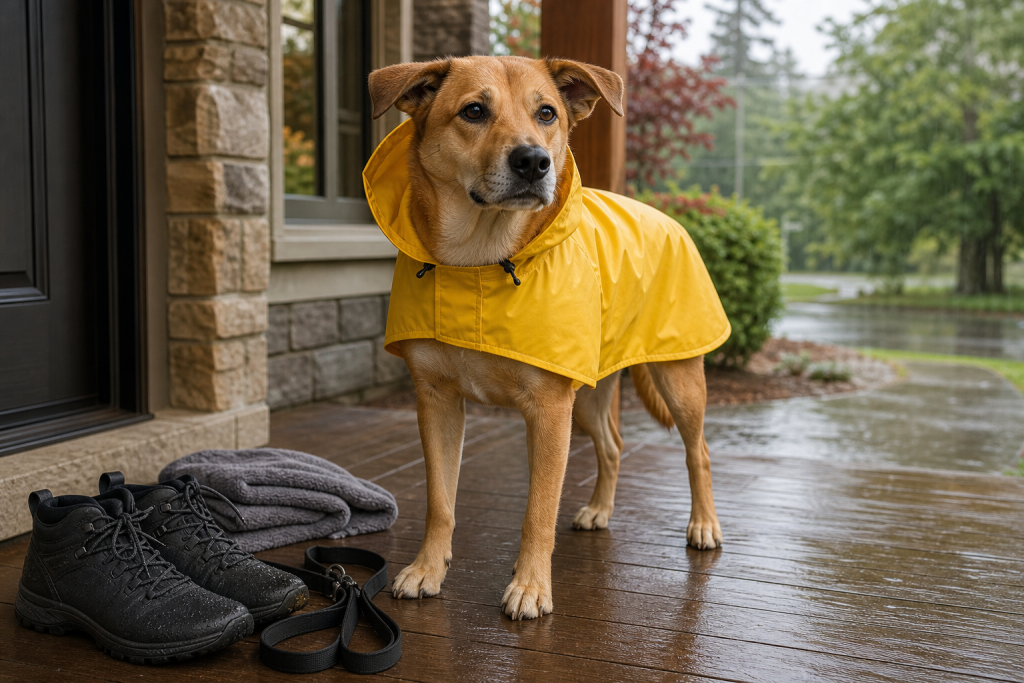
A cheap dog raincoat is only a good deal if your dog can actually move, stay comfortable and keep wearing it after the first wet walk. The mistake is buying by back length or a cute sale photo alone, then discovering the coat rubs the shoulders, blocks bathroom breaks, traps heat or cannot be returned once it is muddy. Before checkout, measure your dog, check the return terms and make sure the coat solves your real rainy-day problem.
Rain gear is getting attention again because summer storms, muddy travel days and early-morning walks make cleanup harder for dog owners. AKC’s current raincoat guidance notes that these coats can help keep a dog’s skin, fur and ears drier, but that does not mean every waterproof-looking jacket is right for every dog. The useful purchase is the one that matches your dog’s coat type, body shape, walking routine and tolerance for clothing.
Why the sale photo is not enough
Dog raincoats look simple online, but the product page can hide the details that matter most. A jacket that covers the back may still leave the chest soaked. A hood may look protective but annoy a dog who already dislikes gear near the ears. A reflective strip may be helpful on dark walks, but it does not fix poor fit or slippery belly straps.
Start with the reason you are buying. If your dog is short-haired, elderly, small, freshly groomed or reluctant to walk in rain, a lightweight raincoat may make wet outings easier. If your dog has a thick double coat and loves rain, the main value may be cleanup, visibility and keeping mud off the belly rather than warmth. If your dog overheats easily, skip insulated designs unless the weather is genuinely cold.
The fit checks to do before paying
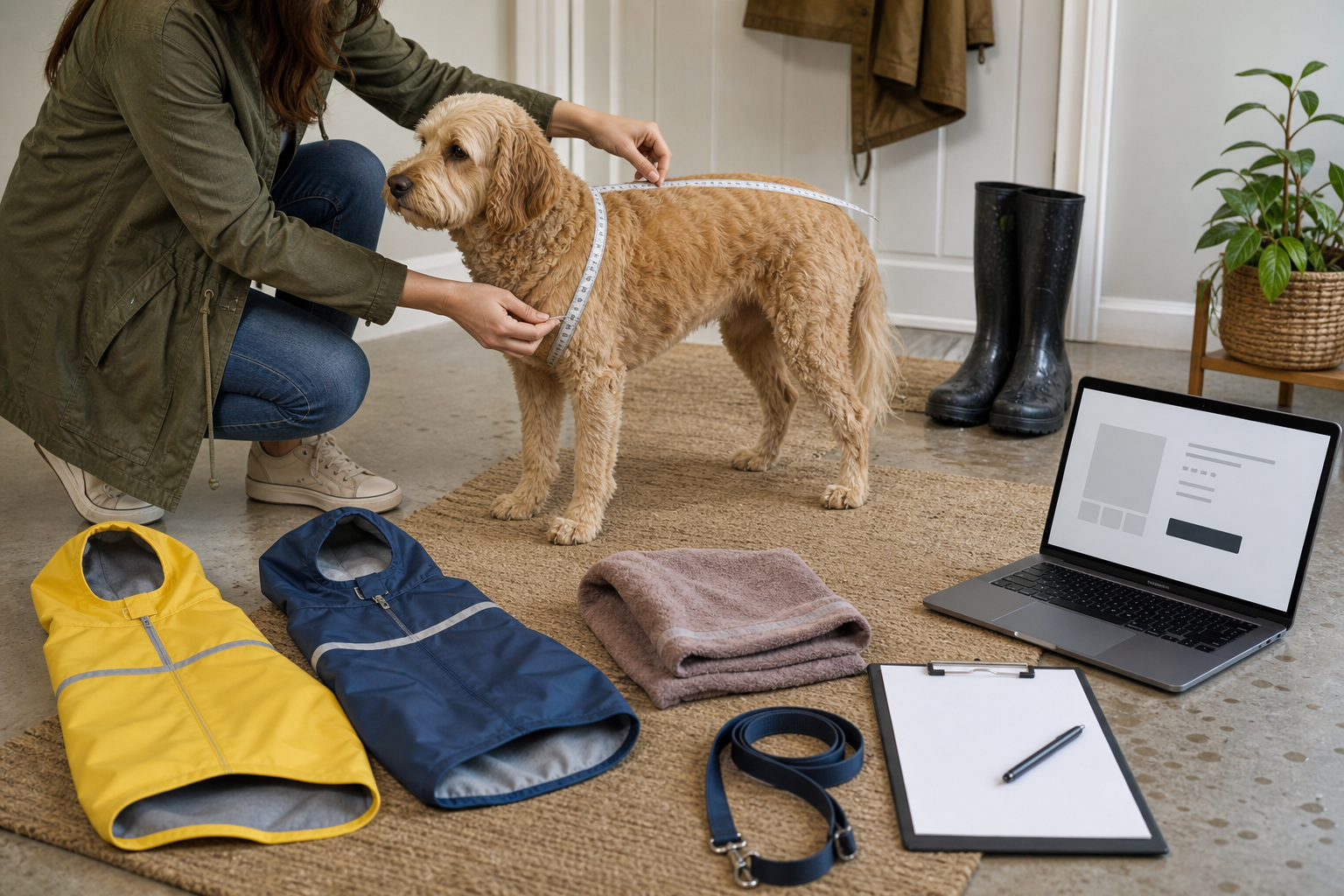
Measure more than one point. Product pages often ask for back length, but chest girth and neck fit decide whether the coat stays put without squeezing. Check whether the size chart uses inches or centimeters, whether the brand tells you where to measure from and whether your dog’s measurements sit in the middle of a size rather than at the edge.
- Back length: the coat should cover enough of the body to be useful without pressing into the tail base.
- Chest girth: straps should secure the coat without rubbing behind the front legs.
- Neck opening: your dog should be able to lower the head and sniff comfortably.
- Shoulder movement: the front legs need a normal stride, especially on stairs or curbs.
- Bathroom clearance: the belly panel should not interfere when your dog urinates or defecates.
- Harness access: confirm whether the coat has a leash opening if your dog walks on a harness.
If the size chart is vague, treat the discount as risky. Raincoats are one of those pet supplies where a slightly wrong size can turn an appealing sale into a return, donation or drawer item.
Waterproof, water-resistant and breathable are not the same
“Waterproof” is the claim shoppers notice first, but breathability and construction matter too. A coat that blocks rain but traps body heat can be uncomfortable on warm, humid walks. A thin water-resistant shell may be enough for a quick bathroom break but not for a long walk in steady rain.
Look for plain, practical details: sealed or covered seams, adjustable closures, a smooth inner surface, reflective trim and cleaning instructions you can live with. If your dog rolls, shakes or runs through brush, also check whether the fabric looks snag-prone and whether replacement buckles or straps are available.
Deal and coupon checks before checkout
Raincoat deals often appear alongside seasonal pet sales, Prime Day-style events and retailer promotions. Do not judge the deal by the percentage off alone. Compare the final cart price with shipping, return costs, size availability and whether the item is final sale.
For online orders, check these points before you pay:
- whether opened or worn apparel can be returned after a careful indoor try-on;
- whether return shipping is free or deducted from the refund;
- whether all sizes and colors have the same return terms;
- whether the sale price only applies through a membership, app, autoship-style offer or limited promotion;
- whether a cheaper coat lacks the harness opening, reflective trim or adjustability you actually need.
Chewy, Petco and PetSmart all publish return-policy details, but the practical burden is still on the shopper to read the terms for the exact item and order channel. Apparel fit is personal, and a generous general policy does not make a poorly measured coat a smart buy.
What to avoid
Avoid raincoats that rely on a single strap if your dog is narrow, deep-chested or very active. Avoid stiff hoods that cover the ears if your dog already freezes when gear touches the head. Avoid heavy insulated coats for warm rain, especially for dogs that run hot. Avoid any jacket that covers too much of the belly for male dogs unless the product page clearly shows clearance.
Also be careful with coats that include decorative parts a dog may chew. Buttons, dangling toggles and loose tabs can turn a simple rain layer into a supervision problem. If your dog chews clothing, choose a simpler design and try it indoors first.
Rain gear also does not replace basic care after the walk. ASPCA grooming guidance emphasizes regular brushing and checking the coat and skin as part of routine dog care. After a wet walk, dry your dog, wipe muddy paws and watch for rubbing where straps sit. If wet-weather walks suddenly become painful, anxious or abnormal for your dog, ask your veterinarian rather than assuming a different coat will solve it.
Quick answers
Does every dog need a raincoat?
No. Some dogs benefit from rain protection, especially short-coated, small, older or rain-averse dogs. Others tolerate rain well and may only need towel drying and paw cleanup.
Should I buy the cheapest dog raincoat on sale?
Only if the size chart, return terms and core features fit your dog. A low price is not useful if the coat rubs, traps heat or blocks normal movement.
Is a hood a good feature?
Sometimes. A hood can help keep the head drier, but many dogs dislike hoods. A high collar or adjustable neck may be more comfortable for some dogs.
What is the safest first try-on?
Try the coat indoors while it is clean, reward your dog calmly and check movement from the side and front. Do not wait until a stormy walk to discover the straps rub or the leash opening is in the wrong place.
Sources
Sources last checked: June 10, 2026, 10:34 Europe/Rome.
- American Kennel Club, “Does Your Dog Need a Raincoat? When to Use Dog Raincoats”: https://www.akc.org/expert-advice/lifestyle/dog-raincoats/
- ASPCA, “Dog Grooming Tips”: https://www.aspca.org/pet-care/dog-care/dog-grooming-tips
- ASPCA, “General Dog Care”: https://www.aspca.org/pet-care/dog-care/general-dog-care
- Chewy, Return Policy: https://www.chewy.com/app/content/return-policy
- Petco, Returns: https://www.petco.com/returns
- PetSmart, Returns and Refunds: https://www.petsmart.com/help/returns-and-refunds-H0008a.html
- Amazon Best Sellers, Dog Raincoats, used as a live demand signal only: https://www.amazon.com/Best-Sellers-Dog-Raincoats/zgbs/pet-supplies/3024174011