
#camping with dogs
#dog camping gear
#dog tie-out stake
#pet travel
#summer dog supplies
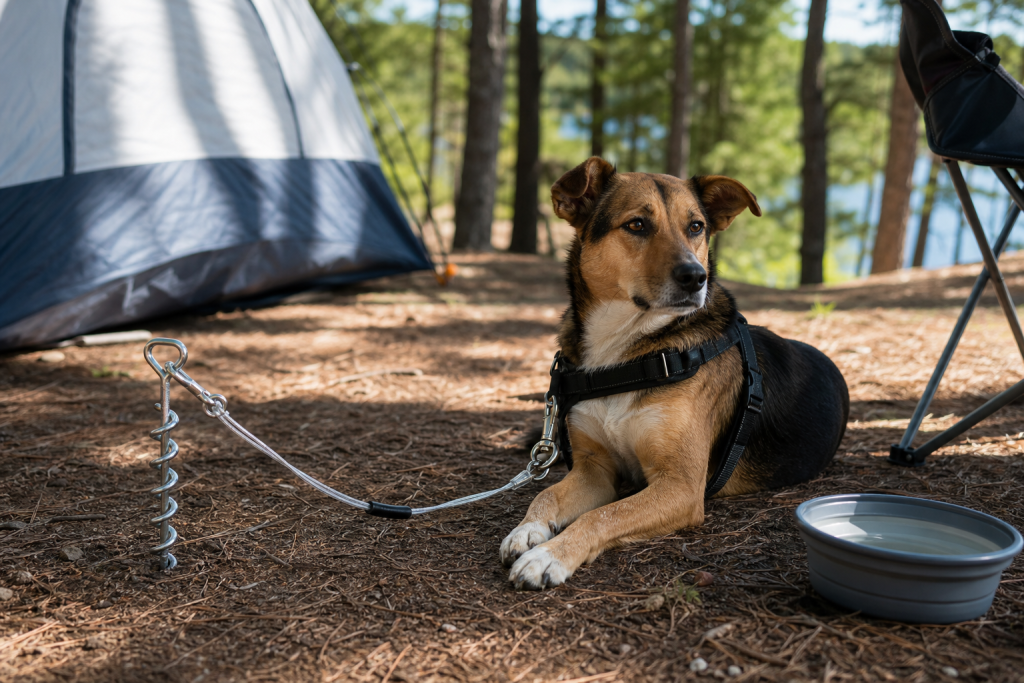
A cheap dog tie-out stake can be useful at a campsite, but only if it matches your dog’s size, the ground, the campground rules and constant supervision. The mistake is treating a stake and cable like a portable fence. It is really a short-term restraint tool, and the wrong setup can tangle, pull loose or give you false confidence while your dog is around heat, wildlife, other campers and food.
Camping with pets is a current summer shopping moment, and ASPCA Poison Control published fresh camping safety guidance in June 2026 for owners heading outdoors with dogs and cats. That timing matters because tie-out kits, long lines, portable pens and travel crates are showing up beside Prime Day pet deals and summer camping gear. Before you add the lowest-priced stake to your cart, check whether it solves the actual campsite problem or just creates a new one.
Why the campsite tie-out deal is easy to misread
A tie-out kit looks simple: stake, cable, clip, done. In real use, the details decide whether it works. Sandy soil, rocky ground, excited dogs, neighboring campsites, camp chairs, cooking gear and children walking past can all change how safe the setup feels.
The ASPCA’s current camping advice tells owners to pet-proof the campsite, watch for left-behind hazards, know common toxic plants and keep pets from roaming. Older ASPCA camping guidance also warns that pets in unfamiliar areas can get lost, reach water, encounter wildlife or be fed something unsafe by other campers. A stake may help define a temporary boundary, but it does not replace eyes on your dog.
What to check before you buy a dog tie-out stake
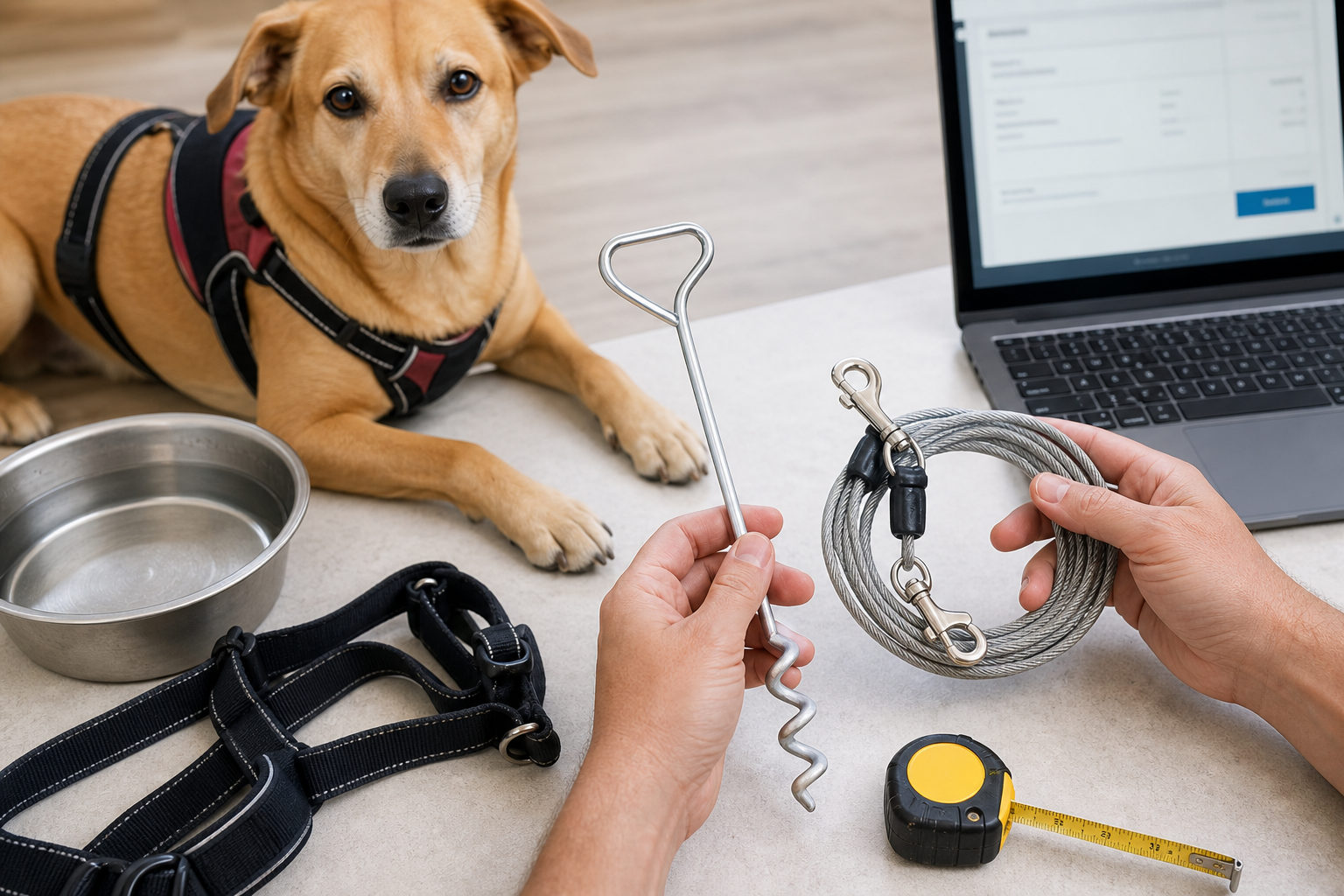
Start with your dog’s real weight and behavior, not the biggest number printed in a marketplace listing. A calm small dog resting near a tent is a different buyer than a strong adolescent dog who lunges when another dog passes. If the listing gives a maximum weight, look for matching hardware details: cable thickness, stake length, clip type, swivel points and whether the product is intended for soft soil, firm ground or mixed terrain.
Check the attachment point. For many dogs, a well-fitted harness is the more sensible shopping plan than clipping a long cable to an everyday collar, especially if the dog might hit the end of the line. Make sure the harness itself is in good condition, cannot slip over the shoulders, and does not rub during movement.
Then check the cable length. Longer is not automatically better. A long cable can reach the fire ring, picnic table, neighboring site, road edge or another dog’s space. A shorter line may be safer in a crowded campground, while a portable pen or crate may be better for rest periods if your dog is crate-trained and comfortable.
The checkout section most owners skip
Before paying, open the return policy and warranty details. A stake that will not hold in your soil type may look unused but still be hard to return after a trial outdoors. If you are buying for one specific trip, confirm shipping speed without assuming a sale badge means it will arrive before departure.
Also check what is included. Some kits include only the stake, while others include a cable, swivel, clips or storage bag. Replacement clips matter because a small bent latch can make the whole setup useless. If the product uses plastic handles, coated cable or lightweight hardware, scan reviews for breakage patterns rather than relying on star ratings alone.
If the deal is on Amazon or another marketplace, verify the seller name, return window and whether the listing bundles multiple sizes under one review page. A five-star review for a small-dog version does not prove the larger version will hold a stronger dog.
Safety checks that matter more than the discount
Do not leave a dog unattended on a tie-out. Humane World for Animals warns that tethering can create serious behavior and safety risks, especially when dogs cannot retreat from a perceived threat. Laws also vary by location, and some jurisdictions restrict how dogs may be tethered, for how long and in what weather.
Heat is another reason not to treat the stake as a set-and-forget product. Choose a shaded spot, keep water within reach, and make sure the dog cannot wrap the cable around a chair, tree, stake, cooler or tent leg. Never place the tie-out where the dog can reach a campfire, grill, vehicle path, trash bag, fishing gear, wildlife bait or another campsite.
Flea and tick products are part of the same trip budget. The EPA advises owners to read flea and tick product labels carefully, use products only for the specified species and weight range, and consult a veterinarian about the best protection. Do not buy a camping tie-out and then skip parasite prevention, ID tags or microchip contact checks.
When a tie-out is the wrong product
Skip the tie-out if your dog panics when restrained, chews cables, guards space, lunges at strangers, slips harnesses or has a history of escaping. A portable crate, exercise pen, hands-free leash, shorter supervised leash or staying home with a sitter may be safer than trying to force a campsite setup.
For cats, a dog tie-out stake is usually the wrong tool. Use a secure carrier, enclosed cat tent, properly fitted cat harness with close supervision, or skip the campsite outing if your cat is not trained and comfortable outdoors.
Deal and coupon checks before paying
A real deal should still pass five checks: correct size, safe attachment, suitable ground, returnable order and complete kit. Do not count a coupon as savings if you still need to buy a separate harness, stronger cable, spare clips, shade, water gear, waste bags and tick prevention before the trip.
For Prime Day-style listings, compare the current price with the same product’s recent price when possible. Watch for vague claims like “for all dogs” or “heavy duty” without a clear weight range and hardware details. If the listing has multiple sellers, check who ships it and who handles returns before you assume the checkout price is the final cost.
Quick answers
Is a dog tie-out stake safe for camping?
It can be useful for a supervised dog in the right spot, but it is not a fence and it is not a pet sitter. The dog still needs shade, water, parasite protection, updated ID and an owner watching for tangles, heat, wildlife, food and other campers.
Should I attach a tie-out to a collar or harness?
A well-fitted harness is often the safer shopping choice for a supervised tie-out because it spreads force better than a neck collar if the dog moves suddenly. Ask your veterinarian or trainer if your dog has respiratory, neck, mobility or behavior concerns.
How long should a camping tie-out cable be?
Long enough for the dog to rest and shift positions, but short enough that the dog cannot reach roads, fires, cooking areas, neighboring campsites, water hazards or other animals. Measure the campsite area instead of buying the longest cable by default.
What else should I pack with a tie-out?
Pack a fitted harness, regular leash, ID tags, updated microchip details, water bowl, waste bags, shade plan, tick-prevention plan, pet first-aid basics and the contact details for a local emergency veterinary clinic near the campground.
Sources
- ASPCA, 10 Ways to Keep Your Pet Safe While Camping This Summer.
- ASPCA, 10 Expert Tips to Keep Your Pet Safe While Camping.
- Humane World for Animals, Is it okay to chain or tether dogs?.
- Animal Legal & Historical Center, Table of State Dog Tether Laws.
- American Veterinary Medical Association, Traveling with your dog or cat.
- U.S. Environmental Protection Agency, Controlling Fleas and Ticks on Your Pet.
Sources last checked June 25, 2026, 04:33 Europe/Rome.