
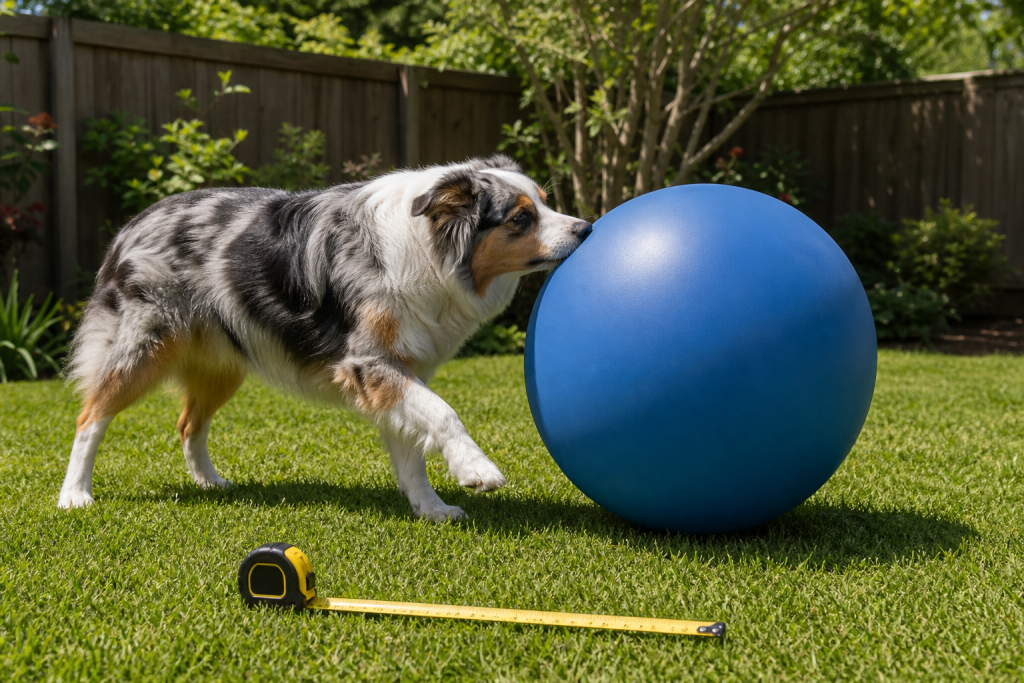
A herding ball deal can go wrong when the ball is small enough to bite, too hard for your dog’s play style, or cheap only because the size and return terms do not fit your yard. The right buy is usually an oversized, supervised pushing toy, not a normal fetch ball and not a chew toy. Before checkout, measure your dog, check whether the ball is inflatable or hard plastic, and skip the bulk bargain if your dog is more likely to clamp down than nose it forward.
Why herding balls are showing up now
Large dog activity toys are getting attention again as shoppers look for backyard enrichment that feels more useful than another plush toy. Current marketplace searches show plenty of oversized “herding ball” listings aimed at Australian Shepherds, cattle dogs, collies and other active dogs, which makes the category easy to find during summer deal browsing.
The appeal is understandable. Herding breeds and other high-energy dogs often need both movement and a job. RSPCA Australia says dogs benefit from mental and physical enrichment, including interactive toys and activities that engage problem-solving and natural behavior. ASPCA also frames food puzzles and DIY enrichment as ways to make ordinary dog routines more challenging and interactive.
That does not make every giant ball a good buy. A herding ball is a specific kind of play tool. If your dog wants to bite, carry, shred, guard or body-slam toys, the cheapest listing can turn into a broken toy, a return fight or a safety problem.
The size mistake shoppers make first
Do not buy a herding ball the way you buy a tennis ball. The point is usually for the dog to push the ball with the nose, shoulder or chest, not to pick it up. Whole Dog Journal’s herding-ball guidance points out that size affects safety and notes that Treibball setups avoid balls that are too low relative to the dog’s shoulder height because bending low to push can increase injury risk. PDSA’s ball-safety guidance also says balls should be large enough that the dog cannot fit the whole thing into the mouth.
Use that as a practical shopping clue. A ball that looks huge in the product photo may still be too small for a tall dog. A ball that is enormous for a medium dog may be hard to control in a small yard. Product photos without a dog, person, fence or measurement can hide that mismatch.
- Measure shoulder height. Use the floor-to-shoulder measurement, then compare it with the ball’s inflated or finished diameter.
- Check the play style. Pushers are better candidates than dogs that immediately bite or shake every toy.
- Match the space. A large hard ball needs room, clear boundaries and supervision so it does not slam into steps, glass doors, garden edges or other pets.
- Watch the first sessions. Treat the first use as a fit test, not a full-speed workout.
Hard plastic, inflatable or covered?
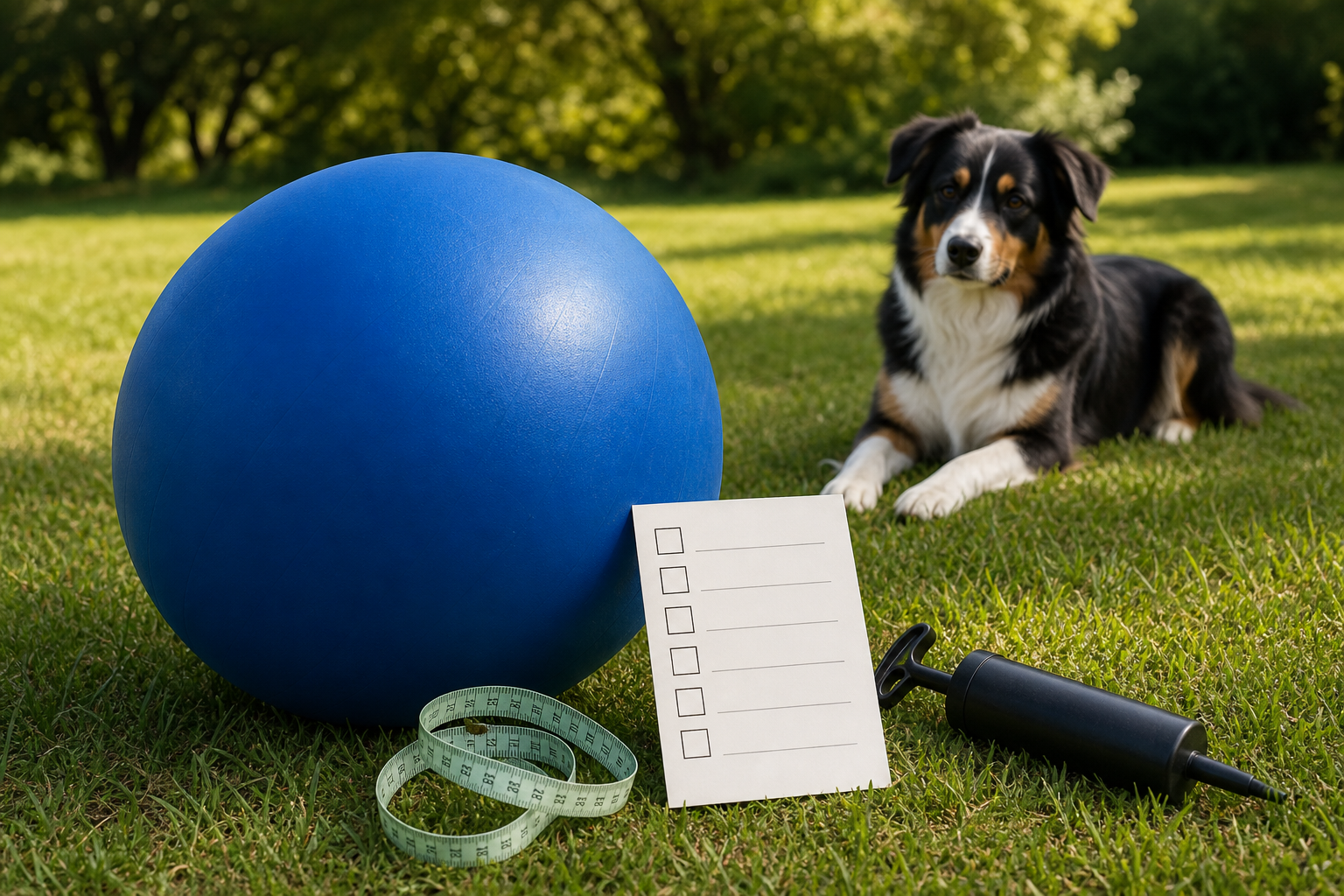
The material changes the deal. Hard plastic balls may last longer for some dogs, but they can be noisy, heavy and unforgiving if the dog rams them with too much force. Inflatable exercise-style balls can be more yielding, but determined biters may puncture them. Covered inflatable balls can add grip and protection, but the cover, zipper, seams, tabs and patches become extra things to inspect.
Ignore vague words like “indestructible” unless the seller explains the material, size, warranty and intended use. Dogs can be rough in very different ways. A toy that survives one collie may not survive a cattle dog that bites the cover seam, and a ball that suits a big fenced lawn may be a poor fit for a tiny patio.
If your dog has dental problems, joint issues, neck pain, vision problems, a recent injury or a history of obsessive toy behavior, ask your veterinarian or a qualified trainer before buying a hard, high-arousal toy. This article is shopping guidance, not a diagnosis or a treatment plan.
The checkout test before you pay
A good herding ball listing should answer basic questions before the sale badge gets your attention. If it does not, keep browsing.
- Final diameter: Is the listed size the actual inflated or finished size, or only the package size?
- Dog size guidance: Does the seller give useful breed, weight or height guidance without pretending one size fits every dog?
- Material and surface: Is it hard plastic, inflatable PVC, fabric-covered, foam, or another material?
- Chew warning: Does the listing clearly say whether the ball is not meant for chewing?
- Repair parts: If inflatable, are a pump, plug, patches or replacement cover included or sold separately?
- Return window: Can you return it after discovering the size is wrong, and who pays shipping on a bulky item?
- Storage: Will it fit through gates, doors and storage spaces when inflated?
Deal and coupon checks
Herding balls are easy to overbuy because many listings look similar. A bigger discount is not helpful if the ball is too small, the cover is sold separately, or the return shipping costs nearly as much as the toy.
Before using a coupon or marketplace sale, compare the full cart. Include shipping, oversized-item surcharges, cover or pump costs, replacement patch kits and any warranty limits. If a listing pushes a multi-pack, ask whether you actually need two giant balls or whether one better-sized ball and a backup repair kit is the smarter purchase.
Be extra careful with marketplace sellers that use the same images for several sizes. Confirm the exact diameter in the selected variant, not just the headline. If the price changes when you pick the size your dog actually needs, the original “deal” may not be the relevant price.
What to avoid
Skip herding balls that are small enough for your dog to grab like a normal ball. Avoid listings that call the product a chew toy but show a thin inflatable core. Be cautious with hard balls on concrete, decks or slick floors, where momentum can turn play into a collision.
Also avoid leaving the ball outside as an unsupervised boredom fix. Weather can weaken materials, dogs can learn to bite seams, and a toy that creates frantic barking or obsessive chasing may make the yard less calm, not more useful.
Quick answers
Is a herding ball good for every dog? No. It suits some dogs that enjoy pushing and chasing, especially with supervision and training. It is a weaker buy for heavy chewers, toy guarders, dogs with mobility concerns or dogs that get over-aroused.
Should the ball be soft or hard? It depends on your dog and space. Softer inflatable styles may be more forgiving but easier to puncture. Hard plastic styles may last longer but need more space and careful supervision.
Can a herding ball replace walks or training? No. Treat it as one enrichment tool. Dogs still need appropriate exercise, rest, training and human attention.
What is the safest first session? Short, supervised and low-pressure. Start in a clear fenced area, stop before your dog gets frantic, and put the ball away if your dog tries to bite, chew or ram it aggressively.
Sources
- RSPCA Australia, “The importance of enrichment for dogs”: https://www.rspca.org.au/latest-news/blog/the-importance-of-enrichment-for-dogs/
- ASPCA, “Canine DIY Enrichment”: https://www.aspca.org/pet-care/dog-care/canine-diy-enrichment
- Whole Dog Journal, “Herding Balls for Dogs”: https://www.whole-dog-journal.com/lifestyle/dog-gear/herding-balls-for-dogs/
- PDSA, “How to choose a safe ball for your dog”: https://www.pdsa.org.uk/what-we-do/blog/how-to-choose-a-safe-ball-for-your-dog
- Humane World for Animals, “How to pick the best and safest dog toys”: https://www.humaneworld.org/en/resources/safe-dog-toys
- Chewy, return policy: https://www.chewy.com/app/content/return-policy
Sources last checked: 2026-07-17 10:37 Europe/Rome.