
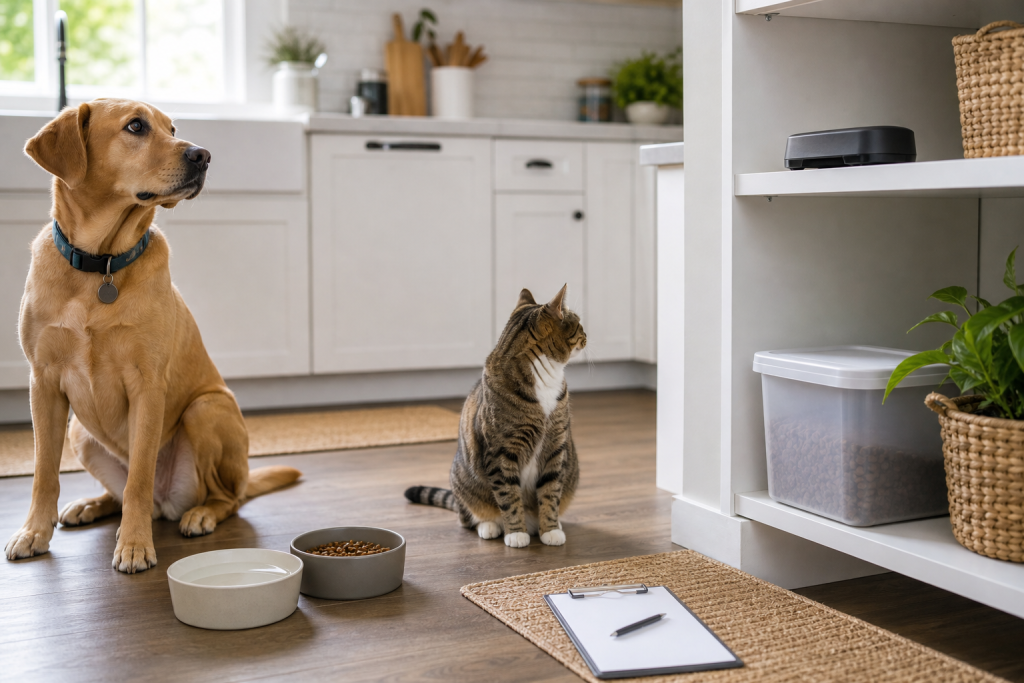
#ant bait
#pest control
#pet food storage
#pet safety
An ant bait deal is only useful if the bait stays completely out of your pet’s reach and the label fits the place you want to use it. The mistake is treating “pet friendly” or “safe when used as directed” like permission to set a station beside the food bowl. Buy the bait only after you know where it will sit, how the station closes, what the label says about pets and when bowls, toys and bedding need to be moved.
Ants tend to show up right where pet owners least want them: around kibble bins, wet food dishes, litter rooms, patios and garage doors. Summer heat, open doors and outdoor feeding can make a cheap ant-control product look like an easy add-on at checkout. But ant bait is still a pesticide purchase, and the label matters more than the sale badge.
Why This Matters Now
Pet retailers and big-box stores are pushing summer pest-control, patio and cleaning products at the same time many owners are stocking up on food, litter and outdoor supplies. That mix creates a predictable cart mistake: a shopper adds ant traps or bait stations while thinking mainly about the pet food mess, not the pesticide placement problem.
The National Pesticide Information Center says pets can be exposed to pesticides by breathing them in, absorbing them through skin or ingesting them, and that baits can contain ingredients pets find attractive. Its advice is straightforward: read the label, reduce exposure and keep baits in secure stations or places pets cannot access.
The Checkout Check Before You Buy
Before adding ant bait to a pet-supply order, answer five questions.
- Where will it go? If the real answer is “near the dog bowl” or “under the cat feeder,” pause. Baits should not be where pets eat, lick, paw, chew or sleep.
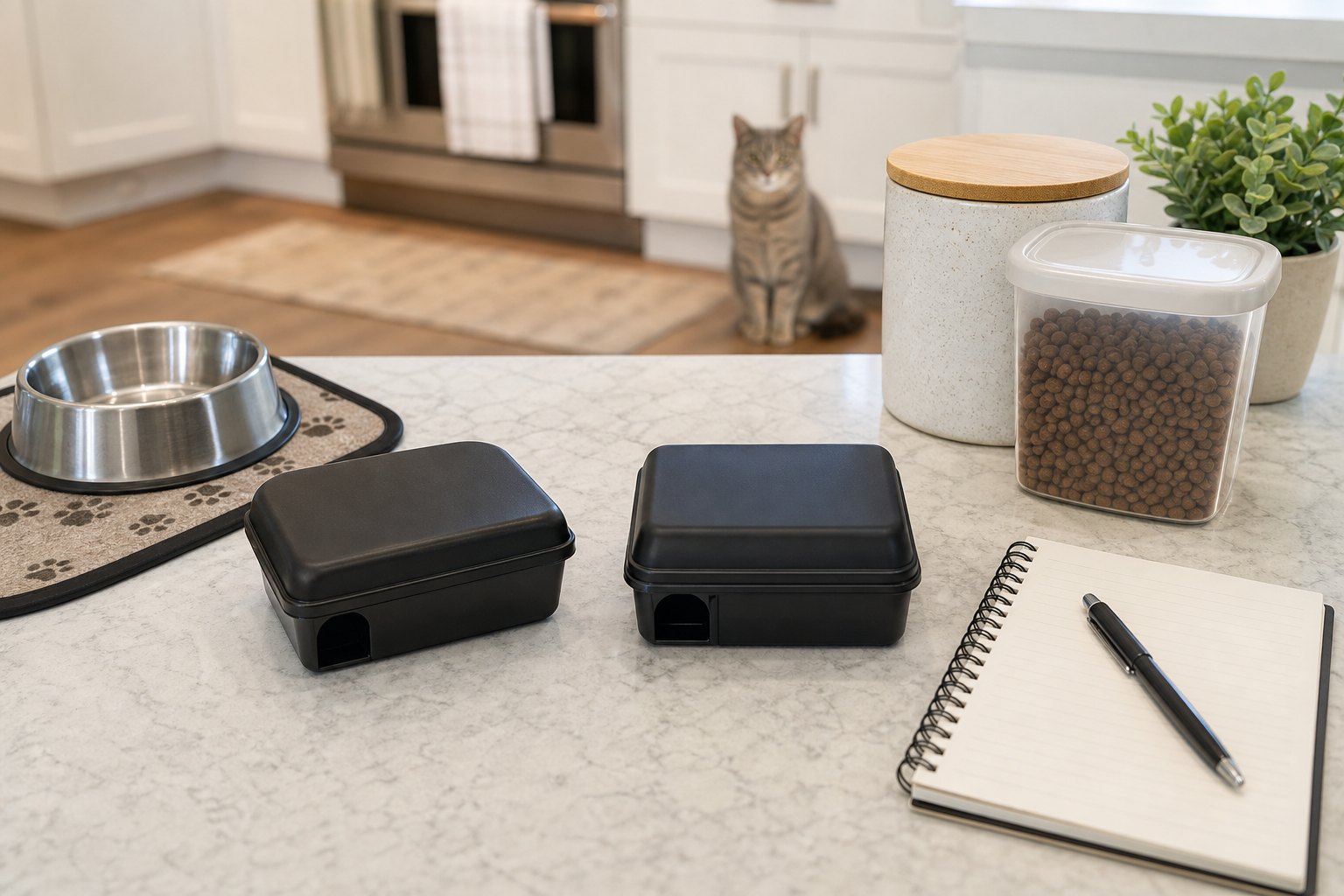
- Is it a closed station or exposed gel/liquid? A station is easier to keep contained, but it still needs to be inaccessible to pets. Exposed bait is a poor fit for floors, feeding mats and low shelves.
- What does the label say about pets? Look for directions on indoor use, treated areas, ventilation, storage, first aid and when people or animals can return.
- Can your pet move it? A curious dog can carry a light bait station. A cat can bat one under furniture. If the station is not secure, the deal is not ready for your home.
- Can you remove the food source first? Sealed food bins, clean mats and washed bowls often reduce the ant problem without putting pesticide beside dinner.
Do Not Trust “Pet Friendly” by Itself
“Pet friendly” is not a substitute for the pesticide label. EPA guidance says labels tell you how to use and store a product safely, give first aid instructions and list phone numbers for help. EPA also tells users to keep pets and children away from treated areas as directed on the label.
That matters with ant bait because the product is designed to attract insects to food-like material. The same feature that makes bait effective can make it interesting to a dog or cat. A bargain multipack is not a bargain if you cannot place every station in a pet-proof location.
A Safer Buying Framework
For a pet household, the strongest ant-control purchase is usually the one that reduces access instead of adding more product. Start with sealed pet-food storage, washed bowls, a clean feeding mat and shorter wet-food serving windows. If ants still trail through the area, choose a bait format that can be placed along the ant path but outside your pet’s reach.
For example, a closed station on a high shelf, behind a blocked cabinet gap or inside a pet-inaccessible utility area may be more realistic than a low floor station beside the bowl. If your home has a puppy, a chewing dog, a cat that opens cabinets or free-roaming small pets, be stricter. “Out of sight” is not the same as “out of reach.”
Deal And Coupon Checks
Retailer promotions can make multipacks look cheaper, but ant bait is not a product to overbuy blindly. PetSmart’s current promotional terms note that prices and selection can vary, quantities may be limited and exclusions can apply. Chewy’s live deals page shows changing delivery and return messaging across products, which is a reminder to check the exact item page before relying on any cart promise.
- Check whether the promo applies to the exact bait format you want, not just the pest-control category.
- Compare cost per station, but only after confirming you can use the full pack safely.
- Do not buy open powders, loose granules or gels for pet-accessible feeding areas just because they are cheaper.
- Keep the receipt and packaging until the ant problem is solved, because the label and first-aid details matter.
- Avoid marketplace listings that hide the active ingredient, label image or indoor-use directions.
What To Avoid
- Do not place bait stations inside or directly under a pet bowl stand.
- Do not spray pesticide on a feeding mat, crate tray, bedding or litter area unless the label specifically allows the use and pets are kept away as directed.
- Do not leave bait where a pet can chew the station, lick liquid bait or carry it away.
- Do not assume boric acid or borax bait is harmless. NPIC notes that boric acid products can expose people or pets if products are accessible, and label directions should be followed carefully.
- Do not wait and watch if you think your pet ate bait or chewed a station. Contact your veterinarian or an animal poison-control service with the product package in hand.
Quick Answers
Is ant bait safe around dogs and cats?
It depends on the product, placement and label directions. Treat every ant bait as a pesticide purchase. Use it only where pets cannot reach it, and follow the label instead of relying on a front-of-package claim.
Can I put ant bait next to my pet’s food bowl?
That is usually the wrong placement. Clean and seal the feeding area first, then put bait along ant trails in a pet-inaccessible spot if the label allows indoor use.
What if my pet chews an ant trap?
Save the package or product name and call your veterinarian or animal poison control. The ASPCA Animal Poison Control Center lists 888-426-4435 as its 24-hour number and notes that a consultation fee may apply.
Sources
Last checked: 2026-07-17 16:36 Europe/Rome.
- National Pesticide Information Center, Pets and Pesticide Use Fact Sheet
- National Pesticide Information Center, Pesticide Use Around Pets
- National Pesticide Information Center, Boric Acid Fact Sheet
- U.S. EPA, Read the Label First: Protect Your Pets
- ASPCA Animal Poison Control Center
- PetSmart promotional terms
- Chewy Today’s Deals page