
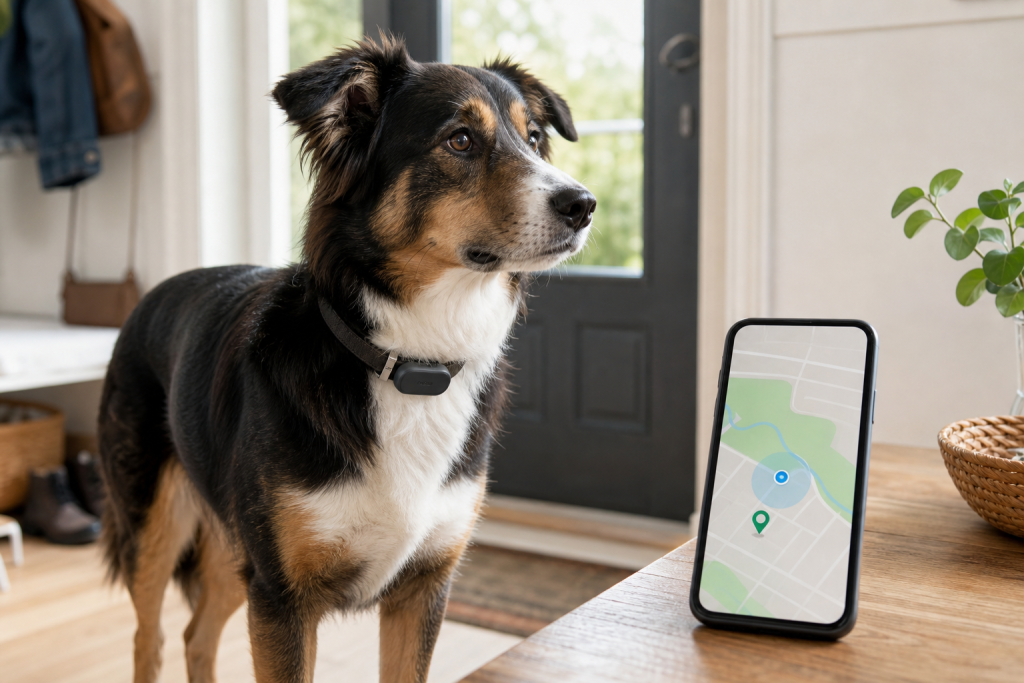
#GPS pet tracker
#no monthly fee tracker
#pet tech
#pet tracker
A no-monthly-fee pet tracker can be a good deal only if you understand what kind of tracking it actually provides. Many cheap listings avoid a subscription by using Bluetooth, a nearby-phone network, local radio, or limited prepaid service, not the same always-on GPS and cellular connection owners expect from live dog and cat trackers. Before checkout, match the tracker to where your pet could realistically get lost.
This matters right now because satellite dog trackers, Prime Day-style pet-tech deals and marketplace listings have made location gadgets look easier to compare than they really are. The phrase “no monthly fee” sounds simple, but it can hide the biggest feature difference in the product: how the tag sends its location when your pet is no longer near you.
Why This Tracker Deal Is Easy To Misread
Pet owners usually want one of two things. Some want a short-range finder for a cat hiding nearby, a dog in the yard or a collar that may have fallen behind the couch. Others want escape alerts and live location updates when a dog runs down the road, crosses a field or disappears beyond Bluetooth range.
Those are not the same purchase. Apple explains that an AirTag needs your iPhone to be within range for Precision Finding, and otherwise relies on the Find My network to report a location. That can work well in dense areas with many Apple devices nearby, but it is not the same as a GPS collar with its own cellular, satellite or radio connection.
Dedicated GPS pet trackers usually charge a subscription because the device has to send location data through a network. The newer Fi Ultra launch shows why shoppers are paying attention: it adds satellite connectivity for areas where LTE may not work, but it still has an upfront device cost and an ongoing plan. A low-price tag without a plan may be useful, but it is not a magic replacement for that kind of service.
The Checkout Checks That Matter
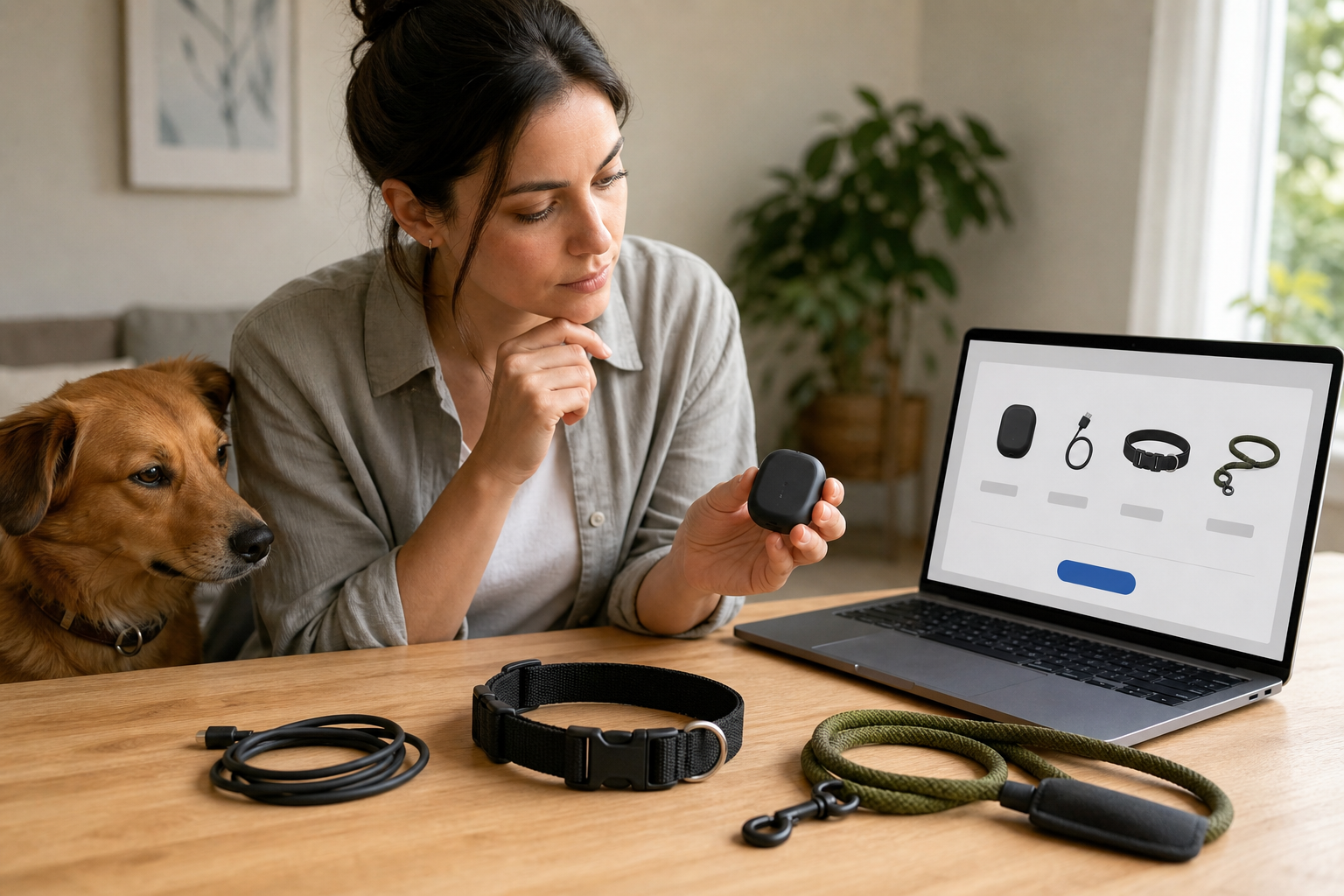
Start with the connection type. If the listing says Bluetooth, crowd network, Find My, local radio, RF or “no SIM,” read the range and update wording carefully. If it says GPS but no monthly fee, look for whether it is truly real-time, whether it needs a handheld receiver, whether service is prepaid only for a limited term, and what happens after that term ends.
Check the alert promise. “Location history” is not the same as live tracking. “Last seen” is not the same as a current moving location. “Works worldwide” may mean the app opens worldwide, not that the tag can report from a rural trail with no nearby compatible phones or network service.
Battery and attachment matter more than the sale badge. A tracker is useless if the battery dies before a trip, if the holder slips off the collar, or if the waterproof rating does not match rain, puddles or swimming. For small cats and toy dogs, check weight and collar fit before you assume a larger dog tracker will be comfortable.
Privacy and app support belong in the cart check too. Read what account is required, whether location sharing can be limited, whether the app supports your phone, and whether the manufacturer publishes support or warranty information. A tracker that depends on an app can lose value quickly if the app, network or account system changes.
Deal And Coupon Details To Verify
Do not compare only the price on the product tile. Compare the first-year and second-year cost, including activation fees, replacement holders, batteries, charging cables and subscription renewals. A no-fee tag can be cheaper for nearby finding, but a discounted GPS collar may be the better value if you need escape alerts and live updates.
Look for the exact model and service terms before using a coupon. Marketplace listings can mix Bluetooth tags, GPS collars, radio trackers and “compatible with” wording in the same search results. If a deal shows a photo of a pet on a trail but the specifications describe short-range Bluetooth, treat the specifications as the deciding source.
Returns are especially important for trackers because performance depends on your home, yard, neighborhood, phone ecosystem and travel habits. Before paying, check whether opening the package, activating the device or registering the app changes the refund path.
What To Avoid
Avoid buying a Bluetooth tag as your only plan for a dog that bolts, a cat with outdoor access or a pet that travels through low-traffic rural areas. It may still help if another compatible phone passes nearby, but that is not the same as a dedicated real-time tracker.
Avoid listings that use “GPS” loosely without explaining how location data reaches your phone. GPS can determine a device’s position, but the tracker still needs some way to report that position to you.
Do not let a tracker replace ID basics. A collar tag, current microchip registration and recent photos still matter because a person may find your pet before any device updates. If your pet is missing, contact local shelters, animal control and your veterinarian rather than waiting only on an app.
When A No-Fee Tracker Makes Sense
It can make sense for indoor cats, supervised yard time, travel bags, spare collars or pets that are usually found within the home or nearby streets. It is most useful when you already understand the phone ecosystem it relies on and you are not expecting guaranteed live movement on a map.
It makes less sense for hiking, camping, rural properties, escape-prone dogs or any pet that may move far from people and phones. In those cases, compare dedicated GPS, cellular, satellite or radio options and treat the subscription as part of the product, not an afterthought.
Quick Answers
Is a no-monthly-fee pet tracker always worse?
No. It can be useful for nearby finding and lower-cost backup tracking. It is worse only when the buyer expects live GPS-style updates that the device cannot provide.
Does an AirTag work as a pet GPS tracker?
It can help locate an item or collar when the Find My network can see it, but it is not a dedicated pet GPS collar with its own live cellular or satellite connection.
Why do many GPS pet trackers have subscriptions?
The plan usually pays for the network connection that sends location data from the tracker to your phone. Without some communication path, GPS alone does not give you a live map update.
What is the biggest checkout mistake?
Buying the cheapest “GPS” listing without checking whether it uses Bluetooth, a crowd network, local radio, prepaid service or a true recurring data plan.
Sources
- Apple Support, AirTag and Find My guidance, including range and Find Nearby behavior, Apple.
- Apple Support Community, AirTag pet-tracking limitations discussed by Apple community specialists and users, Apple Support Community.
- The Verge, Fi Ultra Starlink-enabled pet tracker launch and subscription context, The Verge.
- Tom’s Hardware, Fi Ultra satellite dog tracker specifications and pricing context, Tom’s Hardware.
- PetLink, GPS dog tracker subscription explainer and common no-fee tracker categories, PetLink.
Sources last checked: July 15, 2026, 07:34 Europe/Rome.